Employees and shareholders press for Huang's return
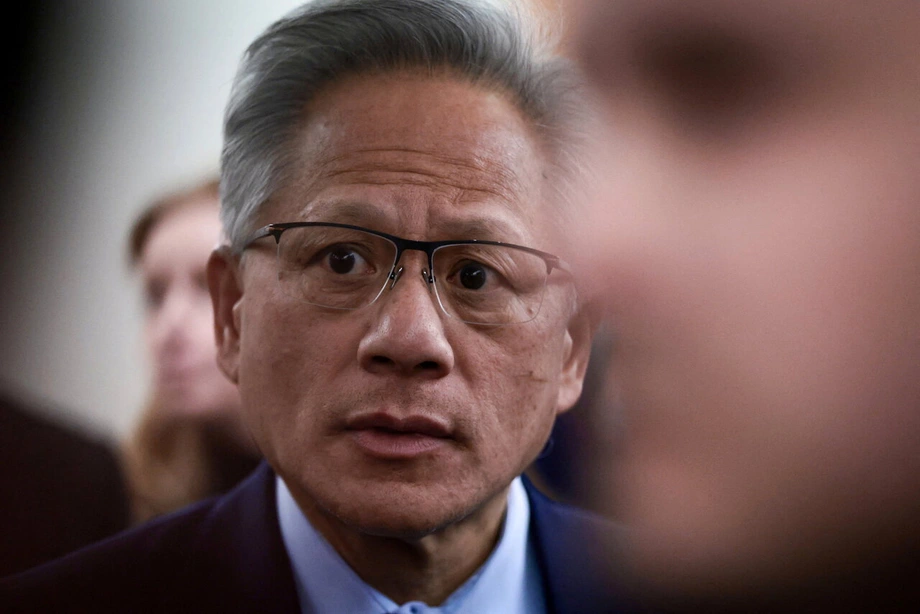
About 36,000 people have signed a petition calling for Jensen Huang to return as Nvidia's chief executive, with Tesla CEO Elon Musk joining a campaign that lists nearly 2,700 current Nvidia employees and more than 20,000 shareholders among its supporters.
Contents
- Employees and shareholders press for Huang's return
- What the petition wants directors to explain
- A resignation recorded before the public announcement
- How the crisis unfolded
- Employees seek a voice in the decision
- Security allegations bring customers and exports into focus
- Kress takes responsibility for continuity
- Investors face uncertainty beyond chip deliveries
- Earnings and congressional scrutiny come next
- Key Points
The Stand with Jensen campaign gathered support after Nvidia announced Huang's departure on November 12, 2026, ending his 33 years leading the company he helped establish in 1993. Chief Financial Officer Colette Kress has taken over temporarily while directors search for a permanent successor.
The petition asks Nvidia to restore Huang to his position while an independent investigation examines allegations surrounding his personal relationships and a suspected Chinese intelligence operation. Its supporters want directors to explain the evidence behind their decisions and give Huang a fair opportunity to respond.
Musk, the chief executive of Tesla and SpaceX, publicly backed the campaign on X:
A petition is underway to reinstate Jensen and I'm signing it too.
The petition website also lists Fundstrat's Tom Lee and Shopify CEO Tobi Lutke. The employee and shareholder totals are categories displayed by the campaign's tracker; the verification method for those affiliations has not been disclosed.
Nvidia shares fell more than 2% during regular trading on Friday, November 13, and more than 1% afterward. The selling followed a turbulent Thursday, when the shares fell as much as 14% before finishing down 4.34%, as detailed in coverage of Huang's departure and replacement. Supporters are now asking the board to reverse the leadership change while Kress works to maintain customer and investor confidence.
What the petition wants directors to explain
The open letter argues that Huang's work building Nvidia over 33 years deserves a fair process. It supports accountability for his conduct, while asking that decisions rest on evidence and an opportunity for him to answer the allegations.
The petition describes its central concern in these words:
We are concerned that Jensen was removed without meaningful due process.
Supporters ask the board to ensure the investigation is independent, publish its scope and timetable, explain the evidence and reasoning behind its decisions, and allow Huang to present his response. They also say they have not been shown evidence substantiating the allegation that the woman at the center of the intelligence controversy was a spy.
The campaign combines two demands: an inquiry that establishes what happened and Huang's return before that inquiry concludes. Nvidia had initially allowed him to continue running the company while an independent review proceeded. The petition seeks to restore that arrangement.
A resignation recorded before the public announcement
Nvidia's securities filing is described as recording that directors accepted Huang's resignation on November 11, effective immediately. The company publicly announced the transition the following day. He left all three positions: president, chief executive and director.
The filing's wording, "accepted the resignation," records the formal action as a resignation. Petition supporters describe his departure as a removal, while accounts of the board's deliberations describe directors considering whether he should remain after further allegations emerged.
Nvidia's announcement gave no reason for the resignation. The circumstances leading to his departure remain central to the campaign's demand for an explanation from directors.
Harvey C. Jones, a director since Nvidia's founding in 1993, became the company's first board chair. The former Synopsys chief executive and executive chairman now oversees a transition that separates the company's leadership from its founder for the first time.
How the crisis unfolded
Huang's departure followed a rapid change in the board's position. Directors initially expressed confidence in him while opening an investigation, then announced his exit four days later.
The main developments trace how a controversy about personal conduct became a leadership and security crisis:
- October 29: Allegations became public concerning Huang's relationship with Alice Huang, a businesswoman associated with Nvidia customer Megaspeed, and suspected Chinese intelligence activity.
- November 8: Huang acknowledged infidelity and apologized. Nvidia announced an independent investigation and said he would continue leading the company.
- November 11: Allegations emerged of a relationship with Nvidia healthcare executive Kimberly Powell, who reported directly to Huang. Directors met, and the securities filing records that they accepted his resignation that day.
- November 12: Nvidia announced Kress as interim CEO and Jones as board chair. A further allegation involving an unnamed Nvidia employee also emerged.
- November 13: The public petition had about 36,000 signatures, including names of prominent technology executives and investors.
- November 17: Nvidia is scheduled to release quarterly results and hold an earnings call.
Huang's admission of infidelity was explicit. The additional alleged relationships remain allegations, and Powell has not publicly commented. Huang has not publicly addressed those additional claims since his apology to employees.
Employees seek a voice in the decision
An internal suggestion submitted by a longtime Nvidia engineer before Huang resigned asked directors to consider employee views before taking action. The discussion attracted more than 1,600 comments, including calls for his return.
About two dozen employees also posted public messages of support on LinkedIn after the announcement. Inside Nvidia, a member of staff sent a companywide email calling for greater transparency about the departure.
The support reflects the unusually close connection between Nvidia and its founder. Huang personally set project priorities, communicated with engineers about technical details and maintained roughly 60 direct reports. His responsibilities reached well beyond public appearances or investor presentations.
Employees who expected the investigation to finish before a leadership decision are seeking an explanation for the faster timetable. The petition gives that concern a public platform, alongside backing from shareholders and executives outside Nvidia.
Nvidia's directors now face pressure from supporters who want Huang restored while remaining responsible for investigating conduct involving the person who built the company. Employee sentiment is part of that decision, alongside the evidence, workplace responsibilities and the company's obligations to shareholders.
Security allegations bring customers and exports into focus
Alice Huang, who is not related to Jensen Huang, has been associated with Singapore computing company Megaspeed. US intelligence officials reportedly suspect she worked for Chinese intelligence. The underlying intelligence has not been publicly released.
Megaspeed's purchases had already attracted scrutiny. Earlier coverage of Megaspeed's chip purchases described a Malaysian company linked to the business buying at least $4.8 billion in equipment built around Nvidia technology in less than two years. US authorities have investigated suspected diversion of advanced chips to China.
Nvidia's board initially said it had no reason to believe national security or company secrets had been compromised. Its independent investigation into Huang placed the review under independent directors supported by outside lawyers. China has denied targeting him, and Nvidia has rejected suggestions that confidential information was shared with customers.
The security inquiry concerns whether an intelligence service sought access to sensitive information through a relationship with Nvidia's chief executive. The allegations involving employees raise a different workplace issue: whether a relationship with someone reporting to the CEO created a conflict of interest or affected management decisions.
Advanced AI chips are subject to US export restrictions because they can support commercially valuable and military computing. Investigators and lawmakers are examining the relationships alongside decisions about access to those processors.
Kress takes responsibility for continuity
Kress will continue as executive vice president and chief financial officer while serving as interim CEO. She joined Nvidia in September 2013 after financial roles at Cisco, Microsoft and Texas Instruments, and has been a familiar voice alongside Huang on earnings calls.
Jones, Nvidia's newly appointed board chair, described the board's expectations for the transition:
The Board has full confidence in Colette and the leadership team, and we expect the company's operations, customer commitments and product roadmap to continue without interruption.
For customers, that means delivering the processors, networking equipment and software around which they have planned expensive computing facilities. A product roadmap is the company's schedule for developing and releasing future technology.
Kress, speaking in the company's transition announcement, set out her immediate priorities:
Our focus remains on serving our customers, partners, developers and shareholders.
Directors will consider both internal and external candidates for the permanent role. They have given no deadline for choosing a successor or indicated that they intend to reinstate Huang. Analyst Dan Ives has predicted Kress could serve for about a year before an external appointment, but the board has announced no such timetable.
Investors face uncertainty beyond chip deliveries
Nvidia's stock decline reflects concern about replacing an executive who combined technical authority, customer relationships and major financial commitments. The company has become an investor and financial supporter of businesses that also buy its chips.
Those commitments include a reported $105 billion pledge in August for an OpenAI data center and an expected investment of about $10 billion in Anthropic's planned public listing. Nvidia and six major financial institutions have also discussed mobilizing more than $500 billion for AI infrastructure. That financing arrangement has not been finalized.
The strategy can help customers obtain money to build computing facilities and purchase Nvidia equipment. It also exposes Nvidia to the financial health of those customers and to whether the facilities are completed and attract enough business.
Nvidia addressed those risks in its latest quarterly filing:
Commitments, guarantees and other commercial arrangements expose us to financial, counterparty and execution risks and may not provide anticipated benefits.
A counterparty is the other business in a financial agreement. If that business cannot meet its obligations, Nvidia may face losses or have to fulfill a guarantee. Execution risk means a project may cost more, take longer or deliver less than planned.
Kress therefore inherits decisions about investment and financial support as well as chip production. Smaller computing providers that depend on Nvidia's backing will be watching whether those commitments continue under new leadership.
Earnings and congressional scrutiny come next
Nvidia is scheduled to publish results for the third quarter of fiscal 2027 on November 17 at approximately 1:20 p.m. Pacific time, followed by an earnings call at 2 p.m. The event will give Kress an early opportunity to address investors as interim CEO.
Congressional scrutiny is also expanding. House committee chairs previously requested a private briefing with Huang for November 18. He has reportedly agreed to testify before Thanksgiving on November 26, although the final date and arrangements have not been announced.
Senator Tim Scott has called for Huang and Commerce Secretary Howard Lutnick to appear publicly before the Senate Banking Committee. Representative Richard Neal and Senator Ron Wyden are investigating the administration's handling of Nvidia chip exports to China.
The petition asks directors to reconsider who should lead Nvidia. The earnings call and congressional inquiries will address separate immediate concerns: how the business is performing, what investigators find about the relationships, and how officials handled decisions involving advanced chip sales.
Key Points
- About 36,000 people signed a petition seeking Huang's reinstatement, with nearly 2,700 employees and more than 20,000 shareholders listed by its tracker.
- Musk publicly backed the campaign, which calls for an independent investigation and a fair opportunity for Huang to respond.
- Nvidia announced Huang's departure on November 12; its securities filing records acceptance of his resignation on November 11.
- Kress is interim CEO while retaining her finance responsibilities. Jones is the company's first board chair.
- Huang acknowledged infidelity. Allegations involving intelligence activity and additional relationships remain under scrutiny.
- Nvidia's November 17 earnings release and congressional inquiries are the next major events.