Only 13% of active vehicles have flood protection
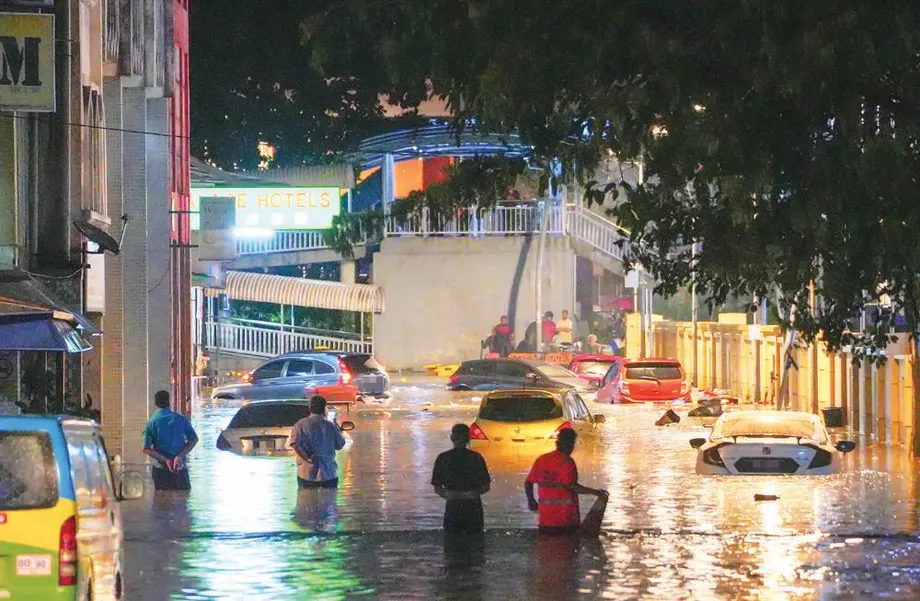
About 23 million active vehicles in Malaysia lack specific insurance against flood damage, leaving their owners exposed to repair bills that can reach tens of thousands of ringgit. Chua Kim Soon, chief executive officer of the General Insurance Association of Malaysia (PIAM), put coverage at just 13%, or approximately 3.4 million of the country's 26.6 million active vehicles.
Contents
- Only 13% of active vehicles have flood protection
- Why the coverage figures need context
- What Special Perils buys
- Flood losses fell, while infrastructure damage rose
- Urban areas and East Malaysia face different costs
- Electric vehicle claims are still developing
- What to do when a vehicle is flooded
- Homes need a separate policy check
- How the warning has developed
- Key Points
The central problem is a misunderstanding about comprehensive motor insurance. Many owners believe it pays for damage from any cause. Floods, storms and landslides generally require an optional extension called Special Perils, which must appear in the policy.
Ministry of Transport records put Malaysia's registered vehicle population at 40.77 million, with 26.6 million active vehicles, including nearly 16 million cars and 9.57 million motorcycles. The active fleet is the basis for Chua's estimate of the protection gap.
For a vehicle insured for RM100,000, Chua estimated the additional annual premium at RM200 to RM500, equivalent to roughly RM17 to RM42 a month. Owners without the extension may have to draw on savings to repair or replace a flooded vehicle.
The warning also reaches beyond motorists. Department of Statistics Malaysia (DOSM) figures put national flood losses at RM636.9 million in 2025. Although that was below the RM933.4 million recorded in 2024, damage to public assets and infrastructure increased, showing how the financial burden can shift between households, businesses and public services.
Why the coverage figures need context
PIAM has also put flood coverage at 14% among motor policyholders, alongside Chua's 13% estimate for the active vehicle fleet. Its physical risk guidance, attributed to the Climate Change Action Committee 2022/2024, gives a lower figure of 4% of Malaysians having flood cover for their vehicles.
Those figures use different descriptions of the population being measured: active vehicles, policyholders and Malaysians. PIAM has not supplied a common measurement period or calculation that reconciles all three. The practical message for an individual owner is straightforward: check the actual policy schedule rather than rely on the name of the insurance package.
Chua has separately put coverage at 13% for vehicles with internal combustion engines, compared with almost 50% for electric vehicles. That comparison suggests purchasing patterns vary substantially between vehicle groups, even while protection across the much larger national fleet remains limited.
Flood insurance will remain optional for vehicles and properties, according to Chua. PIAM is encouraging owners to understand their choices and the cost of extending protection, rather than proposing compulsory cover for everyone.
What Special Perils buys
Special Perils extends a comprehensive motor policy to cover specified natural events, usually including floods, storms and landslides. The exact events covered depend on the insurer and the policy wording.
PIAM's monsoon preparedness guidance, published on November 14, 2025, tells motorists to look in the Additional Coverage section of their policy schedule. An agent or insurer can confirm whether the extension is present and explain its terms.
Owners can also ask about adding protection before their next renewal. At a monsoon readiness briefing, Chua said consumers who lacked the necessary extensions should contact their insurers about changing their existing policies.
"They should be able to add these midway as well," he said.
The RM200 to RM500 annual estimate for a vehicle insured for RM100,000 represents 0.2% to 0.5% of its insured value. Against a repair bill of RM34,000, the reported average for flood claims involving vehicles with internal combustion engines, even the upper estimate is a much smaller expense. The price an owner actually pays depends on the insurer and the protection selected.
Modern cars can also suffer extensive damage without being completely submerged. PIAM warns that water reaching advanced electronics can make a vehicle a total loss, meaning the damage is severe enough for the insurer to settle it as a loss rather than fund repairs.
Flood losses fell, while infrastructure damage rose
DOSM figures show national flood losses rising from RM755.4 million in 2023 to RM933.4 million in 2024, an increase of RM178 million, or about 24%. Housing losses reached RM372.2 million in 2024, accounting for roughly 40% of that year's total.
Losses then fell to RM636.9 million in 2025, a decline of RM296.5 million, or nearly 32%. Public assets and infrastructure moved in the opposite direction: losses increased from RM303.4 million in 2024 to RM380.2 million in 2025, a rise of about 25%.
Public assets and infrastructure consequently represented almost 60% of recorded flood losses in 2025, compared with about 33% in 2024. The figures show why a lower national total can still leave a substantial recovery bill for public facilities and services.
Insurance claims capture another part of the damage. PIAM's November 2025 guidance cited Insurance Services Malaysia Berhad data recording 89 vehicle flood claims incurred in 2024, worth more than RM3 million. National flood loss figures cover a broader range of damage, while insured claims depend on the protection owners purchased.
Urban areas and East Malaysia face different costs
PIAM figures cited with Chua's latest warning put motor insurance losses in Selangor at RM1.6 million in 2025, followed by Kuala Lumpur at RM967,700 and Johor at RM844,100. For property under fire insurance, Sarawak recorded RM38 million, Johor RM32.3 million and Selangor RM21.9 million.
Kuala Lumpur and Selangor feature prominently in the motor figures, bringing the issue directly to motorists in densely developed areas. Chua has also warned that flash floods increasingly occur outside the usual monsoon period, alongside more than 100 landslide incidents annually and thousands of fallen tree cases during thunderstorms.
PIAM's 2025 industry results, released on May 21, 2026, show another regional pattern. Private car claim frequency in East Malaysia was 1.7%, compared with 5.1% nationally, while average motor claim costs in the region were around RM12,000.
The same release reported flood protection take-up under fire insurance at 21%. PIAM has separately put protection among fire and property policyholders at 33%. These measurements cover different policy groupings, making the type of insurance being discussed essential to understanding the percentage.
Electric vehicle claims are still developing
Almost half of electric vehicles had flood insurance, Chua said, compared with 13% of vehicles with internal combustion engines. Reported average flood claims were also lower for electric vehicles, at RM8,400 against RM34,000 for vehicles with combustion engines.
Chua pointed to several possible reasons, including protected electrical systems and mechanisms that automatically isolate high voltage components. He also said electric vehicles are often secondary vehicles and more commonly used in urban areas, where owners may be more inclined to purchase flood protection.
Electric vehicle claims experience is still at an early stage, with the number and range of vehicles insured continuing to develop, Chua said. For an owner comparing policies, the useful questions concern the protection on their particular vehicle, the events covered and the insurer's recovery arrangements.
What to do when a vehicle is flooded
Drivers should avoid entering floodwater and should not restart a vehicle after it has been submerged. Water entering the engine can cause further mechanical damage. PIAM also warns that driving through floodwater may affect a claim involving hydrolock, which happens when water inside an engine prevents its moving parts from operating normally.
Personal safety comes before collecting evidence. Once it is safe, owners should photograph or film the vehicle's position and the floodwater level before it is moved. Those records help the insurer assess where the vehicle was and how much of it was submerged.
PIAM recommends contacting the insurer's emergency hotline or using an approved roadside assistance service to arrange towing to an authorised panel workshop. Its May 2026 release advises comprehensive policyholders to call the insurer's assistance line, available 24 hours a day, and confirm reimbursement eligibility before arranging their own tow.
Digital Roadside Assistance can provide help in real time, approved towing and digital submission of claims where available. PIAM said insurers activated warnings and accelerated claims assistance during regional floods, including the Hat Yai floods in December 2025, to assist stranded policyholders and recover trapped vehicles.
Owners should notify their insurer promptly and supply the requested documents, photographs and details of the loss. PIAM's guidance says a police report should be submitted within 24 hours if the policy requires one. An insurer may appoint a loss adjuster, a specialist who assesses damage and helps determine the claim amount.
Homes need a separate policy check
Only 3.87 million of Malaysia's 9.1 million households held home insurance in 2023–24, according to open DOSM and Insurance Services Malaysia data cited by PIAM. That works out to about 43%, leaving approximately 5.23 million households without a home insurance policy.
PIAM's physical risk guidance also says 74% of Malaysian homes lack flood insurance and 33% of insured homeowners lack contents insurance. A household may therefore have some building protection while its furniture, appliances and other belongings remain exposed.
Basic fire insurance generally covers fire, lightning and domestic gas explosions, with flood protection requiring an extension. Houseowner insurance covers the building, while Householder insurance covers its contents; PIAM says standard versions of these policies include flood protection. Landslide and landslip protection require a separate extension under standard Houseowner and Householder policies.
PIAM gives an example of a flood extension costing as little as RM14 a month for a building insured for RM200,000, depending on location and value. Owners should also check the cost of rebuilding, rather than simply use a property's sale price, when deciding how much cover to purchase.
Businesses face a related problem: repairing premises does not replace income lost while operations are shut. PIAM recommends checking commercial property protection for floods, storms and landslides, and considering business interruption insurance to cover eligible lost income and fixed expenses during recovery.
For eligible Sumbangan Tunai Rahmah recipients, the RM30 Perlindungan Tenang Voucher 3.0 supports purchases of participating microinsurance products, including personal accident insurance. PIAM said 67,946 policies had been issued through the initiative, with RM2.04 million in vouchers redeemed by April 14, 2026. Buyers need to check the particular benefits of the product they select.
How the warning has developed
Malaysia's flood insurance gap has persisted through several damaging periods. The record combines major vehicle losses, changing national damage totals and repeated advice to check policy extensions.
- December 2021: An estimated 50,000 cars were damaged or lost in floods across at least eight states. Federation of Malaysian Consumers Associations president Marimuthu Nadason said up to 95% of vehicle owners would receive no compensation for flood repairs.
- March 7, 2022: Flash floods struck Kuala Lumpur, renewing attention on vehicle protection beyond areas associated with seasonal flooding.
- 2024: National flood losses reached RM933.4 million, including RM372.2 million in housing damage.
- 2025: National losses fell to RM636.9 million, while public asset and infrastructure losses rose to RM380.2 million.
- May 21, 2026: PIAM's industry results reported flood protection take-up under fire insurance at 21%.
- November 2026: Chua's latest warning put specific flood cover at approximately 3.4 million of Malaysia's 26.6 million active vehicles.
Vehicle and property owners can act before their next renewal by asking their insurer to confirm existing cover, quote for any extension and explain the claim and towing procedures. Chua said PIAM and Bank Negara Malaysia were also discussing ways to improve awareness of flood protection among small and medium enterprises.
Key Points
- About 87% of Malaysia's active vehicles lack specific flood protection, according to Chua's estimate.
- Comprehensive motor insurance generally needs a Special Perils extension to cover flood damage.
- For a vehicle insured for RM100,000, Chua estimated an additional annual cost of RM200 to RM500.
- Malaysia recorded RM636.9 million in flood losses in 2025, including RM380.2 million involving public assets and infrastructure.
- Owners should avoid restarting submerged vehicles, document damage when safe and contact their insurer before arranging towing.
- Homeowners should check building and contents protection separately, including any required extensions.