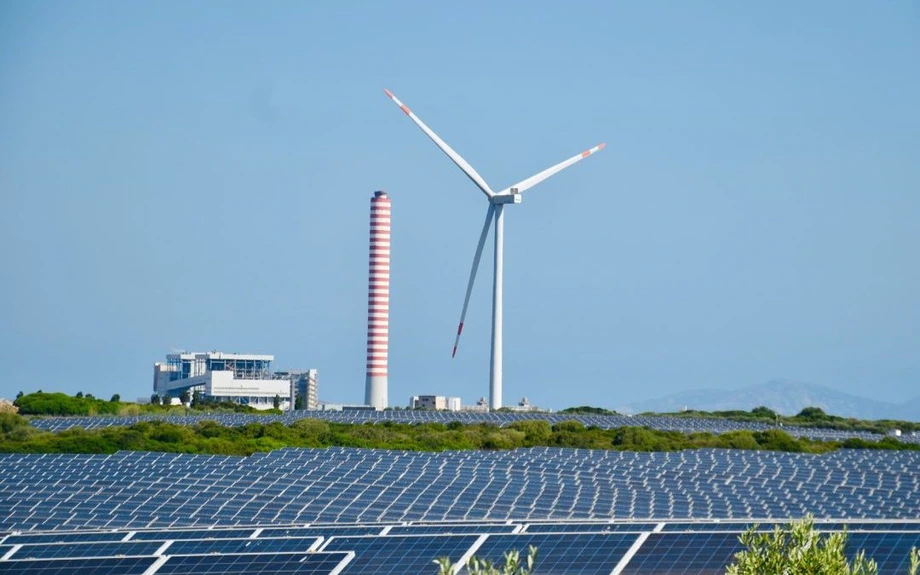
Wind and solar move toward supplying every extra unit of demand
China expects additional clean electricity generation to cover all growth in its electricity demand by 2030, according to the China Energy Transition Outlook 2026, released by the Chinese Academy of Macroeconomic Research on November 13. Wind and solar are expected to provide the main supply for that additional consumption.
Contents
- Wind and solar move toward supplying every extra unit of demand
- How much more electricity will China need?
- Why installed capacity and actual generation tell different stories
- Coal's share falls while new plants enter service
- A fuel supply shock gives the forecast another purpose
- Coastal provinces gain a buffer against imported fuel costs
- Replacing a coal shortfall would require still more clean power
- Investment and manufacturing give China the means to expand
- The milestones leading to 2030
- Key Points
The forecast follows a substantial shift in electricity production. During the first nine months of 2026, renewable sources generated 3.13 trillion kilowatt hours of electricity, up about 8% from a year earlier and equal to 41.8% of total generation. Coal supplied 49.7% of electricity during the first half of the year, taking its share below 50% for the first time.
By 2030, the change would mean that growing electricity use could be met without a corresponding increase in generation from fossil fuels. Existing coal and gas plants would still supply part of the country's electricity. The forecast concerns the extra electricity China needs as consumption rises, rather than replacing its entire existing supply.
A November 5 clean energy analysis from the Centre for Research on Energy and Clean Air, or CREA, puts a number on the task: roughly 2,600 terawatt hours of additional annual clean generation by 2030 compared with 2025. Its calculation uses an International Energy Agency demand projection and would bring electricity from sources other than fossil fuels to approximately 54% of generation.
How much more electricity will China need?
CREA's calculation starts with estimated electricity demand of 9,639 terawatt hours in 2025 and an IEA projection of 12,250 terawatt hours in 2030. The difference is 2,611 terawatt hours, an increase of about 27% over five years.
A terawatt hour is one billion kilowatt hours. Expressed in the same units as the latest Chinese generation figures, the projected increase is about 2.6 trillion kilowatt hours a year. China would need that much additional annual clean production by 2030 to keep generation from fossil fuels at its 2025 level.
The academy's outlook and CREA's calculation point toward the same broad outcome: clean electricity meeting rising consumption. CREA supplies an explicit demand baseline and a condition, holding electricity from fossil fuels steady, that help readers understand the scale of the forecast.
CREA estimates that this would raise the share of electricity from nonfossil sources from 42% in 2025 to approximately 54% in 2030. That is 12 percentage points higher and four points above the 50% target it attributes to China's 15th Five-Year energy plan.
Why installed capacity and actual generation tell different stories
China added 180 gigawatts of renewable generating capacity in the first nine months of 2026. Renewables accounted for 71.7% of all new capacity, while wind and solar together supplied close to seven tenths of additions.
By the end of September, renewable capacity had reached 2,518 gigawatts, up 14.6% from a year earlier and equivalent to about 60.94% of the country's total. Solar had become the largest category of electricity source measured by installed capacity.
Capacity describes how much power equipment can produce at a given moment under suitable conditions. Generation measures the electricity it actually produces over time. A solar panel generates electricity when sunlight is available, so its capacity figure alone cannot tell a household or factory how much electricity it will receive throughout a day.
That helps explain why renewables represented about 61% of installed capacity but 41.8% of generation during the first nine months. The generation figure, rather than the number of panels or turbines installed, is the measure that matters for covering additional consumption.
Renewable electricity production during those nine months exceeded the combined electricity use of the services sector and urban and rural households. The clean electricity category used in CREA's calculations is broader than renewables: it includes nuclear generation alongside hydro, wind and solar.
Coal's share falls while new plants enter service
Coal's first half generation share of 49.7% shows how far China's electricity mix has shifted. The academy's outlook describes coal moving from its traditional role as the principal supplier toward providing backup and adjusting output as the electricity system needs it.
China is still expanding its coal fleet. The country added 78 gigawatts of coal capacity in 2025, its highest annual total in a decade. More equipment can coexist with less generation if plants operate for fewer hours.
CREA's November analysis cites China Electricity Council figures showing that large coal power plants generated 1.6% less electricity and used 0.4% less coal in the first nine months of 2026. During March through August, coal generation was broadly flat while hydro, nuclear, wind and solar output rose by 139 terawatt hours.
China had already experienced a year in which additional clean generation covered rising consumption. In 2025, solar, wind and nuclear together supplied about 530 terawatt hours of extra electricity against demand growth of 520 terawatt hours, figures detailed in February coverage of the country's extended emissions plateau.
The challenge through 2030 is to sustain that balance across several years of growth. Meeting additional demand with clean power would hold fossil generation steady; reducing existing fossil generation would require more clean electricity or lower demand.
A fuel supply shock gives the forecast another purpose
CREA's analysis examines clean electricity as protection against fuel supply disruptions as well as a way to reduce emissions. Its study of the disruption to oil flows through the Strait of Hormuz compares March through August 2026 with the same months of 2025.
China cushioned the reduction in crude imports partly through temporary adjustments. Reduced stockpiling accounted for about 47% of the fall in net crude imports, while refinery throughput declined by 9.6%. Lower exports of petrol, diesel and jet fuel offset roughly 29% of the decline in domestic production of those fuels.
Electric vehicles supplied a more lasting source of fuel savings. CREA estimates that China's electric vehicle fleet displaced 38 million tonnes of oil equivalent during those six months, 52% more than a year earlier. That saving equaled around 13% of crude imports during the same period in 2025.
Electricity supplies also adjusted. Gas generation fell by around 7 terawatt hours, or 4%, while the 139 terawatt hour increase from hydro, nuclear, wind and solar more than covered that reduction. Clean generation gave the power system another source of supply while imported fuels faced disruption.
Coastal provinces gain a buffer against imported fuel costs
China's coastal manufacturing and population centers receive much of the seaborne coal and gas imported for electricity production. CREA identifies the Yangtze River Delta, Guangdong, Fujian, Hebei and Shandong among these areas.
About 34% of China's clean power growth between 2020 and 2025 occurred within those provinces themselves. Including electricity transmitted from the northwest raises their share of the increase to 38%.
The additional clean electricity reaching these fuel importing provinces totaled 730 terawatt hours. CREA calculates that this was equivalent to 1.5 times the electricity China's liquefied natural gas imports could have produced if all that gas had been used for power generation.
CREA also estimates that growth in nonfossil generation since 2020 avoided $9.1 billion in fossil fuel import costs during March through August 2026, the largest saving among the countries it assessed. For coastal factories and cities, domestic clean generation and transmission from inland regions provide alternatives to fuel arriving by sea.
Replacing a coal shortfall would require still more clean power
CREA sets out a second scenario in which clean electricity does more than meet new demand. It also replaces electricity associated with a contraction in coal supply.
Domestic coal output fell by about 98 million tonnes during March through August 2026 compared with a year earlier. Net imports increased by 9 million tonnes, leaving combined supply roughly 89 million tonnes lower. CREA links domestic production losses partly to mine closures and tighter safety inspections following a mining disaster in Shanxi in May.
If that average daily shortfall continued for a full year and the power sector absorbed all of it, CREA estimates that around 420 terawatt hours of clean electricity would be needed annually to replace the associated coal generation.
Under those assumptions, the required increase in annual clean generation by 2030 would rise to approximately 3,030 terawatt hours compared with 2025. Nonfossil sources would then provide about 58% of electricity, rather than 54% in the scenario that simply covers demand growth. Both figures are conditional calculations; actual requirements will depend on electricity consumption and fuel availability.
Investment and manufacturing give China the means to expand
China's total energy investment is projected to reach $940 billion in 2026, the largest national total worldwide. That figure covers the energy sector, including more than renewable electricity alone.
The country supplies about 70% of global wind equipment and 80% of solar photovoltaic module equipment. The outlook coverage credits this manufacturing scale with helping drive global wind and solar generation costs down by more than 60% and 80%, respectively, although it gives no comparison period for those cost reductions.
Clean energy is already a major part of China's economy. Solar panels, electric vehicles and batteries accounted for more than 90% of investment growth in 2025, while clean energy industries generated 15.4 trillion yuan in business, as detailed in February coverage of the country's clean energy investment boom.
Policy still leaves room for emissions to grow outside electricity. The 2026 to 2030 plan sets a 17% reduction in carbon intensity, meaning emissions per unit of economic output. Total emissions can rise even as that ratio falls if economic output grows fast enough.
Transport and chemicals therefore remain part of the energy picture. CREA estimates that 40 million additional electric vehicles beyond its baseline could save approximately 45 million tonnes of oil annually. It also identifies plastics recycling and cleaner chemical feedstocks as ways to reduce oil demand as transport becomes more electric.
The milestones leading to 2030
China's latest forecast brings together developments across generation, fuel supply and national planning. The main milestones are:
- 2025: Estimated electricity demand reached 9,639 terawatt hours, the baseline for CREA's 2030 calculation.
- First half of 2026: Coal's share of electricity generation fell to 49.7%.
- January through September 2026: Renewables generated 3.13 trillion kilowatt hours and supplied 41.8% of generation.
- November 5, 2026: CREA published its calculations for clean electricity growth and energy security.
- November 13, 2026: The Chinese Academy of Macroeconomic Research released China Energy Transition Outlook 2026.
- 2030: The academy expects additional clean generation to cover all additional electricity demand.
The next test is the amount of electricity new projects deliver each year. China's expanding wind and solar fleets must produce enough additional power to keep pace with consumption, while the wider electricity system supplies homes and businesses when demand is highest.
Key Points
- China expects new clean electricity generation to cover all growth in electricity demand by 2030, mainly through wind and solar.
- Renewables generated 3.13 trillion kilowatt hours in the first nine months of 2026, accounting for 41.8% of generation.
- CREA estimates that approximately 2,600 terawatt hours of additional annual clean electricity would meet projected demand growth from 2025 to 2030.
- That scenario would raise the nonfossil generation share to about 54% while holding fossil generation at its 2025 level.
- Replacing a sustained coal supply shortfall as well would raise the estimated requirement to 3,030 terawatt hours and the nonfossil share to 58%.
- Coal remains part of the electricity supply even as clean sources increasingly meet additional consumption.