Board review puts Nvidia's leadership and security under scrutiny
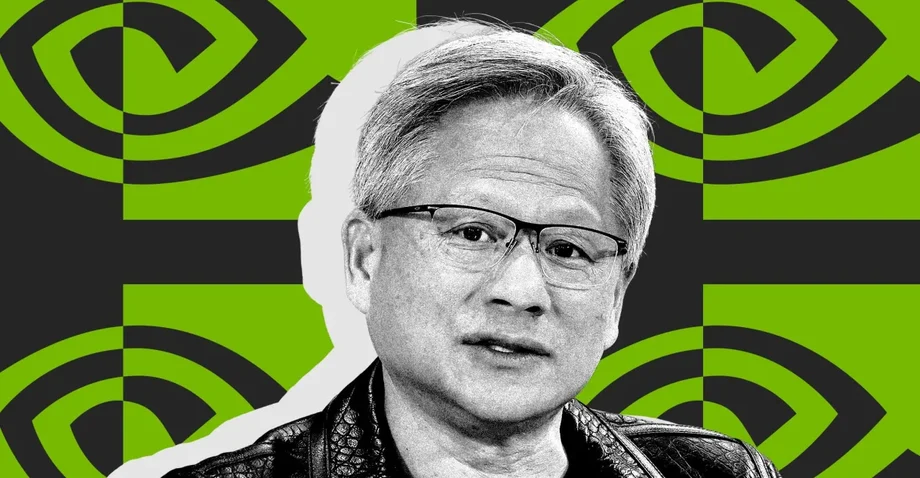
Nvidia's board has opened an independent investigation into allegations that founder and chief executive Jensen Huang was targeted by Chinese intelligence through Alice Huang, a businesswoman associated with Singapore computing company Megaspeed. Huang acknowledged an affair in a message to employees, while the company said he would continue leading Nvidia without interruption.
Contents
- Board review puts Nvidia's leadership and security under scrutiny
- What Huang told employees
- What US intelligence reportedly found
- Why Megaspeed's purchases matter
- How computing access can cross borders
- Congress seeks answers on November 18
- Huang's Washington access adds another concern
- Chip restrictions are changing alongside the inquiry
- The sequence and the next decisions
- Key Points
The investigation brings together a personal relationship, suspected attempts to obtain sensitive information and scrutiny of purchases involving billions of dollars in Nvidia technology. Three Republican House committee chairmen have requested a private briefing with Huang on November 18, one day after the company's scheduled third quarter earnings report.
Nvidia's board said independent directors, supported by outside independent lawyers, would oversee the inquiry. It expressed confidence in Huang and his leadership team and said he supported the review and had committed to cooperating.
The board described its current assessment in its statement announcing the investigation:
While the Board has no reason to believe that either national security or NVIDIA secrets were compromised, the Board's inquiry will examine all available information.
US intelligence agencies reportedly assessed that Alice Huang was recruited by China's Ministry of State Security, the country's principal civilian intelligence agency. The underlying intelligence has not been publicly released. China has denied targeting Huang, and Nvidia has rejected suggestions that confidential information was shared with customers.
Alice Huang and Jensen Huang are not related. She is also known as Huang Le and has held a senior role at Megaspeed, a customer whose acquisition and use of advanced processors were already attracting US government scrutiny.
What Huang told employees
Huang's message to Nvidia employees acknowledged that his relationship with Alice Huang had been intimate. Earlier company responses had described his contacts with her as consistent with the meetings he holds with customer executives.
Huang, Nvidia's founder and chief executive, apologized directly to his wife and children in the employee message:
I was unfaithful to my wife. My actions hurt her and our children. There is no excuse for what I did.
He also addressed colleagues, directors, business partners and shareholders, saying he had fallen short of his responsibilities and would work to regain their confidence. Nvidia said the announcement would not interrupt his work as chief executive.
The board's statement focused on the alleged foreign intelligence effort rather than describing the affair. Its decision places oversight with directors independent of management and lawyers outside the company, giving them responsibility for examining information about the chief executive himself.
What US intelligence reportedly found
US intelligence agencies reportedly conducted at least a year of electronic surveillance of Alice Huang before the allegations became public on October 29, 2026. Officials were said to have concluded that she passed information to Beijing and had been recruited by the Ministry of State Security to gather intelligence about Jensen Huang.
An intelligence memorandum describing the alleged operation was reportedly prepared in the spring and circulated among senior Trump administration policymakers. Secretary of State Marco Rubio was reported to have overseen its preparation. Accounts also describe the memo being shared with a small group of senior officials before President Donald Trump's May visit to Beijing.
Trump had reportedly been briefed about the intelligence approximately a year before the October disclosure and chose not to act at that point. US officials initially believed Jensen Huang did not know Alice Huang was allegedly gathering intelligence for China. He reportedly had not received a government defensive briefing, a warning intended to help someone recognize and respond to suspected foreign intelligence targeting.
The White House and CIA declined to comment on the intelligence account. Chinese Embassy spokesperson Liu Chang rejected the allegations as baseless and a smear against China.
Why Megaspeed's purchases matter
Megaspeed sits at the intersection of the intelligence allegations and a separate Commerce Department investigation into whether advanced Nvidia chips were diverted to China. US officials suspect that some processors acquired through the company's business network may have been smuggled into the country.
The scale of the purchases had already drawn attention during the October intelligence allegations. A Malaysian company linked to Megaspeed bought at least $4.8 billion in equipment built around Nvidia technology in less than two years. Megaspeed was also described as preparing to buy $2 billion in Nvidia AI technology over the following year. Those figures cover different purchasing descriptions and periods, so they should not be added together.
Alice Huang was publicly photographed near Jensen Huang at a gathering in Taipei in June 2024. Megaspeed began buying chips a few weeks later. The two were seen together again after a business dinner with AI suppliers in Taipei in May 2025.
Nvidia said it had previously investigated allegations involving Megaspeed and found no wrongdoing. Megaspeed has said it hired outside lawyers to investigate and would cooperate with the US government. Alice Huang's present role at the company is uncertain; she has been described both as an executive and as a former executive.
How computing access can cross borders
Megaspeed reportedly built data centers in Southeast Asia and rented computing capacity to Alibaba. A data center houses large numbers of processors that customers can use remotely, allowing a business to run AI software without buying or physically possessing the machines.
That business model helps explain why investigators are examining more than shipping records. A chip can stay in one country while a customer elsewhere pays to use its computing power through an internet connection. Investigators examining possible evasion therefore need to consider where the equipment operates, who uses it and what restrictions govern that access.
US officials are examining whether Megaspeed helped Chinese companies obtain access to technology restricted by American export rules, through physical diversion or computing services. The reported rentals to Alibaba form part of that scrutiny.
Nvidia has said its cloud partners did not ask it to seek changes to US law or advocate sales to China. The company also said it does not share confidential information with customers. Its earlier finding concerning Megaspeed's chip transactions preceded the newly announced board inquiry into the alleged targeting of Huang.
Congress seeks answers on November 18
House Foreign Affairs Committee Chairman Brian Mast, Select Committee on China Chairman John Moolenaar and House Intelligence Committee Chairman Rick Crawford signed the request for Huang to attend a joint briefing. The lawmakers want to discuss his dealings with Alice Huang and Nvidia's protections against foreign espionage.
The three Republican chairmen described the purpose of their request in their letter to Huang:
Recent reports raise significant national security concerns regarding the [People's Republic of China's] access to sensitive U.S. technology and information.
The requested November 18 session would be private. Nvidia had not confirmed whether Huang would attend. Its proximity to the scheduled November 17 earnings report means the company's financial performance and its handling of the security allegations are likely to face scrutiny during the same week.
Democratic lawmakers are also seeking answers. Senator Chris Coons said Congress would investigate. Representative Seth Magaziner, who serves on the House Homeland Security Committee, called for Huang and Commerce Secretary Howard Lutnick to testify.
Republican Senator John Cornyn separately criticized reported administration approval for New Matrix, a Chinese company, to assemble Nvidia chips in Beijing. Questions about that company's operations have added to congressional concern over how the Commerce Department checks businesses handling sensitive technology.
Huang's Washington access adds another concern
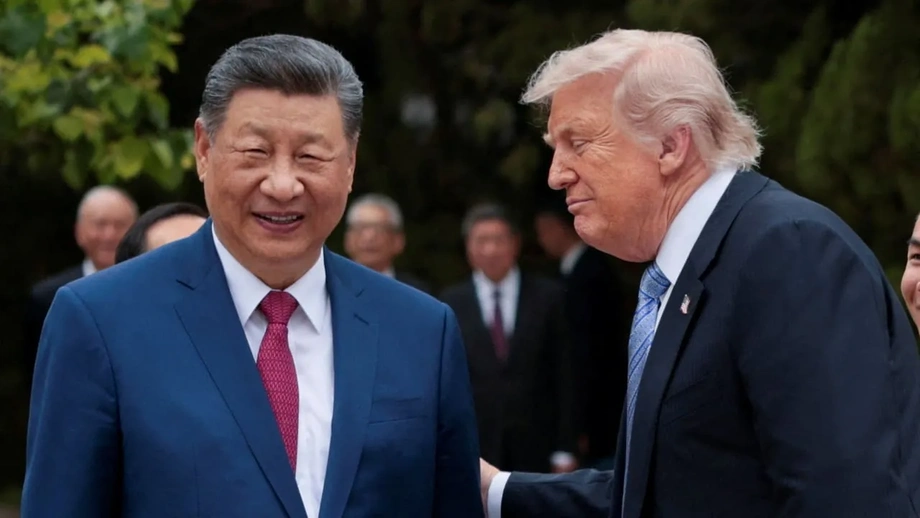
Huang has lobbied the Trump administration to loosen restrictions on Nvidia chip sales to China. He also joined Trump's business delegation to meet Chinese President Xi Jinping and reportedly obtained a seat on Air Force One after being added to the trip at short notice.
Those contacts expand the inquiry beyond Nvidia's chip designs and commercial plans. Lawmakers are also examining what the administration knew about the alleged intelligence targeting while Huang was participating in discussions about American technology policy.
Nvidia spokesperson John Rizzo previously said Huang's interactions with Alice Huang were consistent with meetings he had with other customers. The company has also stressed that its chief executive talks with thousands of customer executives each year and has a security team that accompanies him where needed.
Peter Mattis, a former CIA counterintelligence analyst, described the importance Chinese intelligence places on technology. He said Beijing views AI supremacy as:
the key fight for dominance in the economic world.
Alice Huang reportedly maintained contacts with other chip industry executives, including leaders of Gigabyte, which assembles Nvidia computing systems. Her reported business connections also extended to companies and investors in Shanghai and Zhejiang. Those relationships place the allegations within a wider network of companies building and financing AI infrastructure.
Chip restrictions are changing alongside the inquiry
Nvidia's processors are sought after because they perform the enormous number of calculations needed to train and run advanced AI systems. Training involves processing large amounts of data so a model can learn patterns. Access to more computing power can help companies develop larger or more capable systems.
Both the Biden and Trump administrations restricted advanced chip exports to China. Trump later permitted some sales to approved Chinese customers, including Nvidia's H200, while keeping tighter limits on newer technology and requiring licenses for individual shipments.
Congress is now considering a proposed chip sales limit that would keep China at least two Nvidia product generations behind America's most advanced AI processors for 18 months. The AI OVERWATCH Act is being negotiated through defense legislation. A separate proposal, the Chip Security Act, concerns checks on where processors operate after export. Neither proposal has become law.
Nvidia's H200 belongs to the Hopper family, followed by Blackwell and then Rubin. A generation describes a family of chip designs, rather than a fixed number of years. Under the proposed approach, older processors could remain eligible for approved sales while newer families stayed restricted.
Chinese import decisions create another constraint. About 600,000 H200 chips were reportedly waiting in Hong Kong, while some major Chinese internet companies had received roughly 10,000 each. The stockpile was therefore about 60 times one such allocation, illustrating how permission for limited purchases can coexist with a much larger supply waiting nearby.
The sequence and the next decisions
The controversy has developed across several years, moving from business contacts and large purchases to intelligence allegations, congressional demands and an independent company inquiry.
- June 2024: Alice Huang was photographed near Jensen Huang at a Taipei gathering. Megaspeed began purchasing chips weeks later.
- May 2025: The two were seen together again after a business dinner in Taipei.
- Spring 2026: An intelligence memo about the alleged targeting was reportedly prepared and circulated among senior administration officials.
- October 29, 2026: The intelligence allegations became public.
- November 6: Further details about the alleged recruitment and romantic relationship were reported.
- Sunday after those disclosures: Nvidia announced its independent investigation, and Huang acknowledged the affair to employees.
- November 17: Nvidia is scheduled to report third quarter earnings.
- November 18: House committee chairmen have requested a private briefing with Huang.
Nvidia has not announced a completion date for the board inquiry or the actions it might take afterward. The board has promised further updates as appropriate while Huang continues to run the company.
The immediate decisions concern his response to Congress, the company's handling of the investigation and the Commerce Department's examination of Megaspeed's transactions. For Nvidia's customers, those processes sit alongside continuing uncertainty about which chips can be sold, who may handle them and where they may be used.
Key Points
- Nvidia's independent directors and outside lawyers will investigate allegations that Jensen Huang was targeted by Chinese intelligence.
- Huang admitted an affair with Alice Huang and will remain chief executive during the inquiry.
- The board said it had no reason to believe Nvidia secrets or national security had been compromised.
- China denies the alleged spying effort, and the underlying US intelligence remains classified.
- Megaspeed faces separate scrutiny over suspected diversion of Nvidia chips to China; Nvidia says its earlier investigation found no wrongdoing.
- Three House committee chairmen requested a private briefing with Huang on November 18, after Nvidia's scheduled earnings report.