Two rockets, three astronauts and a deadline before 2030
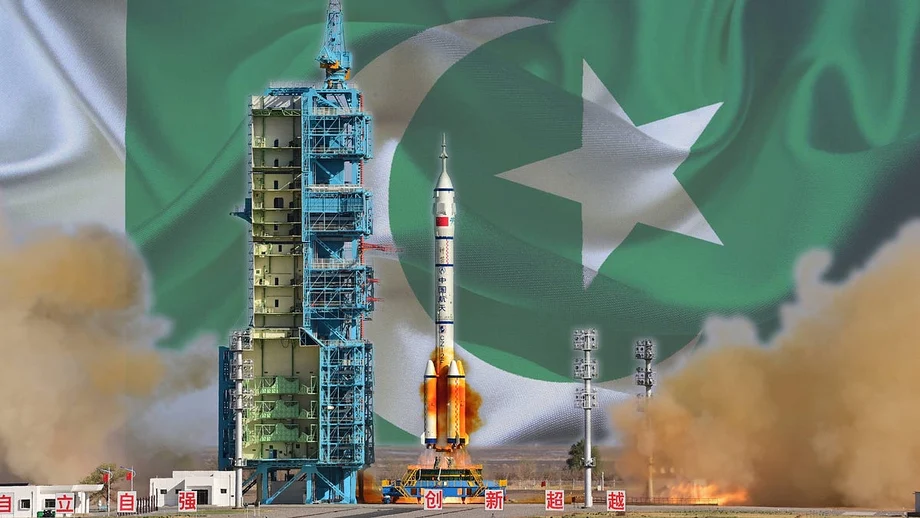
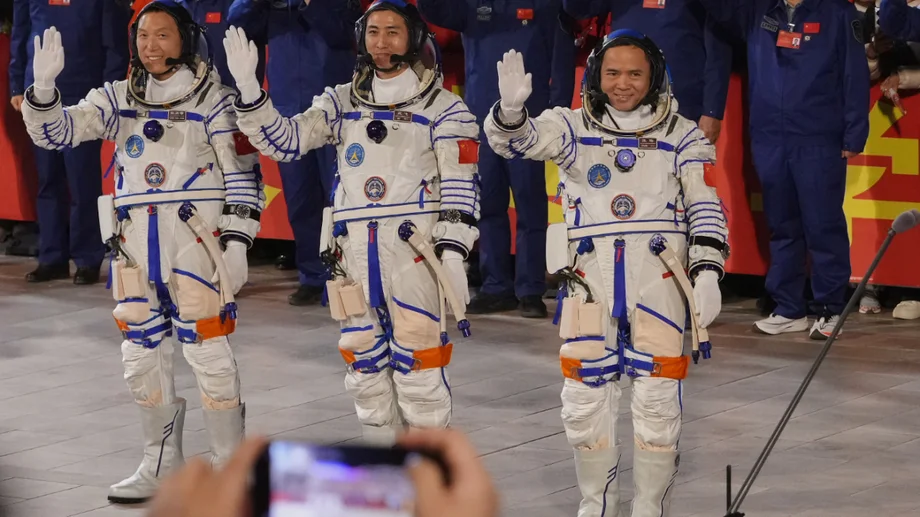
China plans to send three astronauts toward the Moon on two Long March 10 rockets, land two of them on the surface and complete its first crewed lunar landing before 2030. A newly detailed testing sequence points to an uncrewed spacecraft flight in early 2027, a lunar lander demonstration in 2028 and a combined mission rehearsal in 2029.
Contents
- Two rockets, three astronauts and a deadline before 2030
- How the spacecraft will meet near the Moon
- The tests leading to a crewed landing
- Ground tests show what China has already built
- What a first Chinese surface mission would do
- NASA's earlier target depends on its landers
- Why launch counts matter
- From a short visit to longer stays
- Prestige, resources and the cost of keeping pace
- Key Points
Wang Xiang, deputy chief designer of China's crewed space program and chief designer of its lunar exploration program, described the approach at the Seventh Manned Space Symposium in Beijing, held October 31 and November 1, 2026. One rocket would launch the Mengzhou crew spacecraft; the other would send the Lanyue lander. The vehicles would meet in lunar orbit before two astronauts descended.
NASA is targeting its own landing for early 2028, giving the United States an earlier planned arrival. China, however, is pursuing a landing system that avoids the repeated launches and fuel transfers required by the American Starship design. Both programs still face major tests before astronauts can safely reach the surface.
The Chinese deadline has an established government basis. A March 4, 2025, lunar program update published by the China National Space Administration described work toward a first Chinese landing before 2030. It identified the rocket, spacecraft, lander, spacesuit and rover as being in an early prototype development phase.
The latest presentations make the route toward that goal easier to follow. They also reveal the central challenge: China must turn several new vehicles into a reliable transport system, while NASA must complete the landers that connect its established crew transport hardware to the lunar surface.
How the spacecraft will meet near the Moon
Mengzhou and Lanyue would leave Earth separately, entering trajectories that carry them toward the Moon. After reaching lunar orbit, they would approach each other and dock, joining their cabins so astronauts could transfer between them.
Mengzhou would carry three astronauts from Earth. Two would move into Lanyue for the landing, while the third would remain aboard the crew spacecraft in orbit. After the surface expedition, the landing crew would launch back toward Mengzhou and reconnect for the journey home.
A rendezvous is a carefully controlled meeting between spacecraft moving through space. Docking is the physical connection that follows. Around the Moon, both operations must work far from the launch site, with little room for a rescue mission if a critical system fails.
Wang said the arrangement fits China's existing technical capabilities and infrastructure. Developing the crew spacecraft and lander separately would also support standardized production and a family of vehicles for later missions.
The approach divides the load between two rockets rather than requiring one rocket to lift the entire expedition. In return, China must coordinate two launches and make the spacecraft work together after separate journeys to the Moon.
The tests leading to a crewed landing
The reported roadmap increases the difficulty in stages. Engineers would first test Mengzhou near Earth, then send Lanyue to the Moon, and finally rehearse the combined mission without astronauts.
- Early 2027: A Long March 10A would launch an uncrewed Mengzhou into low Earth orbit for testing.
- 2028: A larger Long March 10 would send Lanyue to the Moon to demonstrate descent, landing and ascent.
- 2029: Two Long March 10 launches would send uncrewed Mengzhou and Lanyue vehicles to rehearse docking and lunar surface operations.
- Before 2030: Two launches would support the first crewed landing, with three astronauts traveling to lunar orbit and two descending.
The intermediate years are reported targets rather than a finalized government launch calendar. Symposium coverage also gives a more specific ambition of no later than October 2029, while the public program goal remains before 2030. Officials have not specified the total number of test flights or exact launch dates.
Mengzhou is also expected to make at least two flights to China's Tiangong space station. Descriptions of the initial 2027 mission vary: some place it at Tiangong, while the detailed roadmap describes an uncrewed test in low Earth orbit.
The announced sequence goes from an uncrewed lunar rehearsal to a crewed landing, without a separate crewed lunar flyby or orbit mission like Apollo 8 or Artemis II. Flights near Earth would give Mengzhou additional operational experience before its first lunar crew departed.
Ground tests show what China has already built
China has completed several substantial tests before attempting these flights. Wang listed Mengzhou escape tests from ground level and under maximum aerodynamic pressure, a Lanyue landing and takeoff test, and a low altitude demonstration involving the Long March 10.
An escape system must pull a crew capsule away from a failing rocket. Testing it at ground level checks an emergency near the launch pad. Testing under maximum dynamic pressure checks escape during a demanding part of ascent, when the vehicle's speed and the surrounding air produce the greatest aerodynamic load.
A Lanyue mockup weighing about 26 tonnes underwent a landing and takeoff demonstration in August 2025. Large tethers simulated the Moon's weaker gravity as the vehicle used its engines and control thrusters above a surface designed to resemble lunar terrain.
The Mengzhou spacecraft intended for the 2027 test has also arrived at Wenchang Space Launch Site in Hainan. The government's March 2025 update described construction and development of lunar launch facilities there, alongside plans for tracking, communications and landing support systems.
The work extends beyond rockets. Astronauts will need the Wangyu lunar spacesuit and the Tansuo rover, while controllers on Earth will need dependable communications and tracking throughout every phase of the expedition.
What a first Chinese surface mission would do
The first landing is expected to last three days, with two astronauts conducting a moonwalk each day. The crew would use a Tansuo rover to travel, collect samples and conduct experiments, extending the area they could explore beyond walking distance.
Lanyue has a reported total mass of about 26,000 kilograms, with its landing module accounting for 9,000 to 10,000 kilograms. Its engines draw on technology developed through China's Chang'e robotic lunar missions.
Mengzhou will have different propulsion arrangements for different destinations. The lunar version is described as having four engines and full size propellant tanks. The version serving Tiangong would have two engines and tanks suited to operations near Earth. Both would use a service module with the same basic external form.
The service module supplies functions such as propulsion and electrical power, while the crew module houses the astronauts. Changing the service module's equipment allows a spacecraft family to serve destinations with different fuel and operating requirements.
The 2028 Lanyue test would also gather scientific information, including measurements of surface temperature and lunar dust. China has invited outside researchers to propose experiments for that flight, using capacity available because no astronauts would be aboard.
Chang'e missions provide experience the crewed program can build upon. Chang'e-5 returned lunar samples in 2020, and Chang'e-6 brought back the first samples from the Moon's far side in June 2024. Wang said robotic and crewed exploration share technologies, infrastructure and personnel.
NASA's earlier target depends on its landers
NASA's current sequence places Artemis III in low Earth orbit in summer 2027, followed by a planned Artemis IV landing near the lunar south pole in early 2028. Artemis III would test rendezvous and docking between Orion and one or both commercial landers, SpaceX's Starship and Blue Origin's Blue Moon.
Orion and the Space Launch System have already flown around the Moon, including the crewed Artemis II mission in April 2026. China's new lunar transport vehicles still have their first flights ahead of them. NASA's remaining challenge centers heavily on completing and demonstrating the vehicles that will carry astronauts down to the surface.
Starship reached Earth orbit for the first time on September 28, 2026, but has yet to demonstrate refueling in space. Blue Moon has not flown, with its first uncrewed lunar surface test targeted for spring 2027. Blue Origin also faces pressure on its launcher schedule, with a New Glenn flight reported delayed to January 2027.
Earlier expectations have already shifted. A November 2025 RAND commentary described Artemis III as a planned lunar landing in 2027 and put Mengzhou's first uncrewed flight in 2026. The newer roadmaps move Mengzhou's initial test to 2027 and assign NASA's landing to Artemis IV in 2028.
Why launch counts matter
China's first landing expedition requires two Long March 10 launches, including one for the lander. Starship's lunar mission requires additional launches to deliver propellant in Earth orbit before the lander can head toward the Moon.
Elon Musk has put Starship's requirement at six to eight refueling flights, while other estimates reach 22. Those figures count refueling flights, rather than every launch in the expedition. Each fuel delivery would require successful orbital operations as well as a successful launch.
Blue Moon's described arrangement uses four New Glenn launches, one for the lander and three for transfer stages. NASA would separately launch its astronauts aboard Orion. The different launch counts reflect different spacecraft designs and mission arrangements.
Starship and Blue Moon are intended to support larger deliveries and sustained lunar activity. China's initial Lanyue is designed around getting two astronauts to the surface for a short visit. A smaller first expedition reduces some immediate transport demands, while later construction would require additional cargo missions or larger vehicles.
For both countries, the practical schedule depends on completing whole sequences: launches, orbital maneuvers, docking, landing, ascent and crew return. A failed demonstration can require repairs and another test, consuming the time between planned milestones.
From a short visit to longer stays
China is considering several versions of Lanyue for later exploration, including cargo vehicles, reusable landers, vehicles capable of operating through lunar night and landers carrying laboratory rovers or surface modules.
A heavier concept associated with the future Long March 9 rocket could deliver a vehicle with a mass of about 15,000 kilograms at touchdown. Long March 9 is a separate, larger rocket project; the initial crewed landing relies on Long March 10.
Laboratory rover concepts would replace the crew cabin with an enclosed mobile research vehicle. Astronauts would arrive separately and use the rover during their stay. Multiple vehicles operating in the same region could provide additional living and research space.
Concepts for the China led International Lunar Research Station include habitation, science, engineering, control and power modules. Russia has been assigned a proposed nuclear power module. These remain proposals for a later phase of exploration.
Wang argued for building knowledge and capability through a prolonged survey phase before moving into resource use. The development path described at the symposium starts with short visits and moves toward stays of roughly 14 Earth days, followed by systems able to cope with longer operations and lunar night.
Prestige, resources and the cost of keeping pace
China and the United States both want a lasting presence near the lunar south pole, where water ice could support future expeditions. Water can supply drinking water and oxygen, and its components could eventually be used to make rocket propellant if extraction becomes practical.
The first landing would carry considerable political prestige. Sustained operations would also give a country experience choosing sites, organizing research and developing working practices around shared areas.
Mike Gold, a former NASA associate administrator, described the stakes at a US Senate hearing quoted in the RAND commentary:
The countries that get there first will write the rules of the road for what we can do on the Moon.
Funding provides another comparison. RAND put China's government space spending in 2024 at $19 billion, about $60 billion below the United States. Those figures imply US spending of roughly $79 billion, a little more than four times China's total. Both figures cover government space programs broadly, with lunar exploration competing alongside other activities.
NASA Administrator Jared Isaacman has expressed confidence in the support for the American effort:
We have the mandate, we have the resources, and the support from our stakeholders to be able to execute, and that's what we intend to do.
The next milestones are tangible: Mengzhou's planned flight near Earth in early 2027, Blue Moon's planned demonstration in spring 2027 and Artemis III's docking mission that summer. Their results will determine how much confidence either country can place in its landing date.
Key Points
- China plans two Long March 10 launches to support a crewed lunar landing before 2030.
- Three astronauts would travel aboard Mengzhou; two would descend in Lanyue for an expected stay of three days.
- Reported test targets are early 2027, 2028 and 2029, with exact launch dates and the total test count still unspecified.
- NASA targets an Artemis III docking demonstration in summer 2027 and an Artemis IV lunar landing in early 2028.
- China must demonstrate its new lunar vehicles in flight, while NASA's landers still face major development and testing milestones.
- Both countries are planning beyond an initial landing toward longer stays, scientific work and lunar infrastructure.