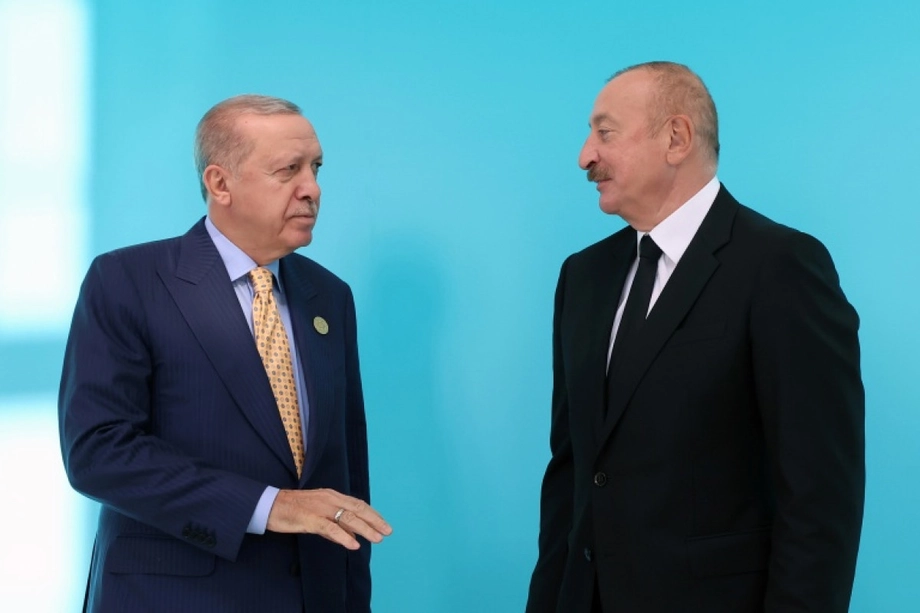
A show of solidarity in Shusha
Turkish President Recep Tayyip Erdogan and Azerbaijani President Ilham Aliyev pledged enduring unity during a November 8 visit centred on Shusha, the city whose capture in 2020 became a symbol of their military partnership. Their appearance together followed an unusually public dispute over school headscarves, criticism from Turkish politicians and Azerbaijan's decision to bar 31 Turkish nationals.
Contents
- A show of solidarity in Shusha
- How school clothing became a diplomatic dispute
- From entry bans to a missed summit
- What the presidents said about their alliance
- Why Shusha and November 8 mattered
- Baku wants a partnership of equals
- Israel and Armenia complicate the relationship
- Energy and reconstruction keep the allies connected
- A banquet and meetings with decorated servicemen
- Key Points
At a joint press conference, Erdogan presented the alliance as a bond that would survive the disagreement. Aliyev said their partnership remained unshaken and described the visit as a demonstration of solidarity to the wider world.
Erdogan, Turkey's president, expressed that message in religious and personal terms:
With the permission of Almighty God, our unity will endure forever.
The visit combined talks in Shusha with an official welcome, a banquet in Khankendi and meetings with decorated Azerbaijani servicemen. Those events placed the leaders alongside the people and places associated with Azerbaijan's victory over Armenian forces.
How school clothing became a diplomatic dispute
The immediate dispute began in September, when Azerbaijan revised school uniform regulations to prohibit additions considered incompatible with secular education. The changes effectively barred Islamic headscarves from classrooms and prompted protests inside Azerbaijan.
The rules, approved on September 21, prohibit clothing in state schools that contradicts "the principle of secularism in education". They do not explicitly mention the hijab. Similar guidelines were extended to teachers on October 6.
Azerbaijan is a mainly Shiite Muslim country whose public institutions reflect decades of Soviet rule and a strong tradition of secular government. In this setting, secular education means schooling organised separately from religious practice. The uniform restrictions brought that approach into conflict with families seeking to express their faith through clothing.
Erdogan's government has moved in the opposite direction in Turkey, dismantling restrictions on wearing the hijab. Criticism of Azerbaijan's rules came from figures in his Justice and Development Party, known as the AKP, including presidential adviser Oktay Saral, who demanded their reversal.
Aliyev's ruling Yeni Azerbaijan party described those comments as "interference in Azerbaijan's internal affairs". A disagreement about school clothing had become an argument about who could speak for Azerbaijan and how much influence its closest ally should exercise.
From entry bans to a missed summit
Baku declared 31 Turkish nationals persona non grata over critical social media posts. The designation means they were considered unwelcome in Azerbaijan. Those affected included an opposition lawmaker and party leaders, extending the dispute beyond Erdogan's own political circle.
Erdogan subsequently dismissed Saral. Aliyev nevertheless stayed away from an October 30 summit of Turkic leaders in Ankara despite receiving a personal invitation from the Turkish president. Foreign Minister Jeyhun Bayramov attended in his place.
The sequence shows how quickly a domestic education rule reached the highest levels of diplomacy:
- September: Azerbaijan revised school uniform rules, effectively barring Islamic headscarves in classrooms.
- After criticism from Turkey: Baku declared 31 Turkish nationals unwelcome, while Erdogan subsequently dismissed adviser Oktay Saral.
- October 30: Aliyev did not attend the Ankara summit and sent Foreign Minister Jeyhun Bayramov instead.
- November 8: Erdogan visited Azerbaijan, held talks with Aliyev in Shusha and attended commemorative events before departing.
The November visit restored direct contact between the presidents in a highly visible setting. The public statements did not specify whether Azerbaijan would change the school rules or lift the restrictions on the Turkish nationals.
What the presidents said about their alliance
Erdogan and Aliyev used the language of lasting brotherhood to answer the recent friction. Their familiar description of the relationship, "one nation, two states", refers to close linguistic and cultural ties alongside their existence as separate sovereign countries.
Erdogan used that motto at the joint press conference to describe a partnership rooted in a shared past:
This unity of hearts, which we describe with the motto 'One Nation, Two States,' is an everlasting torch that draws strength from our shared past and illuminates our future.
Aliyev, Azerbaijan's president, stressed the practical strength of acting together and said Erdogan's presence demonstrated their unity:
Together, Azerbaijan and Turkiye are even stronger.
Aliyev also expressed confidence that the partnership would last forever. The leaders' repeated assurances addressed the immediate diplomatic strain while keeping military cooperation, regional peace and reconstruction at the centre of the visit.
Why Shusha and November 8 mattered
November 8 marks Azerbaijan's capture of Shusha during the 2020 war with Armenia, a victory achieved with Turkish backing. Choosing the city for the welcome ceremony and presidential talks connected the renewed display of friendship to a moment when Turkish support carried major military and political weight.
A guard of honour stood in a square decorated with the flags of both countries. The national anthems were played, the guard marched past the presidents, and members of each delegation were introduced to the other leader before official photographs.
Azerbaijan regained parts of Karabakh and surrounding districts during the 44 days of fighting in 2020. It seized the remainder of Karabakh in 2023. The territory had been controlled by Armenian separatist forces.
Erdogan described the importance of the 2020 fighting during the joint press statement with Aliyev:
Azerbaijan's historic Victory in the 44-day Patriotic War opened a new page in the history of the South Caucasus.
The Turkish president also said Ankara supported both Azerbaijan's struggle and Baku's efforts to secure lasting peace. His remarks linked the wartime partnership to the diplomatic arrangements now being pursued in the region.
Baku wants a partnership of equals
Azerbaijan's response to the headscarf criticism points to a wider sensitivity about independence within the alliance. Baku values Turkish backing while resisting public pressure from Turkish political figures over decisions made inside Azerbaijan.
Elkhan Shahinoglu, head of the Atlas Research Centre in Baku, identified that concern as central to the dispute:
Azerbaijan-Turkey tensions stemmed from the fact that Baku does not see itself as the younger brother in this alliance and insists on relations between equal partners.
Gonul Tol, an analyst at the Middle East Institute in Washington, described the headscarf argument as part of a longer list of disagreements. Writing on X, she set out the issues she believed were driving the tension:
Tensions have long simmered over a number of issues including Azerbaijan's sovereignty, Ankara's influence in Baku, diverging policies toward Israel, and Turkey's rapprochement with Armenia.
The two assessments help explain why dismissing one Turkish adviser did not immediately end the quarrel. The disagreement involved both a specific school policy and the terms on which the governments expect to deal with each other.
Israel and Armenia complicate the relationship
Azerbaijan maintains close military and economic ties with Israel, which supplied weapons used during its 2020 war with Armenia. For Baku, that relationship forms part of the network of partnerships supporting its security and economy.
Turkey has become increasingly hostile towards Israel over the war in Gaza. Erdogan has accused Israel of genocide. Azerbaijan's continuing cooperation with Israel therefore sits alongside a sharp difference in the two allies' regional policies.
Armenia presents another diplomatic challenge. Turkey closed its border with Armenia in the 1990s in solidarity with Azerbaijan. Ankara is now seeking to normalise relations with Yerevan, while linking progress to peace efforts between Armenia and Azerbaijan.
Normalisation means rebuilding ordinary relations between countries, including diplomatic contact and arrangements affecting their border. Turkey's approach connects its own relationship with Armenia to negotiations involving Baku, making coordination with Aliyev especially important.
The presidents' public unity leaves room for different priorities on both fronts. Azerbaijan continues to pursue its relationship with Israel, while Turkey seeks a regional settlement involving Armenia and maintains its confrontation with Israel over Gaza.
Energy and reconstruction keep the allies connected
Turkey and Azerbaijan remain closely tied through military cooperation and energy exports. Turkey serves as a key route for Azerbaijani oil and gas travelling to Western markets, giving the relationship a practical importance beyond the language of brotherhood.
For Azerbaijan, those routes connect its energy production to customers abroad. For Turkey, carrying Azerbaijani supplies strengthens its role between producers in the region and markets farther west. The dispute unfolded within a partnership that both governments continue to use for major economic and security goals.
Erdogan also said Turkey would continue contributing, within its means, to the restoration of Azerbaijani lands. He described reconstruction and the restoration of Karabakh's heritage as work being closely followed in Turkey.
He said Turkey would share its experience in reconstruction and cited the Azerbaijan-Turkey International Forestry Training Center and Smart Seedlings Enterprise in Jabrayil. He also said construction had begun on a 40-classroom school covering 14,500 square metres in Aghdam.
Reconstruction adds another area of continuing cooperation to the military and energy relationship. In Shusha, the presidents paired assurances about their alliance with discussion of the places Azerbaijan regained through war.
A banquet and meetings with decorated servicemen
Khankendi hosted an official banquet on November 8 in honour of Erdogan and his wife, Emine Erdogan, on behalf of Aliyev and First Lady Mehriban Aliyeva. A concert formed part of the reception.
Afterwards, the presidents and first ladies met representatives of the arts community, heroes of the war and servicemen awarded the Garabagh and Zafar orders. Aliyev's daughter Leyla Aliyeva also attended the meeting with decorated servicemen.
The programme brought the diplomatic visit together with Azerbaijan's Victory Day commemorations. The meetings placed the Turkish president beside Azerbaijani military personnel honoured for their service, recalling the wartime cooperation that both leaders had highlighted in their statements.
Erdogan concluded the visit on November 8. A guard of honour lined up at Fuzuli International Airport, where Aliyev and Mehriban Aliyeva saw the Turkish president and his wife off. The personal farewell completed a day devoted to making the continuing alliance visible after weeks of public friction.
Key Points
- Erdogan and Aliyev pledged lasting unity during a November 8 visit that included talks in Shusha.
- The dispute began with Azerbaijani school uniform rules that effectively barred Islamic headscarves in classrooms.
- Baku declared 31 Turkish nationals unwelcome, and Aliyev missed an October 30 summit in Ankara.
- The visit included a banquet in Khankendi and meetings with decorated Azerbaijani servicemen.
- Differences over sovereignty, Israel and relations with Armenia sit alongside continuing military and energy cooperation.
- Erdogan pledged continued Turkish contributions to reconstruction in Azerbaijani territory.