A transport deal advances before a peace treaty
Armenia's Parliament approved a framework agreement with the United States on October 28, 2026, giving political backing to a transport project through southern Armenia that would connect mainland Azerbaijan with its Nakhchivan exclave. The agreement passed by 63 votes to 32, with no abstentions and support coming only from the ruling Civil Contract faction.
Contents
- A transport deal advances before a peace treaty
- What would run through southern Armenia?
- How the agreement reached Parliament
- Who owns the company, and who controls the territory?
- How border checks would work
- What Armenia expects to gain
- Must peace come before the route opens?
- Opposition seeks stronger guarantees
- Costs, competition and the work still ahead
- Key Points
The Trump Route for International Peace and Prosperity, known as TRIPP, would place development under a company initially owned 74% by the United States and 26% by Armenia. The framework provides for an initial period of 49 years, while reserving border control, customs, law enforcement and other sovereign powers to Armenian authorities.
The sharpest dispute concerns what Armenia receives in return, and when. Azerbaijan would gain a connection to territory separated from its mainland. Armenia's government promises access to markets and transport routes through Azerbaijan, but the technical arrangements for that access still require negotiations.
Foreign Minister Ararat Mirzoyan said the project could begin operating before Armenia and Azerbaijan sign their peace treaty. Opposition lawmakers want the two steps linked, warning that Azerbaijan could obtain its desired route while postponing a final settlement.
The vote therefore advances more than a railway or road. It commits Armenia to a lengthy partnership with Washington while leaving important commercial documents, reciprocal travel arrangements and the timing of peace unresolved.
What would run through southern Armenia?
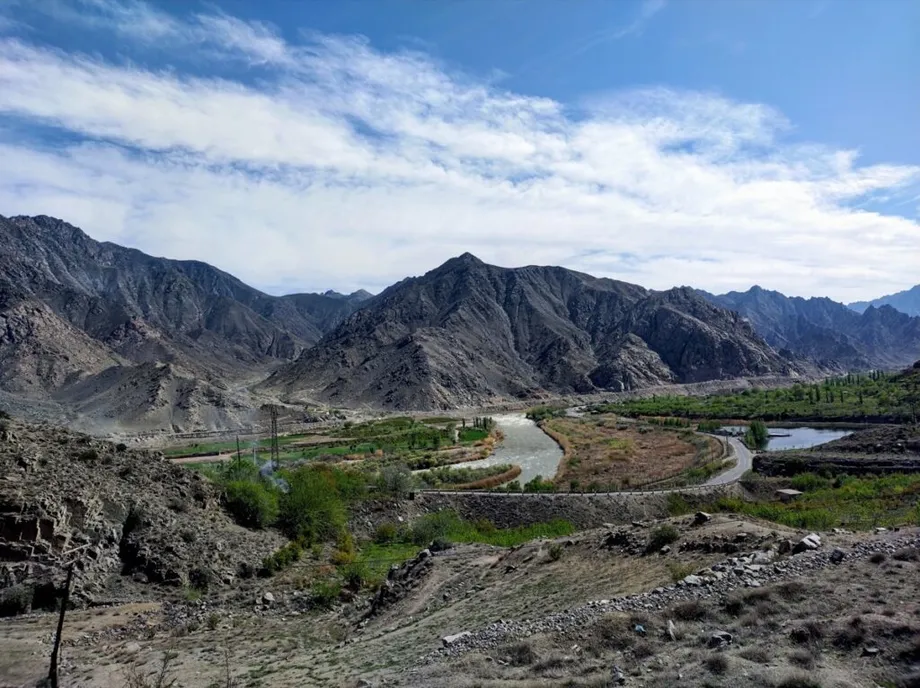
TRIPP would cross Armenia's southern Syunik province, using a railway stretch of about 43 kilometres to connect Azerbaijan with Nakhchivan. An exclave is a part of a country separated from its main territory. The project also envisages a motorway, energy infrastructure and digital communications links.
Azerbaijan has long sought a connection it calls the Zangezur corridor. Armenia has rejected that description because of concerns that it implies a route outside Armenian control. The framework instead places the infrastructure under Armenia's sovereignty and jurisdiction, with the United States participating as a business partner.
For Azerbaijan, the project offers the shortest connection between its mainland and Nakhchivan. For Armenia, the proposed benefit is broader access through Azerbaijan to other countries, alongside the reopening of regional transport connections.
The government's case depends on both directions of travel working. A functioning connection to Nakhchivan would meet a specific Azerbaijani objective; Armenia's gains would depend on the routes, border procedures and commercial terms that it secures for its own passengers and cargo.
How the agreement reached Parliament
The project emerged from the Washington summit in August 2025, where Armenia and Azerbaijan initialled a peace treaty without signing it. Initialling records agreement on a text, while signing is a further formal step. The bilateral framework between Armenia and the United States followed in 2026.
The main stages were:
- August 8, 2025: The Washington summit produced the political arrangement for TRIPP and the initialling of the Armenia–Azerbaijan peace treaty.
- May 26, 2026: The TRIPP framework was initialled during US Secretary of State Marco Rubio's visit to Yerevan. The final version was signed remotely a few days later.
- October 27, 2026: Parliament debated ratification during a session limited to two hours.
- October 28, 2026: Lawmakers ratified the framework by 63 votes to 32.
The parliamentary Foreign Relations Committee had approved the agreement the previous week. During the October 27 debate, 27 lawmakers registered to question Mirzoyan, but only three were able to do so before time expired. Opposition deputies objected to the limited opportunity to examine a commitment lasting decades.
Who owns the company, and who controls the territory?
The TRIPP Development Company would oversee development and implementation. Armenia would grant it exclusive rights to use and develop land within the areas allocated to the project for 49 years.
The United States would initially hold nearly three times Armenia's ownership share, at 74% against 26%. If cooperation is extended for another 50 years after the initial term, Armenia's stake would rise to 49%, an increase of 23 percentage points. The two periods together could span 99 years.
Company ownership and state authority have different jobs under the framework. The company would manage the project's development and contracted services. Armenia would retain legislative, regulatory and judicial authority, together with control over national security, policing, border decisions, taxes and customs duties.
The company's charter and shareholder agreement still need to be finalized. Those documents set out how a company is governed and how its owners exercise their rights. Opposition lawmakers have sought explanations of the ownership split, expected revenues and protections for Armenia over the agreement's long duration.
How border checks would work
The framework proposes a front office and back office arrangement. Private operators contracted by the development company would handle the public facing work, including collecting documents and fees and processing payments from people entering Armenia from Azerbaijan.
Armenian authorities would retain responsibility for decisions. In practical terms, the private operator would receive information and handle administrative tasks, while state institutions would exercise the legal powers governing entry, customs and security.
The arrangement appears intended to address Azerbaijani President Ilham Aliyev's demand that Azerbaijani nationals should not have to "see the face" of Armenian border guards. It would separate direct contact with travellers from the decisions made by Armenian officials.
Opposition lawmaker Lilit Galstyan, chair of Parliament's Committee on Human Rights and Public Affairs, questioned how that separation would work in practice. She called for clearer geographical boundaries, a more precise division between private operators and state institutions, and stronger provisions for revising terms or resolving disputes.
What Armenia expects to gain
Mirzoyan presented TRIPP as part of Armenia's peace strategy as well as an economic project. He said it could support railway connections through the North–South route, trade with Azerbaijan and access to markets in other countries through Azerbaijani territory.
A more direct route for cargo between Armenia and China was one example he gave. He also said American partners would bear the main investment burden.
The foreign minister argued that countries with a financial interest in uninterrupted transport would have a practical reason to keep relations stable. During the parliamentary debate, he described mutual economic interest as a guarantee for peace:
Do you want guarantees? The real guarantee is interest. We [i.e. Armenia] should be interested, and Azerbaijan should be interested,
The government's reasoning is that a disruption would become costly for several participants rather than just one. Armenia, Azerbaijan and other countries using the route would each have something to lose from interruptions to freight and trade.
Armenia Alliance lawmaker Artur Khachatryan challenged whether the agreement secures equivalent obligations from Azerbaijan. He sought clarity on which Azerbaijani routes Armenia could use, whether Armenian domestic transport could use TRIPP infrastructure, and what access Armenia would have to energy and communications links. Those details matter because they determine which businesses and travellers could actually benefit.
Must peace come before the route opens?
Strong Armenia leader Narek Karapetyan argued that launching TRIPP before signing the peace treaty could weaken Armenia's negotiating position. Once Azerbaijan obtains its connection to Nakhchivan, he warned, it could postpone the treaty or introduce further conditions, including demands for constitutional changes.
Mirzoyan took the opposite position: cooperation could itself help bring the treaty closer. He maintained that Azerbaijan's use of Armenian territory would create an interest in opening wider transport connections.
Deputy Speaker Ruben Rubinyan also defended proceeding independently of the treaty. He described the route and continuing border delimitation and demarcation as practical elements of peace. Delimitation means agreeing where a border lies; demarcation means marking it on the ground.
Rubinyan rejected the argument that Armenia should hold back the project to obtain a treaty signature:
If you argue that we should not implement this project in order to secure the signing of a peace treaty, you are saying that TRIPP is a bad initiative for Armenia. But TRIPP is by no means a bad initiative for Armenia.
The disagreement is about the order of commitments. The government wants transport cooperation to help build peace. Its opponents want a signed peace agreement to provide a firmer basis for transport cooperation.
Opposition seeks stronger guarantees
Both the Armenia Alliance and Strong Armenia factions voted against ratification. Armenia Alliance parliamentary leader Anna Grigoryan argued that the bilateral agreement with Washington expressed Azerbaijan's interests more directly than Armenia's.
Grigoryan said the United States would gain a presence in a strategically important area near Iran, while Azerbaijan would secure the connection to Nakhchivan sought by both Baku and Turkey. She questioned whether Armenia's promised reopening of transport links had been matched by concrete arrangements.
Strong Armenia faction secretary Tigran Abrahamyan said implementation needed more than one guarantor. Asked whether his faction would have supported the project with Russia as guarantor, he instead stressed the need to consider TRIPP and the peace agreement together.
Abrahamyan explained the circumstances under which his faction's position could have changed:
We believe that the peace agreement [with Azerbaijan] and the TRIPP project should have been discussed together in parliament. If the peace agreement had been signed and submitted to parliament together with TRIPP, our faction would have voted differently,
Fellow Strong Armenia lawmaker Arega Hovsepyan also called for several guarantors to support the signing of the peace agreement. She described a signed treaty as the best guarantee for TRIPP, placing legal and diplomatic commitments ahead of the government's reliance on shared economic interests.
Costs, competition and the work still ahead
Opposition figures have also questioned the project's commercial case. Republican Party deputy chairman Armen Ashotyan cited estimates of more than $2.4 billion for railway, highway, energy and pipeline infrastructure. That figure was presented by a political opponent of the project, rather than as an approved government budget.
Ashotyan identified four other projects competing with TRIPP for traffic moving between east and west: Georgia's Anaklia deepwater port, the operating Baku–Tbilisi–Kars railway, the Aras route through Iran connecting Azerbaijan with Nakhchivan, and the Turkmenistan–Iran–Turkey railway. Their relevance is commercial: a new route needs customers willing to choose it over alternatives.
Opposition lawmakers said a comprehensive economic impact assessment had not been presented. Projected freight volumes, revenues and the financial return to Armenia were among the details they wanted before accepting lengthy commitments.
Professor Gafar Chahmaghly, a specialist in Armenian affairs, described ratification as an important stage for preparatory work. He said a company had already been established and financial resources allocated, while the company's charter and shareholder agreement still awaited final agreement. He also described oil and gas pipelines among the planned components and said coordination with Azerbaijan was necessary.
Chahmaghly considered implementation possible before a peace treaty, but warned that opening the route without a final agreement could create serious future problems. No opening date or treaty signing date was given. The next practical tasks include completing the company documents and negotiating Armenian transit through Azerbaijan, including border arrangements for Armenian citizens travelling through Nakhchivan.
Key Points
- Armenia ratified the US TRIPP framework on October 28, 2026, by 63 votes to 32, with no abstentions.
- The project would connect mainland Azerbaijan with Nakhchivan through southern Armenia, using about 43 kilometres of railway alongside other infrastructure.
- The United States would initially own 74% of the development company and Armenia 26%, while Armenia retains sovereign authority over its territory.
- The initial arrangement lasts 49 years. A possible extension of 50 years would raise Armenia's ownership share to 49%.
- The government says shared economic interests can strengthen peace. Opposition factions want stronger guarantees and a signed peace treaty alongside the project.
- Company governance documents, Armenian transit arrangements through Azerbaijan and the route's opening date remain unsettled.