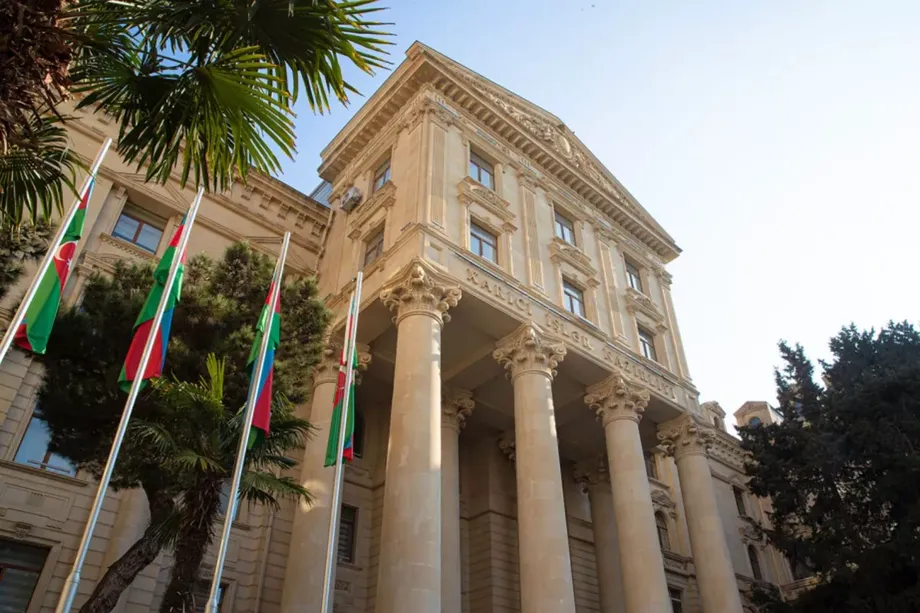
Entry bans reach politicians, journalists and religious figures
Azerbaijan has barred 31 Turkish citizens from entering the country, including New Welfare Party chairman Fatih Erbakan, DEM Party lawmaker Omer Faruk Gergerlioglu and former football referee Ahmet Cakar. The Foreign Ministry released the list on Wednesday, October 21, 2026, citing online statements it said threatened Azerbaijan's sovereignty, national security and constitutional order.
Contents
- Entry bans reach politicians, journalists and religious figures
- What the Foreign Ministry announced
- School headscarf rules form part of the dispute
- Who is on the list of 31?
- Seven others face arrest warrants
- How the two measures affect those named
- A dispute now involving border controls and courts
- Key Points
The ministry accused those listed of making calls on social media and other internet platforms targeting the country, its people and its leadership. It also cited calls for the forcible overthrow of the government, violence linked to religious radicalism, and the incitement of religious hatred and hostility.
The decision brings an entry restriction against a broad group of Turkish public figures into a dispute that has included criticism of Azerbaijan's school clothing rules and its treatment of students and teachers. Politicians, journalists, academics, religious scholars, media executives and television commentators appear on the list.
Azerbaijan's Foreign Ministry said the designations were made under Azerbaijani legislation. It did not identify the specific posts behind the decision or explain the allegations against each person. The announcement gave no expiry date for the bans or timetable for reviewing them.
A separate criminal investigation has also led to arrest warrants for seven other Turkish citizens living in Türkiye, according to Azerbaijan's Prosecutor General's Office. Those proceedings concern speeches and online posts linked to demonstrations outside Azerbaijani diplomatic missions. The entry ban list and the arrest warrant list contain different names and involve different legal measures.
What the Foreign Ministry announced
The Foreign Ministry placed the 31 citizens on Azerbaijan's list of undesirable persons. In practical terms, the announced consequence is that they are prohibited from entering Azerbaijani territory. The designation is also described as persona non grata, a phrase meaning an unwelcome person.
A report published on October 21, 2026, at 13:15 (UTC+04:00) reproduced the 31 names and their listed roles, attributing the information to the Foreign Ministry.
The ministry presented the decision as a response to threats to state security and public order. Its statement grouped together allegations involving attacks on sovereignty, calls to remove the government by force, religious radicalism and hostility. Those allegations are the authorities' stated grounds for the restrictions.
Azerbaijan's Foreign Ministry also said further action would follow calls targeting the country and activities promoting hostility. The ministry stated:
Appropriate measures will continue to be taken against calls directed at the Republic of Azerbaijan and activities that incite hostility.
The warning extends the announcement beyond the people already named. However, the ministry did not specify what additional measures it was considering. For the 31 people on the published list, the action announced was a prohibition on entry.
School headscarf rules form part of the dispute
The bans followed weeks of public debate in Türkiye about Azerbaijan's restrictions on headscarves in educational institutions and measures affecting students and teachers. Several of the people named had criticised Baku's policies, bringing a domestic education dispute before audiences outside Azerbaijan.
A regulatory change covering primary, middle and high schools prohibits additional clothing items that disrupt the uniformity of school uniforms and conflict with the principle of secularism in education. In this setting, secularism refers to keeping public education separate from religious requirements. Critics have raised concerns about what the rules mean for students wearing headscarves.
The disagreement has developed alongside tensions over the approaches of Ankara and Baku to relations with Israel. The Foreign Ministry's explanation for the entry bans focused on alleged threats and incitement in online statements, while the wider public debate has included both school clothing and foreign policy.
For readers following the dispute, the central issue is how Azerbaijan has responded to speech by people outside its borders. The government has used its control over entry into the country against 31 individuals, while prosecutors have pursued criminal allegations against another seven.
Who is on the list of 31?
Fatih Erbakan is among the most prominent political figures affected. He leads the New Welfare Party, known in Türkiye as Yeniden Refah Partisi. Gergerlioglu is a member of parliament from the pro-Kurdish DEM Party. The list also includes HUDA PAR officials and the chairman of the Homeland Party, also identified as the Toprak Party.
The media figures range from newspaper columnists and television hosts to media business owners and online commentators. Mehmet Boynukalin, a professor of theology and former imam of Hagia Sophia, is among the religious and academic figures named. The published list contains the following 31 people:
- Ahmet Baris Iyison, director of Iyison Media and the Gazeteciabi project.
- Cem Ozyurt, blogger.
- Akin Duru, TV8 and Acunmedya employee.
- Dursun Eker, journalist at File Produksiyon Hizmetleri.
- Adem Ozkose, journalist, political analyst and author.
- Muhammed Emin Yildirim, Istanbul representative of the Koklu Degisim magazine and media group.
- Cuneyt Sezer, sociologist, blogger, publicist and political analyst.
- Serhat Koyuncu, public figure.
- Mikail Ayyildiz, religious researcher and author.
- Ahi Aratoglu, researcher, author, poet and sociologist.
- Muharrem Cavus, former head of the AK Party's Bogazici Youth Branch from 2020 to 2025.
- Fatih Erbakan, chairman of the New Welfare Party.
- Yahya Ugras, deputy chairman of HUDA PAR, also identified as Yahya Ogras.
- Aydin Binboga, economist and politician.
- Hakki Eren, journalist at Koklu Degisim.
- Sait Seyitoglu, HUDA PAR official responsible for financial and administrative affairs in Batman.
- Mehmet Boynukalin, professor at Marmara University's Faculty of Theology and former Hagia Sophia imam.
- Okan Aytas, journalist and owner of Finansopia Media.
- Mert Armagan, journalist.
- Yasar Yavuz, journalist at Yeni Safak, Dirilis Postasi and Referans.
- Ahmet Sirri Arvas, poet, journalist and author.
- Yusuf Kaplan, journalist and author.
- Erdinc Tegmen, owner of Erte Media.
- Ahmet Cakar, sports commentator and former football referee.
- Halil Atakan Ay, theologian.
- Ismail Kilicarslan, columnist for TVNET and Yeni Safak.
- Murat Sahin, Akit TV program host.
- Irfan Kaya Ulger, Akit TV program host.
- Fatin Dagistanli, Akit TV program host.
- Omer Ulutas, chairman of the Homeland Party, or Toprak Party.
- Omer Faruk Gergerlioglu, member of parliament.
The range of occupations shows how widely the measure reaches across public debate in Türkiye. It covers elected politicians, people with party responsibilities and commentators whose audiences follow religion, current affairs or sport.
Seven others face arrest warrants
Azerbaijan's Prosecutor General's Office announced a separate development involving seven Turkish citizens living in Türkiye. The Binagadi District Court in Baku issued arrest warrants in absentia, meaning the court acted without the individuals being present.
Prosecutors said the investigation concerns speeches and social media posts allegedly made during demonstrations outside Azerbaijani diplomatic missions in Türkiye. The allegations include incitement to overthrow the constitutional order by force, promoting religious extremism and inciting religious hatred.
The seven people named in those proceedings are:
- Ridvan Kaya, chairman of Ozgur-Der.
- Zekeriya Ceran, also known as Abdullah Imamoglu.
- Fatih Tezcan, commentator.
- Ahmet Sanli, lawyer.
- Fahrettin Taskaya Saral, researcher.
- Abdurrahman Tumer.
- Alparslan Tanrikulu.
The Prosecutor General's Office also requested that the seven be placed on an international wanted list. The announced step was a request for an international listing; no completed listing or arrest abroad was announced.
How the two measures affect those named
The 31 entry bans and the seven arrest warrants have different immediate effects. An entry ban prevents a person from travelling into Azerbaijan. An arrest warrant is a court order seeking a person's detention in connection with a criminal case. The two groups therefore face different forms of action, despite similarities in the language used by the authorities.
For a politician, journalist or academic on the entry ban list, the restriction would prevent an in person visit to Azerbaijan while it remains in place. For the seven people sought by prosecutors, the proceedings involve potential detention and a criminal process. Any action outside Azerbaijan would depend on the authorities and legal procedures of the country concerned.
Azerbaijan's statements also describe different settings for the alleged conduct. The Foreign Ministry referred broadly to social networks and internet platforms. Prosecutors connected the seven suspects to demonstrations outside diplomatic missions, along with speeches and posts associated with those events.
At publication, neither the Turkish authorities nor the individuals on the entry ban list had issued an official response. No hearing date or deadline for a Turkish response was announced.
A dispute now involving border controls and courts
The October 21 announcement gives concrete consequences to a public argument that had spread through political commentary and social media. Azerbaijan has named 31 people who cannot enter its territory, while a separate court process seeks the detention of seven others.
The government's stated concern is violent incitement and threats to the constitutional order. The surrounding controversy includes criticism of education policies, religious dress rules and relations with Israel. Readers can follow the case most accurately by keeping the authorities' allegations, the underlying policy disagreements and the specific legal actions distinct.
The next developments would be any further measures announced by Azerbaijan, action on the request for an international wanted listing, or responses from Türkiye and the people named. For now, the published entry restrictions and the court warrants are the concrete actions announced.
Key Points
- Azerbaijan announced entry bans against 31 Turkish citizens on October 21, 2026.
- The list includes Fatih Erbakan, Omer Faruk Gergerlioglu, journalists, religious scholars and television commentators.
- The Foreign Ministry cited alleged threats, calls for violent overthrow and religious incitement, without identifying individual posts.
- The bans followed debate in Türkiye over Azerbaijan's school headscarf rules and treatment of students and teachers.
- A Baku court separately issued arrest warrants for seven other Turkish citizens over alleged conduct linked to demonstrations.
- Prosecutors requested an international wanted listing for those seven. No official Turkish response had been issued at publication.