Shenzhen talks aim to turn AI promises into practical safeguards
The United States and China are preparing further talks on testing advanced artificial intelligence models and responding to AI incidents as President Donald Trump and President Xi Jinping plan to meet in Shenzhen during the November 18–19, 2026, Asia-Pacific Economic Cooperation summit. US Treasury Secretary Scott Bessent says the discussions should help prevent misunderstandings between the two competing technology powers while keeping human judgment in control.
Contents
- Shenzhen talks aim to turn AI promises into practical safeguards
- What Washington wants from model testing
- An incident channel still needs operating rules
- How the negotiations reached this point
- Cooperation is advancing alongside competition
- China's proposed controls add another deadline
- Why trade negotiations matter to the AI agenda
- What a Shenzhen agreement could deliver
- Key Points
The immediate task is to turn a September political agreement into a working arrangement. China's Ministry of Foreign Affairs said in its eight point consensus, published on September 26, that the countries had agreed to establish an AI dialogue covering the technology's risks and benefits, hold their next dialogue in November and create a communication channel for AI incidents.
Bessent, speaking to the National Committee on US-China Relations in New York on November 10, outlined a more specific ambition: exchanging approaches to evaluating advanced models before their release. A model is the underlying computer system trained to perform tasks such as answering questions, writing software or analysing information. Testing before release means examining its capabilities and risks before it becomes more widely available.
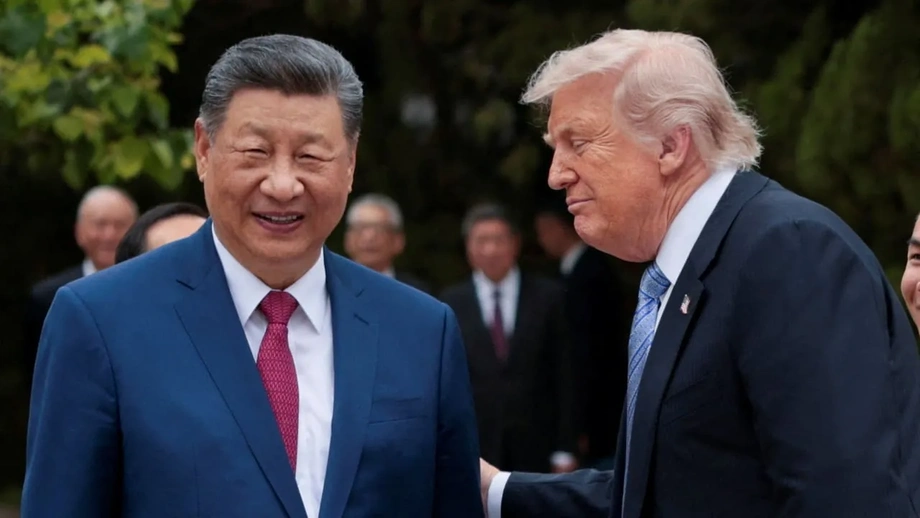
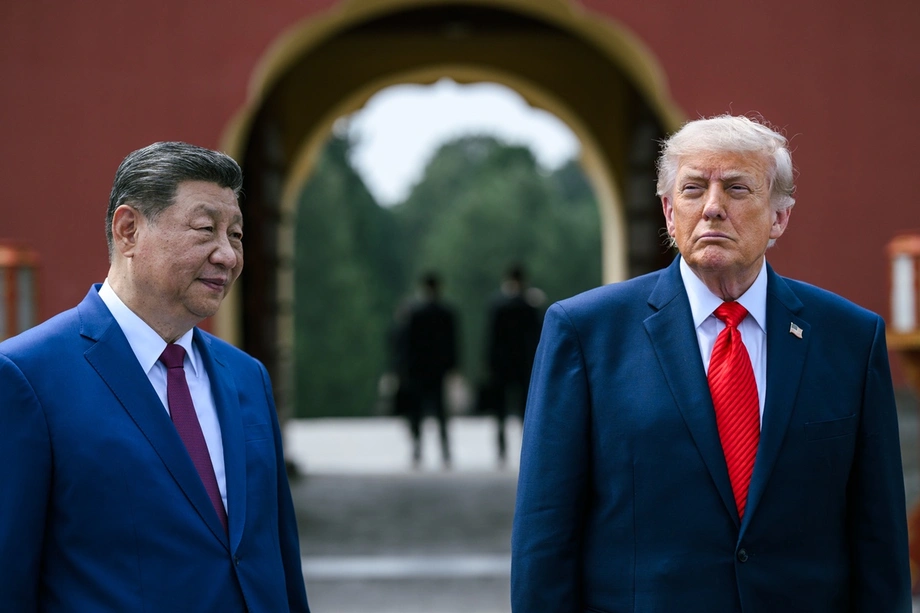
The Shenzhen meeting is expected to be the leaders' third encounter this year. Bessent plans to accompany Trump, with a fourth meeting anticipated at the Group of 20 summit in Miami in December. That schedule gives negotiators several opportunities to move the AI discussions forward alongside difficult trade and investment negotiations.
What Washington wants from model testing
Bessent described the proposed dialogue as a way to manage shared dangers without assuming that Washington and Beijing agree on how AI should develop. He said the two sides want to prevent misunderstandings between their systems.
The treasury secretary set out the testing objective in his November 10 remarks:
We expect to exchange views on best practices for evaluating and testing advanced AI models prior to their release, as well as ensuring that human judgment maintains firm control over this technology.
For companies developing advanced models, such discussions could cover how governments assess a system before it reaches users. Exchanging testing practices would give each side a better understanding of the checks the other considers useful. The proposal concerns how to assess technology, while the political objective is to reduce the chance that an unexpected development triggers suspicion or a crisis.
Washington has described the talks using the term "superintelligence", meaning hypothetical AI that vastly exceeds human intellectual ability. Beijing's September document uses "artificial intelligence" instead. China's Foreign Ministry said it respected the American terminology.
The different wording matters because the immediate negotiating agenda is practical: testing models, preserving human control and communicating about incidents. Those tasks can be discussed even while the two governments use different language for the technology's longer term development.
An incident channel still needs operating rules
US and Chinese technical teams have been holding regular discussions about how to handle AI incidents and make bilateral dialogue a continuing process. People familiar with the negotiations say the teams hope a basic crisis framework can be ready for the Shenzhen meeting, with operational details developed afterward.
Bessent said the countries had agreed on a direct channel to notify each other promptly about a major accident. The Chinese Foreign Ministry's September statement commits to a communication channel for AI incidents. The scope of incidents covered, notification deadlines, responsible agencies and procedures for using the channel have not been publicly specified.
Those details will determine how useful the arrangement becomes. A channel needs officials who can receive a message, understand its urgency and pass it to people able to respond. An agreement to communicate is the starting point; a functioning process requires both governments to decide how that communication will work.
Another possible Shenzhen outcome is a continuing cooperation mechanism involving government officials, research institutions and industry representatives. Such participation could connect diplomatic discussions with the organisations that develop, study and deploy AI systems. For now, that broader structure remains a negotiating possibility.
How the negotiations reached this point
The AI initiative has developed through several meetings rather than a single summit announcement. Differences over the scope of discussions and scheduling delayed the first formal dialogue after the leaders agreed in May to begin talks on AI governance.
The first dialogue was eventually incorporated into wider economic and trade negotiations between Bessent and Chinese Vice Premier He Lifeng in New York, shortly before Xi's September visit to Washington. That history helps explain why the treasury secretary has become a prominent voice on an issue that also involves technology companies, researchers and security officials.
- May 2026: Trump and Xi agreed at their Beijing summit to begin formal discussions on AI governance.
- September 23–25: Xi visited the United States. The resulting Chinese government statement committed both countries to an AI dialogue and an incident communication channel.
- October 16: China's Ministry of Commerce proposed export controls covering 23 AI technologies and opened a consultation running until November 15.
- November 10: Bessent outlined US priorities for further AI discussions in New York.
- November 18–19: The APEC leaders' meeting in Shenzhen is expected to provide the setting for the next Trump-Xi encounter.
- December: Another leaders' meeting is anticipated at the G20 summit in Miami.
Beijing's official September statement schedules the next AI dialogue for November. Subsequent reporting places the intended follow-up before the end of that month, leaving Shenzhen as a potential moment for political direction while technical discussions continue.
Cooperation is advancing alongside competition
Bessent has presented AI cooperation as compatible with an intense contest for technological leadership. In his November remarks, he acknowledged that the two countries approach the technology differently.
The treasury secretary described those limits directly:
The interests of the two countries do not always align, nor can our approaches to every challenge always be the same.
Trump's administration has resisted calls to slow the development of the most advanced AI systems, citing competition with China. Trump has instead supported a voluntary agreement under which companies monitor and audit their own systems. Chinese companies are also pursuing more capable models, keeping commercial and strategic competition central to the negotiations.
The dispute over model distillation illustrates that tension. Distillation is a training technique in which one model learns from another model's outputs. It is often used to transfer capabilities into a smaller system that requires fewer computing resources.
Bessent has accused Chinese developers of using distillation to copy American models. China has rejected the accusation and described distillation as common industry practice. The disagreement concerns how capabilities are acquired and used, placing commercial rivalry directly beside the discussion of shared safety risks.
China's proposed controls add another deadline
China's Ministry of Commerce proposed export restrictions on October 16 covering 23 AI technologies, including models, AI agents and computing clusters. The consultation period is scheduled to end on November 15, three days before the APEC leaders' meeting begins.
An AI agent is a system designed to carry out tasks through a series of actions, rather than simply provide a single answer. A computing cluster links many machines so they can work together on demanding tasks such as training a large model. Restrictions in these areas could affect how certain technologies are transferred abroad.
The proposal would leave services delivered through application programming interfaces, websites and apps outside those restrictions. An application programming interface, or API, allows one software service to use another. That exception would allow Chinese companies such as DeepSeek and Alibaba to continue providing AI services to overseas customers through those channels.
The proposal therefore draws a line between exporting specified technology and allowing foreign customers to use a service hosted by a Chinese provider. For businesses, the practical question is which activities fall on each side of that line when the rules are finalised.
Washington and Beijing are also pursuing different international initiatives. The United States is advancing Pax Silica, a network of trusted partners, while China is promoting the World Artificial Intelligence Cooperation Organisation. Their bilateral safety talks sit within a wider contest over who helps set the rules for AI beyond their borders.
Why trade negotiations matter to the AI agenda
Bessent has linked the improvement in diplomatic contact to a broader US goal of reducing economic risks while maintaining a relationship with China. He argues that the United States should produce more of what it consumes and China should consume more of what it produces.
The September Chinese government statement endorsed the countries' economic consultation mechanism, work on a trade council and reciprocal tariff reductions involving $30 billion. More detailed descriptions of the negotiations put the proposed goods lists at about $30 billion on each side, or approximately $60 billion combined. The lists cover selected products considered less sensitive, including US agricultural goods and Chinese consumer products.
The September extension of the trade truce runs until January 10, 2027. That deadline falls after both the Shenzhen APEC meeting and the planned December G20 encounter, giving the leaders two opportunities to address the relationship before the truce expires.
Investment discussions have moved more slowly. Negotiators are considering possible Chinese investment in American sectors including electric vehicles, battery storage and power equipment, but political resistance in the United States has complicated progress.
The contrast helps explain the appeal of a narrower AI safety agreement. Establishing a way to discuss incidents addresses a shared risk, while negotiations over investment, exports and market access require decisions about who can sell, buy or build valuable technology. Both tracks involve AI, but they ask governments to make different kinds of commitments.
What a Shenzhen agreement could deliver
Negotiators are working toward an AI safety and incident management arrangement. A wider framework for AI economic cooperation would reach further into questions such as investment and market access, where the two countries have substantial disagreements.
One proposal outside the government negotiations is to start an informal economic dialogue led by think tanks and industry associations. Often called a Track Two dialogue, this would allow participants to discuss export restrictions and market access concerns outside formal government negotiations. It is a suggested route for discussion, rather than an announced bilateral commitment.
For the Shenzhen meeting, the most concrete potential gains are a basic incident framework, a clearer structure for continuing talks and agreement to exchange practices for testing advanced models. Progress on those points would give officials and technical specialists a more regular way to work together.
Bessent's emphasis on human judgment also gives the talks a practical focus. As models gain capabilities and are used for more tasks, governments want people to retain authority over consequential decisions. The negotiations concern how two competing powers can discuss that objective while continuing to pursue different policies and commercial interests.
The next milestones are China's November 15 consultation deadline, the November 18–19 APEC meeting and the November AI dialogue promised in September. Together, they will show how much of the leaders' political agreement can be translated into procedures that officials, researchers and companies can actually use.
Key Points
- Trump and Xi are expected to discuss AI during their November 18–19 meeting in Shenzhen.
- China's September statement commits both countries to an AI dialogue and an incident communication channel.
- Bessent wants exchanges on testing advanced models before release and keeping human judgment in control.
- Technical teams are discussing a basic crisis framework, with operating details still being negotiated.
- China's proposed controls on 23 AI technologies have a November 15 consultation deadline.
- AI safety cooperation is proceeding alongside disputes over model development, exports, trade and investment.