Historic Trilateral Talks Address Nuclear Realities
United States President Donald Trump, Chinese President Xi Jinping, and Russian President Vladimir Putin met for ninety minutes at the Kylin Villa in Shenzhen, China, on November 19, 2026. Held on the sidelines of the Asia-Pacific Economic Cooperation summit, the gathering marked the first time the leaders of the three major nuclear powers held a formal trilateral meeting. The session focused heavily on strategic stability, regional conflicts, and the growing concerns surrounding nuclear weapons stockpiles.
Contents
Donald Trump described the meeting as historic and noted that the three nations bear a unique responsibility to reduce nuclear risks. While the summit concluded without a new arms control treaty to replace the expired New Strategic Arms Reduction Treaty, the leaders issued a joint peace declaration affirming that a nuclear war cannot be won and must never be fought.
Donald Trump explained the significance of the discussions during a White House press conference on November 20, 2026.
As the world is facing complex security challenges, the United States, Russia, and China are uniquely positioned to discuss how to reduce the number of nuclear weapons on Earth and also to lessen the risk that those weapons will ever be used.
Rapid Modernization of Beijing Arsenal
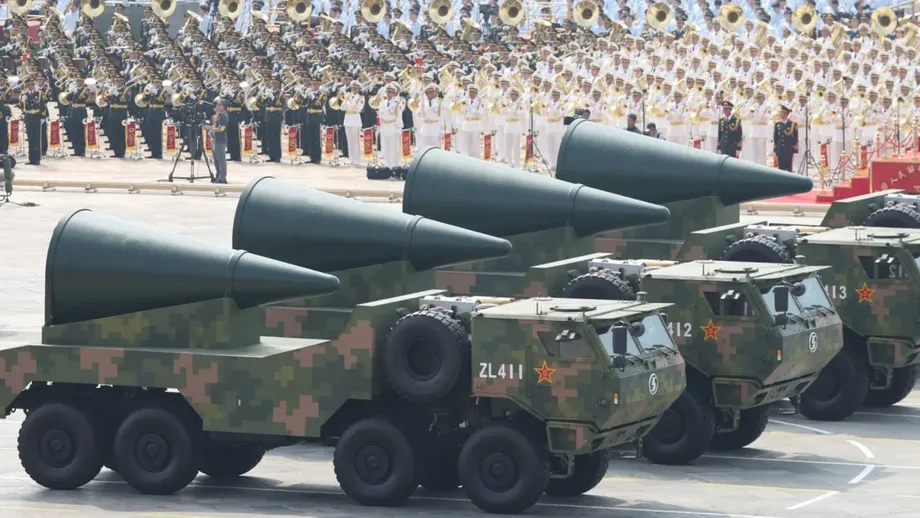
China has expanded and modernized its nuclear arsenal at an accelerated rate in recent years, according to assessments from defense authorities and independent institutes. Data from the Stockholm International Peace Research Institute shows that China increased its inventory to 620 nuclear warheads by January 2026, up from approximately 200 warheads in 2019. Defense intelligence estimates indicate that China is on track to exceed 1,000 nuclear warheads by 2030 and potentially reach 1,500 warheads by 2035.
Donald Trump warned reporters at his White House press conference that Beijing could catch up to the United States within a decade. The United States and Russia maintain much larger stockpiles, with the United States holding 3,700 warheads and Russia possessing 4,300 warheads, according to the Stockholm International Peace Research Institute. China has defended its position by arguing that its arsenal remains a fraction of those held by Washington and Moscow, rebuffing early proposals for trilateral arms limits unless the United States agrees to parity.
Secretary of State Marco Rubio defended ongoing diplomatic engagement during the White House briefing, emphasizing that communication remains essential despite deep strategic rivalries. Marco Rubio stated that the three countries possess the overwhelming majority of nuclear weapons on the planet, making regular dialogue an absolute necessity.
Disputed Allegations of Secret Testing
Tensions over nuclear compliance escalated when Undersecretary of State for Arms Control and International Security Thomas DiNanno announced on February 6, 2026, in Vienna, that the United States government is aware China conducted a secret nuclear explosive test with a yield in the hundreds of tons on June 22, 2020. Thomas DiNanno accused the Chinese military of using a decoupling method to lessen seismic activity and hide the explosion from global monitoring networks.
The Comprehensive Nuclear-Test-Ban Treaty Organization disputed the claim. Rob Floyd, executive secretary of the organization, stated that their International Monitoring System did not detect any event consistent with a nuclear weapon test explosion on that date. Rob Floyd noted that the monitoring system is capable of detecting explosions equivalent to approximately 500 tons of TNT or greater, leaving uncertainty regarding lower-yield tests.
Liu Pengyu, spokesperson for the Chinese Embassy in Washington, DC, strongly denied the allegation. Liu Pengyu stated that China follows a policy of no first use for nuclear weapons, adheres to a self-defense strategy, and strictly maintains its nuclear testing moratorium.
Expiration of the New START Treaty
The trilateral summit in Shenzhen coincided with a major turning point in global arms control. The New Strategic Arms Reduction Treaty, which capped each side at 1,550 deployed strategic nuclear warheads, lapsed on February 5, 2026. Thomas DiNanno described the expiration as the end of an era of unilateral US restraint. Without the treaty in place, the world's largest nuclear superpowers are operating without legally binding limits on their strategic arsenals for the first time in decades.
Vladimir Putin proposed voluntarily maintaining the lapsed treaty limits for another year, but the Trump administration rejected that approach in favor of negotiating a broader framework that includes China. Analysts note that China has significantly expanded its infrastructure alongside its warhead inventory, constructing approximately 775 land-based missile silos across northern desert fields and eastern mountainous areas.
Xi Jinping Calls for Total Elimination
Chinese leader Xi Jinping used his platform at the Shenzhen summit to call for the complete prohibition and thorough destruction of all nuclear weapons. Xi Jinping told his counterparts that nuclear red lines must never be crossed and that every effort must be made to prevent nuclear conflict. At the same time, Chinese military doctrine has emphasized the development of a counter-strike capability and an early-warning launch system.
Hui Zhang, a leading authority on China's nuclear program at the Harvard Kennedy School, has pointed out that uncertainty surrounding Beijing's ultimate buildup goals drives worst-case planning in Washington. Furthermore, the integration of artificial intelligence into military command systems has introduced new complexities, prompting international discussions regarding the retention of human control over strategic weapons. In response, US Treasury Secretary Scott Bessent noted that the United States and China reached an agreement ensuring human involvement in any artificial intelligence related military decisions.
Global Reactions and Strategic Shifts
The historic summit drew mixed reactions from international observers and lawmakers. While some officials praised the high-level dialogue for prioritizing strategic stability, others expressed deep skepticism regarding the intentions of authoritarian leaders. The joint declaration also touched upon energy security, committing the three nations to increase the production and supply of refined petroleum products.
The leaders additionally addressed international law, stating that the International Criminal Court and similar bodies must not abuse their jurisdiction and should respect the immunity of state officials. That provision carries particular weight given the outstanding arrest warrant issued by the international court against Vladimir Putin for alleged war crimes in Ukraine. Meanwhile, concerns over aerospace defense technology continue to evolve in parallel with strategic missile developments, building upon technological shifts examined previously in terminal evasion research.
At a Glance
- Donald Trump, Xi Jinping, and Vladimir Putin held their first-ever trilateral meeting in Shenzhen, China, on November 19, 2026.
- The three leaders issued a joint peace declaration affirming that a nuclear war cannot be won and must never be fought.
- China's nuclear stockpile reached 620 warheads, with Pentagon projections estimating over 1,000 warheads by 2030.
- The United States and Russia hold approximately 3,700 and 4,300 nuclear warheads, respectively, following the expiration of the New START Treaty.
- The leaders agreed to establish dialogue on reducing nuclear risks, preventing proliferation, and maintaining human control over military artificial intelligence decisions.