Trump Praises India Growth to Pressure US Central Bank
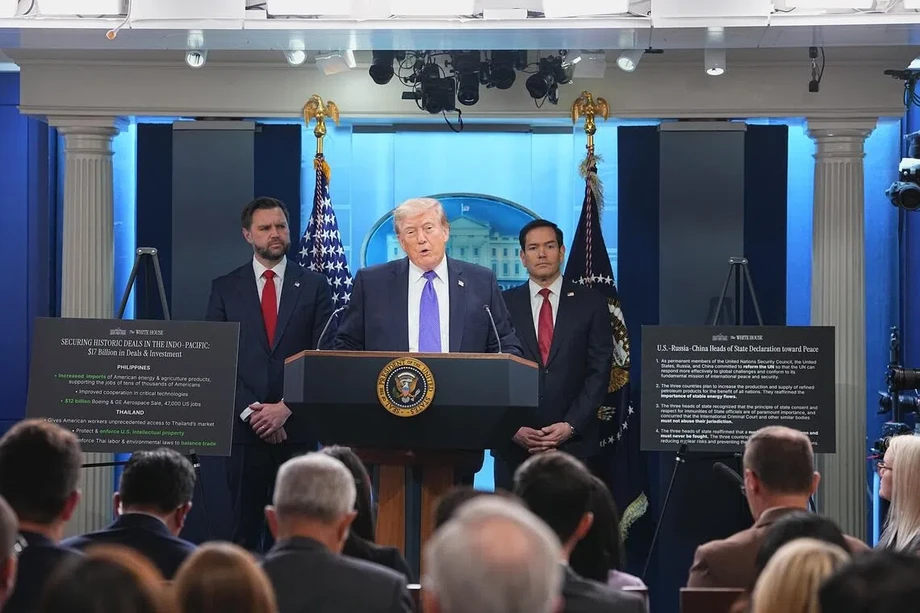
US President Donald Trump pointed to India's economic performance during a White House press conference on November 20, 2026, holding up the country as an example of what the United States could achieve with lower borrowing costs. Flanked by US Secretary of State Marco Rubio and US Vice President JD Vance, Trump argued that the Federal Reserve was unnecessarily holding back American economic potential through restrictive monetary policies. He claimed that the US economy could expand by 15 to 20 percent if the central bank reduced interest rates instead of keeping them elevated.
Contents
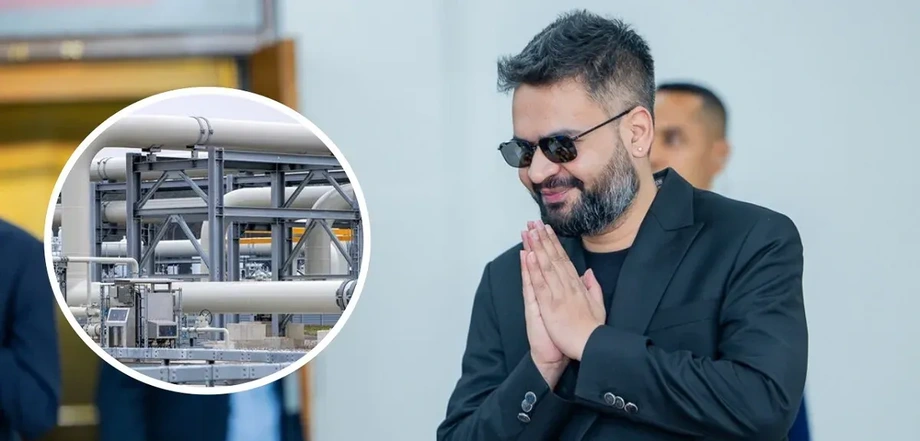
The remarks marked a sharp turn from Trump's July 2025 comments when he criticized India's trade policies and used harsh rhetoric about its financial system, such as calling India a dead economy during a broader tariff dispute. Union Commerce and Industry Minister Piyush Goyal welcomed the latest praise while speaking to reporters in Mumbai on Saturday, noting that the country's rising status draws global attention to its status as the fastest-growing major economy. Meanwhile, opposition politicians in New Delhi offered sharply different interpretations, with Congress MP Pramod Tiwari blaming government policies for economic strains and urging action against imposed tariffs.
Comparing Economic Metrics and Monetary Policy Frameworks
Trump specifically highlighted India's 7 percent GDP growth rate alongside relatively low interest rates, suggesting a direct correlation that the United States should emulate. Official figures from the Ministry of Statistics and Programme Implementation show that India's real GDP grew 7.8 percent year-on-year in the first quarter of the financial year 2026-27, covering April to June 2026. Economists surveyed by an ET poll estimated growth for the July-September quarter at 7.7 percent, while the Reserve Bank of India projected a 7.2 percent expansion. In the United States, the Bureau of Economic Analysis reported that real GDP expanded at an annualised rate of 3.4 percent in the third quarter of 2026, following 2.2 percent growth in the second quarter.
Despite Trump's characterization of India's borrowing costs, benchmark interest rates in the two nations actually sit at different levels. The Reserve Bank of India increased its policy repo rate by 25 basis points to 5.50 percent on October 7, with marginal standing facility rates reaching 5.75 percent. In contrast, the US Federal Reserve maintained its federal funds target range at 3.75 to 4 percent during its October 28 policy meeting. This means India's benchmark repo rate is noticeably higher than the US target range, reflecting divergent economic pressures and policy mandates in each country.
Inflation Pressures Drive Different Central Bank Decisions
The divergence in interest rate policy stems from distinct economic conditions and inflation targets in Washington and Mumbai. The Federal Reserve operates under a dual mandate to promote maximum employment and maintain price stability, targeting a long-term inflation rate of 2 percent. According to the US Bureau of Economic Analysis, the personal consumption expenditures price index rose 3.6 percent year-on-year in September 2026, while core inflation excluding food and energy reached 3.1 percent. These figures kept inflation above the Fed's target and prompted internal division, with governors Lisa Cook and Beth Hammack dissenting at the October meeting to favor another rate hike.
India faces its own distinct price pressures driven by external energy shocks and domestic weather patterns. An energy price shock stemming from Middle East conflicts, combined with uneven and deficient monsoon rainfall, pushed retail inflation above the Reserve Bank of India's 2 to 6 percent target band in October for the first time in two years. Wholesale price inflation also climbed to its highest level under the current series, largely driven by surging fuel and power costs. Economists widely expect the Reserve Bank of India to raise its benchmark rate by another 25 basis points to 5.75 percent on December 4 to cool domestic price increases.
Decades of Friction Between the White House and the Fed
Trump used his White House appearance to launch a renewed verbal attack on the Federal Reserve, accusing the central bank of operating with political bias. He alleged that policymakers intentionally raise borrowing costs whenever the government announces strong economic numbers, rather than cutting rates to reward improved creditworthiness and encourage further expansion.
Interest rates are too high because we have a very political Fed. I'm not blaming the chairman, but the fact that we have a very political Fed. Whenever we announce good numbers, they raise the interest rates. They do that for a reason. It should be the opposite.
This confrontation continues a years-long feud that intensified during Trump's second term, marked by disputes over central bank leadership and institutional independence. The tension escalated dramatically in 2025 when the administration seized on cost overruns at the Federal Reserve headquarters renovation project, where estimated expenses grew from 1.88 billion dollars to 2.46 billion dollars. Federal Reserve Chairman Jerome Powell disclosed in January 2026 that the central bank had received grand jury subpoenas from the Justice Department regarding the renovation, which he described as an intimidation tactic aimed at forcing monetary policy concessions. A federal judge blocked the subpoenas in March, and the Justice Department closed the investigation in April. Although Powell stepped down as chairman when his term ended in May 2026, he remained on the Board of Governors to protect institutional independence, while Kevin Warsh took over leadership of the central bank.
Timeline of Key Developments
- July 31, 2025: Donald Trump criticizes India's trade policies and refers to dead economies in social media posts.
- October 7, 2026: The Reserve Bank of India raises its repo rate by 25 basis points to 5.50 percent amid rising inflation.
- October 28, 2026: The US Federal Reserve maintains its target interest rate range at 3.75 to 4 percent following a divided 10-2 vote.
- November 20, 2026: Trump praises India's 7 percent growth rate and criticizes the US central bank during a White House press conference.
- December 4, 2026: Economists expect the Reserve Bank of India to implement another 25-basis-point rate hike.
The Bottom Line
- US President Donald Trump cited India's 7 percent economic growth during a press conference to argue that lower interest rates could drive US GDP growth up to 20 percent.
- India's actual benchmark repo rate stands at 5.50 percent, which is higher than the US Federal Reserve target range of 3.75 to 4 percent.
- Both central banks face persistent inflation above their targets, leading to contrasting monetary policy tightening cycles rather than coordinated rate cuts.
- Trump's remarks sparked political reactions in India, drawing praise from ruling Bharatiya Janata Party leaders and criticism from opposition parliamentarians over broader economic management and tariffs.