Pipelines, ports and export delays lead Nepal's proposals
Nepal's Ministry of Industry, Commerce and Supplies has proposed a cooking gas pipeline estimated to cost Rs 15 billion, the groundbreaking of a dry port covering 42.36 hectares in Kanchanpur, and the opening of the completed Bhairahawa Integrated Check Post for Prime Minister Balendra Shah's upcoming visit to India.
Contents
- Pipelines, ports and export delays lead Nepal's proposals
- When will Shah travel to Delhi?
- Why Nepal wants a cooking gas pipeline
- What the Rs 15 billion project would include
- Dodhara Chandani could open a western trade gateway
- New seaport access needs changes on paper too
- Bhairahawa and certification delays affect trade today
- Electricity, air routes and border talks widen the agenda
- A long timeline puts implementation in focus
- Key Points
The ministry has sent its priorities to the Ministry of Foreign Affairs, alongside requests to expand petroleum pipelines and remove certification delays holding up Nepali exports. Preparations also include seeking access to India's Dhamra and Mundra seaports, an agreement dating to 2019 that still requires changes to trade and transit arrangements before Nepal can use them.
The proposals address different parts of the same problem: the cost and uncertainty of moving goods between landlocked Nepal and its largest trading partner. A pipeline would change how cooking gas reaches Nepal. New ports would widen shipping choices. Faster border procedures would help businesses get their products to customers.
Jitendra Bahadur Basnet, spokesperson for the industry ministry, said its proposals had been submitted but the final selection remained with the Foreign Ministry.
We have sent the issues from our side, but we have not yet received information on which agendas have been selected. The Ministry of Foreign Affairs is responsible for finalizing the agenda for the visit, so further details will be clarified by them.
The visit is being prepared at the invitation of Indian Prime Minister Narendra Modi. It would be Shah's first bilateral visit since becoming prime minister in March 2026, following his September trip to the United States to address the 81st United Nations General Assembly.
When will Shah travel to Delhi?
November 22–23 has been reported as the visit window, while another proposed itinerary runs from November 22–24. Nepal's Foreign Ministry has yet to confirm the dates, duration or final agenda publicly.
Lok Bahadur Chhetri, spokesperson for Nepal's Ministry of Foreign Affairs, described preparations as continuing.
The ministry is working on the date, agenda and other details of the visit,
Shah reportedly wants a brief visit focused on results, with fewer formalities and no travel beyond Delhi. That would put greater weight on decisions reached in meetings rather than a lengthy programme of ceremonial stops.
India's Foreign Secretary Vikram Misri visited Nepal to convey Modi's invitation. Shah is also interested in jointly flagging off a weekly Ayodhya–Janakpur railway service with Modi. A trial run took place about a fortnight before that proposal was reported, making the railway another connectivity initiative under consideration.
Why Nepal wants a cooking gas pipeline
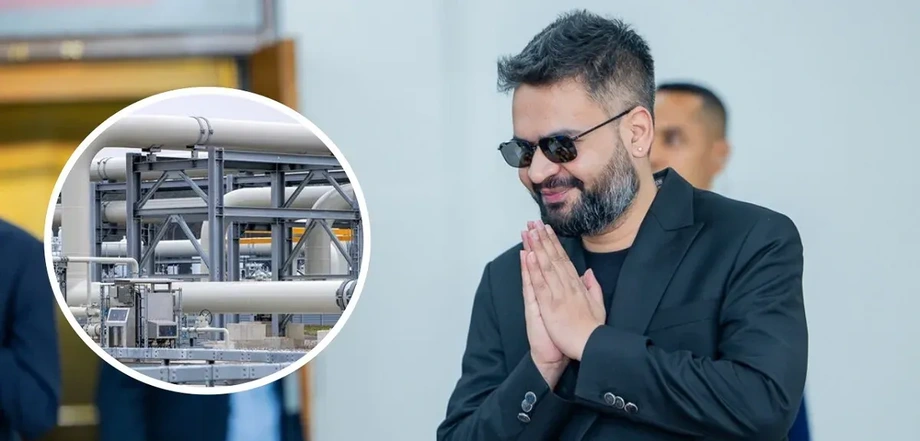
The proposed Motihari–Sarlahi pipeline would carry liquefied petroleum gas, or LPG, from India to a terminal in Nepal. LPG is the fuel commonly supplied in cylinders for cooking. Nepal currently depends on road tankers to bring it across the border.
A policy discussion at the National Planning Commission identified that dependence as a supply risk. Participants included former industry secretaries Purushottam Ojha and Yam Kumari Khatiwada, and former Gas Industry Association chairman Gokul Bhandari. The discussion warned that even a single day of road disruption could create serious pressure on supplies.
Nepali businesses rely entirely on Indian vehicles for this transport and pay more than Rs 6 billion annually in freight charges. The large cylindrical tankers are often called gas bullets because of their shape.
A pipeline would move gas without requiring a tanker for every shipment along that route. Storage at the receiving end would provide a reserve when deliveries or distribution face disruption. Together, the pipeline and tanks are intended to make supply more dependable.
What the Rs 15 billion project would include
Indian Oil Corporation's detailed engineering survey estimates the Motihari–Sarlahi pipeline would cost about Rs 15 billion. Nepal Oil Corporation plans to seek grant assistance from the Indian company, meaning financial support that Nepal would not repay as a loan.
Nepal Oil Corporation already owns 14 bighas of land in Sarlahi for the project. The plan includes three storage tanks with a combined capacity of 15,000 metric tons and a terminal capable of loading and unloading eight gas tankers at once.
The proposed construction cost is less than two and a half times the more than Rs 6 billion Nepal pays annually for gas transport. Those figures show the scale of the existing freight bill alongside the proposed investment. Operating the pipeline, distributing gas within Nepal and maintaining the terminal would also carry costs.
The project could be completed within two years after a bilateral agreement and the start of work. That timetable depends on securing the agreement and financing first.
The industry ministry also wants the visit to advance the second phase of the existing Motihari–Amlekhgunj petroleum pipeline and its extension to Chitwan. These proposals cover petroleum products separately from the planned LPG connection to Sarlahi.
Dodhara Chandani could open a western trade gateway
The proposed Dodhara Chandani dry port would occupy about 42.36 hectares in Gaurishankar Community Forest, in Ward 1 of Dodhara Chandani Municipality, Kanchanpur. India agreed to provide financial and technical assistance under a memorandum of understanding signed on June 1, 2023, taking responsibility for developing the physical infrastructure.
A dry port is an inland freight centre where goods can be handled and cleared through customs. Unlike a seaport, it receives cargo by land. Its value depends on good connections to border crossings, industrial centres and shipping terminals.
Nepal wants the two prime ministers to jointly lay the project's foundation stone during the visit. The project is a priority for Sudurpaschim, where it could give traders a more direct route to Delhi and the industrial areas of Punjab and Haryana, as well as western Indian seaports including Mundra and Jawaharlal Nehru Port near Mumbai.
A bridge with four lanes across the Mahakali River and an access road with six lanes on the Nepal side have already been built. Work on roads approaching the border from India is being accelerated. The proposed groundbreaking would move attention to construction of the freight facility itself.
New seaport access needs changes on paper too
Nepal is preparing to renew its request to use Dhamra in Odisha and Mundra in Gujarat for trade with countries beyond India. India agreed to provide access in 2019, but the necessary changes to trade and transit treaties have not been completed.
Nepal currently uses Kolkata, Haldia and Visakhapatnam. Kolkata and Haldia form part of the same shipping corridor, with Haldia accommodating larger vessels. Dhamra and Mundra would give Nepali importers and exporters more choices over where cargo enters or leaves India.
Dhamra is approximately 950 kilometres from Birgunj. The journey from Birgunj to Mundra is about 1,850 to 2,000 kilometres, roughly twice as far by land. Mundra's position on India's western coast can nevertheless offer a shorter sea journey for cargo arriving from Europe, the Middle East or Africa.
Dhamra's deeper water allows large cargo ships to call directly, while Kolkata's shallower water limits vessel size. For a trader, the useful comparison is the whole journey: shipping time, inland transport, cargo handling and border clearance, rather than road distance alone.
Foreign Minister Shishir Khanal has raised the port access issue again with Indian Ambassador Sudhakar Dalela. The connection with Dodhara Chandani is practical: improved roads and an inland freight terminal would be more useful if Nepal also gains the legal arrangements needed to use additional seaports.
Bhairahawa and certification delays affect trade today
The completed Bhairahawa Integrated Check Post is another proposed inauguration. The ministry wants it brought into full operation so imports and exports passing through Rupandehi and the wider Lumbini corridor can move through a unified inspection and clearance system.
An integrated check post brings border services together in one facility. The aim is to reduce the time and expense involved in moving goods between different offices or inspection points.
Nepali exporters also face delays connected with certification by the Bureau of Indian Standards, or BIS. Cement, plywood, footwear and agricultural products have been held at the border or caught in procedural difficulties. The ministry has asked the Foreign Ministry to present India with a clear proposal to resolve these problems through diplomacy.
These are non-tariff barriers: obstacles involving standards, approvals or procedures rather than a customs tax. For a business, a delayed certificate can leave a shipment waiting even when transport is available and the buyer is ready.
Tea, ginger and large cardamom are also central to calls for easier access to the Indian market. Proposed remedies include Indian recognition of certifications issued by Nepal's quality assurance agencies and laboratories accepted by both countries. Faster procedures would matter to farmers as well as manufacturers, particularly when goods lose value while waiting.
Electricity, air routes and border talks widen the agenda
Nepal is also seeking air entry points through Mahendranagar and Bhairahawa to improve access to its international airports. These requests sit alongside the proposed railway service and freight projects, extending the connectivity discussion from goods to passengers.
Electricity cooperation brings another set of unfinished projects. Seven major hydropower projects awarded to Indian companies have a combined capacity of about 4,700 megawatts, but only one is under construction. Calls surrounding the visit include faster development and a predictable framework for electricity trade, including the treatment of power generated by projects involving companies from third countries.
The Pancheshwar project under the Mahakali Treaty also awaits agreement on its detailed project report. Differences over water sharing and the division of costs and benefits have held it back. Resolving those differences would require decisions beyond announcing another infrastructure proposal.
Territorial disputes over Susta and the Kalapani, Lipulekh and Limpiyadhura area remain part of the wider relationship. Calls to restart border talks have focused on an unused political negotiating mechanism agreed in 2014 and 182 jointly prepared boundary maps awaiting endorsement.
Another proposal is to seek formal submission of the Eminent Persons Group report, completed in 2018 to recommend changes in bilateral relations. These diplomatic demands are broader than the industry ministry's submitted list and would require separate political decisions about what the leaders discuss.
A long timeline puts implementation in focus
Several priorities now being discussed began years before Shah took office. Their history helps explain why the immediate task is to turn agreements and completed construction into services that businesses and households can use.
- 2018: The Eminent Persons Group completed its report on bilateral relations, which still awaits formal receipt by India's prime minister.
- 2019: India agreed to access for Nepal at Dhamra and Mundra ports, with treaty changes still pending.
- June 1, 2023: Nepal and India signed the memorandum assigning India responsibility for building the Dodhara Chandani dry port infrastructure.
- March 2026: Shah became prime minister.
- September 2026: Shah travelled to the United States to address the 81st UN General Assembly.
- November 2026: Ministries are preparing trade, energy and connectivity proposals for his first bilateral visit to India.
The projects are at different stages. Bhairahawa has been built and needs full operation. Dodhara Chandani has an assistance agreement and access infrastructure, but awaits construction of the dry port. The LPG pipeline has an engineering survey but needs agreement and funding. Additional seaport access requires legal changes.
For Nepal, useful results would therefore take different forms: an operating border facility, a construction commitment, a financing arrangement or an agreed certification process. Each would address a specific delay in getting fuel and goods to their destinations.
Key Points
- Nepal's industry ministry has submitted trade and infrastructure priorities for Shah's India visit; the Foreign Ministry will select the final agenda.
- The proposed Motihari–Sarlahi LPG pipeline is estimated to cost Rs 15 billion and would include 15,000 metric tons of storage.
- Nepal wants a joint groundbreaking for Dodhara Chandani dry port and full operation of the completed Bhairahawa Integrated Check Post.
- Access to Dhamra and Mundra seaports still requires changes to trade and transit arrangements.
- Export certification delays affect manufactured goods and agricultural products, including cement, plywood, footwear, tea, ginger and cardamom.
- November 22–23 and November 22–24 have been reported as possible visit windows, with official confirmation pending.