A larger manufacturing base for India and exports
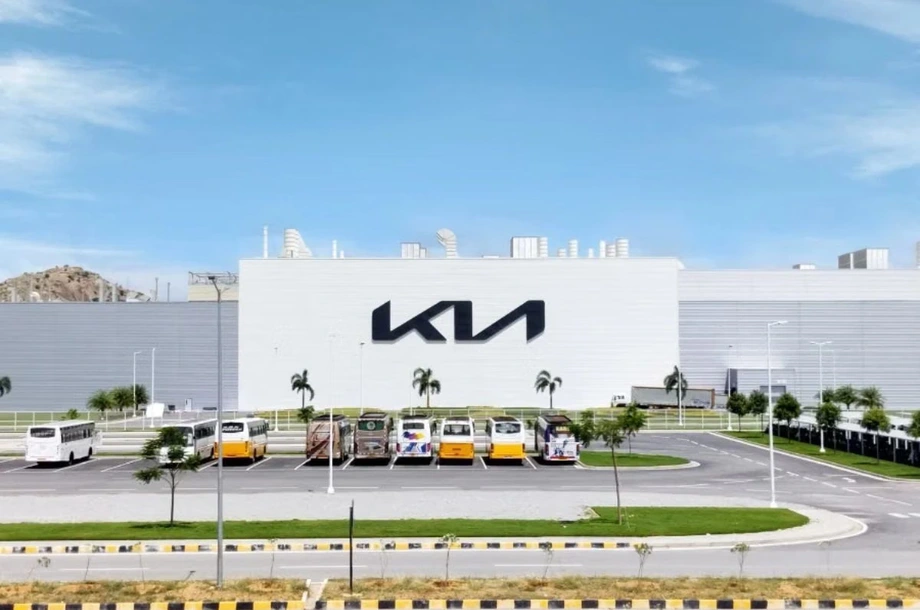
Kia India and its supplier partners plan to invest $2 billion in a second manufacturing plant in Anantapur, Andhra Pradesh, adding capacity for 200,000 vehicles a year from early 2030. The expansion would raise the company's annual manufacturing capacity in India from 430,000 to 630,000 vehicles, an increase of about 47%.
Contents
- A larger manufacturing base for India and exports
- What the new plant will contain
- Why Kia wants more flexibility
- Sales are rising faster than the annual production picture suggests
- Hybrid and electric launches come before 2030
- What 12,000 jobs would mean for Anantapur
- Exports give the expansion a second market
- From the first agreement to the second factory
- How the project fits the wider India investment plan
- Key Points
The company signed a memorandum of understanding with the Andhra Pradesh government on November 12, 2026. Kia India Managing Director and Chief Executive Officer Gwanggu Lee announced the project at the 31st CII Partnership Summit in Visakhapatnam.
The proposed development covers 465 acres, including space for suppliers, and is expected to create around 12,000 direct and indirect jobs. It will manufacture new models with internal combustion engines and electric powertrains, giving Kia more room to supply both Indian customers and overseas markets.
The investment follows a sharp rise in domestic dispatches. Kia sent 286,470 vehicles to dealers between January and October 2026, already exceeding the roughly 280,000 vehicles dispatched during all of 2025. Its October total of 33,462 vehicles was a monthly record.
Kia's longer plan reaches beyond adding factory space. The company is targeting annual sales of around 410,000 vehicles and a 7.6% share of India's passenger vehicle market by 2030. It also plans eight electrified models, including hybrids and vehicles powered entirely by batteries, by the end of the decade.
What the new plant will contain
The second facility will carry out stamping, welding, painting and final assembly. Stamping shapes metal sheets into vehicle panels. Welding joins the body together, while painting and assembly turn that body into a finished vehicle with its motor, interior and other components.
Kia expects production to begin in early 2030, although a detailed schedule for construction and investment spending has not been announced. The memorandum of understanding sets out the planned cooperation between the company and the state government as the project moves toward development.
The $2 billion commitment includes Kia and its supplier partners. Suppliers make parts used by the vehicle factory, so the proposed site covers a wider manufacturing network as well as Kia's own production operations.
The existing Anantapur development occupies 945 acres, including supplier operations. Together, the two sites would cover 1,410 acres. The new development is roughly half the size of the existing one and would add slightly less than half its annual vehicle capacity.
Kia lists the initial investment in the first development at $2.9 billion, including suppliers. Adding the planned $2 billion brings the two commitments to about $4.9 billion, which the company describes as cumulative investment of up to $5 billion.
Why Kia wants more flexibility
Lee linked the expansion to the need to introduce vehicles with different types of propulsion and respond more quickly to changing demand. The factory is intended to give Kia more choices about which vehicles it builds and how it serves different markets.
Lee, Kia India's managing director and chief executive officer, described the purpose of the project:
Our second manufacturing plant marks a significant new chapter, strengthening our ability to respond to customer demand with greater speed and flexibility, while supporting the introduction of new models across ICE and EV powertrains.
ICE means an internal combustion engine, which burns fuel such as petrol or diesel. An EV uses an electric motor, with battery electric vehicles storing their energy in a rechargeable battery. A factory capable of producing both gives the manufacturer scope to adjust its production mix as customer preferences change.
Kia has not named the models allocated to the second plant or explained how production will be divided between the two facilities. That decision matters because several planned launches come before the new factory's expected opening.
Sales are rising faster than the annual production picture suggests
Kia produced approximately 317,000 vehicles in FY2026, against its stated annual capacity of 430,000. That works out to about 74% capacity utilisation, meaning roughly three quarters of the plant's stated yearly production capability was used during that financial year.
Domestic dispatches in FY2026 totalled approximately 289,000 vehicles, while exports reached 27,953. Together, those dispatches closely matched production. Exports accounted for about 8.8% of the combined domestic and overseas total.
The more recent monthly figures show a busier operation. January to October 2026 dispatches rose about 21% from the same period a year earlier. October's record 33,462 vehicles represented growth of about 13.2% from October 2025.
If October's domestic dispatch rate were sustained for 12 months, it would amount to 401,544 vehicles, equivalent to about 93% of the existing plant's annual capacity before allowing for exports. This is a useful comparison of scale: financial year production describes a completed period, while the October figure shows the pace reached in a particularly strong month.
Wholesale dispatches count vehicles sent to dealers, rather than purchases completed by individual customers. Kia's reported monthly sales pace of around 28,000 to 30,000 vehicles, with the Seltos as its main volume driver, helps explain why it is preparing additional manufacturing space several years ahead.
Hybrid and electric launches come before 2030
Kia's product roadmap includes a Seltos Hybrid expected in 2027, followed by hybrid versions of the Sonet and Carens planned by 2029. Another small electric SUV manufactured locally is also planned by 2029.
A hybrid combines an internal combustion engine with an electric motor and battery. That gives Kia another way to electrify its range alongside vehicles powered entirely by batteries. Its goal of eight electrified models by the end of the decade includes both types.
The timing means Kia's planned product expansion will begin before the second factory opens. The company will therefore have to coordinate those launches with its existing production arrangements while preparing the additional capacity expected in early 2030.
The current Anantapur manufacturing range includes the Seltos, Sonet, Syros, Carens, Carens Clavis, Carnival and Sorento. Variants include the Syros EV and Carens Clavis EV, CNG versions of the Carens and Carens Clavis, and the Sorento Hybrid. CNG stands for compressed natural gas, another fuel used in internal combustion engines.
Kia also sells the EV6 and the fully imported EV9 in India. The Sorento, recently introduced with hybrid and diesel options, is averaging around 1,800 vehicles a month. The range shows how the company is spreading its business across several vehicle sizes and power systems.
What 12,000 jobs would mean for Anantapur
Kia expects the proposed plant and associated supplier operations to create around 12,000 direct and indirect jobs. Direct employment covers work within the businesses involved, while indirect employment includes work supported through their wider activities and supply networks.
The existing Anantapur development supports 24,237 direct and indirect jobs, according to the company. Adding the projected employment from the second development would bring the combined figure to approximately 36,237, an increase of almost 50%.
The employment estimate covers more than vehicle assembly. A manufacturing development that includes suppliers also requires parts production, materials handling, maintenance and transport. Kia has not published a breakdown of the projected jobs by employer or occupation.
Three South Korean component manufacturers, Hwashin, Seoyon and Iwamet, have also committed a combined Rs 1,614 crore to Anantapur projects expected to create more than 1,400 jobs. Their commitments show the investment activity around the vehicle manufacturing base; their relationship to the wider $2 billion package has not been detailed.
Nara Lokesh, Andhra Pradesh's minister for human resource development, information technology and electronics, described the state's approach to investors at the summit:
We follow the 3S mantra: Speed, stability in our policies, and service. Once we shake hands, it becomes our project. That is the success mantra of Andhra Pradesh.
Exports give the expansion a second market
Anantapur already supplies customers outside India. The existing factory has shipped more than 410,000 vehicles and kits to nearly 100 countries, according to Kia. Kits contain components intended for assembly elsewhere, so the export business includes more than finished vehicles.
The 27,953 vehicles exported in FY2026 provide a measure for a single financial year, while the figure above 410,000 describes shipments accumulated over time. Overseas business gives Kia another destination for production alongside its growing domestic dealer network.
Lee said the second factory would strengthen the company's ability to serve both domestic and overseas markets. That dual purpose helps explain why planned manufacturing capacity of 630,000 vehicles is higher than Kia's target for annual Indian sales of around 410,000 by 2030.
The difference between those figures is 220,000 vehicles. Capacity measures the scale of the manufacturing system, while the sales target describes Kia's ambition in India. The company has not announced an export target or a forecast for how fully the two plants will operate in 2030.
From the first agreement to the second factory
Kia's Andhra Pradesh expansion builds on an investment relationship that began in 2017. Its first agreement with the state preceded the rollout of the first vehicle manufactured in India, the Seltos, in 2019.
The key dates show how the factory plan fits with the company's product and sales ambitions:
- April 2017: Kia signed its initial memorandum of understanding with Andhra Pradesh.
- 2019: The first Seltos manufactured in India rolled out at Anantapur.
- October 13, 2026: Hyundai Motor Group's $15.5 billion India investment programme followed a meeting between Prime Minister Narendra Modi and group Executive Chair Euisun Chung.
- November 12, 2026: Kia signed the memorandum for its second Andhra Pradesh plant and announced the expansion in Visakhapatnam.
- 2027: The Seltos Hybrid is expected to arrive.
- By 2029: Hybrid Sonet and Carens models and another small electric SUV manufactured locally are planned.
- Early 2030: Production at the second plant is expected to begin.
Lee also described the speed of Kia's growth, saying the company had reached one million units within four years and was pursuing two million within seven years. The second factory would provide a larger manufacturing base for the next stage of that expansion.
How the project fits the wider India investment plan
Hyundai Motor Group has announced a $15.5 billion investment programme for India covering 2026 through 2032. Manufacturing, research and development, and greater use of local suppliers are among its priorities, with capacity expansion planned across Hyundai Motor India and Kia India.
Hyundai and Kia operate as separate vehicle businesses within the wider group. Kia's second Anantapur factory is a specific manufacturing project within that broader push to increase production and investment in India.
For Andhra Pradesh, the proposal would deepen an existing industrial cluster rather than establish a vehicle manufacturing base in a new location. For Kia, it would add room for new models, more domestic sales and overseas shipments while keeping both Indian factories in the same district.
The next practical steps are the construction programme, the schedule for spending the investment and decisions on which models each plant will produce. The central commitment is already defined: 200,000 additional vehicles of annual capacity, with production expected in early 2030.
Key Points
- Kia and its supplier partners plan to invest $2 billion in a second Anantapur manufacturing development.
- The proposed plant would add capacity for 200,000 vehicles annually, raising Kia India's total to 630,000.
- Production is expected in early 2030, with around 12,000 direct and indirect jobs projected.
- The factory will manufacture new vehicles with internal combustion engines and electric powertrains.
- Kia's January to October 2026 dispatches reached 286,470 vehicles, exceeding its full 2025 total.
- Hybrid and electric launches planned for 2027 through 2029 come before the new factory's expected opening.
- Construction dates and the allocation of models between the two factories have yet to be announced.