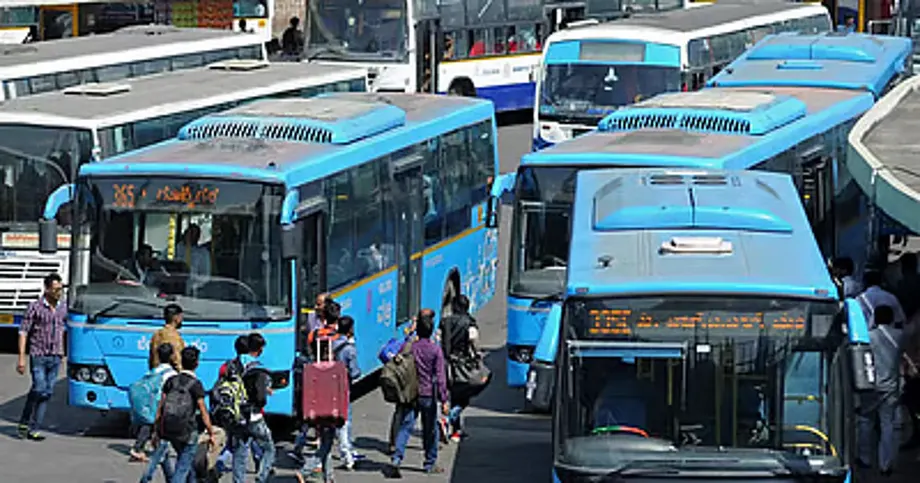
Higher fares hit city and intercity passengers
Karnataka is raising fares on state buses from November 5, with Bengaluru's minimum BMTC ticket increasing from Rs 6 to Rs 10 and the KSRTC express fare to Mysuru rising from Rs 160 to Rs 197. The decision brings larger travel bills for passengers across city, suburban and intercity routes, while triggering an opposition campaign over the finances of the state's transport corporations.
Contents
- Higher fares hit city and intercity passengers
- What Bengaluru passengers will pay
- Short journeys around Bengaluru become more expensive
- Express fares rise on major routes
- How the decision developed
- Why the government says more revenue is needed
- Shakti payments sit at the centre of the dispute
- Opposition plans protests across Karnataka
- What changes for household budgets
- Key Points
Transport Minister Byrathi Suresh announced the revision in Bengaluru. He said fares for the Karnataka State Road Transport Corporation (KSRTC), North Western Karnataka Road Transport Corporation (NWKRTC) and Kalyana Karnataka Road Transport Corporation (KKRTC) would rise by an average of 23%. Bengaluru Metropolitan Transport Corporation (BMTC) fares would increase by 33% to 35%.
The government attributes the increase to rising operating costs and losses. Suresh said the four corporations had accumulated losses of Rs 9,912 crore, while rejecting the argument that the Shakti scheme, which provides eligible women with free travel on non-luxury buses, caused those losses.
Leader of the Opposition R Ashok challenged that explanation. He alleged that the government owed the Transport Department more than Rs 5,800 crore and was making passengers carry the burden of unpaid compensation. He announced protests across Karnataka, including Bengaluru, for November 5.
What Bengaluru passengers will pay
BMTC's minimum fare rises by Rs 4, from Rs 6 to Rs 10, while its maximum fare increases by Rs 10, from Rs 35 to Rs 45. The minimum ticket therefore rises by about 67%, compared with about 29% for the maximum ticket. The corporation's stated increase of 33% to 35% describes the wider revision; individual tickets change by different percentages.
Passengers on Vajra Volvo services that do not serve the airport will also pay more. Their minimum fare rises from Rs 15 to Rs 20, and the maximum fare for a journey of 60 kilometres increases from Rs 75 to Rs 90.
A passenger buying two minimum BMTC tickets each working day would spend Rs 8 more a day. Across 26 working days, that would add Rs 208 to the monthly bill, taking spending on those tickets from Rs 312 to Rs 520. This calculation assumes two separate tickets each day at the minimum fare.
Suresh did not specify revised fares for Vayu Vajra airport services. Passengers travelling to or from the airport therefore still need the fare details for that service, rather than the rates announced for Vajra buses on other routes.
Short journeys around Bengaluru become more expensive
Ordinary services linking Bengaluru with nearby towns will see increases of between Rs 9 and Rs 11 on the routes listed in the revision. Those amounts can add up quickly for passengers making frequent return journeys.
- Bengaluru to Nelamangala or Hoskote: Rs 44, up from Rs 35.
- Bengaluru to Doddaballapura or Anekal: Rs 47, up from Rs 38.
- Bengaluru to Magadi or Malur: Rs 57, up from Rs 46.
A return journey between Bengaluru and Nelamangala on these ordinary services will cost Rs 88 instead of Rs 70. For someone making that trip on 26 days in a month, the increase would total Rs 468, assuming two tickets each day at the stated route fare.
These routes connect Bengaluru with surrounding towns, so the revision affects travel beyond the city bus network. Passengers who also buy a BMTC ticket for another part of their journey may face increases on both legs of the trip.
Express fares rise on major routes
KSRTC express passengers will pay higher fares on routes from Bengaluru to Kolar, Tumakuru, Mandya, Mysuru, Hassan and Chikkamagaluru. The increases range from Rs 19 to Rs 68 for a single journey.
- Bengaluru to Kolar or Tumakuru: Rs 100, up from Rs 81.
- Bengaluru to Mandya: Rs 136, up from Rs 110.
- Bengaluru to Mysuru: Rs 197, up from Rs 160.
- Bengaluru to Hassan: Rs 270, up from Rs 219.
- Bengaluru to Chikkamagaluru: Rs 363, up from Rs 295.
The listed express fares rise by approximately 23% to 24%, close to the average of 23% announced for KSRTC, NWKRTC and KKRTC. In practical terms, a return trip between Bengaluru and Mysuru costs Rs 394 instead of Rs 320, an increase of Rs 74. A return trip to Chikkamagaluru rises by Rs 136, from Rs 590 to Rs 726.
How the decision developed
The fare decision followed requests from the corporations, a review by a committee and discussions within the government. The Public Transport Fare Regulatory Committee was chaired by retired Indian Administrative Service officer Atul Kumar Tiwari and constituted by the Transport Department on July 10.
The committee recommended an increase of 25% for KSRTC, NWKRTC and KKRTC, and 40% for BMTC. The announced averages are below those recommendations: about two percentage points lower for the three regional corporations and five to seven percentage points lower for BMTC.
- January 2025: The four corporations raised fares by 15%.
- June: KSRTC, NWKRTC and KKRTC sought an increase of 33%. BMTC's request was put at 40%, with another figure of about 44% also reported.
- July 10: The Transport Department constituted the fare review committee.
- November 3: A meeting between the minister and transport officials was expected to discuss the proposed revision.
- November 4: The department scheduled discussions with officials from all four corporations to settle the scale of the increase.
- November 5: The revised fares take effect, with opposition protests announced for the same day.
Before the final announcement, proposed increases had also been put at 15% to 17% for BMTC and around 15% for the other corporations. Those preliminary figures were below the increases subsequently announced. The government had described implementation as taking place in phases, but the announced revision gives November 5 as the start date without a timetable for further stages.
Why the government says more revenue is needed
Suresh cited rising diesel costs and financial losses as reasons for increasing fares. In the leadup to the decision, he put the four corporations' combined annual losses at around Rs 2,000 crore and said diesel had become approximately Rs 15 to Rs 16 more expensive per litre since an earlier fare revision.
The corporations collectively operate 26,054 buses across Karnataka. Fuel, maintenance, salaries and administration all contribute to the cost of keeping that fleet running. When ticket revenue and government payments fall short of expenses, the operators record a loss.
The annual loss of around Rs 2,000 crore describes the shortfall over a year. The cumulative loss of Rs 9,912 crore cited at the announcement is the accumulated total over time. The two figures describe different periods of financial pressure.
Suresh also pointed to fare increases in Tamil Nadu and Maharashtra when explaining Karnataka's decision. He did not provide comparable ticket prices for those states, so the concrete change for Karnataka passengers is best understood through the revised route fares.
Shakti payments sit at the centre of the dispute
The Shakti scheme allows eligible women to travel free on non-luxury state buses. The government pays the transport corporations for travel covered by the scheme, rather than collecting a fare from the eligible passenger. The scheme was expected to continue alongside the fare revision.
Suresh said the government had reimbursed the corporations Rs 16,595.75 crore since 2023 for Shakti travel. He denied that the scheme was responsible for their cumulative losses of Rs 9,912 crore.
Ashok alleged that more than Rs 5,800 crore remained unpaid to the Transport Department. He also claimed that the Finance Department had said it could not clear the dues because the state exchequer lacked funds.
The government's reimbursement total concerns payments made since 2023, while Ashok's allegation concerns money he says is still owed. Passengers buying tickets face higher fares from November 5; eligible women using services covered by Shakti continue to receive free travel under the scheme.
Opposition plans protests across Karnataka
Ashok, the Leader of the Opposition, demanded withdrawal of the increase and accused the government of passing its financial responsibilities to the public. Describing his objection to the decision, he said:
Price hikes in the Transport Department are illegal.
Ashok put the increases at 30% to 40%, while Suresh announced averages of 23% for KSRTC, NWKRTC and KKRTC and 33% to 35% for BMTC. The listed fares show why passengers can experience the revision differently: BMTC's minimum ticket rises by about 67%, while the listed KSRTC express tickets rise by roughly 23% to 24%.
Ashok announced demonstrations across all Karnataka districts, including Bengaluru, on the day the fares take effect. He said protests would also continue during the next Assembly session.
What changes for household budgets
Regular passengers will feel the increase through repeated small payments as well as more expensive intercity journeys. A Rs 4 rise on one minimum BMTC ticket becomes Rs 208 over 52 journeys, while the Rs 37 increase on a single Bengaluru to Mysuru express ticket adds Rs 74 to a return trip.
The announcement also follows a rise in Nandini milk prices, putting another common household expense under pressure. The size of each family's transport increase will depend on the routes used, the number of journeys and whether travellers qualify for Shakti.
The government's case rests on raising revenue for corporations facing substantial losses. The opposition's challenge centres on whether unpaid government compensation has contributed to that financial pressure. For passengers paying fares, the immediate outcome is a higher ticket price from November 5.
Key Points
- Karnataka's revised state bus fares take effect on November 5.
- BMTC's minimum ticket rises from Rs 6 to Rs 10 and its maximum from Rs 35 to Rs 45.
- KSRTC, NWKRTC and KKRTC fares rise by an average of 23%; BMTC's announced increase is 33% to 35%.
- The Bengaluru to Mysuru express fare increases from Rs 160 to Rs 197.
- Suresh cited Rs 9,912 crore in cumulative losses and Rs 16,595.75 crore in Shakti reimbursements since 2023.
- Ashok alleged unpaid dues exceeding Rs 5,800 crore and announced statewide protests.
- Revised Vayu Vajra airport fares were not specified in the announcement.