Malaysia sets out a wider push to build with AI
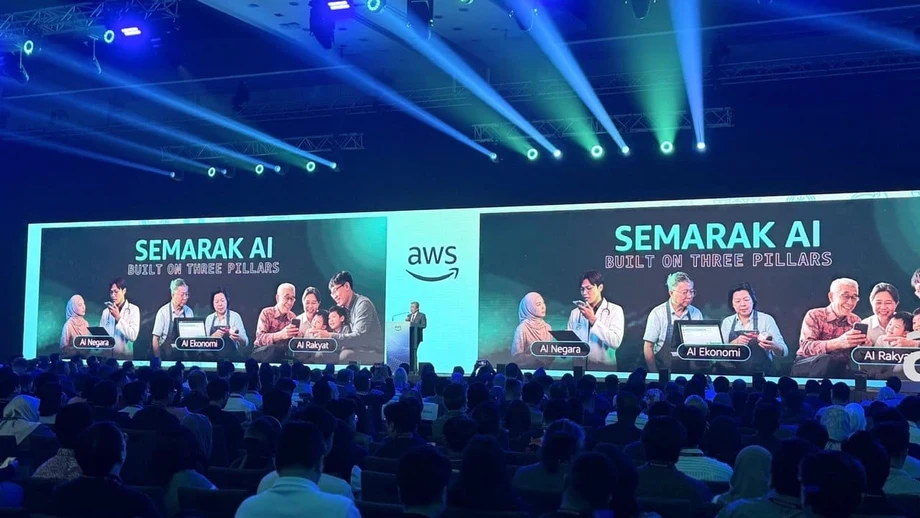
Amazon Web Services (AWS) plans to put artificial intelligence tools in the hands of up to 445,000 Malaysian government officers under Semarak AI Malaysia, a programme launched on November 4, 2026, at AWS Cloud and AI Day Kuala Lumpur. The initiative also targets 10,000 small and medium enterprises by 2028 and a government software development community growing from an initial 500 developers to 4,000 over the same period.
Contents
- Malaysia sets out a wider push to build with AI
- What changes for government officers?
- GovHub starts with 500 developers
- Small businesses get six months of access
- Local software companies form the next layer
- Sarawak accelerator moves products toward customers
- Students build applications using natural language
- A Kuala Lumpur school joins the programme
- The milestones from 2024 to 2028
- Key Points
The programme connects three groups that use technology in different ways: public officers handling government work, companies building or buying business software, and students learning to create applications. Its three pillars are AI Negara for the public sector, AI Ekonomi for businesses and AI Rakyat for communities.
In its programme launch statement, AWS described the initiative as a step beyond initial AI adoption, giving Malaysians access and skills to develop their own solutions. For government officers, the commitment centres on access to Amazon Quick, a workplace AI tool, through the National Digital Department's platform.
Investment, Trade and Industry Minister Datuk Seri Johari Abdul Ghani said Malaysia's ambition required people and companies capable of creating technology:
For Malaysia to lead in the regional AI economy, we need a workforce and a software industry that can build, not just consume, AI technology.
AWS said Semarak AI Malaysia builds on its existing RM29.2 billion commitment to Malaysia. The company did not disclose a separate investment amount for the programme or a timetable for extending Quick access to all the government officers it aims to reach.
What changes for government officers?
Amazon Quick will be made available to up to 445,000 government officers through the National Digital Department, known as JDN, and its AI-as-a-Service platform. Such a platform gives agencies a shared channel for accessing AI tools, rather than requiring every office to arrange its own service separately.
AWS identified three practical uses: analysing procurement data, bringing together policy research from different agencies and finding patterns in large datasets. Procurement is the process through which government bodies buy goods and services. Analysing those records can help officers organise and examine information about purchases.
Policy research often involves reading documents from several departments before preparing advice or proposals. Quick is intended to help combine that information so officers can work with it more easily. Finding patterns in a large dataset means identifying recurring relationships or trends that would take longer to locate by reading individual records.
The public sector programme has two connected strands. Quick supports officers working with information, while GovHub gives developers a tool for building software. JDN's platform is the delivery channel for both, bringing everyday administrative work and application development into the same national initiative.
GovHub starts with 500 developers
GovTech Malaysia, under the Ministry of Digital, is launching GovHub using Kiro, AWS's AI development tool. Its first phase is a pilot involving 500 developers in 2026, followed by a target of 4,000 developers by 2028.
The 2028 goal is eight times the size of the initial pilot, an increase of 3,500 developers. That planned expansion gives GovHub a more specific schedule than the wider commitment to provide Quick access across the civil service.
Kiro uses a method called specification driven development. A developer describes what an application should do, and the tool turns those instructions into structured plans covering requirements, design and implementation before generating code. In simple terms, it prepares a clearer building plan before starting construction.
AWS says this process gives the AI more context about the intended result and helps developers reach it in fewer attempts. For GovHub, the immediate task is to introduce the approach to the first 500 developers before expanding participation toward the 2028 target.
Small businesses get six months of access
AWS is working with GD XCHANGE, the solutions arm of logistics company GDEX, and technology distributor VSTECS to bring Quick and Kiro to eligible small and medium enterprises. Businesses will receive six months of complimentary access after an AI readiness assessment.
The collaboration aims to bring 10,000 SMEs into the programme by 2028. GD XCHANGE provides a connection to businesses already served by GDEX, including companies in online commerce, retail and manufacturing. The arrangement combines access to the tools with an assessment before companies begin using them.
One retail SME is already using Quick and Kiro to automate tracking of competitor prices and forecasting of customer demand, according to AWS. The company said the retailer could respond to market changes in hours instead of weeks.
Those tasks address familiar business decisions: what price to charge and how much stock to prepare. Competitor price tracking gathers information about prices elsewhere, while demand forecasting estimates what customers are likely to buy. Automating parts of that work can give a business more frequent information for its decisions.
The six month access period gives participating companies a defined opportunity to use the tools in their operations. The programme's business focus extends beyond introducing AI assistants, however. AWS is also supporting Malaysian software companies that build applications for other businesses.
Local software companies form the next layer
Malaysian software companies building on AWS increased their cloud and AI workloads by approximately 30% on average between 2024 and 2025, according to the company. That growth followed the launch of the AWS Asia Pacific (Kuala Lumpur) Region in 2024.
A cloud region is a geographic area where a provider operates infrastructure that customers use to run applications and store or process data. A workload is a computing task or application running on that infrastructure. AWS's figure describes growth in cloud and AI activity among the Malaysian software companies using its platform.
These companies supply applications used by banks, retailers, manufacturers, hotels, logistics firms and public agencies. Their role matters to the programme because a business can adopt AI through software created for its industry, rather than developing every function itself.
AWS identified MOCHI Technologies as one example. The Malaysian company is building on AWS to help more than 1,000 SMEs manage marketing, customer relationships, human resources and operations through a single platform designed around AI.
MOCHI's example connects the two sides of AI Ekonomi: local developers building business software and smaller companies using it. The programme seeks to expand both the supply of Malaysian applications and the number of businesses able to use AI tools.
Sarawak accelerator moves products toward customers
The Sarawak SaaS Accelerator, or SaSAR, is a collaboration between AWS and the Sarawak Digital Economy Corporation (SDEC). Its pilot cohort has graduated more than 20 software companies working in sectors including agriculture, automotive services and healthcare.
SaaS means software as a service, where customers use an application delivered over the internet. Under the accelerator, companies receive help to build AI products on AWS, while SDEC connects them with Sarawak businesses looking to adopt those products.
Graduates received AWS cloud credits and technical mentorship, alongside guidance from SDEC on building their businesses. Cloud credits help cover eligible computing costs. AWS said graduates have since established collaborations with government agencies, energy providers and enterprise partners across Sarawak.
One early project is an AI enabled software testing solution intended to help organisations test and validate applications, including mobile applications. Testing checks whether software behaves as intended and helps developers find problems before wider use.
The testing product is undergoing validation with pilot users so its capabilities can be refined before broader deployment. Its progress illustrates the accelerator's practical sequence: develop a product, connect it with potential users and use their experience to improve it.
Students build applications using natural language
More than 3,000 students and lecturers from polytechnics and community colleges across Malaysia participated in the POLYCC Agentic AI League 2026. The event set a Malaysia Book of Records milestone for the largest participation in an agentic AI competition.
The competition builds on AWS's collaboration with the Ministry of Higher Education's Department of Polytechnic and Community College Education, known as JPPKK. Kiro was its primary coding tool, allowing participants, including students without programming backgrounds, to work with agentic AI concepts using natural language.
Agentic AI refers to systems that can work through steps toward a goal, rather than simply provide a single answer. Natural language means ordinary written instructions. In this setting, students could describe what they wanted to create and use Kiro to help turn those instructions into software.
AWS Malaysia country manager Hussein Mohd Ali described the initiative as a way to give government officers, software companies and students the tools to build their own AI solutions. He said:
Every ministry, every developer, and every student who builds with AI raises the bar for what's next.
A Kuala Lumpur school joins the programme
AWS has adopted Sekolah Kebangsaan Datuk Keramat (1) in Kuala Lumpur under the government's Sekolah Angkat MADANI programme. It is the company's first school adoption in Malaysia.
The plans include upgrades to digital facilities and facilities for science, technology, engineering and mathematics, commonly grouped under the term STEM. AWS also plans to train teachers to deliver coding and robotics lessons.
Students will take part in practical activities involving drone technology and digital safety. The school effort brings the community pillar to younger learners, while the polytechnic and community college competition focuses on students already closer to further study or employment.
Teacher training is a distinct part of the school commitment. Alongside improving facilities and running activities for pupils, AWS intends to help teachers deliver technology lessons themselves. The school programme therefore combines equipment, classroom teaching skills and student participation.
The milestones from 2024 to 2028
Semarak AI Malaysia brings several projects under one programme, but their stages of development vary. The Sarawak accelerator has already graduated its pilot cohort, the student competition has taken place, and GovHub has a staged participation target.
- 2024: The AWS Asia Pacific (Kuala Lumpur) Region launched.
- 2024 to 2025: Malaysian software companies building on AWS increased cloud and AI workloads by approximately 30% on average, according to AWS.
- November 4, 2026: AWS launched Semarak AI Malaysia at AWS Cloud and AI Day Kuala Lumpur.
- 2026: GovHub's first phase starts with 500 developers. More than 3,000 students and lecturers participated in the POLYCC Agentic AI League 2026.
- By 2028: GovHub aims to reach 4,000 developers, while the collaboration with GD XCHANGE and VSTECS targets 10,000 SMEs.
The programme's central connection is between people who use information, people who build software and organisations that buy it. Government officers are being offered workplace tools, developers are being given a structured coding assistant, and businesses and students are being brought into the same effort to create and use AI applications.
Key Points
- AWS aims to provide Amazon Quick access to up to 445,000 Malaysian government officers through JDN's AI-as-a-Service platform.
- GovHub will use Kiro, starting with 500 developers in 2026 and targeting 4,000 by 2028.
- Eligible SMEs can receive six months of complimentary Quick and Kiro access after an AI readiness assessment.
- The business collaboration targets 10,000 SMEs by 2028.
- More than 20 software companies graduated from the Sarawak SaaS Accelerator pilot.
- More than 3,000 students and lecturers joined the POLYCC Agentic AI League 2026.
- AWS plans digital facility upgrades, teacher training and student activities at Sekolah Kebangsaan Datuk Keramat (1).