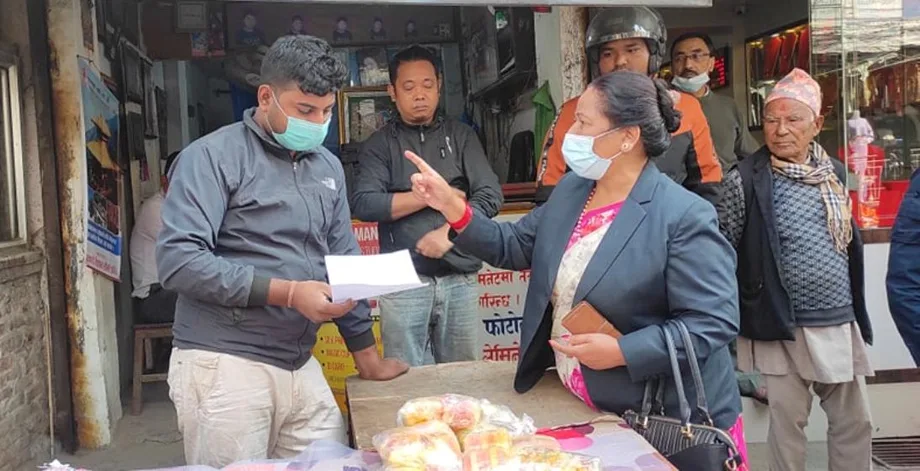
Sweet shop inspections bring warnings and destroyed food
Nepal's Department of Food Technology and Quality Control has issued warning notices and compliance instructions to 433 of 497 sweet shops inspected nationwide during its Tihar monitoring campaign. The department says 222 shops have fully introduced the required product information displays, as inspectors also target spoiled sweets, unsuitable colouring and deteriorated cooking oil.
Contents
- Sweet shop inspections bring warnings and destroyed food
- What sellers must display
- Where the notices were issued
- What inspectors found in Kathmandu Valley
- Colouring, kitchen layout and pest control
- Earlier inspections show recurring problems
- Kathmandu combines training with enforcement
- Checks extend to products sold as puja ghee
- Key Points
The campaign combines a new requirement for sellers to tell customers what they are buying with checks on how food is made. Shops must display the sweet's name, main ingredients, cooking oil or ghee, consumption deadline and price per kilogram. Inspectors can collect samples to check whether the food matches those declarations.
A detailed departmental inspection record shows what those checks uncover inside individual businesses. In its food inspection press note, dated 2082/06/31 in Nepal's Bikram Sambat calendar, the department records visits to six hotels and restaurants in Kathmandu Valley. Inspectors destroyed about eight litres of cooking oil at two businesses and found problems involving cleanliness, pest control, colouring and newspaper touching food.
Tihar, also called Yamapanchak, is Nepal's second biggest festival. Sweets are central to celebrations alongside lamps, flowers and Deusi-Bhailo performances. Rising demand gives businesses more orders to fill, while buyers need reliable information about ingredients and how long their purchases will remain suitable to eat.
The nationwide notice count covers businesses instructed to meet standards. The six premises described in the press note provide a closer view of specific findings and the corrective action ordered.
What sellers must display
The department says the new standards draw on the Food Hygiene and Quality Act 2024 and the Consumer Protection Act. Its instructions apply to hotels, sweet shops and stores selling prepared sweets, including products displayed loose rather than sold in sealed packages.
Five details must be visible where customers choose their purchases:
- The name or type of sweet.
- The main ingredients, such as milk, khuwa, dry fruits, sugar or gram flour.
- The type of oil or ghee used in preparation.
- The expiry or best-before date, showing the stated consumption period.
- The price per kilogram.
Khuwa is milk cooked down until much of its water has evaporated, leaving concentrated milk solids. Naming it and other ingredients helps customers understand a product that may otherwise look similar to sweets made with a different recipe.
The department also requires businesses to make information about the raw ingredients visible in their showcases. Identifying soybean oil, sunflower oil or ghee gives buyers a clearer basis for comparing products and prices.
Sanjeev Kumar Karn, director general of the Department of Food Technology and Quality Control, explained the purpose of the instructions:
"Our objective was to prevent consumers from being cheated and ensure that they have access to hygienic sweets," Karn said.
Inspectors may take samples for laboratory testing even when a shop has installed the required display. The department says businesses using ingredients different from those declared, inedible dyes or spoiled oil can face the maximum penalties available under the law, including cancellation of operating licences.
Where the notices were issued
Lumbini accounted for 175 of the 433 shops receiving notices, the largest provincial total. Koshi followed with 84, Madhes with 56, Bagmati with 53, Gandaki with 26, Karnali with 24 and Sudurpashchim with 15.
Lumbini's figure represents about 40 percent of all notices. The department has not given the number of shops inspected in each province, so readers cannot calculate a provincial compliance rate from these totals.
Nationally, 433 notices among 497 inspected shops amounts to about 87 percent. The 222 shops displaying the prescribed information represent about 45 percent of those inspected. The department describes businesses as making improvements during the campaign, with some receiving instructions and subsequently putting labels in place; it has not published a shop by shop breakdown connecting the two counts.
Karn said inspectors from 30 offices were working with local governments, district administration offices and the Department of Commerce. He described the next stage as identifying businesses that still failed to comply, starting legal proceedings and imposing fines at the premises.
The department's broader festival monitoring figures cover 1,751 locations between October 1 and 17, including food businesses, animal feed operations and hotels. More than Rs 1.076 million in fines had been collected across that wider programme. The amount attributable specifically to sweet shops was not given.
What inspectors found in Kathmandu Valley
The press note, issued under the name of department spokesperson Dr. Bal Kumari Sharma, records different conditions at the six premises visited. Some received instructions to improve working practices; others had products destroyed or samples taken for further examination.
At Shri Manakamana Khaja Pasal in Gaushala, Kathmandu, inspectors recorded unsatisfactory cleanliness and pest control, improper colouring and inadequate personal hygiene. A sweet tested in the department's mobile food laboratory was positive for starch. About three litres of cooking oil were destroyed after an oil quality reading of 26.5.
At Shri Bal Ganesh Mithai Pasal in Thali, inspectors found newspaper used to cover and pack food, unsatisfactory cleanliness, ineffective pest control and disorderly fryer use. A sweet tested negative for starch. About five litres of oil were destroyed after a reading of 26.0.
The oil measurement is called total polar materials, or TPM. It tracks substances that build up as frying oil deteriorates through use and heating. Inspectors use the reading to assess the condition of the oil rather than relying only on its colour or appearance.
At Anupam Sweet and Fast Food in Lagankhel, cleanliness was recorded as satisfactory and the oil TPM reading was 13.0. Inspectors nevertheless found 100 bags made from printed paper and instructed the business to stop using them. Paper intended for printing is unsuitable for direct food contact because ink and other substances can transfer to food.
Colouring, kitchen layout and pest control
New Janakpur Sweet and Fast Food in Lagankhel had about five kilograms of jalebi batter prepared with food colour and about two kilograms of bags made from newspaper. The department recorded the destruction of about five kilograms of jalebi and the newspaper bags, and collected a motichur laddu sample for surveillance.
Inspectors instructed the business not to use food colouring in foods that are cooked, fried or roasted, and to stop using newspaper. The finding connects an ingredient decision in the kitchen with a packaging practice at the sales counter: both were subject to correction.
Shri Devman Sweets, also in Lagankhel, had an open preparation area, no pest control and cooking and dishwashing areas together. Inspectors found sweets being fried in vanaspati ghee and collected a sample of that fat. They ordered pest control, separation of cooking and washing, and written procedures for the proper use of food colours.
The business was given seven days to submit evidence of corrections. Separating washing from cooking helps keep dirty water, used utensils and cleaning activity away from food being prepared.
At the Chabahil branch of Shri Shiva Foods Pvt. Ltd. in Tusal, Boudha, inspectors recorded general cleanliness but unsatisfactory pest control. They collected one oil sample and two sweet samples, and instructed the business to improve hygiene and pest management.
Earlier inspections show recurring problems
Municipal inspections in Madhyapur Thimi show that several of these problems have appeared in earlier Tihar seasons. A municipal operation described on 17 Kartik 2078 in the Nepali calendar covered wards 4 and 6, including Shankhadhar Chowk and Bakhaha Bazaar.
Deputy Mayor Anjana Devi Madhikarmi, who chaired the monitoring committee, led that inspection. At Laxmi Sweets and Chaat House, the team destroyed 3.6 kilograms of red puri made with inedible colouring. At Shri Siddhi Binayak Sweets and Chaat House, three kilograms of spoiled sweets were destroyed.
The same operation seized and destroyed three sacks of rotten and mouldy bhai masala from a pavement stall. Inspectors also destroyed five packs of milk cake without labels at New Dhanusha and Dhanusha Mithai Bhandar.
Municipal instructions covered business registration, permission to sell packaged products, price lists, weighing equipment, covered food and kitchen cleanliness. Those earlier findings place today's disclosure rules alongside recurring problems with preparation, storage and selling practices.
The main dates and periods in the inspection record are:
- 17 Kartik 2078: Earlier Tihar inspections in Madhyapur Thimi were described, including destruction of spoiled sweets and products containing inedible colouring.
- 2082/06/31: The department's press note documented checks at six Kathmandu Valley premises.
- October 1 to 17: The department recorded 1,751 inspections across its broader festival programme.
- October 28: Karn identified this as the effective date for the sweet shop display directive.
The department's account places the display directive on October 28 while also giving October 1 to 17 figures for the wider campaign. It does not explain the year or reporting cutoff connecting those dates, and no calendar date was given for the next phase of legal action.
Kathmandu combines training with enforcement
Kathmandu Metropolitan City has also stepped up inspections under its campaign theme, Clean Food: Excellent Business. Its training for confectionery operators covers food laws, hygiene, permitted ingredients and colouring, labels, processing, distribution and the facilities needed to prepare food safely.
Nurnidhi Nyaupane, chief of the city's Agriculture and Livestock Department, urged sweet producers and related businesses to meet their legal and hygiene responsibilities. He described the city's approach to enforcement:
The metropolis does not intend to intimidate businesses," he said. "But every entrepreneur should remember their responsibility. Maintaining hygiene benefits both consumers and business operators.
Santosh Giri, adviser to the city's Food Safety and Quality Program, said Kathmandu planned to continue training and inspections regularly. A recent inspection in New Baneshwor found many small hotels and restaurants operating below standards, prompting directions to comply and warnings of legal action.
Checks extend to products sold as puja ghee
The department is also acting against inedible fatty substances sold as puja ghee. Demand for ghee rises during Tihar because households use it for traditional lamps and religious rituals as well as food.
Karn said some religious supply shops had sold substances made from fat under the name of ghee. Inspectors had seized such products at various locations, with goods returned or destroyed.
For sweet buyers, the immediate checks are concrete: look for the ingredient list, the named oil or ghee, the consumption deadline and the price. A missing display leaves essential purchase information unavailable. Consumers can report businesses failing to follow the rules to the department or the nearest police or administrative office.
For businesses, the campaign requires changes both at the counter and behind it. Labels must give customers useful information, while kitchens must address oil condition, permitted colouring, cleanliness, pest control and suitable packaging.
Key Points
- The department inspected 497 sweet shops nationwide and issued notices and instructions to 433.
- It reported that 222 shops had fully introduced the required information displays.
- A detailed official inspection of six Kathmandu Valley businesses recorded destruction of about eight litres of deteriorated cooking oil.
- Sweet shops must display product names, main ingredients, oil or ghee, consumption deadlines and prices per kilogram.
- Kathmandu is combining business training with inspections, while national checks also target substances sold as puja ghee.
- The department plans legal action against businesses that continue to breach requirements.