A new fast over medical training and public healthcare
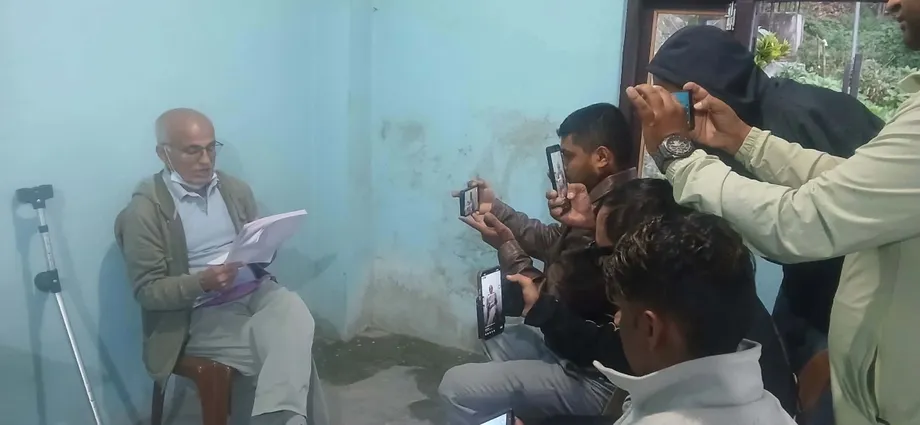
Dr Govinda KC has begun his 25th hunger strike at Narayan Temple in Ilam, demanding that Nepal reverse approvals for medical courses and student seat increases that he says fail to meet required standards. His statement places the start of the fast at 5 pm on Thursday, Kartik 12, 2083, in the Nepali calendar.
Contents
- A new fast over medical training and public healthcare
- Why Geta is the central concern
- Seat allocations bring scrutiny of the regulator
- What the scholarship demand means for students
- The ministry says reforms and working groups are advancing
- How the dispute reached another hunger strike
- Patients and proposed colleges across Nepal
- Key Points
The medical education campaigner has presented six demands, including an independent investigation into senior officials, full operation of the Geta teaching hospital and enforcement of a requirement reserving at least 75 per cent of seats as scholarships at institutions using public or government resources.
At the centre of the dispute is Shahid Dasharath Chand University of Health Sciences in Geta, Kailali, in Sudurpaschim Province. KC objects to permission for MBBS and nursing programmes to begin in the current academic session, alleging that the institution lacks the necessary infrastructure, qualified academic staff and legal compliance.
Nepal's education ministry says teaching at Geta will begin during the same academic year. It also says working groups are implementing an earlier agreement with KC, setting up a disagreement over whether government action is delivering the promised reforms.
KC, a doctor and medical education reform campaigner, said an extended deadline had passed without his demands being addressed. Announcing his decision, he said:
I am announcing the start of my hunger strike from 5 pm today, as the government has failed to address our demands even within the extended deadline.
The dispute reaches beyond university admissions. KC links the quality of medical training to the treatment patients receive, the cost of becoming a doctor or nurse, and the long journeys people in western Nepal make to obtain healthcare.
Why Geta is the central concern
Geta's medical college and teaching hospital were built with public resources after years of campaigning. KC says more than half a decade has passed since construction was completed, yet the hospital is still not operating at full capacity.
KC wants the hospital brought fully into service immediately, with academic programmes introduced after staffing, infrastructure and legal requirements are met. His demand places the hospital's operation before the expansion of teaching.
A teaching hospital has two connected jobs: treating patients and giving future doctors and nurses supervised practical experience. MBBS is the undergraduate medical degree used to train doctors. Students need functioning clinical services and qualified teachers alongside classroom instruction.
KC alleges that institutions lacking the required facilities and legal standards are being presented as teaching hospitals to support the new programmes. He also seeks changes to provisions in the university's governing law that he describes as disputed and influenced by party politics.
The education ministry presents Geta's planned courses as part of expanding access to medical education. Its statement says several disciplines will begin teaching there during the current academic year. The central disagreement is therefore about the conditions for opening courses, while both sides describe expanding public medical education as a goal.
Seat allocations bring scrutiny of the regulator
The Medical Education Commission decides how many students institutions may admit. KC wants approvals for increased seats withdrawn wherever colleges have allegedly failed to meet prescribed standards. A larger intake means more students sharing the institution's teachers, clinical placements and facilities.
KC has questioned the commission vice-chairperson's impartiality because the official previously served as principal of Nepal Army Medical College, which subsequently received an increase in seats. He also alleges that a family member of the vice-chairperson was appointed to a committee responsible for determining student quotas.
A conflict of interest can arise when an official's personal relationships or institutional ties overlap with a public decision they help make. KC wants an investigation into whether such interests affected appointments or decisions in this case.
KC also points to a vacant commission director position carrying important responsibilities in seat allocation. He is calling for the commission vice-chairperson and the Geta university's vice-chancellor and registrar to be suspended pending an independent investigation at a high level.
The proposed inquiry would examine appointment procedures, academic qualifications, professional experience, possible conflicts of interest and decisions taken after the officials assumed office. KC wants legal action against anyone found guilty. These are allegations and demands from KC; the ministry's response describes institutional reforms without addressing each accusation individually.
What the scholarship demand means for students
KC is seeking strict enforcement of a requirement that at least 75 per cent of seats at institutions using government or public resources be allocated as scholarships. Put simply, that would mean at least 75 scholarship places in an intake of 100 students.
His demand connects public spending on buildings and institutions with access for students who cannot afford the full cost of medical education. KC opposes any reduction in that scholarship share and any increase in admissions that falls short of required standards.
The education ministry says selection and management of students receiving free scholarships are among the achievements made after the National Medical Education Act, 2075. KC's complaint concerns whether those protections are being enforced as institutions expand.
KC argues that private commercial interests could benefit from reduced scholarships and increased admissions without adequate facilities. Describing his position on the purpose of medical training, he said:
Medical education is not a tool for commercial interests. It is a service directly connected to citizens' health and lives. No compromise can be accepted on its quality, impartial regulation or the effective operation of public institutions.
The ministry says reforms and working groups are advancing
Nepal's education ministry has acknowledged KC's contribution to medical education reform as important. It credits agreements between the campaigner and successive governments with helping bring policy and institutional changes.
The ministry identifies the National Medical Education Act, 2075, as the basis for establishing the Medical Education Commission, introducing a common entrance examination and organising selection for free scholarships. A common entrance examination gives applicants a shared route into medical education rather than separate admission processes at each institution.
The ministry also says affiliation decisions, which authorise institutions to provide medical education under an academic body, have become more transparent and based on standards. It says working groups covering the subjects in the agreement with KC have been formed and are active.
KC says the agreement has gone unfulfilled for roughly three months and that subsequent decisions have moved against its purpose. The ministry points to work in progress; KC wants completed action on the hospital, appointments, scholarships and admissions.
How the dispute reached another hunger strike
KC previously held his 24th hunger strike in Dhangadhi. That protest included demands concerning appointments in the medical education sector and full operation of Geta's teaching hospital.
The sequence described in his statement connects that earlier protest with the current fast:
- During the 24th hunger strike in Dhangadhi, KC pressed for action on Geta and disputed appointments.
- On Sawan 11, 2083, according to KC's statement and the ministry's account, the government reached an agreement with him on health, education, governance and social justice.
- Over the following roughly three months, KC says implementation failed to meet those commitments.
- At 5 pm on Kartik 12, 2083, he began his 25th hunger strike in Ilam after an extended deadline expired.
The initial chronology gives different dates, describing the agreement as June 25 and the start of the fast as October 29, 2083. KC's detailed statement instead uses Sawan 11 and Kartik 12, 2083; those date differences have not been reconciled.
KC also wants implementation of commitments concerning investigations into arson, looting and vandalism across Nepal on September 9, 2025. That demand forms part of the broader governance and social justice agreement he is asking the government to honour.
Patients and proposed colleges across Nepal
Sudurpaschim residents face a direct cost when public hospital services remain limited, KC argues. He says many must travel to Nepalgunj, Kathmandu or India for treatment, adding transport and accommodation expenses to medical bills.
KC links those journeys and financial pressures to delayed treatment and the risk of death, lasting illness or disability. Full operation of Geta, in his view, would bring more care within reach of the population the institution was built to serve.
His sixth demand seeks faster establishment of government medical colleges or health sciences academies in Ilam, Udaypur and Dadeldhura. KC says initial processes have already begun and wants earlier commitments put into effect. He also repeats his call for at least one government medical college or health sciences academy in every province.
Bardibas in Madhesh Province is another point of disagreement. KC says the government cancelled the medical college construction project and demands reversal of that decision and a resumption of building work. The education ministry, meanwhile, lists Bardibas alongside Surkhet and Butwal as places where medical education infrastructure development is continuing.
Those positions leave the project's practical status unclear to people waiting for the institution. Across the proposed colleges, KC's demands bring together two concrete priorities: more public institutions outside Kathmandu and sufficient staff, facilities and scholarship places for them to serve students and patients.
Key Points
- Govinda KC began his 25th hunger strike at Narayan Temple in Ilam, announcing a start time of 5 pm.
- He wants Geta's teaching hospital fully operational before academic programmes begin under the required conditions.
- KC seeks withdrawal of disputed course approvals and seat increases, plus an independent investigation into senior officials.
- His demands include at least 75 per cent scholarship seats at institutions using public or government resources.
- The education ministry says reforms are progressing and working groups are implementing its agreement with KC.
- KC also seeks public medical institutions in Ilam, Udaypur and Dadeldhura, and restoration of the Bardibas construction project.