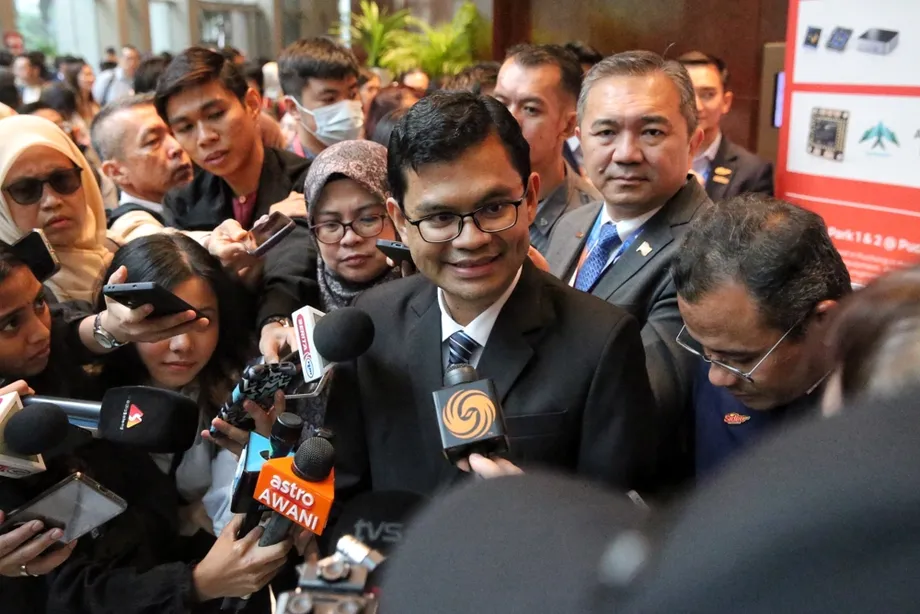
Six designs put Malaysia's technology ambitions to the test
Malaysia unveiled six locally developed semiconductor innovations in Kuala Lumpur on October 16, 2026, with combined sales potential estimated at RM300 million, as the country pushes to earn more from designing and owning technology. The products range from a processor for artificial intelligence to controllers for satellite power and autonomous drones.
Contents
- Six designs put Malaysia's technology ambitions to the test
- What the six innovations are designed to do
- Why customers and qualification come next
- From manufacturing chips to owning designs
- Two parks build a shared base for design
- Arm access supports the engineering effort
- Training targets extend beyond the six products
- Capital must support the move into production
- States are being asked to build on different strengths
- Key Points
Economy Minister Akmal Nasrullah Mohd Nasir said the innovations demonstrated growing Malaysian design capabilities, but securing customers, completing industry qualification and expanding production were the next tasks. The RM300 million estimate, equivalent to about US$74 million, has been described as potential annual sales. Akmal gave no date for reaching that level.
The six innovations emerged from companies operating within the Malaysia Semiconductor IC Design Park initiative. Its facilities in Puchong and Cyberjaya now house 407 engineers across 20 companies, bringing Malaysian businesses together with partners from Taiwan, France, Japan and Australia.
Akmal launched the products during the Selangor AI & Semiconductor Summit, held alongside the Selangor International Business Summit 2026. His message was that a country with more than five decades of semiconductor manufacturing experience now needs more businesses that create the technology behind the products.
For Malaysian engineers and companies, that means a larger role in deciding what chips do, developing the designs and retaining the intellectual property. For customers, the immediate question is practical: whether these products meet their technical requirements and can be supplied reliably.
Akmal described the next commercial milestone in his launch speech:
The next milestone is to secure customer adoption, meet industry qualification requirements and scale these innovations into successful commercial products.
What the six innovations are designed to do
The lineup covers several different parts of an electronic system. Some products process information, while others store data, regulate electricity or control movement. Their intended markets stretch from computers and factories to vehicles and spacecraft.
- SkyeChip's MARS1000 is an edge AI processor intended for cameras, robots and factory systems.
- MaiStorage's aiDAPTIV+ provides storage solutions for personal computers and servers running AI applications.
- SiliconX's field-programmable gate array, or FPGA, is a reprogrammable chip for industrial and automotive applications. It was presented as the first homegrown FPGA in Malaysia and Southeast Asia.
- Infinecs' Maxwell is a power regulator designed for vehicle electronics.
- Weeroc Space's Conan is a power controller chip for satellites and other space systems.
- Alphaswift's FC Mini is a flight controller for autonomous drones.
Edge AI means running artificial intelligence close to where information is collected, such as inside a camera or robot, rather than sending every task to a remote server. A processor intended for this role must work within the device's limits on power, space and computing capacity.
An FPGA serves a different purpose. Its internal logic can be reconfigured after manufacturing, allowing engineers to adapt it to particular tasks. Power regulators and controllers manage the electricity supplied to other components, while a drone flight controller coordinates functions needed to keep the aircraft operating.
Why customers and qualification come next
Akmal's commercial priorities put customer demand alongside technical development. A working design must fit a buyer's system, pass the checks required for its intended use and reach production in quantities that make commercial sense.
Industry qualification is the process of demonstrating that a component meets the performance and reliability requirements of a market or customer. Vehicle electronics and space systems can have demanding requirements because components must operate reliably in difficult conditions.
The six products therefore face different routes to sales. A company considering an AI storage solution will assess it against its computing needs. A satellite developer will assess a power controller against the requirements of its spacecraft. Each supplier needs to turn a technical capability into a product that a customer is prepared to buy.
Akmal also said the government needed to help develop markets for Malaysian designs. His approach connects product development with demand: more customers can support larger production runs and attract further investment into local businesses.
The RM300 million opportunity will depend on those steps. The announcement places customer adoption, qualification and production expansion at the centre of the next phase, rather than treating the unveiling itself as the final commercial milestone.
From manufacturing chips to owning designs
Malaysia's semiconductor industry developed over more than 50 years, beginning with assembly operations in Penang and expanding into testing, packaging, equipment, manufacturing services and design. The country hosts operations serving major international semiconductor businesses, including Intel, GlobalFoundries and Infineon.
Packaging protects a chip and connects it to the wider electronic system. Testing checks whether it functions as intended. Chip design determines the circuits and functions inside it. Malaysia's strategy is to build design capabilities alongside its established manufacturing work.
Akmal described the policy shift through two ideas: Made in Malaysia identifies where a product is manufactured, while Made by Malaysia focuses on the ability to develop and own the technology behind it. He said the country needs both.
Selangor Menteri Besar Datuk Seri Amirudin Shari linked that shift to the risks of relying heavily on production decisions made elsewhere. He explained why moving into more valuable activities mattered:
If a country does not adapt and move up the value chain, we stand to lose if a company decides to close shop and move their production elsewhere.
Two parks build a shared base for design
Selangor's two design parks provide the physical base for this effort. Amirudin said the Puchong facility was almost full, while Cyberjaya was preparing to expand from one occupied floor to three. The Cyberjaya park also houses an advanced chip testing centre, described at the launch as Southeast Asia's first.
The development has moved through several stages:
- August 2024: Malaysia's first Semiconductor IC Design Park opened in Puchong.
- November 2025: A second facility opened in Cyberjaya, adding design space and advanced testing infrastructure.
- October 16, 2026: Six local semiconductor innovations were unveiled during the Selangor AI & Semiconductor Summit.
Akmal said the parks produced the six innovations within two years. Their combined workforce of 407 engineers and mix of 20 companies show the initiative bringing several businesses and technical teams into the same network.
The planned Cyberjaya expansion would triple the number of occupied floors, from one to three. Amirudin presented the parks as places where talent, technology and capital could be brought together, with international partners contributing to the local design environment.
Arm access supports the engineering effort
Malaysia's partnership with Arm is intended to give local companies broader access to advanced chip design technology and intellectual property. Akmal said this access builds on existing Malaysian expertise in testing, equipment and packaging.
Intellectual property in chip design can include reusable technical designs that engineers incorporate into a larger product under a licence. Access to established building blocks can shorten parts of development, allowing teams to concentrate more effort on the functions that make their own product useful.
Akmal connected Arm access with the speed at which the parks had developed their innovations. He also stressed the need to convert that access into commercially viable products that can be sold in larger volumes.
His proposed measures of progress reach beyond the number of chips passing through Malaysian factories. They include how many are designed locally, how much intellectual property Malaysian companies develop and own, and how much economic value stays in the country.
Training targets extend beyond the six products
The National Semiconductor Strategy aims to train and improve the skills of 60,000 Malaysian engineers. Within the wider talent effort, the Arm On-Demand Training programme targets 10,000 Malaysians with specialised integrated circuit design skills over four years. An integrated circuit, or IC, combines electronic components on a small semiconductor chip.
Amirudin said the Advanced Semiconductor Academy of Malaysia had already trained around 850 engineers through collaboration with more than 100 universities. That gives the parks a training network alongside the companies developing products.
The national strategy also targets the development of 110 Malaysian semiconductor companies with greater economic value: 10 existing local companies and 100 additional firms. Its technical priorities include IC design, advanced packaging and advanced manufacturing equipment.
Under the Thirteenth Malaysia Plan, the government aims to increase the share of skilled workers from about 31% in 2025 to 35%, a rise of four percentage points. Akmal linked the growth of industries such as semiconductors with the need for companies to attract and employ more skilled people.
Capital must support the move into production
Selangor's Ehsan Semiconductor Fund aims to raise RM100 million for young semiconductor businesses and companies developing AI applications. Amirudin identified access to capital as one of the three requirements for local design capability, alongside technology and talent.
SkyeChip offers a separate example of financing through the public market. Amirudin said the company raised RM352 million when it listed on Bursa Malaysia's main market in May. That financing sits alongside the product development work represented by its MARS1000 processor.
Weeroc Space has completed its second tape-out, according to Amirudin. Tape-out is the stage when a completed chip design is sent for manufacturing. It is an important development step before teams can evaluate manufactured silicon and continue the work needed for customer use.
The fund, listing and tape-out illustrate different needs within the same industry: money to develop businesses, capital to support growth and engineering progress toward manufactured products. The six innovations will require continued work across those areas as companies pursue orders.
States are being asked to build on different strengths
Akmal called for federal and state semiconductor initiatives to complement one another. Asked about Sarawak's recently unveiled locally designed gallium nitride chip, he said individual states could contribute different expertise to a stronger national industry.
He pointed to Selangor's concentration of design companies, engineers, tools and investment, while also naming Penang, Kedah and Sarawak as states with complementary capabilities. Better coordination, he said, could turn investments in individual states into benefits for Malaysia as a whole.
Akmal explained the case for cooperation in terms of Malaysia's size:
For us as a small country, definitely we need to rely on each other's strengths.
The policy challenge now joins national coordination with company level execution. Shared training, design access and testing facilities can support the industry, while each supplier still needs customers for its own product. The six innovations give Malaysia concrete projects through which to pursue its ambitions for technology ownership, skilled employment and greater value retained locally.
Key Points
- Malaysia unveiled six local semiconductor innovations on October 16, 2026, covering AI, industrial electronics, vehicles, satellites and drones.
- Combined sales potential is estimated at RM300 million, described as an annual opportunity, with no date given for achieving it.
- The Puchong and Cyberjaya design parks house 407 engineers across 20 companies.
- Customer adoption, industry qualification and production expansion are the next commercial priorities.
- The National Semiconductor Strategy targets training for 60,000 engineers and development of 110 Malaysian semiconductor companies.
- Arm access, training programmes, testing infrastructure and investment are intended to support Malaysia's move toward designing and owning more technology.