Six matches stand between South Korea and a historic opportunity
South Korea will begin its bid for a first Olympic appearance in women's football away to China on April 19, 2027, before hosting North Korea five days later, under a provisional schedule following the Asian qualifying draw on November 12, 2026.
Contents
- Six matches stand between South Korea and a historic opportunity
- How the Olympic places will be decided
- What the rankings reveal about Group B
- A difficult record, with recent reasons for confidence
- South Korea's provisional qualifying calendar
- Why the possible Pyongyang visit matters
- The Philippines fixtures form the middle of the campaign
- A larger tournament meets a team climbing the rankings
- Key Points
The draw at the Asian Football Confederation (AFC) House in Kuala Lumpur placed coach Shin Sang-woo's team in Group B with North Korea, China and the Philippines. Only the group winner will qualify directly for the 2028 Los Angeles Olympics. Second place will lead to two further stages of competition.
South Korea's final group match is scheduled away to North Korea on December 4, 2027, raising the possibility of a decisive visit to Pyongyang. The Korea Football Association (KFA) says the detailed dates and venues remain subject to consultation with the AFC and the national associations involved.
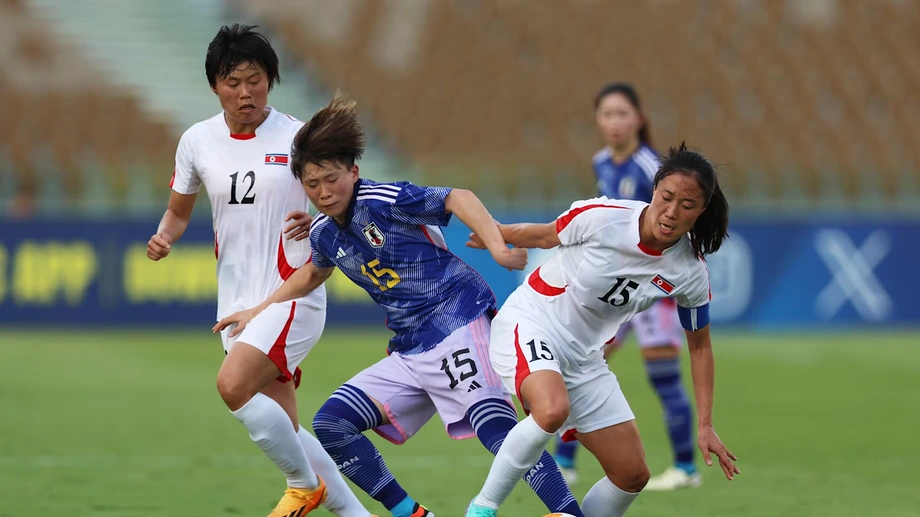
Los Angeles will expand the Olympic women's football tournament from 12 teams to 16. Yet South Korea's route includes two opponents against whom it has managed just six victories in 66 matches combined. Recent results offer Shin's players a more encouraging starting point: they drew with North Korea and defeated China at the 2026 Aichi-Nagoya Asian Games.
How the Olympic places will be decided
Asia has two guaranteed Olympic places and an opportunity to earn a third through an intercontinental playoff. The allocation is commonly described as 2.5 places. The half place means a chance to qualify by beating a team from another continent.
The eight teams in the final Asian qualifiers are the quarterfinalists from the 2026 AFC Women's Asian Cup. They have been divided into two groups of four, with every team playing each opponent once at home and once away. Each team therefore has six group matches.
The Group A and Group B winners will advance directly to Los Angeles. The two runners-up will meet over two matches, scheduled for February 28 and March 4, 2028, with each side hosting one game. The winner will then face Argentina for an Olympic berth.
For South Korea, finishing first would settle qualification in December 2027 under the proposed calendar. Finishing second would extend the campaign into 2028 and require success against both the other Asian runner-up and Argentina. Teams finishing third or fourth will be eliminated.
What the rankings reveal about Group B
The draw used the October FIFA women's world rankings to divide the eight teams into four seeding pots. A pot is a group of teams from which one is drawn into each qualifying group, spreading the higher ranked sides across the competition.
Japan, ranked fifth, and North Korea, ranked 12th, occupied Pot 1. Australia, 15th, and South Korea, 17th, were in Pot 2. China, 18th, and Chinese Taipei, 38th, made up Pot 3, while the Philippines, 39th, and Uzbekistan, 51st, were in Pot 4.
South Korea drew an opponent ranked five places above it in North Korea and another just one place below it in China. Drawing China rather than Chinese Taipei also meant facing a team ranked 20 places higher than the other possible opponent from that pot.
Group A contains Japan, Australia, Chinese Taipei and Uzbekistan. Japan is the highest ranked team in the entire qualifying field, while Australia also sits above South Korea. Group B brings together three teams within six ranking places of one another, making the contest for its single automatic berth especially competitive on paper.
A difficult record, with recent reasons for confidence
South Korea has won once, drawn five times and lost 16 times in 22 senior women's internationals against North Korea. Against China, its record is five wins, 10 draws and 29 defeats in 44 matches.
Combined, those records amount to six wins, 15 draws and 45 defeats across 66 meetings. South Korea has won roughly 9% of those games, calculated from the six victories divided by 66 matches. Four of its six scheduled qualifiers will be against these two opponents.
Shin's team produced better results in their most recent encounters at the Asian Games in September and October 2026. South Korea drew 1-1 with North Korea in the group stage, then beat China 1-0 in the bronze medal match. The victory over China was its first against that opponent in 11 years.
South Korea also lost 2-0 to host Japan in the Asian Games semifinal before securing bronze. The tournament gave Shin's team recent experience against three of the sides still competing for Asia's Olympic places, including both of its highest ranked Group B opponents.
South Korea's provisional qualifying calendar
The proposed schedule divides South Korea's six matches into three pairs during FIFA women's international windows in April, October and November to December 2027. Those windows are designated periods for national team football.
The opening pair immediately brings China and North Korea into focus. South Korea then faces the Philippines twice in October before closing against China and North Korea again. The provisional timeline is:
- April 19, 2027: China away.
- April 24, 2027: North Korea at home.
- October 7, 2027: The Philippines away.
- October 12, 2027: The Philippines at home.
- November 29, 2027: China at home.
- December 4, 2027: North Korea away.
- February 28 and March 4, 2028: Playoff between the two group runners-up, if South Korea finishes second.
Each pair of group matches is separated by five days. South Korea is scheduled to travel home between its April fixtures and again between its October matches. Its final pair reverses that pattern, beginning at home against China before the away game against North Korea.
The KFA's schedule follows the AFC's advance timetable for the seeding pots. An intercontinental playoff date against Argentina has not been given.
Why the possible Pyongyang visit matters
North Korea's scheduled home match on December 4 would come at the end of the group campaign, when the automatic Olympic place could still be undecided. A close contest at the top of Group B could make that final meeting decisive.
South Korea's women's team last played away in North Korea during the 2017 Asian Cup qualifiers in Pyongyang. That match ended 1-1. A return in December 2027 would come more than a decade after that visit.
Seoul and Pyongyang are the prospective locations for the two meetings between the Koreas. The final arrangements will depend on discussions between the football associations and the AFC, alongside the wider confirmation of the qualifying schedule.
For Shin's team, the practical challenge is to prepare for a campaign that includes three home matches and three away matches while those arrangements are settled. The last fixture carries particular sporting weight because there would be no remaining group game in which to recover lost ground.
The Philippines fixtures form the middle of the campaign
The Philippines is the lowest ranked team in Group B at 39th, compared with South Korea at 17th. Its two meetings with South Korea are scheduled consecutively, away on October 7 and in South Korea on October 12.
Those games account for one third of South Korea's group schedule. Their position between the opening and closing matches against China and North Korea makes them a substantial part of the qualification contest, even as the meetings between the Koreas attract particular attention.
South Korea will know the results of its first games against China and North Korea before facing the Philippines. By the end of the October window, four of its six matches will have been played, leaving only the return fixtures against the two opponents it has historically found hardest to beat.
A larger tournament meets a team climbing the rankings
Los Angeles will feature four more women's football teams than Paris did in 2024, an increase of one third from 12 to 16. South Korea is pursuing its first appearance since the sport entered the Olympic programme at Atlanta in 1996.
South Korea enters this campaign after moving from 19th to 17th in the FIFA rankings released on October 20, 2026. That was its highest position since June 2023. China moved from 16th to 18th, putting South Korea one place above its opening qualifying opponent.
Among the eight teams in the final Asian qualifiers, South Korea ranks fourth, behind Japan, North Korea and Australia. Its highest position in the FIFA women's rankings was 14th in March 2019.
Shin's task now is to turn the recent Asian Games results and ranking improvement into a sustained campaign. South Korea must finish above all three Group B opponents to secure the direct place, or finish second and negotiate the longer playoff route. The first scheduled test is China away on April 19.
Key Points
- South Korea faces North Korea, China and the Philippines in Group B of the final Asian Olympic qualifiers.
- Only each group winner qualifies directly. The runners-up enter an Asian playoff, whose winner then faces Argentina.
- South Korea's six provisional group fixtures run from April 19 to December 4, 2027.
- The final match is scheduled away to North Korea, with Pyongyang a possible venue.
- The Asian runners-up playoff is scheduled for February 28 and March 4, 2028.
- South Korea recently drew 1-1 with North Korea and beat China 1-0 at the 2026 Asian Games.
- Los Angeles will have 16 women's football teams, up from 12 in Paris. South Korea has never qualified.