A four kilogram victory in Ningbo
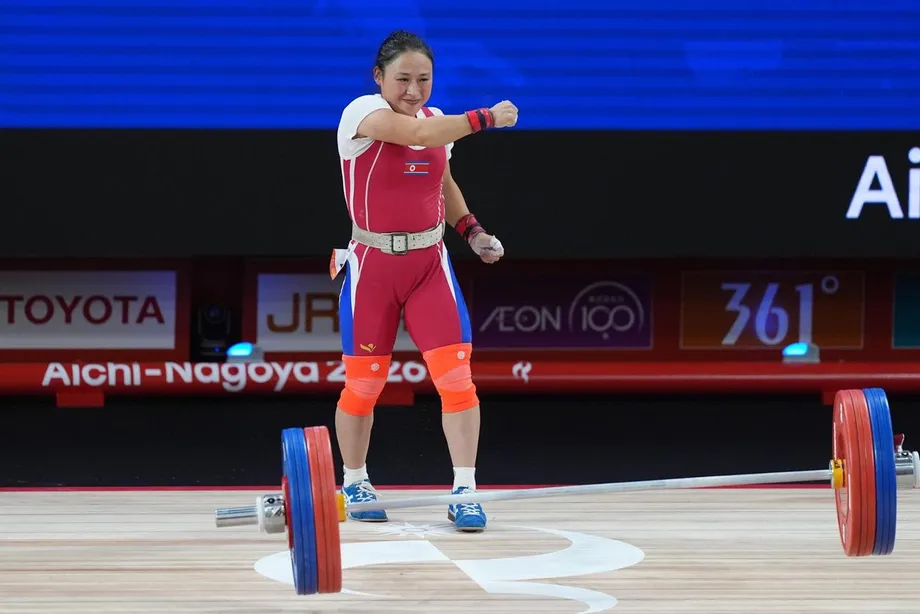
North Korea's Ri Song-gum lifted a combined 211 kg to win her third consecutive world weightlifting championship in Ningbo, China, on October 27, 2026, then turned her attention to a move into the 53 kg category for the 2028 Los Angeles Olympics.
Contents
Ri completed a 92 kg snatch and a 119 kg clean and jerk, finishing four kilograms ahead of China's Zhao Jinhong, whose lifts of 91 kg and 116 kg produced a 207 kg total. Ri also attempted 122 kg in the clean and jerk in pursuit of a world record, but could not complete the lift.
The victory followed her world titles in Manama in 2024 and Førde in 2025. It also came a month after her gold medal at the Aichi-Nagoya Asian Games, where she lifted 215 kg and set three world records.
North Korea took two more places on the total podium in the men's 60 kg competition. Pang Un-chol won silver and international newcomer Pak In-song took bronze, both finishing on 300 kg behind China's Yang Yang on 304 kg.
How Ri built her winning total
Ri's advantage over Zhao came from both parts of the competition. She lifted one kilogram more in the snatch and three kilograms more in the clean and jerk, building the four kilogram winning margin through two successful disciplines.
The snatch takes the barbell from the floor to above the head in one continuous movement. The clean and jerk has two parts: the athlete first brings the bar to the shoulders, then drives it overhead. The best successful lift in each discipline is added together to produce the total.
Ri won gold in the snatch, clean and jerk, and total. World championships award medals for each of those results, so an athlete can leave one weight category with three medals. Ri's three golds in Ningbo represent a sweep of this competition; her third consecutive world title describes her winning streak across three annual championships.
Ri's unsuccessful attempt at 122 kg left her best clean and jerk at 119 kg. Her completed lifts were enough to secure the title ahead of Zhao, even without the additional three kilograms she sought on the final attempt.
A world title after September's record sweep
Ri arrived in Ningbo after lifting 94 kg in the snatch and 121 kg in the clean and jerk at the September 2026 Aichi-Nagoya Asian Games. Her 215 kg total there accompanied world records in both lifts and the total.
Her Ningbo performance was two kilograms lower in each discipline, leaving her total four kilograms below her Asian Games result. The comparison shows the level she had reached just weeks before the world championships: she could finish below her September marks and still beat her closest challenger by four kilograms.
Ri has broken world records 12 times over the past three years across the 48 kg and 49 kg categories. That record of repeated improvements provides the context for her attempt at 122 kg in Ningbo, even though this particular attempt ended without a successful lift.
The Ningbo event is described as the women's 50 kg category in most accounts of the result, while two identify it as 49 kg. The reported lifts and finishing order are consistent: Ri totaled 211 kg, ahead of Zhao on 207 kg.
Why the move to 53 kg matters
Los Angeles is the reason for Ri's planned change of category. The women's lightest Olympic weightlifting category in 2028 is set at 53 kg, prompting her to prepare for competition at that limit rather than remain in the lighter categories where she has built her recent record.
A weight category sets the maximum body weight an athlete may have at the weigh-in. It is separate from the weight on the barbell. Moving to 53 kg therefore means preparing to compete in a heavier body weight group, where Ri will need to turn any added weight into useful lifting strength.
Ri made her international debut at the 2014 Youth Olympics, where she finished second. Throughout her international career, she has competed at a body weight no higher than 49 kg. The planned move would take her beyond the range in which she has established herself.
Her immediate plan is to spend about five months gaining weight before the second IWF qualifying event in March 2027. That gives the change a concrete timetable: the period after Ningbo is intended for preparation before she returns to the qualifying schedule.
The next competition milestone is March 2027, while her Olympic target is Los Angeles in July 2028. The Ningbo title strengthens her record as she begins that transition, with the next phase focused on a different category.
The dates behind Ri's next step
Ri's career milestones connect an early international medal with three successive world titles and a planned change before Los Angeles. The recent results also show how closely the Asian Games, world championships and qualifying preparations follow one another.
- 2014: Ri finished second at the Youth Olympics on her international debut.
- 2024: She won the world title in Manama.
- 2025: She retained the world title in Førde.
- September 2026: She won Asian Games gold in Aichi-Nagoya with a 215 kg total and three world records.
- October 27, 2026: She totaled 211 kg in Ningbo for her third consecutive world title.
- March 2027: She plans to reach the second IWF qualifying event after about five months focused on gaining weight.
- July 2028: She is targeting the Los Angeles Olympics in the 53 kg category.
The shift begins immediately after another successful competition in her familiar weight range. Rather than spending the coming months preparing solely to repeat her Ningbo numbers, Ri plans to change the body weight at which she competes.
Pang saves silver with his final attempt
Pang Un-chol faced a much tighter situation in the men's 60 kg clean and jerk. The world record holder in the category had lifted 130 kg in the snatch, but missed his first two clean and jerk attempts.
His third attempt became decisive. Pang completed 170 kg, securing the clean and jerk result he needed to finish with a 300 kg total and take silver. Without a successful lift in that discipline, he would have been left without a combined total.
Yang Yang won gold with 304 kg, four kilograms ahead of Pang. The result repeated their finishing order at the Asian Games the previous month, where Pang had also taken silver behind the Chinese lifter.
Pang earned silver medals in the snatch, clean and jerk, and total in Ningbo. His final successful lift preserved a place on all three podiums after two failures had put his combined result at risk.
Pak wins a discipline on his international debut
Pak In-song reached the podium at his first international competition with a different route to the same 300 kg total. He lifted 129 kg in the snatch and 171 kg in the clean and jerk, taking bronze in the total.
Pak completed all three of his clean and jerk attempts and won gold in that discipline. He also collected bronze in the snatch, giving him three medals on his international debut.
The two North Korean lifters illustrate how separate discipline medals and the combined standings can produce different winners. Pang lifted one kilogram more than Pak in the snatch, while Pak lifted one kilogram more than Pang in the clean and jerk. Their totals matched, but Pang received silver and Pak bronze in the final standings.
Pak's 171 kg clean and jerk was the winning performance in that discipline, while Yang's 304 kg combined result secured the main title. Success in one lift and success across the whole competition reward different parts of an athlete's performance.
Nine medals across two categories
The championships brought together about 520 athletes from more than 90 countries and regions. Within that field, Ri, Pang and Pak collected nine medals across the women's lightweight event and the men's 60 kg competition.
Ri contributed three golds. Pang added three silvers, while Pak won one gold and two bronzes. Their combined return was four golds, three silvers and two bronzes, counting the separate snatch, clean and jerk, and total awards.
Ri's result supplies the headline achievement, a third consecutive world title before her planned move to 53 kg. The men's results add two contrasting performances: Pang rescued his total with his final attempt, while Pak completed every clean and jerk attempt and won that discipline at his first international appearance.
Key Points
- Ri Song-gum won her third consecutive world title with a 211 kg total in Ningbo on October 27, 2026.
- China's Zhao Jinhong finished second on 207 kg, four kilograms behind Ri.
- Ri won gold in both lifts and the total but missed a world record attempt at 122 kg in the clean and jerk.
- She plans to move to 53 kg for Los Angeles 2028, with preparation aimed at a qualifying event in March 2027.
- Yang Yang won the men's 60 kg title on 304 kg; Pang Un-chol and Pak In-song each totaled 300 kg for silver and bronze.
- Pak won clean and jerk gold with 171 kg at his first international competition.