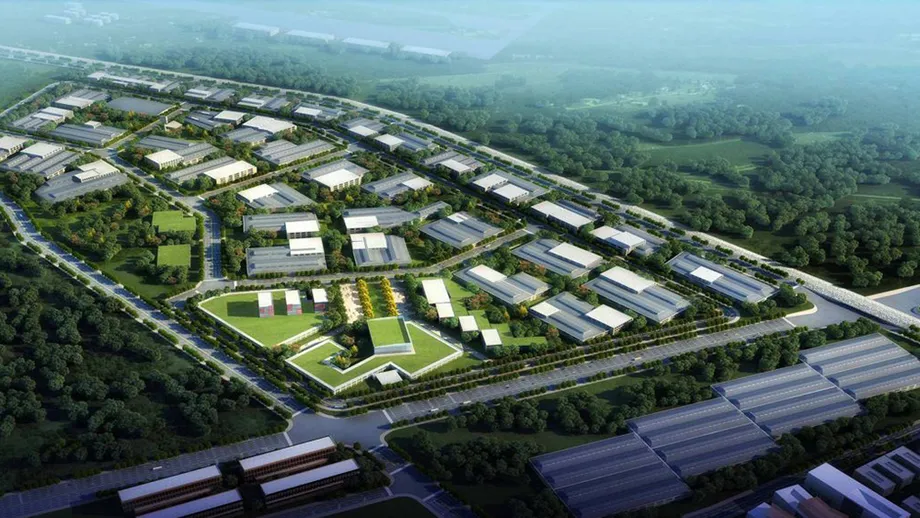
Investment and jobs put industrial zones in focus
Bangladesh's economic zones have attracted nearly $300 million in private investment and created around 42,000 jobs with World Bank support, according to figures from the bank's Bangladesh office publicised on October 28, 2026. The announcement highlights the role of prepared industrial land, infrastructure and business support in bringing companies into production.
Contents
- Investment and jobs put industrial zones in focus
- What an economic zone provides
- Roads, water and power behind the figures
- Who financed the groundwork?
- How widely did workers benefit?
- Safety and environmental standards were part of the programme
- From the first programme to a $500 million successor
- Why the results matter to Bangladesh's financing needs
- Key Points
The World Bank Bangladesh shared the figures on its official Facebook page as part of its work to mobilise private capital. In simple terms, that means using development finance and other support to help businesses commit their own money to factories, facilities and employment.
The bank's earlier project record gives a much larger investment figure: its May 5, 2021, project results account says the Private Sector Development Support Project helped attract more than $3.9 billion in direct private investment during 2011 to 2021, while creating about 41,000 jobs. The latest announcement does not identify its measurement period or explain how its investment and employment totals relate to those earlier results.
For workers and businesses, the practical story reaches beyond either headline figure. The earlier programme developed 1,500 acres of land, delivered $407 million worth of infrastructure and facilities, and helped train more than 21,000 people. It also supported rules governing industrial zones and services intended to make investment easier.
Those details show how the programme worked: public and development funding helped prepare sites and institutions, while private companies supplied investment in businesses. Employment depended on both parts coming together, with usable land, electricity, water, transport connections and workers able to take the jobs.
What an economic zone provides
Bangladesh turned to special economic zones partly because businesses struggled to find suitable land for new industrial projects. The World Bank's 2021 account describes how rising agricultural productivity during the 1990s encouraged millions of workers to move towards manufacturing and services in cities, while a shortage of land constrained new investment.
An economic zone brings industrial sites and supporting services together in a designated area. A company still has to establish and run its business, but access to prepared land and shared infrastructure can remove some of the work involved in starting from an undeveloped site.
The Private Sector Development Support Project combined construction with support for government agencies, companies and employees. Its work helped establish the Bangladesh Economic Zone Authority, known as BEZA, and the Bangladesh High-Tech Park Authority, or BHTPA.
These institutions received assistance to assess whether public land was suitable for development, prepare zones and technology parks, and issue licences. That administrative work matters alongside construction: investors need an organisation able to evaluate sites, process applications and manage the rules under which businesses operate.
Roads, water and power behind the figures
The project's physical works included 26 kilometres of roads, a 14 kilometre embankment, eight bridges, three electricity substations and two water reservoirs. Together with other facilities, the World Bank valued the infrastructure delivered at $407 million.
Factories depend on these connections every day. Roads and bridges move building materials, workers and finished goods. Substations help deliver electricity to industrial users, while reservoirs support water supply. Preparing these services across an industrial area allows individual businesses to build around a shared foundation.
The programme supported the development of Bangabandhu Sheikh Mujib Shilpa Nagar 1 and the Mongla Economic Zone, including bringing the zones to market through a private lease agreement. It also prepared land for Bangabandhu Sheikh Mujib Shilpa Nagar 2.
The World Bank said the project attracted Bangladesh's first foreign anchor investor in the market for developing and operating economic zones. An anchor investor is an early major participant whose commitment can help a development get started and draw other businesses to it. Here, the investment involved the companies responsible for developing and operating the zones themselves.
Who financed the groundwork?
The Private Sector Development Support Project received $170 million in credits from the International Development Association, the World Bank institution that provides financing on favourable terms to eligible countries. The United Kingdom's Department for International Development, later part of the Foreign, Commonwealth and Development Office, provided a grant of more than $20 million.
The British grant supported construction and technical assistance, including master planning, investment promotion, advice on transactions and skills development. A separate British funded investment climate programme, managed by the International Finance Corporation, also supported technical assistance.
The $170 million in IDA credits and the more than $20 million grant were development funding for the programme. The more than $3.9 billion recorded for 2011 to 2021 was investment by private businesses. Keeping those categories separate helps explain the financing model: development support paid for enabling work, while companies committed capital to commercial activity.
BEZA, BHTPA and the Bangladesh Export Processing Zones Authority were the main implementing agencies. The programme also coordinated with associations representing garment manufacturers, knitwear producers, call centres, outsourcing businesses and software companies, connecting its work to several parts of the economy.
How widely did workers benefit?
The World Bank's 2021 results recorded about 41,000 jobs, with women holding 24 percent of them. That share was close to one in four. Women accounted for 31 percent of the more than 21,000 people who received skills training, or almost one in three trainees.
The seven percentage point difference shows that women's participation was higher in training than in the jobs counted by the project. Training and employment measure different stages of participation: a course can prepare someone for work, while a job count records employment created.
The programme trained information technology workers and executives and helped companies improve their internal processes and the quality of their output. Support for obtaining international quality certifications was part of that work. Such certifications give customers a recognised way to assess whether a supplier meets specified standards.
The project's employment work also extended to conditions inside workplaces. It supported compliance with building codes and a social and environmental counsellor programme in export processing zones that served around 500,000 workers. That wider reach covered workers at existing operations as well as the programme's efforts to create new employment.
Safety and environmental standards were part of the programme
Bangladesh's factory disasters in 2012 and 2013, including fires and building collapses, made industrial safety an urgent policy concern. The World Bank's account connects the economic zone programme to the need for more socially and environmentally responsible industrial growth.
The project helped develop the Private Economic Zones Policy, the Bangladesh Economic Zones Workers Welfare Policy, the One Stop Services Act and the Bangladesh Economic Zones Fund Management Regulations. These measures addressed how zones were organised, how workers were covered by welfare policy, how services were provided and how funds were managed.
The One Stop Services Act formed part of the effort to simplify administrative procedures. The basic idea of a single service point is to make it easier for an investor to obtain the approvals and services needed to operate, instead of navigating each process independently.
Mr. Chaminda, identified by the World Bank as sustainability manager at Hop Yick Ltd. in Bangladesh, described improvements in his company's environmental management, access to European markets and environmental certifications. He said the company had:
achieved a 9.31 percent emission reduction
His account gives a concrete example of the business changes the programme sought to support: better environmental performance alongside the ability to sell into international markets. The World Bank also recorded regional recognition for the company through an LCMP gold award.
From the first programme to a $500 million successor
The World Bank approved the $500 million Private Investment and Digital Entrepreneurship project, known as PRIDE, on June 19, 2020. Its 2021 results account presented PRIDE as the continuation of the Private Sector Development Support Project.
PRIDE's stated aims included creating jobs, attracting private investment and supporting environmental sustainability in participating economic zones and software technology parks. Its design included renewable energy, improvements in energy efficiency and a grant programme to encourage investment in greener production.
The main dates put the investment announcements into context:
- 2011 to 2021: The Private Sector Development Support Project helped attract more than $3.9 billion in private investment and create about 41,000 jobs.
- June 19, 2020: The World Bank approved the $500 million PRIDE project.
- May 5, 2021: The World Bank published its detailed account of the earlier project's results.
- October 28, 2026: Figures from World Bank Bangladesh were publicised showing nearly $300 million in private investment and around 42,000 jobs.
The successor programme widened the focus from making industrial sites usable to improving how participating businesses use energy and manage production. For a factory, greater energy efficiency means using less energy for a given amount of output, which can reduce operating costs as well as emissions.
Why the results matter to Bangladesh's financing needs
Bangladesh's latest investment announcement comes as the government seeks further World Bank financing for energy, agriculture and banking. On October 22, the government was seeking $3.77 billion in financing for the financial year 2027, comprising $2.77 billion for projects and $1 billion in direct budget support.
The request included $350 million in guarantees for liquefied natural gas imports, $450 million for financial sector reforms and $300 million for fertiliser supplies. Those proposals were under negotiation, alongside discussion of a broader $10 billion financing framework over three years.
Energy and banking have a direct connection to the industrial activity economic zones are intended to support. Factories need reliable power and fuel to operate, while businesses need functioning banks to handle payments and provide finance. Prepared industrial land addresses one set of investment needs; dependable services and access to money address others.
The economic zone results offer a concrete record of what development support can help deliver: serviced land, transport connections, institutions, training and private business investment. For Bangladesh, the central task is to turn those foundations into sustained production and employment while improving conditions for the people doing the work.
Key Points
- World Bank Bangladesh cited nearly $300 million in private investment and around 42,000 jobs in economic zones.
- The bank's earlier results account recorded more than $3.9 billion in private investment and about 41,000 jobs during 2011 to 2021.
- The earlier project developed 1,500 acres and delivered $407 million worth of infrastructure and facilities.
- Women held 24 percent of the jobs recorded in 2021 and represented 31 percent of trainees.
- The programme received $170 million in IDA credits and a British grant of more than $20 million.
- The $500 million PRIDE successor project was approved in June 2020, with investment, employment and environmental goals.