Xiaomi Unveils New Flagship Smartphones in China
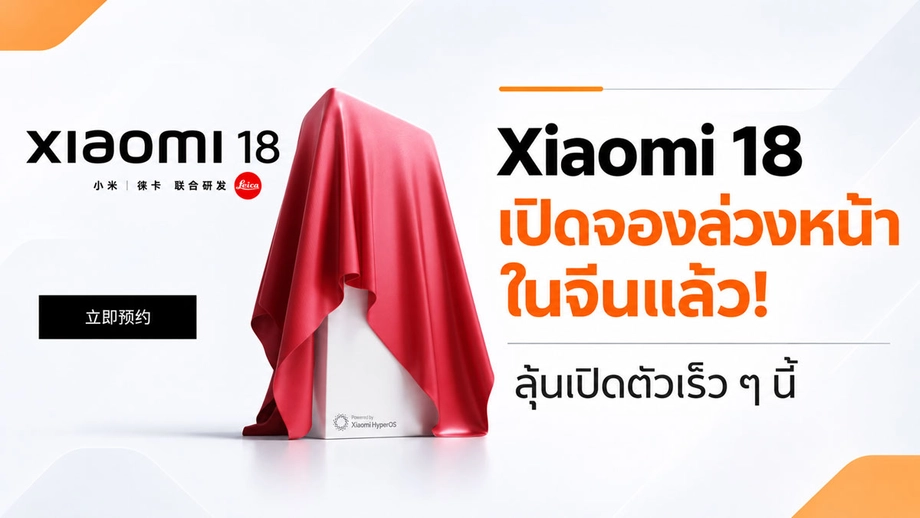
Xiaomi has officially introduced the Xiaomi 18 Pro and Xiaomi 18 Pro Max in its home market of China, marking the arrival of Qualcomm's new 2nm processor series. The launch follows a period of blind pre-reservations where buyers in China could register for the devices without knowing the specifications or pricing details. The new flagship phones arrive at a time when China's smartphone market has experienced a sharp contraction, with China's smartphone market shipped about 57.9 million devices in the third quarter of 2026, down 15.4% from a year earlier according to preliminary International Data Corporation figures. Xiaomi aims to capture consumer interest in this competitive environment by introducing advanced silicon technology, extensive artificial intelligence features, and upgraded camera hardware.
Contents
- Xiaomi Unveils New Flagship Smartphones in China
- Processor Performance and Thermal Management
- Display Innovations and Hardware Privacy Protection
- Leica-Branded Camera System and Advanced Imaging
- Battery Technology and Charging Specifications
- Software Integration and Intelligent Assistants
- Pricing Structure and Market Availability
- At a Glance
Processor Performance and Thermal Management
The Xiaomi 18 Pro is powered by the Snapdragon 8 Elite Gen 6 processor, while the Xiaomi 18 Pro Max equips the higher-end Snapdragon 8 Elite Extreme Gen 6 chipset. These advanced microprocessors are built using a 2-nanometer manufacturing process, which refers to the physical size of the transistors etched onto the silicon chip. Smaller transistors allow manufacturers to pack more computing power into a confined space while improving energy efficiency. Both chips are paired with the Adreno 850 graphics processing unit, reaching clock speeds of up to 5 gigahertz. Xiaomi states that this hardware combination delivers a 35% improvement in graphics performance, 40% lower power consumption for graphics tasks, and an 80% increase in neural processing unit inference performance for artificial intelligence calculations. To prevent overheating during intensive tasks like high-end mobile gaming, the Pro Max model combines OFFSET PoP packaging with a redesigned ring-shaped cold-pump system. This cooling setup is engineered to maintain full frame rates for one full hour during heavy gaming sessions.
Display Innovations and Hardware Privacy Protection
Display technology on both devices utilizes advanced LTPO OLED panels manufactured with the M11 light-emitting system and new green light-emitting materials. An LTPO (low-temperature polycrystalline oxide) screen is a type of display that can dynamically adjust its refresh rate from 1 hertz to 120 hertz, saving battery power by slowing down updates when the user is looking at a static image and speeding up motion when scrolling or gaming. The Xiaomi 18 Pro features a 6.4-inch display, while the Pro Max uses a larger 6.9-inch panel. Both screens support a peak brightness of 4,000 nits, high dynamic range formats like HDR10+ and Dolby Vision, DC dimming, and the wide BT.2020 color gamut. The bezels surrounding the screens measure just 0.99 millimeters on all four sides. A notable addition is hardware-level intelligent privacy protection that can be assigned to individual applications, ensuring notifications, floating windows, and multitasking views remain concealed outside authorized viewing zones. Users can activate global privacy protection instantly using a dedicated physical button on the device. In addition to the main screens, both phones feature a secondary AMOLED display integrated into the rear glass panel, measuring 2.7 inches on the Pro and 2.9 inches on the Pro Max. These rear screens support a 120-hour refresh rate and can display notifications, widgets, games, and AI-generated wallpapers using more than 100 application cards.
Xiaomi executives highlighted the expanding utility of the rear display system during the product rollout. Company representatives noted that the secondary screen platform serves millions of users daily for quick interactions and personalized content creation.
The company says the rear screen already has 3.97 million daily active users, while the rear-screen assistant is used 138 million times per month.
Leica-Branded Camera System and Advanced Imaging
Photography capabilities on both the Xiaomi 18 Pro and Xiaomi 18 Pro Max are built around a triple rear camera system developed in partnership with Leica. The primary camera uses a 200-megapixel Light Fusion 960-series sensor paired with a Leica Summilux lens, optical image stabilization, and a wide f/1.67 aperture. Accompanying the main sensor is a 50-megapixel ultra-wide camera offering a 102-degree field of view and 5-centimeter macro support for close-up shots. The telephoto setup utilizes another 200-megapixel Leica periscope sensor with optical image stabilization, a 75-millimeter equivalent focal length, and 3.2x optical zoom. This periscope telephoto camera can focus as close as 12 centimeters, allowing it to function as a macro lens for detailed close-up photography. Video recording reaches up to 8K resolution or 4K at 120 frames per second, while the front-facing 50-megapixel camera supports 4K recording at 60 frames per second. The devices also include the Legendary Moment imaging system, which combines on-device processing with cloud-based enhancement and artificial intelligence tools to recommend shooting locations, analyze composition, suggest filters, and provide real-time posing guidance.
Battery Technology and Charging Specifications
Power management relies on advanced silicon-carbon battery technology, which allows manufacturers to store more energy in a smaller physical volume compared to traditional graphite batteries. The Xiaomi 18 Pro packs a 7,000-milliamp-hour battery with a silicon content of 32%, while the Pro Max features an even larger 8,500-milliamp-hour battery. Both models support 100-watt wired charging, 50-watt wireless charging, magnetic charging, and 27-watt wired and wireless reverse charging to power other accessories. Physical dimensions reflect the differences in battery size and screen measurements. The Xiaomi 18 Pro measures 151.8 by 72 by 8.46 millimeters and weighs 203 grams, while the larger Pro Max measures 163.39 by 77.6 by 8.39 millimeters and weighs 235 grams. Both phones include dust and water resistance ratings of IP66, IP68, and IP69, alongside stereo speakers, Dolby Atmos, Hi-Res Audio, and a four-microphone array, with the Pro Max adding a dedicated triple-speaker system.
Software Integration and Intelligent Assistants
Operating system duties are handled by HyperOS 4, which comes pre-installed on both smartphones alongside the Super Xiao Ai 2.0 digital assistant. The assistant is powered by Xiaomi's MiMo foundation model, an artificial intelligence architecture capable of handling complex language tasks, memory retention, autonomous task planning, and multi-step execution. The software platform also supports cross-device coordination, allowing connected tablets and personal computers to process data directly from the smartphone. Memory and storage configurations range up to 16 gigabytes of LPDDR5X RAM and 1 terabyte of UFS 4.1 storage. The devices include modern connectivity options such as 5G, Wi-Fi 7, Bluetooth 6.0, ultra-wideband, NFC, dual-frequency GPS, USB Type-C 3.2 Gen 1, an infrared sensor, and an ultrasonic in-display fingerprint scanner.
Pricing Structure and Market Availability
Pricing for the new lineup varies based on memory and storage configurations. The standard Xiaomi 18 Pro starts at 5,999 yuan (about $840) for the 12GB and 256GB model, moving up to 6,999 yuan (about $980) for 12GB and 512GB, 7,999 yuan (about $1,120) for 16GB and 512GB, and 8,999 yuan (about $1,260) for the top 16GB and 1TB tier. The Xiaomi 18 Pro Max starts at 6,999 yuan (about $980) for 12GB and 256GB, 7,999 yuan (about $1,120) for 12GB and 512GB, 8,999 yuan (about $1,260) for 16GB and 512GB, and 9,999 yuan (about $1,400) for 16GB and 1TB. Special Transparent Editions featuring a red transparent Xiaomi Dragon Crystal Glass 3.0 rear panel are also available in 16GB and 1TB configurations, priced at 9,999 yuan for the Pro and 10,999 yuan for the Pro Max. Both phones are currently available to order in China, with formal retail sales scheduled to begin later in the week. Xiaomi has confirmed that a global release for the series is planned for later in the year, though regional pricing and specific hardware configurations may vary outside the Chinese market.
At a Glance
- Xiaomi launched the Xiaomi 18 Pro and Xiaomi 18 Pro Max in China on September 23, 2026.
- The phones are powered by Qualcomm's 2nm Snapdragon 8 Elite Gen 6 and Snapdragon 8 Elite Extreme Gen 6 chipsets.
- Pricing in China ranges from 5,999 yuan to 8,999 yuan for the Pro, and 6,999 yuan to 9,999 yuan for the Pro Max, with transparent editions reaching up to 10,999 yuan.
- Battery capacities are 7,000 milliamp-hours for the Pro and 8,500 milliamp-hours for the Pro Max, both supporting 100-watt charging.
- Camera systems feature dual 200-megapixel Leica sensors for the main and periscope telephoto lenses, alongside a 50-megapixel ultra-wide camera.
- Both devices run HyperOS 4 with the Super Xiao Ai 2.0 assistant and feature secondary rear AMOLED displays.
- Xiaomi has confirmed a global launch for the series later in the year.