From a shrinking coding team to a factory classroom
Situ, a programmer aged 34 with a decade of experience, watched his team shrink from 30 people to five before his own layoff on October 9. Now he is paying 9,400 yuan to learn industrial automation, hoping that programming factory machinery will offer a more secure living than writing software.
Contents
- From a shrinking coding team to a factory classroom
- An industry growing faster than workers' sense of security
- Why the job cuts have more than one cause
- AI is changing what a programmer is paid to do
- Tencent's reorganisation shows where the money is going
- The pressure reaches mortgages, families and age
- Why some coders are learning to run machines
- A transition unfolding across several years
- More production needs people who can afford to buy
- Key Points
His experience captures a change unfolding across a Chinese software and information technology services industry employing more than 11 million people. Artificial intelligence is speeding up coding, companies are redirecting investment, and workers who once accepted punishing hours in exchange for high salaries are reconsidering the bargain.
Situ describes a project originally assigned to six programmers for three months. A single developer working with AI finished it in a week, he says. His own work increasingly involved approving changes suggested by a machine rather than typing code.
Situ, who is preparing to move into factory automation, described the change this way:
We've turned into yes engineers," he says. "Yes, yes, yes, all day long.
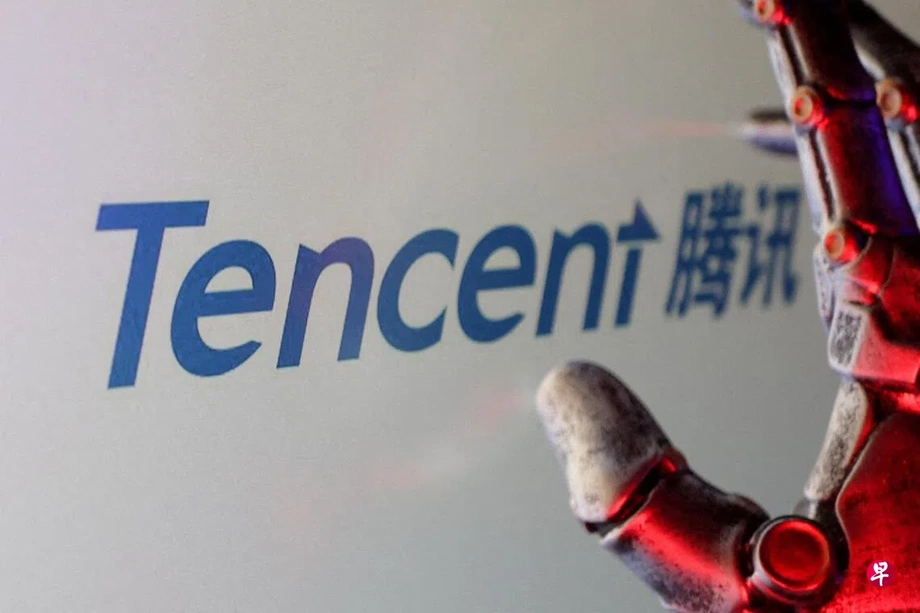
China's biggest technology employers are taking different routes. Alibaba's workforce fell by 34% in 2025, with much of the reduction reflecting retail business sales. Tencent increased its workforce by 5% that year. By November 2026, Tencent was discussing a substantial reorganisation around AI while rejecting claims that it planned to cut half its staff.
For programmers, the immediate problem is concrete: keeping an income while the work changes. The forces behind their insecurity include automation, weaker demand, business sales and a retreat from the rapid hiring of earlier years.
An industry growing faster than workers' sense of security
China's Ministry of Industry and Information Technology put the industry's scale into focus at an April 28, 2026, briefing. Deputy Minister Ke Jixin said software and information technology services generated 15.48 trillion yuan in revenue in 2025, 6.2 times the level in 2012, and employed more than 11 million people.
The ministry's policy briefing also announced an AI Plus Software initiative to accelerate the development and use of intelligent programming. The government is actively encouraging the technology that is changing programmers' work.
Ke said daily token usage exceeded 140 trillion by the end of March, more than 1,000 times the level in the same period of 2024. Tokens are the small pieces of text or other information that AI models process. The figure gives a sense of how rapidly model use has expanded.
The ministry also described demand beyond conventional internet businesses. Chinese cloud providers had built more than 150 data centres across over 30 countries and regions, while industrial software was serving major manufacturing sectors. Software skills remain necessary, but employers increasingly want them attached to AI, infrastructure and physical production.
Why the job cuts have more than one cause
Alibaba reduced its reported workforce by 34% in 2025 as it focused more closely on AI and cloud infrastructure. Much of that decline came from selling retail businesses, which moved employees outside the group. Baidu finished the year with nearly 7% fewer employees, while vehicle manufacturer BYD reduced its workforce by roughly 10%.
Sun Zhongwei, a public administration professor at South China Normal University, puts the earlier hiring boom and subsequent downturn at the centre of the explanation:
Many of these companies expanded rapidly during the internet boom, hiring at an exponential pace," said Sun. "The changes in their organization structure are much more about adjusting to a downturn after that cycle of growth than being about AI displacing jobs.
Weak consumer demand and China's prolonged property downturn have added pressure. A former Baidu marketing employee dismissed in March said the company cited financial strain and had been cutting departments outside its central business activities.
Employers are also recruiting while cutting elsewhere. BYD increased hiring for research and development roles by nearly 5% in 2025. Tencent ended that year with 115,849 employees, up 5%. For applicants, the difficulty is matching the new vacancies rather than simply finding a company whose total workforce is growing.
AI is changing what a programmer is paid to do
Fei Zhaojun, a programmer aged 40 in Beijing, lost his job alongside about 160 colleagues two weeks after his boss asked whether AI could replace human coders. He had doubted that the tools could do programming perfectly. His employers appeared willing to work with their limitations.
Situ's account describes another route to smaller teams: software development becomes a process in which fewer people direct AI tools, review their output and fix problems. A project that once required several specialists can sometimes be handled by a smaller group.
Claire Deng, a Shenzhen headhunter specialising in AI and technology talent, says hiring has increased for AI agents and products that connect AI to physical tasks. She also says replacing staff requires companies to redesign how work is organised, a process many businesses are still testing.
IDC figures indicate how quickly adoption is spreading beyond software offices. The share of Chinese industrial enterprises saying they used AI models and agents rose from 9.6% in 2024 to 47.5% in 2025, almost five times as high. Agents are systems that can carry out a sequence of tasks, rather than simply answer a question.
The number of Chinese programming jobs that will disappear because of AI remains unknown. Workers are already facing both smaller teams and changing expectations about what each remaining employee can deliver.
Tencent's reorganisation shows where the money is going
Tencent management discussed accelerating organisational change during an online event marking the company's 28th anniversary on November 12, 2026. The approach described was to have roughly half the workforce improve existing core businesses and the other half explore products and services built around AI from the start.
A person close to the company rejected circulating claims that Tencent planned to dismiss 50% of its employees. The proposal concerned how resources would be assigned, with managers expected to make the organisation flatter and quicker to respond.
Tencent's spending illustrates the shift. In the second quarter of 2026, revenue rose 11% to 204.79 billion yuan. Research and development spending increased 35% to 27.28 billion yuan, while capital expenditure rose 176% to 52.78 billion yuan. Chief executive Pony Ma said the company would substantially increase purchases of computing capacity.
Its WorkBuddy office agent had 32.353 million active users in September, according to third party research. Tencent senior executive Dowson Tong said more than half of China's 500 largest companies were using it. Investment in computing equipment and AI products is growing much faster than revenue, while employees are being asked to find new ways to use that investment.
The pressure reaches mortgages, families and age
Chinese programmers have long complained about 996: working from 9 a.m. to 9 p.m., six days a week. That amounts to 72 hours on the weekly schedule. High pay once persuaded many workers to accept the strain; job insecurity now makes that exchange harder to sustain.
Workers around or above 35 describe particular anxiety about competing with younger recruits while paying mortgages and raising children. Situ was already planning an exit before losing his job because he no longer wanted a career built around continuously mastering new tools under the threat of dismissal.
Other workers describe financial pressures that qualifications have not eased. A woman with a master's degree from one of China's elite Project 985 universities had been unemployed for six months while facing mortgage payments of about $2,400 a month. A programmer aged 27 expressed disbelief at facing a career crisis so early.
A worker aged 45 who had spent 22 years at Alibaba was also among those cut. Another woman, dismissed twice within six months, eventually left a job whose five hours of daily commuting proved incompatible with caring for a young child.
For these households, the decision is not simply whether to learn another programming language. It may mean accepting lower pay, moving to a cheaper city, paying for retraining or choosing work that leaves enough time to care for a family.
Why some coders are learning to run machines
Taizhou, a manufacturing city in Zhejiang province, has become one destination for career switchers. At one automation school, an instructor said former programmers made up about 20% of students. Former construction and civil engineering workers accounted for the largest share, at 60% to 70%.
The instructor said the number of local automation training schools had risen from one to four or five in two years. Situ enrolled with a former colleague and planned to turn weekend study into three months of full time training after his dismissal.
Their target is work involving programmable logic controllers, or PLCs. These are industrial computers that tell machinery when to act, such as starting a conveyor or moving a robotic arm. Engineers write the instructions, connect equipment and adjust machines beside the production line.
Wang Yuxiang, a former developer of website interfaces, moved towards automation in 2024 after earning about 5,000 to 6,000 yuan a month in software. He later obtained an automation job paying 12,000 yuan monthly, with accommodation and meals. Another career switcher, Chen Haoyu, received nine factory job offers within a week, including one paying 7,200 yuan a month.
The transition has costs. Wang bought obsolete equipment for more than 1,000 yuan to practise, struggled to make it work and sold it for 400 yuan. Factory experience required learning wiring, components and machine maintenance alongside programming.
Automation engineer Zhang Shuo says the physical adjustment of machinery is difficult for AI to replace. The work can also mean extensive travel, sometimes around 300 days a year. A factory career may offer a new income without offering an easier daily life.
A transition unfolding across several years
The sequence shows overlapping changes rather than a single wave of layoffs. Workers began moving into manufacturing before the latest AI tools became widely used, while companies were already changing their business portfolios.
- 2024: Wang Yuxiang began moving from software development towards industrial automation.
- 2025: Alibaba's workforce fell 34%, Baidu's nearly 7% and BYD's roughly 10%; Tencent's grew 5%.
- April 28, 2026: The industry ministry announced plans to accelerate intelligent programming through AI Plus Software.
- November 12, 2026: Tencent's reorganisation plans became public, alongside a rejection of claims that it intended to cut half its workforce.
Beijing has introduced an 18 point plan to assess and manage AI's employment effects. National goals include creating more than 12 million urban jobs in 2026 and keeping urban unemployment below 5.5% through 2030. Those goals sit alongside the AI Plus initiative and the five year plan promoting wider adoption through 2030.
More production needs people who can afford to buy
Yasheng Huang, a professor at MIT Sloan, argues that China's manufacturing strength and AI productivity could reinforce an existing imbalance: rising output without a matching increase in jobs, wages and spending. He cites household consumption equivalent to 39% of China's gross domestic product, compared with 68% in the United States.
The concern is straightforward. A company can produce more with fewer workers, but households need income to buy what companies sell. Cornell University economics professor Eswar Prasad similarly warns that productivity gains could arrive alongside serious disruption to employment.
Other occupations are already adjusting. Translator Du Qinchun says industry pay has fallen by more than half compared with earlier years, even as training AI translation models has temporarily brought him work. Children's content writer Wang Zhicheng started an independent studio after his employer cut roughly half of its 13 scriptwriters.
China's experience also fits a wider regional shift. The International Labour Organization estimates that nearly 80 million Southeast Asian workers hold jobs potentially exposed to generative AI. In Singapore, an April 2026 manpower study found that 6.2% of firms using AI reported technology related layoffs; changing existing roles was more common.
China's ageing population adds another consideration. San Francisco Bay University professor Xuenan Cao argues that automation could help compensate for a shrinking workforce. The immediate challenge for displaced programmers is finding a workable route between today's lost salary and the jobs that investment may create.
Key Points
- China's software and information technology services industry employs more than 11 million people and generated 15.48 trillion yuan in 2025.
- AI is speeding up coding while economic pressure, business sales and restructuring also reduce workforces.
- Tencent increased employment in 2025 and rejected claims of a planned 50% staff cut in November 2026.
- Some former programmers are retraining to program factory machinery, accepting tuition costs, practical training and possible frequent travel.
- China is promoting intelligent programming while pursuing employment targets and measures to manage AI's effects on workers.