Guangzhou launch brings Toyota robotaxis into public service
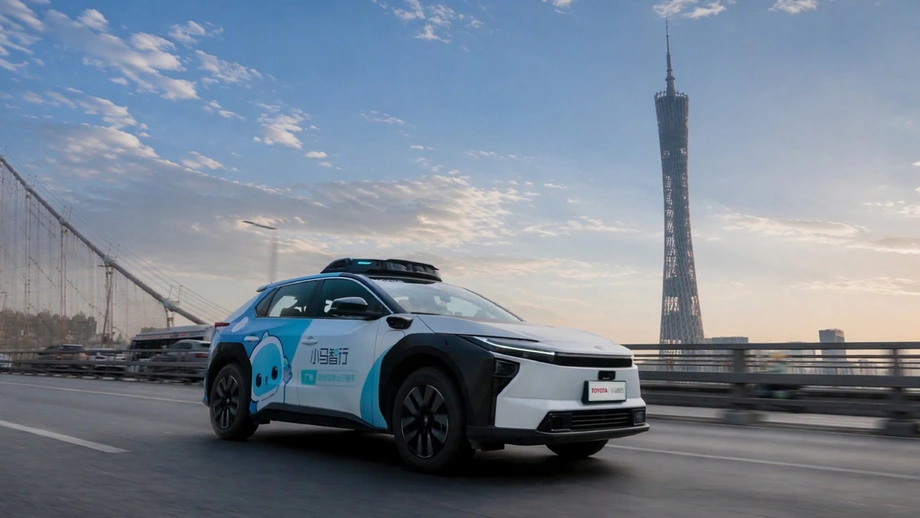
Pony.ai and Toyota began fully driverless commercial services with their seventh generation bZ4X robotaxi in Guangzhou on November 16, 2026, starting in the city's Nansha district. Passengers can book rides 24 hours a day through the PonyPilot app or Pony.ai mini programs on WeChat and Alipay.
Contents
- Guangzhou launch brings Toyota robotaxis into public service
- How passengers can use the service
- What Level 4 means inside this vehicle
- Seven years from partnership to passenger rides
- A factory programme with a larger deployment goal
- Charging and maintenance become part of the service
- Pony.ai's expansion puts the launch in perspective
- Key Points
The launch takes the jointly developed electric vehicle from factory production and road testing into public passenger service. The partners are working toward deploying around 1,000 bZ4X robotaxis across major Chinese cities, with testing and preparations already under way beyond Guangzhou.
Pony.ai's November 16 announcement says the bZ4X has joined its fully driverless commercial fleet. The public rollout is also described as demonstration operations, bringing passengers into the next phase of a partnership that began in 2019.
The bZ4X is one of three models using Pony.ai's seventh generation autonomous driving system and Toyota's first battery electric robotaxi to enter mass production. Its first production vehicle left the factory in February 2026, about nine months before this public launch.
The immediate change for passengers is straightforward: a new vehicle can now be booked without a driver on board. For the companies, the task is broader. They must turn a jointly engineered vehicle into a dependable transport service, supported by charging, maintenance, cleaning and enough cars to meet demand.
How passengers can use the service
Nansha, in southern Guangzhou, is the starting point for the bZ4X service. Riders can request a vehicle at any hour using Pony.ai's own app or the booking tools inside WeChat and Alipay, giving them several ways to access the service.
The companies have not disclosed the initial bZ4X fleet size, fares, detailed permitted operating boundaries or a current deadline for completing the planned deployment of around 1,000 vehicles. Those details will determine how widely passengers can use the new model and how quickly it becomes available elsewhere.
Pony.ai says adding the bZ4X will improve vehicle availability and operating efficiency as demand grows. The model joins an existing commercial fleet, so its introduction expands the company's vehicle lineup rather than marking Pony.ai's first driverless service in Guangzhou.
Inside the vehicle, passengers have Bluetooth unlocking, an intelligent voice assistant, entertainment and personalized climate controls. Other described features include online music and the ability to adjust air conditioning and ventilation before the ride. These functions give passengers ways to enter the car and manage the cabin without asking a driver for help.
What Level 4 means inside this vehicle
The bZ4X provides Level 4 autonomous driving. In plain language, that means the driving system handles the driving task without a human driver within the areas and conditions for which it is designed. Its operating area and conditions define where the service can work.
Pony.ai supplies the autonomous driving technology and operating experience, while Toyota contributes the vehicle platform and manufacturing expertise. The companies worked together from the stage when the vehicle's requirements were being defined, integrating the driving system with the car itself.
Toyota's contribution includes redundant vehicle controls. Redundancy means having backup systems so that a single component failure does not leave the car dependent on that component alone. The companies also describe capabilities intended to keep essential functions working after a fault, an important engineering requirement when there is no driver on board.
Dr. Luyi Mo, vice president of Pony.ai, described the division of expertise behind the launch:
Bringing the bZ4X Robotaxi into commercial service demonstrates what can be achieved by combining Pony.ai's proven Level 4 autonomous driving technology with Toyota's world-class vehicle engineering and manufacturing expertise,
Pony.ai says refinements to the driving system make acceleration, braking and cornering smoother. The companies also say the vehicle is designed to handle situations including nighttime driving, heavy rain and urban congestion. These are company descriptions of the system's capabilities.
Seven years from partnership to passenger rides
Pony.ai and Toyota began working together in 2019, developing several generations of autonomous vehicles using platforms including Lexus models and the Toyota Sienna. Their collaboration has brought robotaxi services to Beijing, Shanghai, Guangzhou and Shenzhen.
The bZ4X builds on that work with a vehicle developed for autonomous operation from the outset. Earlier vehicles provided platforms for testing and refining the technology; the new model brings vehicle engineering, factory production and fleet operation into a shared programme.
- 2019: Pony.ai and Toyota began their autonomous driving partnership.
- August 2023: Pony.ai, Toyota Motor China and GAC Toyota announced a joint venture to support robotaxi development and production.
- November 2025: Pony.ai held permits for fully driverless commercial operation of seventh generation vehicles in Guangzhou, Shenzhen and Beijing.
- February 2026: The first production bZ4X robotaxi left GAC Toyota's fifth production line and subsequently entered testing on public roads.
- November 16, 2026: Public bZ4X robotaxi service began in Guangzhou, initially in Nansha.
Pony.ai's November announcement puts investment associated with the joint venture at more than RMB 1 billion. The three participants brought together autonomous driving development, Toyota's vehicle engineering and GAC Toyota's manufacturing capacity to move the model toward commercial deployment.
A factory programme with a larger deployment goal
GAC Toyota and Pony.ai operate a dedicated production line in Nansha for the bZ4X robotaxi. The first production vehicle came from GAC Toyota's fifth production line, placing manufacturing and the initial passenger service in the same district.
The companies say the vehicle was designed for factory production, rather than being converted into a robotaxi after assembly. That approach allows autonomous driving requirements, including backup controls and cabin functions, to be addressed as part of the vehicle's development and manufacturing process.
The planned deployment of around 1,000 bZ4X vehicles would make the model a substantial part of Pony.ai's business. For scale, Pony.ai's entire global robotaxi fleet numbered 1,975 at the end of June 2026. The bZ4X target alone is therefore roughly half the size of that earlier global fleet, although the figures refer to different dates and one is a future goal.
Toyota had previously envisaged around 1,000 bZ4X vehicles operating during 2026. Pony.ai's November announcement retains the approximate vehicle target without attaching a year to it. The current commitment is therefore an expansion goal, while Guangzhou provides the first public operating base for this model.
The four Chinese cities reached by the broader partnership also need to be distinguished from the new model's rollout. Beijing, Shanghai, Guangzhou and Shenzhen have hosted services developed through the collaboration; the bZ4X launch announced on November 16 begins in Guangzhou, with other cities still in testing and deployment preparation.
Charging and maintenance become part of the service
Pony.ai and Toyota are extending their collaboration beyond the vehicle and its driving software. They are developing support for maintenance, charging and routine fleet servicing, with cleaning also included in the operational arrangements.
Pony.ai brings experience managing autonomous fleets across cities. Toyota contributes established servicing capabilities and its dealer network. Together, those resources are intended to keep vehicles ready for passengers after they leave the production line.
A service available 24 hours a day still needs time and facilities to recharge batteries, inspect cars and prepare cabins for the next passenger. Fleet managers must rotate vehicles through those tasks while keeping enough cars available for bookings.
The Guangzhou launch therefore tests more than how the bZ4X drives. It also puts the supporting operation into everyday use. As the partners add vehicles and cities, the capacity to service cars and return them to passenger duty becomes part of delivering the availability Pony.ai promises.
Pony.ai's expansion puts the launch in perspective
Pony.ai's robotaxi business has been growing alongside its vehicle partnerships. Revenue from that business reached $12.07 million in the second quarter of 2026, up 691% from the same period a year earlier and accounting for approximately one third of the company's quarterly revenue.
A rise of 691% means revenue was about 7.9 times the level a year earlier. That gives the Guangzhou rollout a commercial setting: Pony.ai is adding another production model while passenger services are becoming a larger source of income.
Chief executive James Peng said during the earnings call that the fleet had reached approximately 2,000 vehicles, with a target of more than 3,500 by the end of 2026. Those figures cover Pony.ai's broader robotaxi fleet, including models other than the Toyota bZ4X.
The company is also pursuing international deployments. In August, it announced an expanded Uber partnership involving plans for more than 2,000 robotaxis across five European cities. In October, it announced work with inDrive and Nvidia to explore a pilot in Kazakhstan, with an initial deployment planned for Astana after an agreement with the government.
Planned international deployments through mobility partnerships total more than 4,000 vehicles. Pony.ai also has passenger services in Croatia, Dubai, Singapore and South Korea. Against that wider expansion, the Toyota programme adds a vehicle manufacturing and servicing partnership anchored in Guangzhou.
Key Points
- Pony.ai and Toyota launched fully driverless bZ4X commercial service in Guangzhou on November 16, 2026, initially in Nansha.
- Passengers can book around the clock through PonyPilot or Pony.ai mini programs on WeChat and Alipay.
- The Level 4 vehicle combines Pony.ai's autonomous driving system with Toyota's vehicle platform and backup controls.
- The first production bZ4X robotaxi left the factory in February 2026.
- The partners aim to deploy around 1,000 bZ4X robotaxis across major Chinese cities; the latest announcement gives no completion date.
- The collaboration includes charging, maintenance, cleaning and fleet support as well as vehicle development and production.