From Sci-Fi Concept to Consumer Product
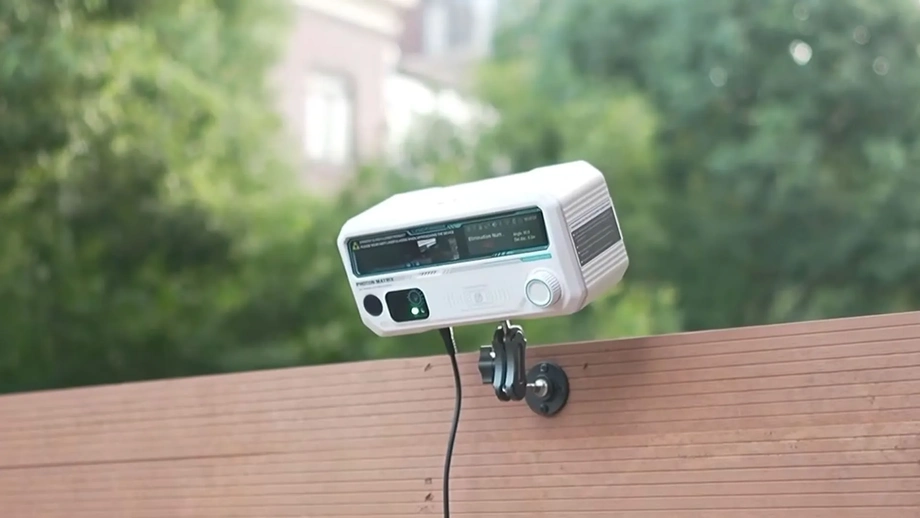
A startup based in Changzhou, China, named Photon Matrix Lab, has developed a compact laser defense system designed to eliminate mosquitoes in mid-air. Roughly the size of a brick, the device operates similarly to a miniature anti-aircraft system by detecting, tracking, and targeting flying insects. The project transitioned into mass production and commercial distribution following a crowdfunding campaign on Indiegogo that surpassed its initial twenty-thousand-dollar goal by raising over 2.8 million dollars from more than 5,000 orders. The company offers two versions of the device, which includes an infrared invisible laser model for indoor use priced at 988 dollars and a blue visible laser model for outdoor use priced at 1,088 dollars. Shipments are expected to begin in November following final calibration, and the device has secured European CE conformity clearance.
Contents
The underlying concept dates back nearly two decades to 2006, when former Microsoft chief technology officer Nathan Myhrvold and physicist Lowell Wood, who worked on Cold War strategic defense projects at Intellectual Ventures, sought a technological solution to combat malaria. Myhrvold publicly presented a prototype known as the Photonic Fence during a TED conference in California in February 2010. While those early demonstrations proved the technology could track and shoot down insects using optical sensors and lasers, the system was never successfully commercialized for everyday consumers. The modern iteration by the Changzhou startup successfully miniaturizes the technology into a consumer-friendly package, utilizing advanced sensors and artificial intelligence to automate the entire process.
How the Laser Turret Tracks and Strikes
The device relies on built-in light detection and ranging, commonly known as LiDAR, which is a remote sensing method that uses pulsed laser light to measure distances and create three-dimensional spatial maps. The system emits approximately 100,000 low-power laser pulses per second to maintain a continuous overwatch of a defined area. When an object enters the scanning field, a combination of a camera, millimeter-wave radar, and recognition software evaluates parameters such as the target size, speed, and movement pattern to determine whether the object is a mosquito. Once confirmed, artificial intelligence software predicts the target trajectory and steers a concentrated laser pulse using galvanometer-controlled mirrors rather than moving the physical body of the unit.
The system features a detection range of up to 19.7 feet, which equals 6 meters, and covers a horizontal scanning field of about 90 degrees. It is capable of tracking and neutralizing targets between 2 and 20 millimeters in size with a maximum flight speed of about 2.2 miles per hour, which equals 1 meter per second. According to the manufacturer, the system achieves a response time of about 3 milliseconds and can engage approximately 30 mosquitoes per second. Rather than incinerating the insect instantly, the laser pulse damages the wings of the mosquito to remove its ability to stay airborne. According to company founder Wang Chuan, some insects can survive for hours or days after losing their wings, meaning the device neutralizes the threat by grounding them rather than causing an immediate kill.
Safety Protocols and Mandatory Training
Operating a high-powered laser in a domestic environment introduces significant safety hazards, particularly regarding potential permanent eye damage from direct exposure or reflections off shiny household surfaces. To achieve the necessary operational effectiveness, the manufacturer selected a Class 4 laser source, which represents the highest hazard category and can cause severe injuries even during extremely brief exposures. To mitigate these risks, the device incorporates multiple protective mechanisms, including artificial intelligence cameras and radar capable of detecting humans and pets even in dark conditions, background-distance restrictions, and reflective-surface detection that automatically blocks laser activation when a hazard is identified.
In addition to automated hardware safeguards, the manufacturer implemented mandatory user training before the equipment can be operated for the first time. According to a report published by Xinhua News Agency on November 18, 2026, users must successfully complete a safety test covering operational rules before activating the device. Additional details from international reporting indicate that this requirement involves passing a 15-question quiz and registering a fingerprint on the system. These stringent prerequisites aim to prevent accidental exposure and ensure that consumers understand the risks associated with operating consumer-grade high-power laser equipment in residential spaces.
From Household Gadgets to Potential Military Applications
Beyond its intended use as a domestic pest control appliance, the technology has drawn scrutiny from defense analysts regarding its broader tactical implications. In an analysis published by the Institute for National Security Studies, researcher Yehoshua Kalisky examined the technical parallels between the consumer mosquito-killing system and counter-drone defense requirements. Intercepting swarms of small unmanned aerial vehicles presents a major technological hurdle due to the tiny dimensions of the drones, their low radar signatures resulting from non-metallic structural materials, and their high maneuverability through complex topography. Neutralizing such swarms requires early detection, rapid target switching, and precise spatial tracking at the speed of light.
The academic evaluation published in the INSS research publication notes that the technologies integrated into the consumer device serve as an effective laboratory proof-of-concept for multi-wavelength laser systems operating against swarms of minuscule flying objects. The ability of the device to detect, track, and engage multiple random targets moving through space at high speed mirrors the exact computational and optical challenges faced by military engineers developing counter-swarm directed energy weapons. Analysts suggest that the logical progression of this technology involves scaling up the laser power levels and applying advanced artificial intelligence flight path analysis to intercept hostile drone swarms in tactical environments.
Hobbyist Replication and Practical Realities
Public interest in the technology extends beyond commercial preorders, inspiring electronics enthusiasts to construct experimental prototypes outside of formal industrial settings. A prominent technology creator on the Bilibili video platform in China published a detailed demonstration of a self-built laser defense system on November 13, 2026. Within eight days of publication, the video accumulated 1.46 million views, 87,000 likes, and 17,000 bookmarks, sparking widespread discussion among viewers interested in replicating the engineering project.
The video creator highlighted several critical engineering challenges and safety limitations encountered during the development process. Commercial LiDAR units lack the customizability required to modify laser parameters and successfully combine tracking and elimination beams, forcing hobbyists to build custom optical combining systems from scratch. The creator issued strong warnings regarding power thresholds, noting that lasers exceeding two watts can burn through clothing in half a second, while a five-watt laser applied for 100 milliseconds leaves permanent burn scars on human skin. Furthermore, hobbyists noted that laser interception is not a primary solution for pest control compared to traditional preventative measures like eliminating standing water and sealing entry points.
At a Glance
- A Changzhou startup developed a desktop laser defense system called Photon Matrix to eliminate mosquitoes in mid-air.
- The device uses LiDAR, millimeter-wave radar, and artificial intelligence to track targets and deploy a Class 4 laser pulse.
- Manufacturer specifications claim a 6-meter range, a 90-degree field of view, and the ability to engage 30 mosquitoes per second.
- Safety measures include automated animal and human detection alongside a mandatory safety quiz and fingerprint registration before initial operation.
- Defense analysts assess that the consumer device functions as a laboratory proof-of-concept for multi-wavelength laser systems designed to intercept drone swarms.