From six years of research to a factory shift
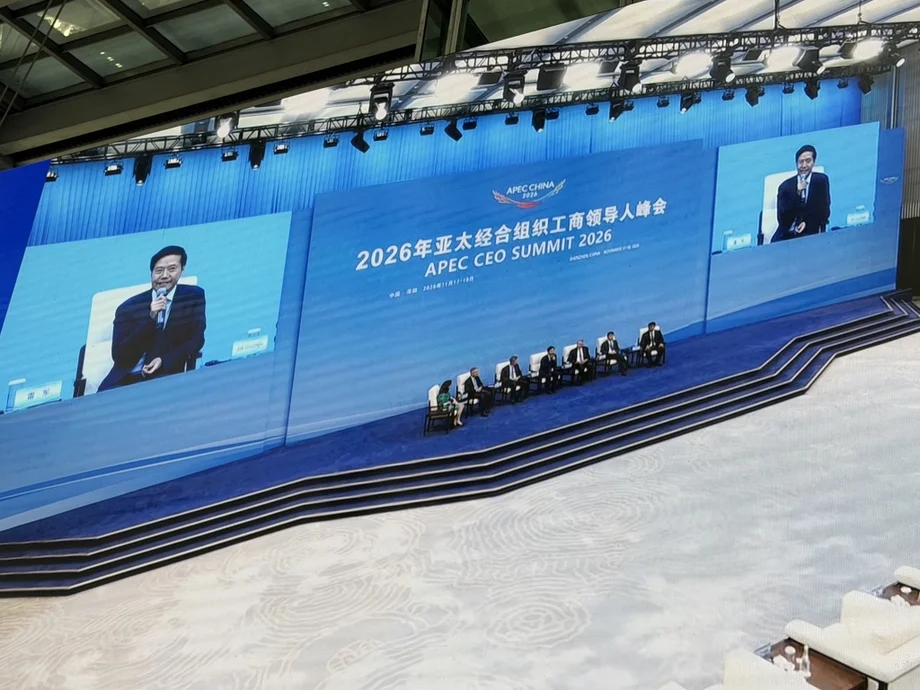
Xiaomi's embodied intelligence robots have begun trials inside factories and can complete an eight hour work period while going to recharge themselves, founder, chairman and chief executive Lei Jun said on November 17, 2026, at the APEC CEO Summit in Shenzhen.
Contents
- From six years of research to a factory shift
- What the eight hour claim means
- What Xiaomi has disclosed, and what comes next
- Beyond a robot at one workstation
- Why Lei sees an opportunity beyond cars
- A connected ecosystem of 1.16 billion devices
- China's robotics targets provide a useful comparison
- APEC puts supply chains at the centre
- Key Points
Lei said Xiaomi had been working on robotics for six years. He described the machines as factory interns, a way of presenting their current role as learning and testing on the production floor. During the eight hour period, he said, a robot can recharge itself twice.
The announcement puts a practical measure at the centre of Xiaomi's robotics ambitions: whether a machine can remain useful throughout a factory shift. Keeping a robot working involves more than making it move. It also means managing power, returning to its task and fitting into the rhythm of production.
Lei's comments came during the summit running from November 17 to 18. He also discussed Xiaomi's use of artificial intelligence in manufacturing, its connected device platform and his belief that AI operating in the physical world could eventually create an industrial opportunity larger than the car industry.
What the eight hour claim means
Xiaomi's robot work period includes opportunities to recharge. The practical claim is therefore about completing a shift with autonomous charging built into it. For a factory, charging is part of the operating schedule, alongside the time a machine spends performing its assigned task.
Lei described the robot as able to go and charge itself twice during that period. That capability matters because a machine that manages its own energy needs can reduce the need for someone to interrupt other work and connect it to a charger.
Before the summit, Lei had shared a video showing a Xiaomi general purpose humanoid robot attempting eight hours of work in a car factory. He said the exercise met the workstation's production needs for the day and provided an initial validation of its ability to perform work on a production line.
The distinction between the two descriptions is useful: the earlier demonstration involved a humanoid robot, while Lei's summit remarks referred more broadly to embodied intelligence robots. Embodied intelligence means AI working through a physical machine that senses its surroundings, decides what to do and acts. A humanoid is one possible shape for such a machine.
What Xiaomi has disclosed, and what comes next
Lei gave a broad account of progress rather than a detailed factory performance report. Xiaomi has not specified the number of robots involved, their precise assignments, charging duration, error rate, level of human supervision or a date for wider deployment. Those details will determine how the trials translate into regular production.
The developments described so far form a short sequence:
- Over the past six years, Xiaomi has pursued robotics research, according to Lei.
- Before the November summit, Lei shared a video of a humanoid robot attempting an eight hour assignment in a car factory.
- On November 17, 2026, he said embodied intelligence robots had entered factory trials and could recharge themselves during an eight hour work period.
- The APEC CEO Summit in Shenzhen was scheduled for November 17 to 18.
The earlier car factory exercise and the latest comments together show Xiaomi moving its robotics work into production settings. The company is testing machines against the demands of a workstation, where completing the required work across a day matters more than a brief demonstration.
Beyond a robot at one workstation
Xiaomi's wider manufacturing strategy places AI across the factory. Lei said the company had used AI to optimise individual stages of production and had completed factories operating without people.
He then described a further ambition: an industrial agent capable of producing autonomously, finding problems and improving its own processes. An agent is software designed to pursue a goal through a sequence of actions. In a factory, that could mean connecting decisions about production with information coming from equipment and workstations.
Lei presented that broader industrial agent as something Xiaomi was exploring. His description moves the focus from a single machine carrying out an assignment to a production operation that can detect difficulties and adjust how it works.
A robot at a workstation and an industrial agent address different parts of that challenge. The robot performs physical actions. The agent would help organise decisions across production. Xiaomi's ambition is to bring more of those physical and digital functions together.
Why Lei sees an opportunity beyond cars
Lei said embodied intelligence could become a huge industry, with possibilities exceeding those of the automotive sector. His argument centres on AI moving beyond screens and becoming part of devices, vehicles and machines that act in the real world.
Lei, Xiaomi's founder and chief executive, described the opportunity in these terms:
AI is a completely new era and will certainly bring many business opportunities, especially after AI moves into the physical world and becomes deeply integrated with devices and different application settings.
His optimism came with a concern about the current AI business. Lei said investment was very large, while the range of applications reaching practical use remained limited. Relatively few companies, he said, had completed the commercial cycle of turning AI capabilities into products or services that earned money.
Lei also said he had not seen a revolutionary, benchmark product emerge over the previous four years, although he expected major products in the coming years. For Xiaomi, the factory trials provide a concrete setting in which to pursue that ambition: a robot must perform useful work within an existing production process.
A connected ecosystem of 1.16 billion devices
Xiaomi's robotics ambitions sit alongside a much larger network of connected products. Lei said its Internet of Things platform had connected 1.16 billion devices. The Internet of Things, often shortened to IoT, means physical products linked to networks so they can exchange information or respond to commands.
Lei described Xiaomi's strategy as an ecosystem bringing together people, cars and homes. He said the company also develops foundation AI models, including MiMo. A foundation model is a broadly trained AI system that can support different applications rather than serving just one narrow task.
The device platform gives a sense of the scale of Xiaomi's existing business in connected technology. Its robotics work adds another kind of product to the company's ambitions, one that must interact physically with its surroundings as well as process information.
Lei said Xiaomi's ecosystem was open and involved many partners. He called for businesses across the Asia Pacific region to use intelligent technology to provide consumers with services that are consistent, convenient and easy to use.
China's robotics targets provide a useful comparison
Xiaomi's factory trials come as Chinese authorities set more concrete goals for embodied intelligence. Beijing's robotics manufacturing plan, issued on November 11, set a target for annual production capacity of 200,000 complete robots by 2028, alongside targets for durability, load carrying and battery performance.
The Beijing plan calls for battery endurance exceeding four hours during continuous work. Xiaomi's reported eight hour period includes autonomous charging. The two figures describe different operating measures: one concerns endurance on a charge, while the other concerns maintaining work across a longer period with recharging included.
Beijing also set a goal of more than 2,000 operating hours on average between failures. That adds another dimension to the factory challenge. A useful robot needs to complete today's assignment and continue working reliably over many shifts.
APEC puts supply chains at the centre
Lei linked Xiaomi's ambitions to cooperation across the Asia Pacific region. He described its economies as central to global industrial and supply chains, with large consumer markets and different strengths that could complement one another.
Xiaomi's phones and cars require thousands of components assembled through cooperation across global supply chains, he said. Robotics brings a similar need to connect hardware, software and manufacturing capabilities.
Lei said he treated the summit as a chance to meet old friends and learn about their latest progress. He placed trust at the centre of business cooperation, arguing that platforms such as APEC help companies from different economies understand one another and work together.
For Xiaomi, the immediate development is the move into factory trials. Lei's larger vision connects those experiments to an existing device ecosystem, increasingly automated manufacturing and partnerships across the region.
Key Points
- Lei Jun said on November 17 that Xiaomi's embodied intelligence robots had begun factory trials after six years of robotics research.
- He said the robots could complete an eight hour work period and recharge themselves twice during it.
- An earlier humanoid robot demonstration tested an eight hour assignment in a Xiaomi car factory.
- Xiaomi is exploring industrial agents that could produce autonomously, detect problems and improve processes.
- Lei said Xiaomi's IoT platform had connected 1.16 billion devices and described physical AI as a major business opportunity.