Kress ends licensed shipments as Washington tightens scrutiny
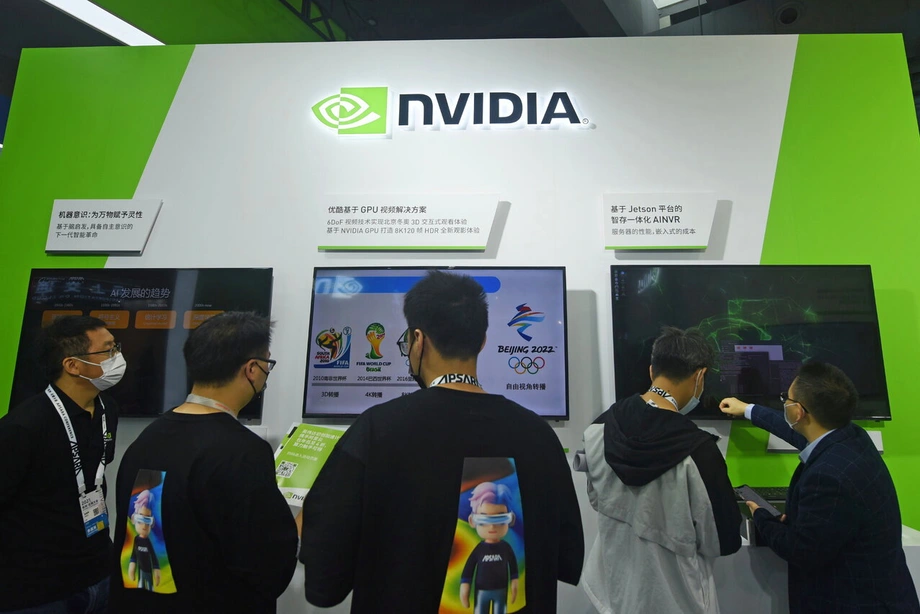
Nvidia has stopped shipping licensed Hopper data centre products to China after selling $2.4 billion worth during its third quarter of fiscal 2027, interim Chief Executive and Chief Financial Officer Colette Kress told analysts on November 17, 2026. The company has also removed those products from its future revenue forecasts.
Contents
- Kress ends licensed shipments as Washington tightens scrutiny
- What products are affected?
- How the decision developed
- Washington targets computing access beyond China's borders
- Customer limits and legislation follow different tracks
- How much revenue is at stake?
- A new committee takes charge of export oversight
- Leadership changes meet congressional pressure
- Chinese buyers face restrictions on both hardware and services
- Key Points
The decision closes a sales route that the Trump administration approved in 2025 for H200 processors, part of Nvidia's Hopper family. It comes during a leadership transition and a broader American effort to restrict Chinese companies' access to advanced artificial intelligence chips, including processors installed in data centres outside China.
Kress, who took temporary charge following cofounder Jensen Huang's departure on November 12, described the shipment decision during Nvidia's quarterly earnings call:
Our future guidance does not have any licensed Hopper data centre products included, and we are no longer shipping licensed Hopper data centre products to China.
Kress did not explain why shipments had stopped or give a date for resuming them. Nvidia's announcement leaves Chinese customers without this licensed supply route while the company places export compliance under closer supervision by its board.
The financial setting is striking. Nvidia reported quarterly revenue of $115.8 billion and forecast $130 billion for the following quarter, even while assuming no data centre compute revenue from China. Its central business question is whether demand elsewhere can absorb products that tighter American controls prevent it from selling to Chinese customers, directly or through overseas computing services.
What products are affected?
The approved processors are H200s, which belong to Nvidia's Hopper generation. Blackwell followed Hopper, and Rubin followed Blackwell, placing the H200 two generations behind Nvidia's latest processor family.
A generation is a family of chip designs, rather than a fixed number of years or a standard increase in speed. H200 processors remain useful for developing and running AI systems, even though newer products can perform more work.
AI processors carry out many calculations at once. Developers use large groups of them to train models, the process through which software learns patterns from data, and to run those models when people ask questions or request other tasks.
Nvidia had sought American approval to sell the more advanced Blackwell chips to China, but the Trump administration did not approve that request. President Donald Trump instead permitted H200 sales under an arrangement that required the chips to pass through the United States and carried a 25% tariff.
The shipment halt concerns licensed Hopper data centre products for China. Nvidia's fourth quarter forecast goes further in its financial assumptions by excluding all China data centre compute revenue, the category covering processors and related technology used for these computing workloads.
How the decision developed
Nvidia's shift follows months in which American export permission, Chinese import restrictions and congressional scrutiny all shaped the market. Washington controlled which products could be exported, while Beijing limited how much American hardware Chinese companies could obtain.
Earlier in November, about 600,000 H200 chips were described as waiting in Hong Kong amid restrictions on bulk imports into mainland China. That H200 stockpile in Hong Kong showed how processors could be positioned near buyers yet remain unavailable for their planned computing installations.
- 2025: The Trump administration approved a route for H200 sales to approved Chinese customers.
- November 12, 2026: Huang resigned as president, chief executive and a director. Kress became interim chief executive, and Harvey Jones became board chair.
- November 16: The US Commerce Department announced tighter controls addressing overseas access to advanced AI computing.
- November 17: Kress confirmed that licensed Hopper shipments to China had stopped. Nvidia also announced a new board committee overseeing national security and export controls.
- December 3: Huang has been asked to testify before the Senate Banking Committee.
The sequence puts the shipment decision alongside a change in leadership and new federal restrictions. Each affects a different part of Nvidia's business: who runs the company, which transactions Washington permits and which sales management includes in its forecasts.
Washington targets computing access beyond China's borders
The Commerce Department's Bureau of Industry and Security announced an interim final rule on November 16 addressing remote access to advanced computing through overseas data centres. The measure aims to stop companies in restricted countries from obtaining computing power through facilities in other jurisdictions.
Remote access lets a business use processors over an internet connection while the physical equipment stays elsewhere. A Chinese AI developer, for example, can rent computing capacity from a foreign data centre instead of importing a server into China.
That arrangement makes the customer using the machine as important to regulators as the country receiving it. The administration is increasing scrutiny of processor exports to multiple countries and restricting overseas sales where the purchasing data centre plans to provide Chinese companies with access to advanced AI chips and servers.
Export control lawyer Dan Fisher-Owens described a practical consequence for large data centres suited to training AI models: buyers would have to certify that they were not serving Chinese customers. Operators unable to provide that assurance could face restrictions on obtaining Nvidia equipment.
For facilities in Singapore, Malaysia, Thailand and Indonesia, the commercial risk therefore extends beyond their own location. Their ability to buy advanced processors may depend on identifying customers and documenting who ultimately uses the computing capacity.
Customer limits and legislation follow different tracks
Nvidia had already warned chip buyers that proposed legislation could expose both the company and its customers to American legal action over Chinese access to computing services. The Remote Access Security Act, known as RASA, passed the House of Representatives in January but had not passed the Senate.
The bill would give the government broader authority over access to cloud computing services. The Commerce Department's November rule is an administrative action, while RASA still requires further congressional approval before becoming law.
Nvidia also told customers it would not sell chips to operators renting more than 50% of their graphics processing units, or GPUs, to Chinese companies. Communications about future contracts described a requirement for at least 51% of services to go to customers outside China.
Those customer conditions focus on the share of computing capacity rented to Chinese businesses. The new federal restrictions address whether particular overseas sales can proceed when Chinese customers would gain remote access.
Congress is also considering measures covering chip location checks, semiconductor manufacturing equipment and legislative oversight of export approvals. The push for tighter controls has gathered support from both parties, although negotiations have not produced agreement on the full package.
How much revenue is at stake?
Nvidia's $2.4 billion in quarterly licensed Hopper sales to China amounted to about 2.1% of its $115.8 billion total revenue and about 2.2% of its $107.6 billion data centre revenue. Those calculations show the size of the direct sales being halted relative to the company's quarterly business.
The wider exposure involves overseas facilities that serve Chinese customers. Investment bank Jefferies estimated that the new restrictions could reduce Nvidia's data centre revenue next year by $44 billion to $62 billion.
Kress offered a more reassuring assessment of Nvidia's ability to keep selling its output. She said the backlog of demand for advanced products such as Vera Rubin meant the restrictions would have no impact on total company revenue. The two assessments turn on how much capacity other customers can buy when affected transactions are removed.
Nvidia's latest results show substantial demand outside the halted sales route:
- Quarterly revenue reached $115.8 billion, up 103% from a year earlier.
- Data centre revenue rose 110% to $107.6 billion.
- Net income increased to $65.3 billion from $31.9 billion a year earlier.
- Fourth quarter revenue guidance was $130 billion, plus or minus 3%, with no China data centre compute revenue assumed.
The midpoint of that forecast is about 12.3% above third quarter revenue. Nvidia is therefore forecasting further growth while preparing its finances around the loss of this China business.
A new committee takes charge of export oversight
Nvidia has established a National Security and Export Control Oversight Committee to supervise national security policy, export compliance and global trade risks. Director Suzanne Nora Johnson will chair it, joined by Stephen C. Neal and John O. Dabiri.
The committee will meet at least quarterly and work with independent experts. Nvidia's National Security Team and Global Trade Compliance Team will report directly to the committee and Kress, giving the interim chief executive a direct role in monitoring these issues.
Board chair Harvey Jones explained the company's reasoning in a statement:
Nvidia recognizes that advanced silicon technologies and the emergence of artificial and superintelligence present unprecedented challenges for national security.
Nvidia's 2026 proxy statement says the company has no chief compliance officer. Its existing structure assigns risk management to senior executives and trade compliance oversight to the board's Nominating and Corporate Governance Committee. The new panel adds a body devoted specifically to national security and export controls.
For customers, that creates another level of review around sales carrying trade or security risks. For Kress, it places responsibility for delivery, revenue forecasting and compliance close together during her temporary leadership.
Leadership changes meet congressional pressure
Jones told investors that Nvidia's board unanimously accepted Huang's resignation and did not intend to reinstate him as chief executive. Nvidia has retained executive search firm Heidrick & Struggles to find a permanent successor, considering candidates from inside and outside the company.
Huang had been a prominent advocate of restoring chip exports to China. His departure from Nvidia followed disclosures about personal relationships and scrutiny of a businesswoman associated with Singapore data centre company Megaspeed.
US authorities are investigating suspected Chinese intelligence links and possible chip diversion involving that businesswoman, Alice Huang, who is not related to Jensen Huang. Beijing has denied attempting to spy on him. Megaspeed has denied wrongdoing and appointed outside lawyers to investigate its operations.
Congressional scrutiny now reaches beyond the former chief executive. Huang and Nvidia General Counsel Tim Teter have agreed to appear before the House Foreign Affairs Committee, the Select Committee on the Chinese Communist Party and the House Intelligence Committee. Huang has also been asked to testify before the Senate Banking Committee on December 3.
Treasury Secretary Scott Bessent has publicly questioned Nvidia's export compliance practices. The hearings will put pressure on company leaders to explain how they screen buyers, monitor potential diversion and account for processors after sale.
Chinese buyers face restrictions on both hardware and services
Chinese AI companies now face constraints on two ways of obtaining Nvidia computing power: buying licensed H200 hardware and renting access to more advanced processors overseas. The shipment halt affects the first route, while Washington's new remote access rules target the second.
Beijing has also limited H200 imports as it seeks to support domestic chip suppliers. Georgetown researcher Jacob Feldgoise described a tension between that policy and major AI users' preference for Nvidia equipment.
Congressional proposals would add another constraint by keeping China at least two processor generations behind America's newest products. The proposed two generation limit would preserve access to older designs while reserving newer ones for other markets, subject to licensing rules.
Nvidia's latest announcement makes the immediate commercial position simpler: it is no longer shipping the licensed Hopper products, and its next quarterly forecast assumes no China data centre compute revenue. Chinese buyers must plan around tighter access, while Nvidia is counting on demand elsewhere to sustain its growth.
Key Points
- Nvidia stopped licensed Hopper data centre shipments to China after $2.4 billion in sales during its third quarter of fiscal 2027.
- The affected H200 processors had received US approval and sit two generations behind Rubin.
- New American controls target Chinese access to advanced chips through overseas data centres.
- Nvidia forecasts fourth quarter revenue of $130 billion, plus or minus 3%, without China data centre compute revenue.
- A new board committee will oversee national security and export controls, with compliance teams reporting directly to it and Kress.
- Nvidia is searching for a permanent chief executive, while Huang has been asked to testify before the Senate Banking Committee on December 3.