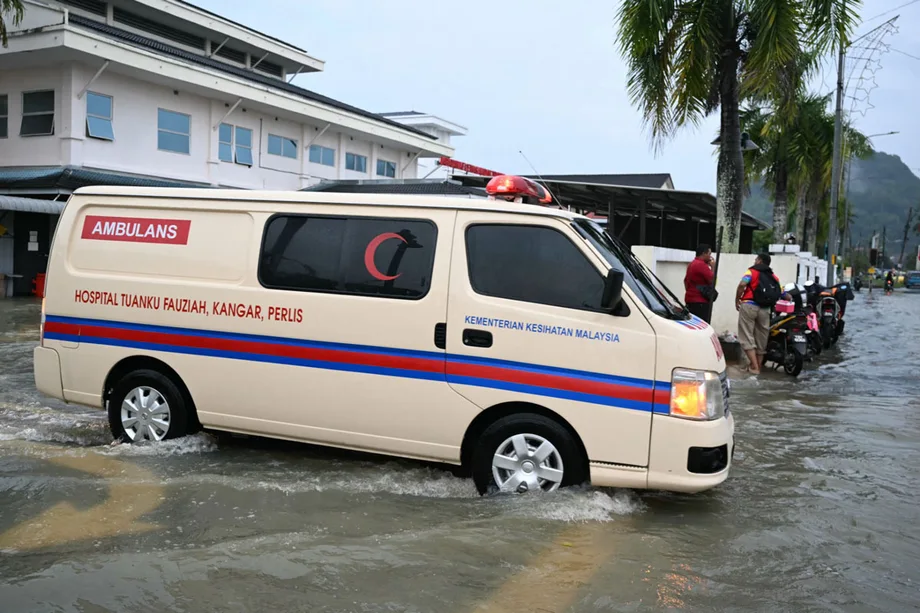
A shortfall of 475 ambulances drives a new purchase
Malaysia's Health Ministry plans to procure 1,389 ambulances after a supplier delivered just 115 of the 590 vehicles ordered under a contract awarded in 2022, Health Minister Datuk Seri Dr Dzulkefly Ahmad told Parliament on November 17, 2026.
Contents
- A shortfall of 475 ambulances drives a new purchase
- Why the ministry refused an extension
- What the 989 ambulance tender requires
- How the procurement unfolded
- An ageing fleet needs replacement as well as expansion
- What the audit found about emergency waits
- Vehicles need crews and better positioning
- Penang shows the role of community ambulances
- Key Points
The previous contract ended in November 2024 with 475 ambulances undelivered. That means the ministry received about 19.5% of the vehicles it had ordered, leaving more than four out of every five outstanding.
Dzulkefly said the ministry was in the final stages of procuring 989 ambulances, with supplier appointments expected to be finalised in December 2026. Another 400 vehicles have received funding approval under the year's Budget, bringing the planned total to 1,389.
The purchase comes amid pressure on an ageing fleet and longstanding concerns about emergency response times. In a separate parliamentary reply, the ministry said 1,773 of its 1,975 ambulances, or 89.8%, were more than six years old.
For patients, the issue is whether a working ambulance with the right equipment and staff can reach them quickly. Earlier national audit findings show that vehicle shortages sit alongside problems with staffing, dispatch decisions and long travel distances.
Why the ministry refused an extension
Dzulkefly disclosed the delivery shortfall while winding up debate on the Supply Bill 2027 in the Dewan Rakyat. He said the ministry had decided against giving the previous supplier more time after the contract period ended.
The health minister explained his decision to lawmakers:
However, the appointed company only managed to supply 115 ambulances throughout the contract period, which ended in November 2024. The Health Ministry decided not to extend the contract, otherwise, we would be rewarding failure after failure,
The ministry's separate parliamentary reply described contractor delays as having disrupted delivery schedules and led to termination of the previous contract. It also gave a breakdown of the 115 vehicles received: 100 Type A ambulances and 15 Type B ambulances.
Dzulkefly declined to identify the parties involved. Explaining that decision, he told Parliament:
I don't want to politicise or weaponise healthcare (issues). This is my principle,
Datuk Radzi Jidin, the Perikatan Nasional MP for Putrajaya, had raised the procurement issue during the debate. He pointed to public complaints about long waits during medical emergencies and said the concern was a shortage of available ambulances, rather than blame directed at healthcare workers.
What the 989 ambulance tender requires
The Health Ministry's official tender notice, numbered 72/2026, sets out a purchase of 989 Type B ambulances together with medical equipment for ministry hospitals and health clinics.
The notice calls for the vehicles to be supplied, tested and commissioned. Commissioning means checking and preparing a vehicle and its equipment for operational use, rather than simply handing over the keys.
Published on April 28, 2026, the notice listed an open tender closing at noon on May 11, 2026. It divides the purchase into six groups and specifies a contract lasting two years. The notice categorises the procurement as supplies and carries an FTA (CPTPP) designation, referring to the Comprehensive and Progressive Agreement for Trans-Pacific Partnership.
Dzulkefly said the ministry had reallocated funds and secured additional funding for the new procurement. He also said the matter had been raised with the Finance Ministry.
The minister's next stated milestone is the finalisation of supplier appointments in December 2026, followed by delivery in stages. No date was given for the arrival of the last vehicle. The relationship between the 1,389 vehicles and a separately approved purchase of 91 Type B ambulances was also not specified.
How the procurement unfolded
The replacement effort stretches across several years, beginning with an earlier assessment that the service needed substantially more ambulances. The sequence helps explain why a large new order is being pursued after a much smaller number of vehicles arrived.
- September 7, 2022: The ministry's Tender Board had approved 590 ambulances, with the proposal then awaiting Finance Ministry approval, according to the ministry's response recorded in the national audit.
- 2022: The contract later discussed by Dzulkefly was awarded for 590 ambulances.
- November 2024: The contract period ended with 115 vehicles delivered.
- April 28 to May 11, 2026: The ministry advertised the tender for 989 Type B ambulances.
- November 17, 2026: Dzulkefly told the Dewan Rakyat that the planned purchases totalled 1,389 vehicles.
- December 2026: Supplier appointments for the 989 ambulance purchase are expected to be finalised.
The parliamentary statement places the 989 vehicle purchase at the supplier selection stage. The additional 400 vehicles have funding approval under the Budget, a different step in the buying process.
An ageing fleet needs replacement as well as expansion
The ministry's figure of 1,773 ambulances older than six years leaves just 202 vehicles in its stated fleet aged six years or less. The ministry said its procurement effort was intended to replace outdated vehicles that were no longer economical to operate.
Replacing older ambulances matters because breakdowns and time spent undergoing repairs can reduce the number available for emergencies. A vehicle listed in a fleet total may still need maintenance before it can take another call.
The planned 1,389 purchases are equivalent to about 70.3% of the ministry's stated fleet of 1,975 ambulances. That comparison shows the scale of the programme, although the eventual fleet size will depend on how many existing vehicles are retired.
The Finance Ministry has also given special approval for 91 Type B ambulances outside the existing supply contract. The Health Ministry said those vehicles would be delivered in stages to health facilities nationwide and support emergency care before patients reach hospital, as well as transfers between facilities.
Those two jobs can compete for vehicle time. An ambulance carrying a patient between hospitals is occupied for the journey and cannot simultaneously attend a new emergency elsewhere. Availability therefore depends on both the number of working vehicles and the demands placed on them.
What the audit found about emergency waits
The Auditor-General's 2021 report, Series 2, documented weaknesses in ambulance response during 2017 to 2021. The ministry's target was to reach at least 50% of Priority 1 emergencies within 15 minutes.
Priority 1 means the most urgent cases, where a person's life may be in danger. Examples in the audit included strokes, breathing difficulties and accidents.
Across the period examined, performance ranged from 31.5% to 41.8%, below the 50% target. Of approximately 1.06 million Priority 1 calls, 443,080, or 41.8%, were attended within 15 minutes. The gap between that figure and the target was 8.2 percentage points.
These urgent cases represented 51.2% of the 2.07 million emergency calls received over the five years. In other words, just over half of the calls involved the highest priority category.
The audit identified failures to activate the response team at the hospital closest to an incident, as well as long distances between hospitals and emergency sites. Distances cited ranged from 60 kilometres to 443 kilometres.
Those findings show why dispatch decisions matter alongside purchases. Sending a nearby available team gives a patient a better chance of receiving help quickly than sending one from farther away. In remote areas, even the nearest hospital may be a long journey from the person needing assistance.
Vehicles need crews and better positioning
The ministry told auditors in 2022 that the system providing care before hospital arrival required 1,000 ambulances to run smoothly and address shortages. The same audit recorded a ratio of available staff to ambulances of 0.7 to one and identified a shortage of assistant medical officers assigned to emergency and trauma departments.
An ambulance service needs people as well as vehicles. Drivers move the team safely, while clinical staff assess patients, give treatment and decide what care is needed during transport. Buying a vehicle creates another potential response resource; staffing and equipping it make that resource usable.
The ministry's response to the audit included plans to station ambulances in areas identified as emergency hotspots. It also outlined a proposed National Prehospital and Disaster Medical Services Institute and a pilot planned for selected Klang Valley locations in October 2022. The audit described these as planned measures at that time.
Staff survey findings in the audit also pointed to practical needs. Between 64.4% and 76.5% of respondents expressed satisfaction with their assigned tasks, while recommendations included regular ambulance courses, equipment improvements and more emergency staff.
For the new procurement, the concrete service questions are where the vehicles will be stationed, which older units they will replace and whether enough personnel are available to operate them. Those decisions will determine how much of the purchase translates into additional emergency coverage.
Penang shows the role of community ambulances
Senator Dr Lingeshwaran R. Arunasalam presented figures showing how much emergency transport in Penang depends on organisations outside the Health Ministry. Between January and September in the period he cited, the state recorded 18,992 emergency ambulance calls under the MECC999 system.
Ministry ambulances handled 14,180 calls, or 74.7%, while NGO and community ambulances handled 4,812, or 25.3%. That amounts to roughly one in every four calls being answered by a service outside the ministry.
Dr Lingeshwaran said only St John Ambulance and the Malaysian Red Crescent were formally recognised under NG999, while nearly 10 other NGOs in Penang responded to emergencies outside the official framework. He pointed to narrow roads, traffic congestion and the ageing fleet as reasons to improve coordination.
The senator urged the ministry to speed up guidelines for community ambulances and include them in Priority 1 responses, with exceptions for obstetric and gynaecological cases and death confirmations. Calling for wider integration, he said:
With their proven track record and significant workload, integrating all community ambulances into the national system is urgently necessary,
Penang's figures add another dimension to the national purchase: public ambulances already operate alongside substantial community capacity. Better coordination of those services, together with functioning vehicles and staffed crews, addresses the same practical goal of getting help to patients sooner.
Key Points
- The supplier under the 2022 contract delivered 115 of 590 ambulances, leaving a shortfall of 475.
- The ministry plans to procure 989 ambulances, with another 400 approved under the Budget, for a total of 1,389.
- The official tender covers equipped Type B ambulances, testing and commissioning under a contract lasting two years.
- Supplier appointments for the 989 vehicles are expected in December 2026, with deliveries to follow in stages.
- The ministry said 89.8% of its stated fleet of 1,975 ambulances was more than six years old.
- Earlier audit findings identified staffing shortages, dispatch problems and long distances alongside slow emergency responses.
- NGO and community ambulances handled 25.3% of the Penang emergency calls cited in Parliament.