Parliament urged to tackle wages, power shortages and factory closures together
Bangladesh's opposition has proposed a national taskforce to address a garment industry crisis that is spreading from factory floors to highways and Parliament. The proposal includes priority gas and electricity supplies to export industrial areas within 30 days, financial support for struggling factories and a monthly public dashboard tracking production, orders, closures and jobs.
Contents
- Parliament urged to tackle wages, power shortages and factory closures together
- What would the proposed taskforce do?
- Energy shortages are already costing orders and jobs
- How far apart are workers and employers?
- Household budgets show why the dispute is urgent
- Why November 23 matters for the wage decision
- Factory shutdowns spread as protests intensify
- Arrests and lost pay put pressure on negotiations
- Buyers seek safe talks as disruption threatens deliveries
- Key Points
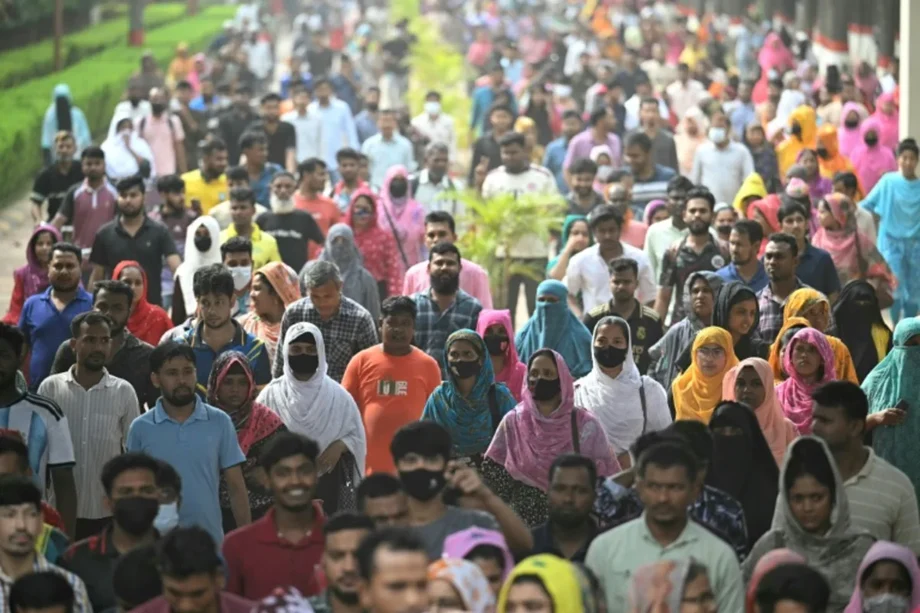
The parliamentary debate on Tuesday came amid demands to raise the minimum monthly garment wage from 12,500 taka to 30,000 taka, a 140% increase. Protests on November 17 disrupted major highways around Dhaka, while police used tear gas and sound grenades and authorities closed factories across the industrial belt.
Shafiqur Rahman, the opposition leader and amir of Jamaat-e-Islami, called for government and opposition representatives, factory owners, workers and technical specialists to work together. He warned that prolonged production stoppages would leave workers without income and owners unable to repay bank loans, putting pressure on the wider economy.
Mohammad Najibur Rahman, the Jamaat MP for Pabna-1 who introduced the discussion, put the sector's workforce at about four million and the number of people whose livelihoods depend on it directly or indirectly at about 40 million. He said garments generate more than 80% of Bangladesh's export earnings.
The taskforce remains a proposal. Deputy Speaker Kayser Kamal said the debate, held under Rule 147 of Parliament's rules of procedure, was a general discussion requiring no parliamentary decision. It therefore ended without a vote.
What would the proposed taskforce do?
Najibur Rahman's proposals connect immediate relief with the practical problems preventing factories from operating. Alongside the 30 day energy priority, he called for financial assistance to factories short of operating funds, payment of workers' outstanding dues, domestic production of technology and machinery parts, and action against extortion.
The proposed monthly dashboard would bring together information on energy supplies, production, purchase orders, factory closures and employment. Publishing those figures together would allow Parliament, businesses and workers to follow whether restored power supplies were translating into more output, more orders and fewer job losses.
Shafiqur Rahman also urged the government to consider direct financial support for workers. He argued that government assistance was needed for both employees and owners, and that cooperation across political parties could help rebuild confidence between them.
Ministers outlined plans covering new wages, reliable energy supplies, lower production costs and wider export markets. No timetable for establishing a taskforce was announced.
Energy shortages are already costing orders and jobs
Najibur Rahman cited a Bangladesh Knitwear Manufacturers and Exporters Association survey showing how gas and electricity shortages had affected factories in August and September. Buyers reduced or cancelled orders at 55% of the surveyed knitwear factories, 78% experienced partial production stoppages and 87% failed to ship goods on time.
The MP also said more than 19,000 workers had lost their jobs over the preceding six months. He argued that setting a new minimum wage must go alongside measures that allow factories to produce goods and earn the money needed to pay employees.
The survey figures describe different pressures within the same production chain. A factory that loses electricity may miss its shipping deadline. A buyer waiting for that shipment may then reduce its next order, leaving the factory with less work even after power returns.
Garment exports nevertheless rose 5.8% from a year earlier to $13.75 billion in July to October 2026. Export revenue measures the value shipped across the industry, while the survey describes disruption among participating knitwear factories. Together, the figures show rising national sales alongside serious operating difficulties at individual plants.
How far apart are workers and employers?
Workers protesting on the streets want a minimum monthly wage of 30,000 taka, compared with the existing 12,500 taka. Their demand would add 17,500 taka to the monthly floor. At the wage board, worker representative Babul Akhter proposed 32,000 taka for grade four and 48,000 taka for grade one on November 9.
The 32,000 taka proposal is a 156% increase over the current minimum. Employers were expected to present their opening offer at the board's next meeting on November 23, leaving the size of the negotiating gap uncertain until that proposal is made.
Living costs explain much of the pressure for an increase. Consumer prices rose 28.7% between November 2023, when the current wage was set, and September 2026. Applying that increase to 12,500 taka produces about 16,100 taka, the amount needed to restore roughly the same buying power.
The street demand is therefore about 13,900 taka above that inflation adjustment. Workers are seeking room in their household budgets beyond replacing what price increases have taken away.
Previous wage awards provide another comparison. The minimum rose by 51% in 2018 and 56% in 2023. Applying increases of that size to today's floor would produce roughly 19,000 to 19,500 taka, still more than 10,000 taka below the protesters' demand.
Household budgets show why the dispute is urgent
A survey conducted by unions affiliated with the Asia Floor Wage Alliance covered nearly 300 garment workers at 30 factories producing for export. It found average combined family income of 31,800 taka a month against household spending of 45,202 taka, a monthly gap of 13,402 taka.
Individual workers earned an average of 15,300 taka, covering about 34% of the household spending recorded in the survey. Some 62% of those surveyed reported debt.
Sultana Begum, president of the Green Bangla Garments Workers Federation, told an alliance webinar that the wage demand reflected basic family expenses:
Let me be clear: garment workers are not asking for luxury; they are demanding the right to live with dignity,
The government has introduced a rice subsidy for garment workers in Dhaka, Gazipur, Narayanganj and Chattogram. For three months, eligible workers can buy up to 10 kilograms a month at 30 taka per kilogram, making the maximum monthly purchase cost 300 taka.
Rent, transport and other bills remain pressing expenses. Food inflation slowed to 6.40% in October, while inflation for items other than food reached 9.89%. Housing and utility prices rose 9.8% from a year earlier in September, and transport prices rose 9.5%.
Why November 23 matters for the wage decision
Minimum Wage Board chairman Syed Azad Subhani said the revised wage would apply from December 1, 2026, once the process was completed, with workers due to receive increased pay in the first week of January 2027. He distinguished that effective date from the date on which the final wage would be announced.
The board has six months under the law to determine wages and can seek additional time from the government. Subhani said the government wanted a faster resolution, but proposals, negotiation and the required legal steps still had to be completed.
The main dates in the wage review and unrest are:
- November 1: The six member Minimum Wage Board was formed.
- November 9: Worker representative Babul Akhter proposed 32,000 taka for grade four and 48,000 taka for grade one.
- November 15: Board members visited factories in Narayanganj to gather information on pay and household costs.
- November 16: The third board meeting was postponed after a permanent member representing workers became ill.
- November 17: Wage protests disrupted major highways and factory operations.
- November 23: The rescheduled board meeting is due, with employers expected to submit their proposal.
- December 1, 2026: The intended effective date for the revised wage.
- Early January 2027: Workers are expected to receive their first increased payments.
Board members have visited small, medium and large factories in Chattogram, Narayanganj and Savar. They collected information on actual salaries, housing costs, family spending and the number of dependants supported by workers. Subhani said those findings would be included in the wage review report.
Factory shutdowns spread as protests intensify
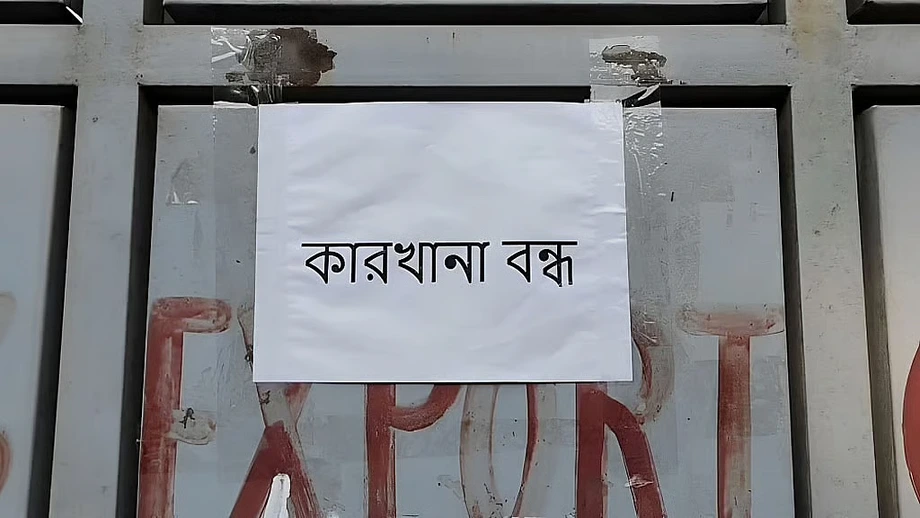
Authorities announced closures at 80 factories in Savar and Ashulia during the November 17 unrest. A broader industry estimate put closures across Bangladesh at about 500 of the country's 4,500 garment factories, roughly one in nine.
Thousands of workers blocked the Dhaka to Mymensingh highway, while protests also disrupted the Dhaka to Aricha highway and roads around Hemayetpur. Protesters threw bricks, damaged vehicles and factories, and set fires. Police fired tear gas and sound grenades to disperse crowds.
Mohammad Mominul Islam Bhuiyan, superintendent of Ashulia Industrial Police-1, said workers threw bricks towards police and factory premises. Khairul Mamun Mintu, legal affairs secretary of the Bangladesh Garments and Sweaters Workers Trade Union Centre, said workers initially entered factories peacefully before employees from some plants came outside and threw bricks, prompting nearby factories to declare holidays.
Border Guard Bangladesh deployed 42 platoons across Dhaka, Gazipur and Narayanganj. One garment worker was reported to have died during the wider unrest; police in Ashulia could not immediately provide an injury count.
Arrests and lost pay put pressure on negotiations
Savar Model Police Station officer in charge Mohammad Saiful Alam said more than 117 people had been arrested. Labour organisations described at least 60 arrests since the beginning of November, including union leaders, although that count was difficult to verify. The figures cover differently described groups and areas.
Saiful Alam alleged that people from various organisations, including a banned organisation, were encouraging violence. Union organisations raised concerns about raids, detention and cases against representatives who they said had not participated in unrest.
The Asia Floor Wage Alliance said Sultana Begum was taken away by police shortly after the webinar in which she discussed workers' financial difficulties and the treatment of union leaders. Tayebur Rahman, assistant director at the Bangladesh Legal Aid and Services Trust, described some cases against workers as fabricated and said unclear charges complicated legal assistance.
Factory closures also threaten immediate income. Sixty five factories were reported to have closed indefinitely under the labour law's provision allowing owners to halt production and stop wages during unrest, commonly described as no work, no pay. Industry associations had warned that factories unable to operate would remain shut under Section 13(1).
Buyers seek safe talks as disruption threatens deliveries
The American Apparel & Footwear Association has urged Prime Minister Tarique Rahman's government to support negotiations involving employers and workers, with protection against violence and intimidation. Its members include major international buyers that depend on Bangladesh's factories.
Stephen Lamar, the association's president and chief executive, called for meaningful participation by both sides in the wage review:
AAFA and its members encourage the government to ensure that the minimum wage review is conducted through effective tripartite consultation, with full respect for freedom of association and collective bargaining rights,
Tripartite consultation means negotiations involving three groups: government, employers and workers. The proposed parliamentary taskforce would add opposition politicians and technical specialists, giving it a wider remit covering energy, finance and industrial administration.
Joseph Parkes, senior Asia analyst at Verisk Maplecroft, said electricity cuts and gas shortages had already disrupted Christmas ordering and warned that unrest would extend delivery problems into the following year. Continued shutdowns also affect production for spring and summer 2027 orders.
November 23 is the next scheduled opportunity to narrow the wage gap. Parliament's proposal addresses the connected challenge: keeping factories supplied and operating while ensuring that the people making Bangladesh's exports can meet their living costs.
Key Points
- Opposition MPs proposed a taskforce covering wages, energy, factory finance, worker dues and extortion. Parliament held no vote.
- Workers on the streets seek 30,000 taka a month, up from 12,500 taka. The wage board worker representative proposed 32,000 taka for grade four.
- The wage board is due to meet on November 23. Revised wages are intended to apply from December 1, 2026, with payments in January 2027.
- A knitwear survey cited in Parliament found delayed shipments at 87% of participating factories during energy shortages in August and September.
- Authorities closed 80 factories in Savar and Ashulia; the broader industry estimate was about 500 closures nationwide.
- Garment exports rose 5.8% to $13.75 billion in July to October 2026, even as factories faced energy shortages and disruption.