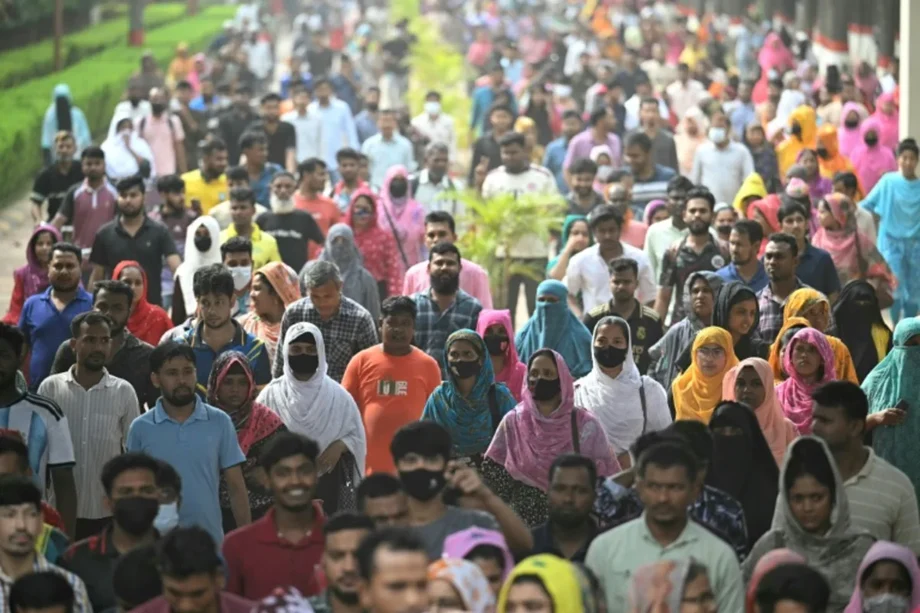
About 20,000 workers face closures without a reopening date
Nine garment factories in Bangladesh have closed indefinitely amid renewed wage protests, affecting about 20,000 workers, according to Bangladesh Garment Manufacturers and Exporters Association (BGMEA) sources. The closures come as workers demand a minimum monthly wage of Tk 30,000 and owners consider shutting many more factories across the industrial belt around Dhaka.
Contents
- About 20,000 workers face closures without a reopening date
- Which factories have closed?
- How the stoppages spread
- A wage demand more than double the current minimum
- What closing under the labour law means
- Clashes and a detention fuel further protests
- Gazipur disruption reaches a major highway
- Labour leaders and police describe intimidation
- Owners weigh wider closures as talks approach
- Lost production puts workers and export orders under pressure
- Key Points
Factory authorities invoked Section 13(1) of the Bangladesh Labour Act, a provision they are using to suspend operations and withhold wages from workers participating in a strike classified as illegal. The immediate stakes are both production and pay: factories are losing working days while affected employees face a period without earnings.
Authorities declared holidays at 204 factories on November 12, including 137 in Ashulia and the wider Savar area and 67 in Gazipur. These temporary suspensions sit alongside the indefinite closures, which have no fixed reopening date. Clashes, a highway blockade and reports of threats against workers have complicated efforts to restart production.
The dispute is unfolding during negotiations over a new minimum wage. Workers on the streets are seeking Tk 30,000 a month, compared with the current Tk 12,500, while their representative on the Minimum Wage Board has proposed Tk 32,000. Owners were preparing their own proposal for a board meeting scheduled for November 16.
BGMEA President Mahmud Hasan Khan Babu said employers had repeatedly reopened factories only to find workers unwilling to resume production. He said operations could restart when conditions returned to normal. Labour representatives, meanwhile, warned that closing factories without pay could deepen workers' anger.
Which factories have closed?
The Department of Inspection for Factories and Establishments and BGMEA identified the nine factories as MM Knitwear, Arunima Sportswear, Newage Apparels, Newage Garments, Kailock Newage BD Limited, Titas Sweaters, Mamun Knitwear, DMC Apparels and DMC Washing Limited.
A narrower count attributed to Ashulia Industrial Police identified seven closures in Savar and Ashulia, including Jeans Manufacturing Company Ltd in Hemayetpur, which was absent from the nine factory list. That count covered three Arunima Group factories, three Newage Group factories and Jeans Manufacturing Company.
The Arunima Group factories, Arunima Sports Wear, DMC Apparels and DMC Wash, closed from November 12. The three Newage Group factories in Nishchintapur had been closed since November 10. Gazipur police separately confirmed indefinite closures at MM Knitwear and Mamun Knitwear in Konabari.
Notices at the Konabari factories said workers had stopped work from the afternoon of November 10 while demanding a higher minimum wage. Management alleged vandalism and described the stoppages as an illegal strike. Ashulia Industrial Police Superintendent Mohammad Mominul Islam Bhuiyan said police had consulted factory authorities and that the closed units would reopen when conditions returned to normal.
How the stoppages spread
The unrest began on October 31, eased after November 5 and intensified again on November 10. The following timeline shows how wage negotiations and factory disruption developed together:
- October 31: The current wave of labour unrest began.
- November 4: The garment wage board agreed to increase the minimum wage, with the amount still to be negotiated.
- After November 5: Protests subsided and factories resumed operations.
- November 10: Unrest intensified again, with holidays declared at 146 factories and clashes in Ashulia.
- November 11: The number of factories declaring holidays reached 182, and BGMEA held an emergency meeting.
- November 12: Holidays were declared at 204 factories as disruption spread further into Gazipur.
- November 16: The next wage board meeting was scheduled, with owners preparing their proposal.
The daily holiday count rose by 58 factories between November 10 and November 12, an increase of about 40%. BGMEA also recorded production disruption at 156 factories on Wednesday, including 140 in Savar and Ashulia, a measure covering halted production, work stoppages and protests.
A wage demand more than double the current minimum
Workers demanding Tk 30,000 a month are seeking an increase of Tk 17,500 from the current minimum of Tk 12,500. That is a rise of 140%, meaning the requested wage would be 2.4 times the existing minimum.
The workers' representative on the wage board proposed Tk 32,000, which is Tk 2,000 above the demand heard in the street protests. A minimum wage sets the lowest permitted pay for workers covered by the wage structure; the board's negotiations determine the new floor.
Protest demands also include an end to worker blacklisting and the cancellation of dismissals workers describe as unfair. Blacklisting means identifying workers in a way that can prevent them from finding jobs at other factories. Some demonstrations were organised around nine demands, while the November 10 protests highlighted wages, blacklisting and dismissals as three central issues.
Khanam, a garment worker who gave only one name, described going to work without starting production:
We went to the factory in the morning, punched in and came back home.
She said workers were waiting for a wage decision they could accept:
I don't think the demonstrations will calm down soon. They will continue until the wage board comes up with a revised and acceptable wage.
What closing under the labour law means
Bangladesh's Ministry of Law publishes the Bangladesh Labour Act, enacted as Act No. 42 of 2006 on October 11, 2006. It governs matters including employment, wage payments, minimum wages, workplace safety and industrial disputes.
Section 2(57) defines a lockout to include an employer closing a workplace or suspending work in connection with an industrial dispute, or to compel workers to accept employment terms. Factory notices in this dispute invoke Section 13(1), describing closures in response to what management calls illegal strikes.
Under the provision as described in the closure notices, workers participating in such a strike receive no wages for the closure period. The practical consequence is that the dispute over higher pay can leave participating workers without their existing earnings while operations remain suspended.
Khairul Mamun Mintu, legal affairs secretary of the Bangladesh Garments and Sweaters Workers Trade Union Centre, warned that this approach could increase tensions:
This provision can provoke unrest. Workers do not receive any wages while factories remain closed under this provision.
Clashes and a detention fuel further protests
Ashulia saw at least 10 people injured, including police personnel, during clashes on November 10. Workers from factories including Sharmin Group, Envoy and Sterling had recorded their attendance before stopping work. When demonstrators tried to occupy the Nabinagar-Chandra highway, police used sound grenades, tear gas and batons, while workers threw bricks and stones.
Further clashes on Thursday left around 50 people injured, according to Ashulia Industrial Police Superintendent Mohammad Mominul Islam Bhuiyan. Work was temporarily suspended at about 150 factories as demonstrations spread through several neighbourhoods.
Workers at Ha-Meem Group factories including Next Collection, Sterling Style, Setara and Yagi Bangladesh walked out in the Government Market area along the Baipail-Abdullahpur highway. Police detained Rakib Hasan, a worker at Next Wash Ltd.
Rumours of widespread arrests then circulated, drawing protesters to Jamgora, Nishchintapur, Beron, Zirabo, Tongabari and Gouripur. Workers from factories that had continued operating also left their workplaces to demand the release of detained workers.
Five platoons of Border Guard Bangladesh personnel and additional police were deployed in Ashulia. Security personnel patrolled with armoured vehicles, while police took positions near factories and major locations. Ashulia Police Station Officer-in-Charge Tarikul Islam said conditions had returned to normal after noon.
Gazipur disruption reaches a major highway
Workers from Labenda and Apex factories blocked the Dhaka-Tangail Highway at Mouchak Telirchala in Gazipur's Kaliakair area while demanding higher wages. The blockade began at about 8:30am and traffic resumed at 11:30am after police cleared the road.
The nearly three hours of disruption caused long traffic queues and delayed other road users. Gazipur Industrial Police Superintendent Amjad Hossain said nine factories had declared a holiday for Thursday and two in Konabari had closed indefinitely. The broader BGMEA tally counted 67 factory holidays across Konabari and Kaliakair.
Ashulia also experienced violence at factory premises. Industrial Police said protesters described as outsiders pressured Taharat Composite Limited in Zirabo Pukurpar to declare a holiday at about 2:30pm. Bricks and stones thrown into the factory injured junior quality inspector Md Sajib Hasan, who was taken to City Hospital.
Some workers in Ashulia refused to return after lunch. Police said social media messages urging workers to leave factories, together with fear and pressure, were contributing to absences even among employees who wanted to continue working.
Labour leaders and police describe intimidation
Md Hashmat Ali, president of the Savar and Ashulia Regional Committee of the Bangladesh Apparel Workers Federation, said some workers wanted to see the owners' wage proposal before returning to production. He said most wanted to work, but factory authorities sometimes declared holidays as a precaution when employees from a few establishments took to the streets.
Hashmat Ali also alleged that people affiliated with the ousted Awami League were mixing with workers and escalating tensions. He cited workers at a Ha-Meem Group factory who worked until 10pm on Wednesday, then allegedly faced threats and attacks on their way home and stayed away the following day.
Dhaka District Superintendent of Police Shamima Parveen alleged that members of a banned organisation had joined the movement and were trying to destabilise the country. She said police were seeking to arrest them and had spoken to labour leaders who wanted to return to work.
Dhaka-19 MP Dewan Mohammad Salahuddin Babu said attempts at sabotage during the unrest would be dealt with politically. The allegations of outside involvement sit alongside the workers' stated demands for higher wages, an end to blacklisting and the reversal of unfair dismissals.
Owners weigh wider closures as talks approach
BGMEA Vice President Md Rezwan Selim said most owners and former association presidents at the November 11 emergency meeting supported closing factories because they were struggling to reopen and operate them. BGMEA was also planning a special general meeting for Saturday to decide its next steps.
Owners discussed whether their representative should attend the November 16 wage board meeting if unrest continued. They were divided on that question. Selim said the owners' representative was preparing a wage proposal for the meeting.
Mohammad Rashed, vice president of the Bangladesh Knitwear Manufacturers and Exporters Association, said owners were considering indefinite closures at 210 factories. He cited refusals to work, vandalism and concerns about paying salaries while production remained disrupted. Some owners were also considering closing all factories in the Ashulia industrial area.
The new wage amount remained undecided. The implementation schedule was also unsettled: owners had indicated December, while the timetable following the board's November 4 agreement put an announcement in December and the new rate taking effect in January. Workers therefore faced uncertainty over both the size of the increase and when it would reach their pay.
Lost production puts workers and export orders under pressure
Bangladesh's garment industry earns around $38 billion annually, accounts for about four fifths of export earnings and employs more than four million people. BGMEA has more than 4,500 member factories. The country is the world's second largest garment exporter after China.
Mohiuddin Rubel, additional managing director of Denim Expert Ltd and a former BGMEA director, described how repeated stoppages affect workers, factory finances and international customers:
These disruptions hurt everyone. Businesses lose money, workers lose working days, the economy takes a hit, and buyers start to question Bangladesh as a sourcing destination,
Rubel warned that the effect on buyer confidence could last beyond the immediate disruption:
That damage is hard to undo.
The immediate challenge is to keep wage negotiations moving while restoring conditions in which workers can safely return and factories can operate. Wider closures would extend the loss of earnings to more households, while any withdrawal from the wage board meeting would interrupt the forum where the new minimum is being negotiated.
Key Points
- Nine factories were listed as indefinitely closed, affecting about 20,000 workers, according to BGMEA sources.
- Factory holidays reached 204 on November 12 across Ashulia, Savar and Gazipur.
- Workers are demanding Tk 30,000 a month, up from Tk 12,500; their wage board representative proposed Tk 32,000.
- Closures invoked Section 13(1), with participating strikers facing loss of wages during the shutdown.
- Clashes injured workers and police, while a blockade stopped traffic on the Dhaka-Tangail Highway for nearly three hours.
- Owners were considering wider closures and preparing a proposal for the November 16 wage board meeting.
- The wage amount and implementation schedule remained unsettled.