A new borrowing route under growing pressure
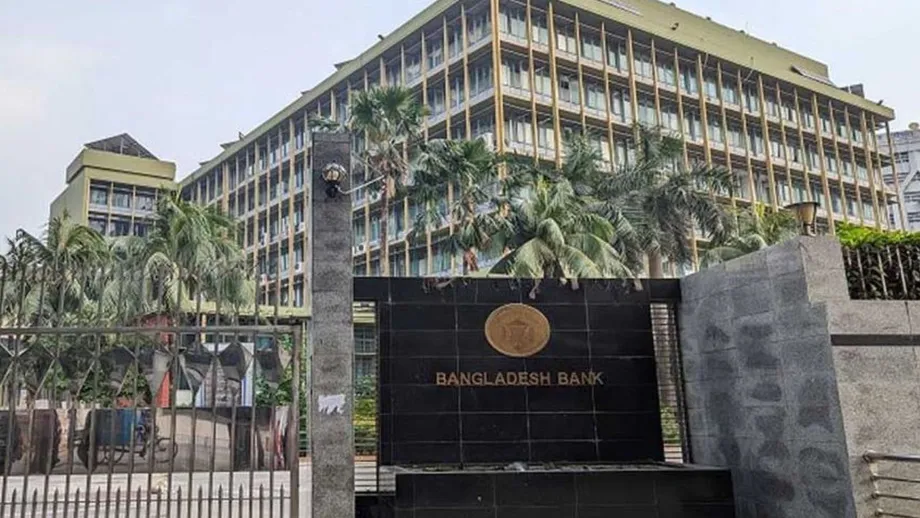
Bangladesh is preparing its first international sovereign bond sale as it looks for foreign currency to finance development projects and meet rising debt costs. Finance Division officials describe approval in principle for borrowing of up to $1 billion, while Prime Minister's Special Assistant Tanvir Shahriar Ghani says the government intends to enter the market within two to three months.
Contents
- A new borrowing route under growing pressure
- How far has the bond plan advanced?
- Why borrowing in taka is not enough
- Debt costs are squeezing the budget
- Dollar, yen or yuan?
- The cheapest interest rate may not mean the cheapest loan
- Repayment timing matters as much as price
- IMF negotiations continue alongside the bond preparations
- A long history of plans, with new oversight
- Project delivery becomes part of the borrowing test
- Key Points
The financing pressure is already visible. In July to September of the 2026–27 fiscal year, development partners disbursed $660 million, while Bangladesh paid $1.35 billion in external debt repayments. Repayments were therefore slightly more than twice those disbursements, leaving a $690 million gap between these two flows.
Finance and Planning Minister Amir Khosru Mahmud Chowdhury outlined the borrowing plans around the international debt conference jointly organised by the Finance Division and Asian Development Bank in Cox's Bazar on 15–16 November 2026. He said activities to issue international bonds would begin in early January. Ghani identified New York or London as possible locations for the debut.
A sovereign bond is a government loan divided into securities that investors can buy. The government promises interest payments and repayment of the amount borrowed when the bond matures. An international issue would give Bangladesh access to investors beyond its usual development lenders.
The proposed sale forms part of a wider financing effort involving dollar bonds, Japanese and Chinese markets, domestic Islamic securities and an equity fund focused on Bangladesh. At the same time, the government is negotiating a new financing framework with the International Monetary Fund, aiming to settle discussions by January or February.
How far has the bond plan advanced?
The Finance Division submitted the sovereign bond proposal to Prime Minister Tarique Rahman in October. Preparations include a legal framework, an international credit rating and an agreement with the lead arranger. Officials have described a possible maturity of up to 10 years, meaning that repayment could fall due within a decade of issuance.
The approval has been described as allowing up to $1 billion, although another description of the October decision puts the amount below $1 billion. Ghani said the actual size would be decided later. The final amount, currency, interest rate and sale date remain unsettled, with timing dependent on market conditions.
JPMorgan Chase is expected to serve as lead arranger, helping structure and market the transaction. Hong Kong advisory firm Bridgeworks International is also expected to provide support. The Cabinet Committee on Economic Affairs approved proposals for their appointments in principle, while contractual arrangements and JPMorgan's commission still require agreement.
Planned investor presentations, known as roadshows, would take place in London, New York and Hong Kong. Singapore has also been identified as a possible market. These meetings would help officials learn how much investors might buy and what interest rate they would demand before Bangladesh commits to a sale.
Why borrowing in taka is not enough
Chowdhury said development projects require foreign currency that domestic borrowing alone cannot supply. Local bonds raise taka, but imported equipment, overseas services and other international purchases require currencies accepted by foreign suppliers.
The finance minister explained the problem in his remarks at the conference:
If we only issue local bonds, we still have to turn to the international market whenever we need foreign currency for development.
Bangladesh has traditionally relied heavily on multilateral institutions, such as the World Bank and ADB, and bilateral loans from individual countries. International bonds would add another group of lenders: investors buying government securities for a financial return.
External loan disbursements fell from about $9.5 billion in FY2023–24 to $7.5 billion in FY2025–26, according to figures discussed by Zahid Hussain, former chief economist of the World Bank's Dhaka office. That is a decline of roughly $2 billion, or 21%. A bond sale of $1 billion would equal about half that decline, illustrating both its potential contribution and its limits.
Debt costs are squeezing the budget
Bangladesh's outstanding public debt stood at Tk22,06,462 crore, including Tk9,59,311 crore in foreign debt, according to figures the finance minister presented to parliament on 12 July. Foreign borrowing represented about 43.5% of the total, with domestic borrowing accounting for the larger share. A crore equals 10 million taka.
The FY2026–27 budget allocated Tk1,27,500 crore for interest payments. Domestic debt interest accounted for Tk1,05,000 crore, compared with Tk22,500 crore for foreign debt interest. About 82% of the budgeted interest bill therefore came from domestic borrowing.
Foreign financing presents a separate cash challenge because repayment requires foreign currency. Bangladesh paid a record $4.494 billion in foreign loan principal and interest in FY2025–26. New foreign loan commitments were $5.243 billion, the lowest in 14 years. A commitment is a promise of financing; disbursement is the money actually released.
The July to September figures show why that difference matters. Development partners committed $1.27 billion but released $660 million, about 52% of the commitments recorded for the quarter. These figures describe different stages of lending, with project implementation and release procedures affecting when cash arrives.
Tax collection also shapes how much debt the government can afford. IMF official Sonali Jain-Chandra said in October that Bangladesh's tax revenue was around 7% of gross domestic product. Chowdhury subsequently said income tax and customs collections had each grown by more than 14%, while value added tax receipts were growing more slowly.
Dollar, yen or yuan?
Bangladesh is considering several instruments that reach different investors. A dollar bond sold internationally would require repayment in dollars. A Samurai bond is issued by a foreign borrower in Japan's domestic market in yen. A Panda bond is issued in mainland China in yuan.
A dollar denominated Eurobond is another option. In this setting, Eurobond describes an international bond structure; its currency can be dollars rather than euros. Officials are also considering domestic sukuk, Islamic securities structured around assets or investment arrangements.
China and Bangladesh agreed to pursue Panda bonds during Rahman's June visit to China. Bangladesh Bank Governor Mostaqur Rahman initially supported an issue equivalent to $50 million. Economic Relations Division Secretary Md Shahriar Kader Siddiky cautioned during government discussions that the IMF might object to a proposed Panda issue.
A Bangladesh focused equity fund in Hong Kong would raise a different kind of money. Equity investors take an ownership interest rather than lending at a fixed interest rate. Its financing structure would therefore differ from a sovereign bond, which creates a government repayment obligation.
The cheapest interest rate may not mean the cheapest loan
Interest rates in Japan and China can make yen or yuan borrowing appear attractive. Bangladesh would still need to assess currency movements, fees and the cost of protection against exchange rate changes. A lower interest payment can be offset if the repayment currency becomes more expensive to obtain.
Dollar borrowing offers a closer match with much of Bangladesh's export earnings and remittance receipts. Yet a weaker taka would increase the local currency cost of obtaining dollars for repayment. Borrowing in yen or yuan introduces further conversion choices because Bangladesh must secure those currencies when payments fall due.
Currency hedging is a way to reduce uncertainty by arranging future exchanges under agreed terms. Such protection costs money. The useful comparison is therefore the total borrowing cost, including interest, issuance expenses, any guarantee fees and currency protection.
Mahbub Ahmed, a former senior secretary of the Finance Division, urged the government to examine the proposed terms and spending plans together:
The terms, interest rate and intended use of the proceeds are extremely important when issuing sovereign bonds in international markets.
Zahid Hussain's October analysis cited approximate coupons of 2–3% on Indonesia's Panda and Dim Sum bonds, against around 7.5–8% on Pakistan's dollar Eurobonds. A coupon is the stated interest payment on a bond. Those rates reflect different currencies, credit risks and structures, so Bangladesh would need its own investor assessment and full cost calculation.
Repayment timing matters as much as price
Commercial bonds commonly mature within three to 10 years, although longer terms are possible. Many require the principal to be repaid in one large payment at maturity. A government may plan to issue another bond to cover that payment, creating refinancing risk: investors might demand much higher interest or decline to lend when repayment comes due.
Development loans can give projects considerably more time to generate benefits. Hussain described International Development Association blend credits as carrying interest of around 2%, with maturities of about 25 years and grace periods of five years. These terms spread repayment over a longer period than the proposed bond maturity of up to 10 years.
Infrastructure creates a practical timing problem. A port or energy facility may take years to finish and longer to generate its full economic return. If its financing matures too soon, the government must find repayment money before the project has delivered the expected benefits.
Multilateral guarantees could help attract investors by covering specified repayment risks. Pakistan's inaugural Panda bond in 2026 raised about $260 million with ADB and Asian Infrastructure Investment Bank guarantees, according to Hussain's analysis. Bangladesh's pursuit of commercial markets could therefore still involve development institutions, alongside their direct lending.
IMF negotiations continue alongside the bond preparations
Chowdhury said Bangladesh was not withdrawing from engagement with the IMF. Two working groups are addressing disagreements, with the government seeking conditions that fit current economic circumstances and its development programme covering five years.
The finance minister described the discussions at the Cox's Bazar conference:
We have differences with the IMF on certain issues, and work is under way to resolve them. Two working groups are addressing these matters. We hope to conclude the discussions by January. There has been no discussion about withdrawing from the IMF programme.
The government had decided in May to leave the previous arrangement early and pursue a fresh one, then formally requested a new programme on 3 June. The earlier programme began at $4.7 billion in January 2023 and later expanded to $5.5 billion. Bangladesh received about $3.8 billion in five instalments, while the sixth instalment became held up.
Negotiations cover exchange rate management, banking reform, electricity and fertiliser subsidies, and revenue collection. The government is also discussing financing with the World Bank, ADB and Islamic Development Bank, alongside bilateral lenders and bond investors. Chowdhury has given January as a target for completing IMF talks, with the broader conference account allowing January to February.
The IMF's debt sustainability assessment accompanying its 2025 Article IV consultation classified Bangladesh at moderate risk of both external and total debt distress. Revenue collection, export earnings, foreign currency reserves and repayment capacity will help determine how much additional borrowing the country can manage.
A long history of plans, with new oversight
Bangladesh has considered international sovereign bonds repeatedly without completing a debut. The latest effort includes an eight member committee led by Ghani, with representatives from the Finance Division, Economic Relations Division, Bangladesh Bank and the securities regulator.
The committee will assess the amount, currency, interest structure, maturity, timing and market. Its responsibilities also cover advisers, disclosure documents, investor engagement and the arrangements for interest and principal payments after issuance.
- 2011–2013: Bangladesh explored a $500 million sovereign issue, formed a committee and discussed the proposal with potential investors in London.
- 2014–2021: Further proposals included $2 billion in 2014 and $1 billion to $2 billion in 2016, with discussions returning in 2021.
- 11 November 2019: IFC issued a separate Tk800 million Bangla Bond in London to finance PRAN Group, with a maturity of three years.
- July–October 2026: The government formed the latest feasibility committee and approved the sovereign borrowing proposal in principle.
- 15–16 November 2026: The Cox's Bazar conference brought the borrowing strategy and debt management reforms into focus.
- January–February following the conference: Officials aim to advance the bond process and conclude IMF framework discussions.
The 2019 Bangla Bond provides experience with international investors, but its borrower and structure were different: IFC issued securities denominated in taka to support PRAN. Bangladesh's proposed sovereign issue would place the repayment obligation directly on the government.
Project delivery becomes part of the borrowing test
Chowdhury linked the financing effort to closer monitoring of major projects, including Matarbari deep sea port, LNG terminals and development authority initiatives. He instructed responsible agencies to meet deadlines and said officials would be held accountable for failures.
Timely completion matters because interest can accumulate while construction is under way. Delays postpone the transport, energy or commercial benefits expected to support economic activity and public revenue. The value generated by the borrowed money will help determine whether the additional debt is affordable.
The conference agenda also included an annual borrowing plan and a possible separate Debt Management Office. Borrowing, repayment and risk assessment responsibilities are currently divided among institutions. Bringing those decisions into a more coordinated framework would help officials track when obligations fall due and which currencies are required.
For Bangladesh, the immediate decisions are concrete: how much to borrow, at what total cost, for which projects and on what repayment schedule. A successful debut would create another financing channel. Its lasting value would depend on whether the funds produce benefits large enough, and early enough, to meet the resulting obligations.
Key Points
- Bangladesh is preparing its first international sovereign bond, with approval described as up to $1 billion and the final amount still undecided.
- Ghani targets market entry within two to three months; Chowdhury says issuance activities should begin in early January.
- External debt repayments of $1.35 billion exceeded development partner disbursements of $660 million in July to September.
- Dollar bonds, Samurai bonds, Panda bonds, domestic sukuk and an equity fund are under consideration.
- Currency movements, fees and repayment timing will determine the full cost of commercial borrowing.
- Bangladesh aims to settle discussions on a new IMF financing framework by January or February.