A growth target with a growing repayment bill
Bangladesh plans to build a $1 trillion economy by 2034, with a government strategy that seeks to raise total investment to 40% of gross domestic product by the 2030–31 fiscal year. The immediate challenge is financing that expansion while paying a larger debt bill: the 2026–27 budget sets aside Tk1.275 trillion for interest payments.
Contents
- A growth target with a growing repayment bill
- How the plan developed during 2026
- Growth must recover from a sharp slowdown
- Three stages link stability to economic reform
- Debt repayments narrow the room for investment
- Borrowing reforms aim to improve control
- Revenue and bank repair underpin the expansion
- Industrial revival and new exports share the agenda
- Energy and transport determine factory performance
- Households, farmers and students are part of the plan
- The next checkpoints extend beyond the budget
- Key Points
The government's national budget speech sets targets of 6.5% economic growth and 7.5% inflation for 2026–27. By 2030–31, it aims for growth of 8.5%, inflation of 5% and foreign direct investment equivalent to 2.7% of GDP, compared with a current level of 0.45%.
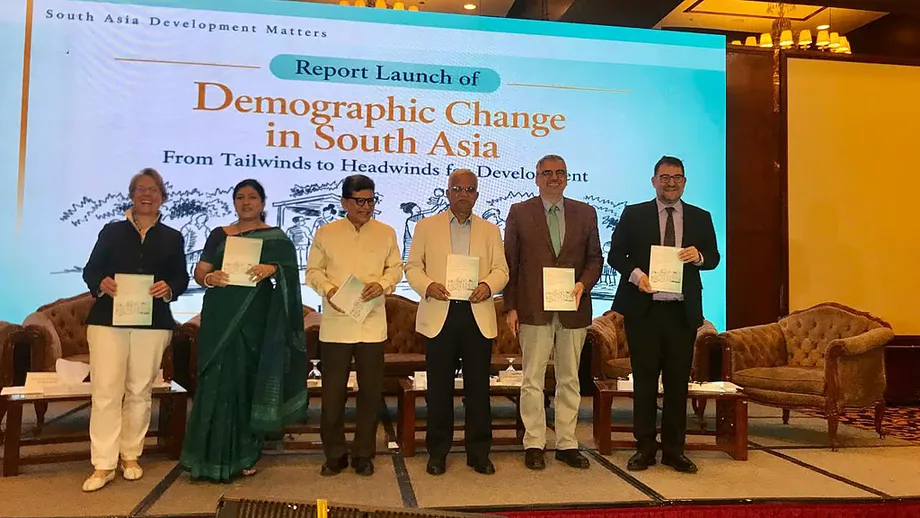
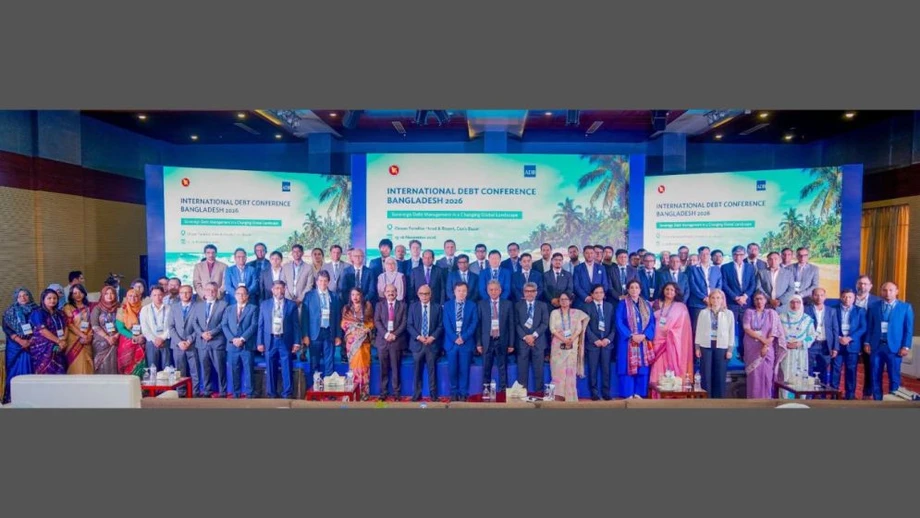
Finance and Planning Minister Amir Khasru Mahmud Chowdhury returned to the 2034 ambition at the International Debt Conference Bangladesh 2026 in Cox's Bazar on November 15. The Finance Division and Asian Development Bank jointly organised the event for November 15–16, bringing the financing question to the centre of the government's growth programme.
Chowdhury said borrowing should be judged by the economic and social benefits it produces. He described the government's objective this way:
Our objective must be to ensure that every taka borrowed contributes meaningfully to economic growth, productivity and public welfare,
GDP measures the value of goods and services produced in a country. Reaching a target expressed in US dollars requires attention to production, prices and the taka's exchange rate. For households, the practical measures of progress will be jobs, purchasing power and access to services.
The plan brings those priorities together through industrial investment, agriculture, education, energy and social protection. Its central task is to turn additional spending and borrowing into productive activity that generates income and government revenue.
How the plan developed during 2026
Chowdhury first outlined the ambition in Parliament on April 6, answering a written question from Dhaka-18 MP SM Jahangir Hossain. He put per capita income for 2024–25 at $2,769 and described measures covering employment, exports, remittances, small businesses and the rural economy.
The Centre for Policy Dialogue's budget summary identifies the proposal presented on June 11 as the first full budget of the BNP led government and its first formal document setting out implementation of electoral commitments.
- April 6, 2026: Chowdhury tells Parliament that the government is preparing an action plan for a $1 trillion economy by 2034.
- June 6, 2026: Prime ministerial adviser Rashed Al Mahmud Titumir outlines industrial restructuring and agricultural reforms at a budget roundtable in Dhaka.
- June 11, 2026: The finance minister presents the proposed 2026–27 budget in Parliament.
- November 15–16, 2026: The Cox's Bazar debt conference examines borrowing strategies and financing options.
- 2030–31: The government's intermediate targets include 8.5% growth and investment reaching 40% of GDP.
- 2034: The government aims to reach the $1 trillion milestone.
Growth must recover from a sharp slowdown
Bangladesh enters the programme after several years of weakening growth. The budget records GDP growth of 5.78% in 2022–23, 4.22% in 2023–24 and 3.49% in 2024–25. It also gives an earlier benchmark of 6.78% in 2005–06.
Growth fell by 2.29 percentage points between 2022–23 and 2024–25. Achieving the immediate target of 6.5% would require an increase of 3.01 percentage points from the 2024–25 rate.
The budget attributes the slowdown to external shocks, corruption, financial sector weaknesses, expensive credit, energy shortages and declining investor confidence. Its response combines simpler business procedures with banking reform, infrastructure investment and support for production.
Inflation makes recovery more difficult for families and businesses. General inflation reached 11.66% in July 2024, while food inflation reached 14.10%. Food prices rising at that pace force households to devote more income to essentials, leaving less for transport, education and other purchases.
Three stages link stability to economic reform
The government's 3R Strategy divides the programme into Recovery and Stabilization, Economic Restoration, and Reconstruction for Acceleration. Each stage addresses a different part of the recovery, from protecting vulnerable households to building a more productive economy.
The first phase has a horizon of one year. It prioritises economic stability, wider social protection, better public services, simpler business procedures and stronger coordination among public institutions.
The second phase, covering three years, focuses on revenue reform, private investment, banking capacity, export diversification and workforce development. Agriculture, energy and infrastructure investment are intended to improve how efficiently businesses produce and deliver goods.
The third phase has a horizon of five years. It concentrates on skills, innovation, digital technology, stronger institutions, international economic connections and dependable energy, alongside growth that can withstand climate pressures.
The budget also identifies creative industries, sport, environmentally sustainable activities and the ocean economy as areas for development. Across sectors, it says public investment should be assessed for value for money, economic returns, employment and environmental effects.
Debt repayments narrow the room for investment
Bangladesh's public debt stood at approximately Tk18.89 trillion, or 36% of GDP, on June 30, 2024, according to figures presented by Chowdhury. That compared with Tk13.44 trillion in June 2022, an increase of Tk5.45 trillion in two years.
By July 12, 2026, the minister told Parliament that outstanding government debt was Tk22.06462 trillion, including Tk9.59311 trillion in foreign debt. Financial Institutions Division Secretary Nazma Mobarek put public debt below 39% of GDP at the end of 2024–25.
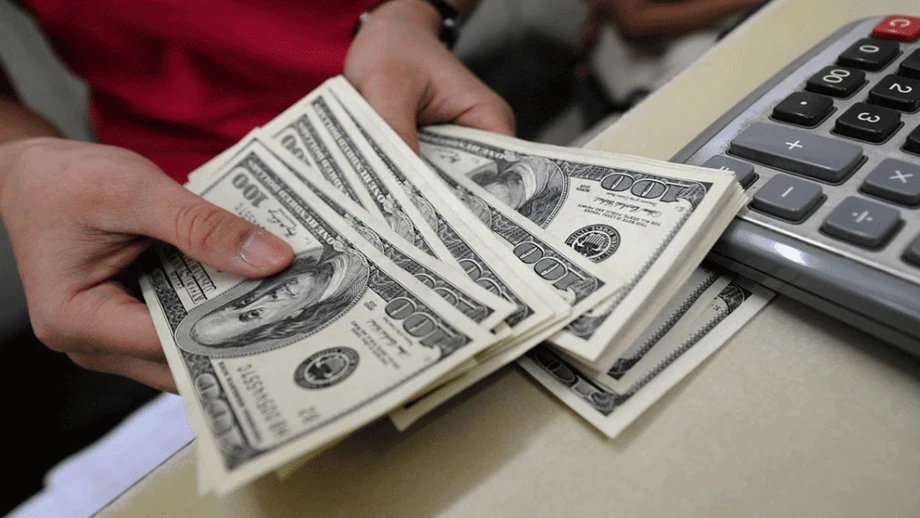
The pressure also shows up in annual repayments. Bangladesh paid $3.4 billion in foreign loan principal and interest in 2023–24 and $4.494 billion in 2025–26. Repayments are projected to reach about $5.5 billion in 2029–30.
ADB Bangladesh Country Director Qingfeng Zhang said total debt servicing rose from 2.3% of GDP in 2020–21 to 3.0% in 2024–25. Mobarek said annual interest payments on external debt, measured in taka, were projected to more than double between 2024–25 and 2028–29.
The 2026–27 interest allocation includes Tk1.05 trillion for domestic debt and Tk225 billion for foreign debt. Interest payments consume public money that must also cover education, health, infrastructure and social assistance.
Borrowing reforms aim to improve control
Finance Secretary Dr Md Khairuzzaman Mozumder said the Finance Division was preparing an Annual Borrowing Plan to make government financing more predictable. Other proposed changes include a new Medium Term Debt Strategy, an integrated Debt Management Office and a Public Debt Act.
A borrowing plan tells investors how much the government expects to raise and when. A debt management office would bring closer coordination to responsibilities now spread across institutions, including borrowing, repayment and risk assessment.
Chowdhury called for greater use of loans with low interest rates and long repayment periods, stronger project assessment and completion of priority projects. The government is also considering better disclosure of guarantees, limits and fees on those guarantees, and a statement of financial risks. A government guarantee can create a future public bill if the original borrower cannot pay.
The financing options under discussion include Islamic securities known as sukuk, green bonds for environmental projects, blue bonds for ocean related investment, and bonds linked to Sustainable Development Goals. Blended finance would combine development funding with private investment.
Bangladesh is also exploring dollar denominated Eurobonds, yen denominated Samurai bonds and yuan denominated Panda bonds. No issuance date was given. Officials want a broader domestic bond market and links with international settlement systems, including Euroclear and Clearstream, to make investment transactions easier.
The IMF's debt analysis accompanying its 2025 Article IV consultation classified Bangladesh at moderate risk of both external and total debt distress. The budget sets a goal of returning the debt risk assessment to low.
Revenue and bank repair underpin the expansion
The budget targets government revenue equivalent to 11% of GDP and tax revenue of 9.6% by 2030–31. Chowdhury's proposals include widening the tax base, reducing unjustified exemptions and digitising VAT and income tax administration.
Businesses are pressing for changes too. At the June 6 roundtable, Apex Footwear Managing Director Nasim Manzur proposed cutting the corporate tax rate from 27.5% to 20%, alongside more stable policies, modern tax administration and better airport warehousing.
The government must balance incentives for investment with the revenue needed to finance services and repay debt. Its budget proposes targeted concessions while seeking stronger tax collection across the economy.
Bank repair carries a substantial immediate cost. The budget says more than Tk400 billion is being spent on bank recapitalisation in the fiscal year it describes as current. Recapitalisation adds financial resources to banks so they can absorb losses and support operations.
The proposed reforms include reducing unpaid loans, making loan approval and rescheduling more transparent, strengthening central bank supervision and limiting political and family influence over bank management. Developing corporate bonds, mutual funds and other investment channels is intended to reduce dependence on banks for financing over long periods.
Industrial revival and new exports share the agenda
Titumir told the June 6 roundtable at the CIRDAP International Conference Centre that the government was preparing an industrial restructuring package worth around Tk600 billion to revive dormant factories. He called for fewer administrative complications and fair opportunities for businesses serving domestic and export markets.
Jute mills provide one concrete example of the revival programme. Production has resumed at nine of 17 leased state mills under Bangladesh Jute Mills Corporation, creating approximately 9,500 jobs. Preparations are under way to reopen another three.
Lease agreements involving National Jute Mills and Star Jute Mills with PRAN-RFL Group, and Platinum Jubilee Jute Mills with Hamko Group, carry potential investment of Tk6.19 billion and annual revenue of Tk11.75 billion. The broader revival initiative could create another 50,000 to 60,000 jobs.
The budget also proposes concessions for newer industries. Raw materials for semiconductor design, testing and packaging would face only 1% import duty, with specified other duties and taxes exempted through June 30, 2031. Existing concessions for consumer electronics, computers and digital devices would be extended through June 30, 2030.
Foreign direct investment is expected to help fund expansion. Raising it from 0.45% to 2.7% of GDP means increasing its share sixfold. The government plans to develop Chattogram as a trade and logistics centre, while northern agricultural districts would receive more processing, storage and refrigerated transport facilities.
Energy and transport determine factory performance
Bangladesh imports approximately 95% of its petroleum requirements, around 34% of its natural gas demand as liquefied natural gas, and virtually all its liquefied petroleum gas, according to the budget. Those purchases expose the economy to international prices and foreign currency costs.
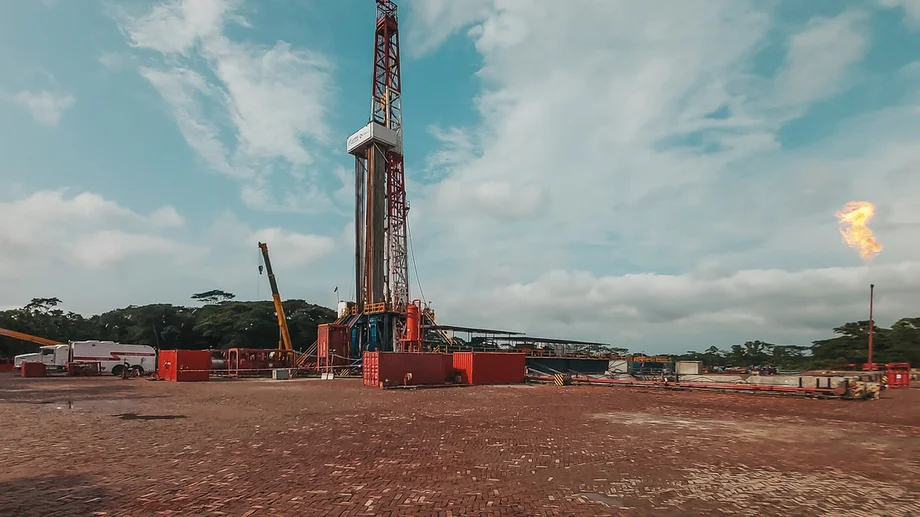
The government's response includes plans to develop about 150 gas wells, improve LNG terminal capacity and increase supply to the national grid. Solar proposals include tax concessions on equipment, financial support, loans at low interest rates and an opportunity to sell surplus electricity at Tk10.50 per unit.
Transport and communications receive a proposed Tk607.30 billion in 2026–27, compared with Tk482.92 billion in the revised 2025–26 budget. The increase is Tk124.38 billion, or about 25.8%. Roads, bridges, rail connections and port improvements are intended to reduce the cost of moving goods.
The budget also records Biman Bangladesh Airlines' agreement to buy 14 Boeing aircraft for approximately $3.7 billion. Plans for aviation and logistics hubs cover Dhaka, Chattogram and Sylhet, with additional international gateways proposed for Rajshahi, Cox's Bazar, Jashore and Saidpur.
Households, farmers and students are part of the plan
The proposed Family Card programme aims to support about 4.1 million vulnerable households in 2026–27, with roughly 72,000 volunteers expected to help implement it. A Farmer Card programme targets 4.3 million farmers in that year and 24 million landless, marginal and small farmers over time. Eligible farmers would receive Tk2,500 annually for production expenses.
Water management is another part of the agricultural programme. The government plans excavation or renewed excavation of 14,000 kilometres of rivers, canals and water bodies over four years. It says 377 kilometres were completed in the preceding six months, exceeding the target of 360 kilometres.
Researcher and rights activist Maha Mirza called at the June roundtable for more agricultural spending, mechanisation, storage and facilities at union level. Her proposals connect farm production with the practical means to preserve crops and reach buyers.
Education spending is proposed at Tk1.36606 trillion, or 2% of GDP, compared with Tk872.06 billion and 1.39% of GDP in 2025–26. The government aims to reach 5% of GDP within five years.
The education programme would progressively introduce technical learning from Class VI, expand apprenticeships and provide courses recognised by industry. The budget also proposes a mandatory third language alongside Bangla and English to help prepare students for domestic and overseas work.
Other measures include assistance for around 60,000 religious service providers in 2026–27, including imams, muezzins, Hindu priests and temple attendants. Police recruitment, training and operational improvements are intended to strengthen public safety and rebuild trust.
The next checkpoints extend beyond the budget
Bangladesh's financing strategy must also account for graduation from the United Nations category of least developed countries. The UN General Assembly decided on October 29, 2026, to extend the preparatory period by three years, moving graduation from November 24, 2026, to November 24, 2029.
Graduation may change some trade preferences and access to favourable borrowing terms. Loan conditions will depend on individual lenders, income levels and repayment capacity. Stronger exports, remittances and reserves therefore matter both for growth and for meeting foreign currency obligations.
The government's next major economic checkpoints are the 2030–31 investment, growth, inflation and revenue targets, followed by the 2034 GDP ambition. Delivering them requires coordinated progress: reliable energy for factories, sound banks for borrowers, useful skills for workers and projects that generate returns sufficient to support their financing costs.
Key Points
- Bangladesh aims to become a $1 trillion economy by 2034.
- The budget targets 6.5% growth and 7.5% inflation in 2026–27.
- By 2030–31, targets include 8.5% growth, investment at 40% of GDP and foreign direct investment at 2.7%.
- The 2026–27 budget allocates Tk1.275 trillion for interest payments.
- Proposed reforms include an Annual Borrowing Plan, a Debt Management Office and a Public Debt Act.
- Industrial revival, agricultural support, education, energy and transport investment form the main delivery programme.
- Bangladesh's revised date for graduation from least developed country status is November 24, 2029.