58 million workers face an insecure route to old age
Bangladesh's formal businesses are adding jobs at just half the average pace of firms across 82 emerging economies, leaving millions of workers with limited employment security as the country approaches a major population turning point.
Contents
- 58 million workers face an insecure route to old age
- The dates that define Bangladesh's opportunity
- Formal employment grows at half the comparison rate
- Why a degree is not enough
- Women's employment needs practical support
- Medical costs threaten savings before retirement
- Pensions reach only a small minority
- Government sets pension targets and training plans
- South Asia's growth boost is fading
- Paying for jobs, health and care together
- Key Points
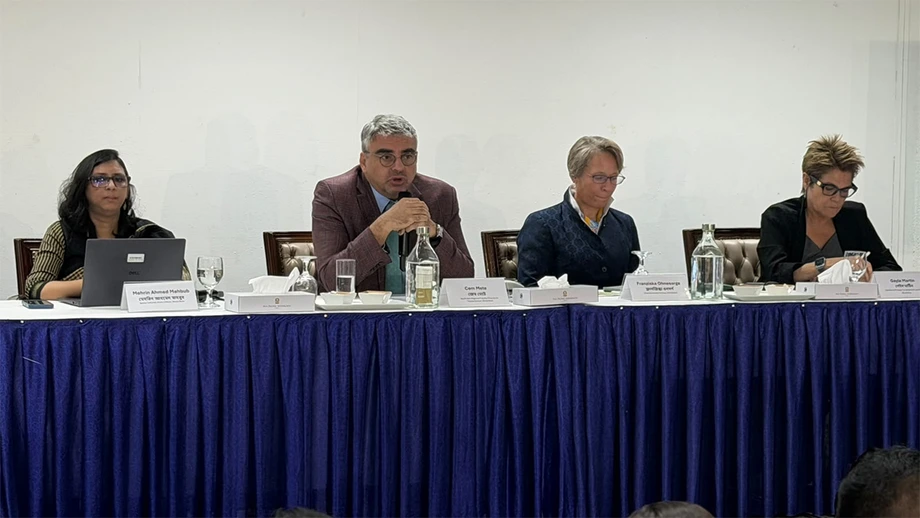
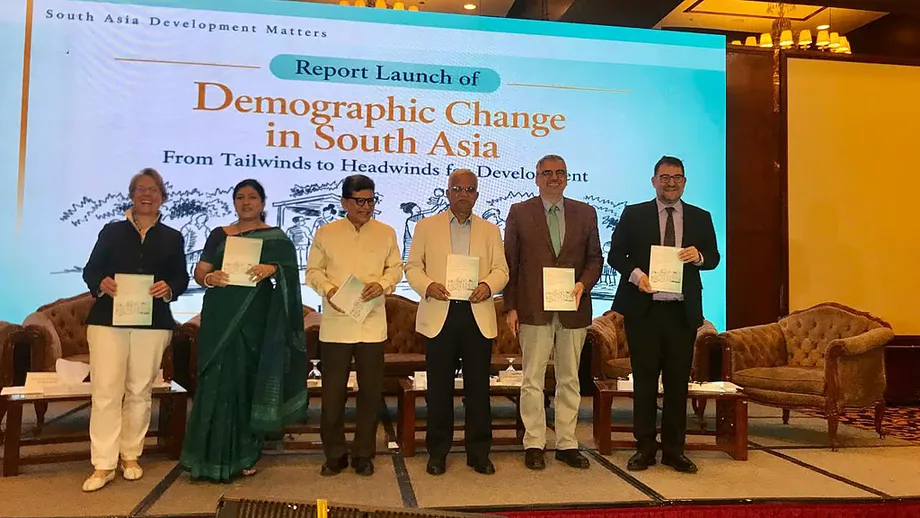
About 58 million people, or 84 percent of workers, are informally employed, according to the World Bank report Demographic Change in South Asia: From Tailwinds to Headwinds for Development, presented in Dhaka on November 3, 2026. Even among university graduates, 44 percent hold informal jobs.
The country's working age population share is projected to peak in 2045. By 2051, people aged 65 and above are expected to account for 14 percent of the population, the threshold the report uses for an aged society. Bangladesh therefore faces two connected tasks: helping today's workers earn and save more, while building the healthcare and income support they will need later.
A demographic dividend is the economic opportunity that comes when a larger share of the population is old enough to work. More people can produce goods, provide services, pay taxes and support dependants. Bangladesh's difficulty is turning that potential into productive employment before its population grows older.
The World Bank's findings connect problems often discussed separately: graduates entering insecure work, women facing obstacles to employment, rural communities lacking healthcare staff, and families paying most medical costs themselves. Together, they describe a country at risk of reaching old age with too few secure jobs and too little protection.
The dates that define Bangladesh's opportunity
Bangladesh has more time than much of South Asia to benefit from its population structure. The region's working age population, currently about 1.17 billion, is expected to peak and begin shrinking in less than a decade.
The report sets out several milestones for Bangladesh and its neighbours:
- 2023: Bangladesh introduced its universal pension programme.
- 2027: People aged 65 and above are projected to reach 7 percent of Bangladesh's population, marking an ageing society.
- 2045: Bangladesh's working age population share is projected to peak.
- 2049: South Asia is projected to become an aged region, with 14 percent of its population aged 65 or older.
- 2051: Bangladesh is projected to reach the same 14 percent threshold.
Bangladesh's working age share can continue rising while employers struggle to absorb people seeking work. The World Bank projects that labour supply could exceed employment by 13 million people by 2050. Creating jobs now would help households build savings before the demand for care and retirement support grows.
Formal employment grows at half the comparison rate
Formal firms in Bangladesh recorded annual employment growth of 2.7 percent, compared with an average of 5.4 percent across 82 emerging economies. Bangladesh ranked in the bottom quarter of that comparison group.
Small and medium enterprises have also shed workers on average, according to findings presented with the report. That weakens an important route into employment for people who cannot secure positions at larger businesses.
Informal work often means working without an appointment letter, predictable wage arrangements or reliable employment protection. A worker can have a job and still face considerable uncertainty about next month's income.
Bangladesh's medium and large firms also rely on informal employment, which accounts for 35 to 40 percent of their jobs. The problem therefore extends beyond small roadside businesses or people working for themselves. Joining a larger company does not always bring a secure employment arrangement.
The World Bank's analysis of the Bangladesh Bureau of Statistics' 2022 informal sector survey also points to entrepreneurship driven by a shortage of alternatives. Across Bangladesh, India and Nepal, between 45 and 70 percent of informal entrepreneurs said they started their activities because they could not find another or regular job.
The bank recommends expanding access to finance for micro, small and medium enterprises and simplifying regulations. For workers, the intended result is practical: more businesses able to invest, expand production and offer better jobs.
Why a degree is not enough
The finding that 44 percent of graduates work informally exposes a gap between educational achievement and the jobs available. Young people can spend years studying and still enter work with weak protection and uncertain prospects.
Nazneen Ahmed, executive director of the Centre for Policy Dialogue, argued at the Dhaka discussion that education policy needed to be connected to employment:
If we provide education without jobs, we create educated unemployed people,
Bangladesh's preparation also falls short much earlier in life. Preschool enrolment is 36 percent, compared with the South Asian average of 62 percent, a gap of 26 percentage points. The report identifies persistent weaknesses in education, health and skills as constraints on workers' productivity.
Productivity means how much a worker can produce in a given time. Better skills matter, but workers also need suitable equipment, functioning businesses and jobs where they can use what they have learned. The report finds that growth in output per worker at firms in Bangladesh and India trails much of the world.
Women's employment needs practical support
Low participation by women in the labour force is another major limit on Bangladesh's demographic gains. When women who want paid work cannot enter or remain in employment, households lose potential income and the economy loses productive capacity.
Jean Pesme, the World Bank's division director for Bangladesh and Bhutan, set out the bank's priorities:
Bangladesh's demographic opportunity depends on what it does now: help firms create better jobs, equip young people with market-relevant skills, and remove barriers that keep women out of work,
Ahmed called for safe transport and housing for women entering employment. Those needs connect job creation with daily life: a position may be available, yet difficult to accept if travelling to work is unsafe or suitable accommodation is out of reach.
The government is also considering how women's unpaid care work could be recognised through pension credits. Such credits would count care responsibilities toward pension entitlements. Planning state minister Zonayed Abdur Rahim Saki described the idea among proposals to widen retirement protection.
Medical costs threaten savings before retirement
Bangladeshi households pay 79 percent of current health expenditure directly from their own pockets, the highest share in South Asia, according to World Bank chief economist for Asia Franziska Ohnsorge. For a family, that means illness can quickly become a financial emergency.
Ohnsorge also identified a gap of 10 years between life expectancy and healthy life expectancy. People are living longer, but a substantial part of those extra years may involve illness or limitations on daily activities. She warned that medical bills could exhaust older people's savings, while limited income security keeps many working into old age.
Rural communities face a sharp shortage of staff. About 70 percent of Bangladesh's population lives in rural areas, but only 20 percent of health workers serve there. The density of doctors in cities is 18 times that in rural areas.
Primary healthcare facilities are poorly prepared for noncommunicable diseases, illnesses such as diabetes and heart disease that do not spread from person to person. Only 18 percent of centres have all the service components assessed as necessary, while the required medicines and equipment are available at just 7.5 percent.
The report records injectable insulin at only 1.6 percent of upazila health complexes and metformin, another diabetes medicine, at 38 percent. Fewer than 1 percent of facilities have the full set of assessed requirements for heart disease treatment.
Pensions reach only a small minority
South Asia's pension systems cover few people at either end of working life. Only 17 percent of the region's working age population contributes to a pension scheme, while just 10 percent of older people receive pension benefits, the lowest coverage globally.
Bangladesh introduced its universal pension programme in 2023, but the report identifies a large continuing protection gap for informal workers. Their dominance in employment makes coverage difficult: many people earn irregular amounts and lack an employer who can arrange regular contributions.
The report puts Bangladesh's government old age allowance at 500 taka a month, equivalent to only 5 to 8 percent of the average income of poor rural households. It also identifies inflation as a factor weakening the allowance's purchasing power.
Children receive limited support too. Those younger than five make up 9 percent of the population but receive only 2 percent of social protection spending, according to the report. Bangladesh must therefore prepare for ageing while continuing to invest in children who will become its future workforce.
Government sets pension targets and training plans
Saki said the government aimed to increase universal pension enrolment from 376,000 to 5 million by 2028 and 15 million by 2030. Those targets would require enrolment to grow to more than 13 times the stated starting level by 2028 and almost 40 times that level by 2030.
He also outlined proposals to channel remittances into pension funds and develop care within communities for people needing support over long periods. No timetable was given for introducing the proposed pension credits for unpaid care work or the remittance arrangements.
Social welfare minister Abu Zafar Md Zahid Hossain said the government had selected 14 vocational training streams, including tailoring and computer skills, to help young people find jobs or start businesses.
The minister also announced plans to review the family card programme every six months, examining how women used the allowance and whether household finances improved. That creates a recurring opportunity to assess whether the support is helping families become more financially secure.
Hossain Zillur Rahman, executive chairman of the Power and Participation Research Centre, urged a reassessment of Bangladesh's growth model. Describing the period from 2014 to 2024, he said:
Two important patterns emerged: growth was accompanied by slower poverty reduction and slower employment creation,
South Asia's growth boost is fading
South Asia has already received a measurable economic benefit from its changing population. Since 2000, the rising share of adults in their prime working years has contributed an average of 0.4 percentage points to annual GDP growth and 1.1 percentage points to annual labour productivity growth, according to the World Bank.
By 2050, the annual contribution of demographic change to GDP growth is projected to fall to 0.1 percentage point. That is one quarter of the earlier contribution. Economies will need more growth from investment, skills and productive businesses as population structure provides less help.
Johannes Zutt, the World Bank's vice president for South Asia, described the region's central difficulty:
South Asian economies are aging faster and earlier in their development journeys,
Bangladesh is approaching an older population at a relatively low income per person. That leaves less money available to households and the government for pensions, treatment and care than richer economies had when they reached similar population milestones.
The bank also identifies a possible second demographic dividend. Healthier older people can continue contributing to the economy, while savings and investment can support higher productivity. Healthcare, pensions and care services help make that possible by supporting people's health and financial security as they age.
Paying for jobs, health and care together
Bangladesh's financing challenge connects the entire agenda. Better schools, stronger primary healthcare, wider social protection and support for an older population all require public money. The report identifies weak tax collection as a constraint on expanding those services.
Pesme called for stronger domestic resource mobilisation, meaning raising more revenue within Bangladesh to meet growing public needs. The bank recommends more investment in primary education and health, better treatment for noncommunicable diseases, and stronger pension and care systems.
Better employment would support that effort from another direction. More secure earnings would give households greater room to save, contribute to pensions and cope with illness. Expanding productive businesses would also help build the economic base needed to finance public services.
Bangladesh's two decades before the projected 2045 peak are therefore a period for action on several fronts at once. Jobs and skills can improve incomes today, while healthcare and retirement protection can reduce the financial pressure families face as they grow older.
Key Points
- Bangladesh's working age population share is projected to peak in 2045; it is expected to become an aged society in 2051.
- About 58 million workers, or 84 percent, are informally employed, including 44 percent of graduates.
- Formal employment grows by 2.7 percent annually, half the 5.4 percent comparison average across 82 emerging economies.
- Households pay 79 percent of current health expenditure directly, while rural areas face major shortages of health workers.
- The government aims for 5 million universal pension participants by 2028 and 15 million by 2030.
- The World Bank recommends better jobs, stronger skills, fewer barriers to women's employment, and wider healthcare and retirement protection.