A route to Italian jobs without the annual quota race
Bangladeshi workers who complete approved training at home can pursue jobs in Italy outside its annual immigration quotas, under a legal route explained at a seminar in Dhaka on November 3, 2026. The training is free for participants and combines Italian language lessons, civic education and practical preparation for work.
Contents
- A route to Italian jobs without the annual quota race
- What Article 23 changes
- Free courses cover language, rights and safety
- Who checks the training programmes?
- The employer, visa and arrival deadlines
- Visa fees and the cost of brokers
- Hospitality and textile trainees are already preparing
- How the route fits Italy's wider recruitment plans
- Bangladesh wants to extend the model
- Key Points
The route operates under Article 23 of Italy's immigration law. It allows recruitment throughout the year, without the designated application opening known as a click day. An Italian employer must still request permission to hire the worker, followed by a visa application decided by the Italian diplomatic mission.
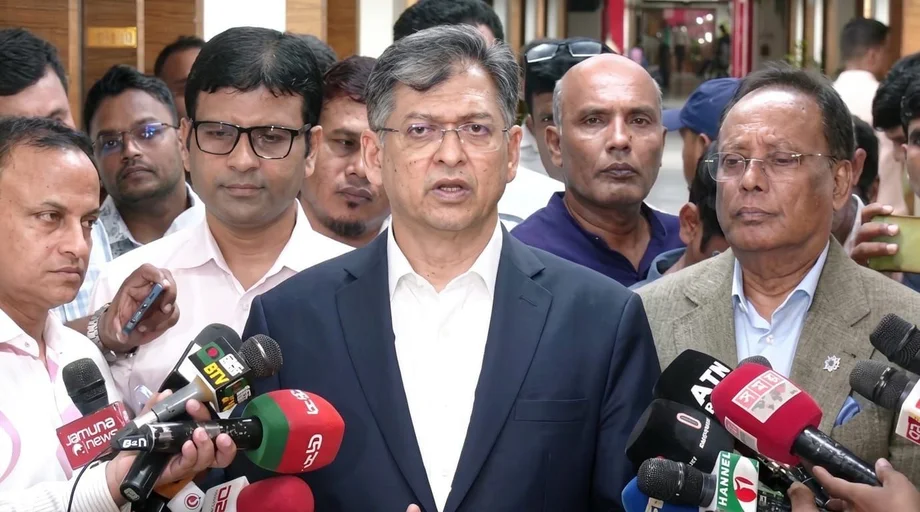
At Dhaka Regency Hotel and Resort, officials described training already taking place in hospitality and textiles. Mahdi Amin, adviser on expatriates' welfare and overseas employment and spokesperson for the Prime Minister's Office, said the initiative would begin on a limited scale soon.
Amin described the planned launch in these words:
The process will begin on a limited scale very soon,
The opportunity comes alongside Italy's separate plan, presented at the seminar, to admit 497,550 foreign workers through its regular quota system during 2026 to 2028. Article 23 gives workers who complete approved programmes another route, with training linked to employment needs rather than competition for those annual places.
What Article 23 changes
Italy's Ministry of Labour and Social Policies identifies the legal basis as Article 23 of Legislative Decree 286/1998, amended by Decree-Law 20/2023 and converted into Law 50/2023. The changes put entry for workers completing ministry approved vocational and civic language programmes outside the Decreto Flussi quotas.
Decreto Flussi is the system through which Italy sets numbers for various categories of foreign workers. Article 23 instead connects approved preparation abroad with recruitment by an employer. Workers can use this route at any time of year, while individual courses retain their own selection and training schedules.
The ministry's overseas training framework sets out the legal basis and the steps from course completion to employment. For a prospective worker, the sequence is training, an employer's hiring request, visa processing and residence formalities after arrival.
Seminar organisers said Bangladesh also has a reserved allocation within the regular quota system, citing its cooperation in taking back irregular migrants. They did not give the number of places reserved for Bangladesh or announce an enrolment deadline for the training initiative.
Free courses cover language, rights and safety
The Italian Embassy said approved programmes require basic Italian, knowledge of Italian society and civic responsibilities, and vocational qualifications relevant to the intended job. Participants complete that preparation in Bangladesh before travelling.
The ministry's training programme guidelines, adopted and published on July 7, 2023, specify a broader set of compulsory subjects. Courses must include workers' rights, employment rules, and workplace health and safety alongside language, civic education and sector skills.
For someone preparing to work in a restaurant or factory, these subjects connect directly to daily tasks: understanding instructions, knowing employment rights and recognising safety requirements. Language teaching therefore forms part of preparation for the job, alongside the practical training.
Amin said trainees were spending five to six months preparing and learning Italian as a third language alongside Bangla and English. Organisers said participants would bear no training costs.
Antonio Milo, a training representative who outlined the route's benefits, said participants would gain skills they could also use in Bangladesh if they ultimately stayed. The ministry's guidelines similarly include the development of productive and entrepreneurial activity in countries of origin among the programmes' aims.
Who checks the training programmes?
Training organisations must obtain approval through Italy's Piattaforma Ingressi Formati all'estero, known as PIF, on the government's Servizi Lavoro portal. This is the platform for submitting training projects for review.
An interministerial commission coordinated by the labour ministry examines the projects. Its membership includes representatives responsible for foreign affairs, interior matters, education, agriculture and relations with Italy's regions and autonomous provinces.
The assessment considers the organisations proposing the training, how closely the course matches demand for workers, and how the teaching will be organised. The guidelines also provide for coordination with local authorities and support from Italy's diplomatic and consular network.
Prospective participants therefore have a concrete point to verify with the Italian Embassy and Bangladesh's Bureau of Manpower, Employment and Training (BMET): whether the particular programme has the required ministry approval. Organisers urged workers to use those official channels when checking migration opportunities.
The employer, visa and arrival deadlines
An Italian employer begins the hiring stage by requesting a Nulla Osta through the Interior Ministry's Portale Ali. A Nulla Osta is an authorisation to hire a named foreign worker. The Italian diplomatic mission then decides the worker's application for an entry visa.
The labour ministry says the Single Desk for Immigration issues the hiring authorisation within 30 days under a procedure allowing approval when the administration does not respond within the prescribed period. Exceptions apply to applications involving countries covered by special risk provisions, and labour inspectors may carry out subsequent sample checks.
Workers can submit their visa application within 12 months of finishing the course. The ministry states that the Italian diplomatic or consular mission is to issue the visa within 90 days. These are separate stages, so the employment arrangement and immigration paperwork need to be coordinated after training.
After arrival, workers must apply for a residence permit within eight days, according to the procedures explained at the seminar. Applications can be submitted through designated post offices or the relevant immigration authorities, with the competent Questura, the police authority responsible for residence permits, handling the permit.
The ministry also requires the employer and worker to sign the residence contract within 15 days of entry. Its guidance allows employment to begin while the residence permit is being processed, under the applicable legal conditions.
Seminar speakers said permits could last up to two years, depending on the employment contract, and could be renewed. They also described the possibility of obtaining a permit without a fixed expiry after five years of legal residence, subject to the requirements for that status.
Visa fees and the cost of brokers
Organisers warned that brokers were charging between $10,000 and $15,000 for visa arrangements, sometimes using false documents and promises. They contrasted those demands with official visa fees of €50 to €116 and a VFS service charge of €38, making a combined maximum of €154 for the charges presented.
The distinction matters for families budgeting for migration. Those figures cover the stated visa and application service charges. Workers also need clear information about responsibility for travel and any other expenses associated with their particular employment arrangement.
Amin described the government's goal as reducing migration costs to zero wherever possible. The Italian Embassy's specific assurance was that participants would not pay for the approved training. Anyone considering a place can ask the programme and employer for an itemised explanation of costs before making financial commitments.
The employer's authorisation and the embassy's visa decision remain necessary steps after training. Organisers urged prospective migrants to obtain verified information from the Italian Embassy and BMET rather than pay intermediaries offering shortcuts through the process.
Hospitality and textile trainees are already preparing
Two projects discussed at the Dhaka seminar show how the training model is being applied. Frontiere Skills' TASTE project prepares participants for restaurant and hospitality work, with trainees receiving instruction at Dhaka Regency Hotel. Format is running training for the textile sector.
Trainees from both projects attended the event. Their presence gave the discussion a practical focus: participants were already learning skills for particular industries, while officials explained the legal process connecting that preparation with recruitment in Italy.
Italian Ambassador Antonio Alessandro and embassy Deputy Head of Mission Federico Zamparelli addressed the seminar. Embassy migration adviser Giuseppe Di Giovanni presented the employment entry rules, while European Union Deputy Head of Delegation Baiba Zarina discussed the EU's Talent Partnerships initiative.
Representatives of training organisations, UP Recruitment Agency, the International Labour Organization and the International Organization for Migration also participated. The projects bring together course providers, employers and public authorities, each with a different task in preparing workers and processing recruitment.
How the route fits Italy's wider recruitment plans
The quota figures presented in Dhaka total 497,550 admissions across three years. The planned annual intake rises from 164,850 in 2026 to 166,850 in 2028, an increase of 2,000. Those places cover workers from multiple countries and employment sectors.
The main dates and figures are:
- July 7, 2023: Italy adopted the training guidelines through Directoral Decree No. 27.
- 2026: The regular quota figure presented at the seminar was 164,850 workers.
- November 3, 2026: The Dhaka seminar explained Article 23 and the first training projects in Bangladesh.
- 2027: The regular quota figure presented was 165,850 workers.
- 2028: The regular quota figure presented was 166,850 workers.
Seminar figures put the number of Bangladeshis legally resident in Italy at about 217,000, including 80,000 work permit holders. Amin referred to a broader Bangladeshi community of more than 250,000 people. The figures describe different population categories: legal residents in the seminar presentation and the wider community in his remarks.
For prospective workers, the practical change is access to an employment route outside the annual quota allocation. Its focus on approved training gives participants a defined preparation period before the employer and visa stages.
Bangladesh wants to extend the model
Amin said Bangladesh would seek to adapt the curriculum for technical training centres and vocational institutions. The government also intends to develop similar arrangements for other overseas employment destinations, with foreign language education included in skills programmes.
Explaining his view of the training approach, Amin said:
We want to consider this a model,
Bangladesh Overseas Employment and Services Limited (BOESL) and other public institutions would support skilled migration, he said. He also proposed providing expatriate cards before departure to help workers access services, send remittances and maintain family connections.
The immediate plan is a limited launch, followed by efforts to bring useful parts of the training into the wider education system. For participating workers, the first decisions are more specific: verifying an approved course, completing its requirements and securing recruitment by an Italian employer.
Key Points
- Article 23 allows workers completing approved training abroad to pursue Italian jobs outside annual immigration quotas.
- Training in Bangladesh is free for participants and covers Italian, civic education, vocational skills, employment rights and safety.
- An employer must request hiring authorisation, and the Italian diplomatic mission decides the visa application.
- Visa applications can be submitted within 12 months of course completion.
- Workers must apply for a residence permit within eight days of arrival and sign the residence contract within 15 days.
- Hospitality and textile projects are already training participants, while Bangladesh plans a limited launch and wider use of the model.