A referendum mandate meets a dispute over power
Bangladesh's government is pressing ahead with constitutional amendments through a parliamentary committee, while the opposition insists that a separate reform council must carry out changes backed by nearly 69 percent of votes cast in the February 12, 2026 referendum. The disagreement now threatens to keep opposition parties outside the process that will shape the country's governing rules.
Contents
- A referendum mandate meets a dispute over power
- How the disagreement developed
- Parliament or a constitutional reform council?
- Why the meaning of August 2024 matters
- Students divide over participation
- Who would sit in a second chamber?
- Freer voting and neutral election management
- Participation beyond the major parties
- Who will hold the new institutions accountable?
- The government advances as the opposition mobilises
- Key Points
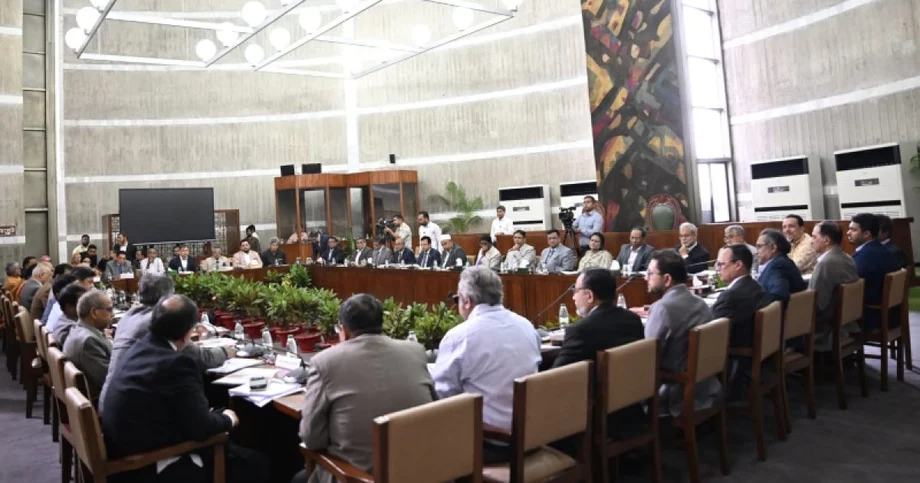
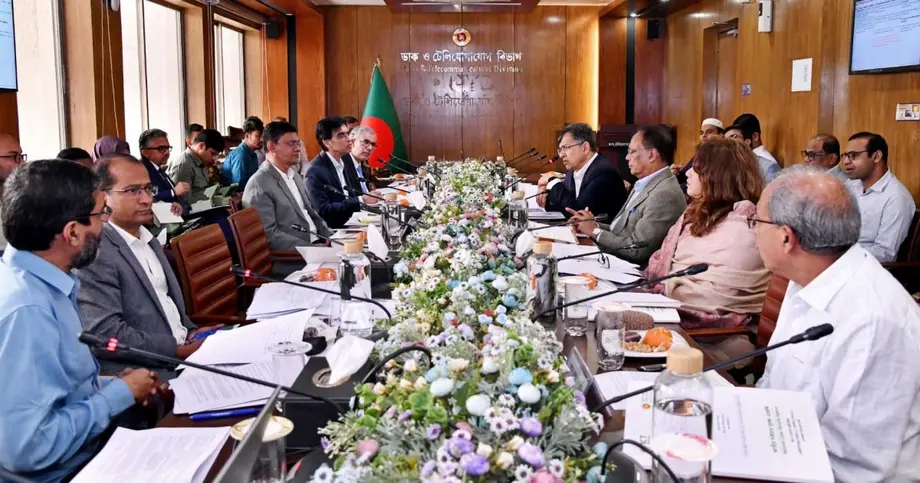
On November 3, the parliamentary special committee met student representatives to discuss the prime minister's powers, emergency provisions, education, healthcare and the July National Charter. The same day, leaders of Jatiya Chhatra Shakti, the student organisation associated with the National Citizen Party, rejected the committee and demanded that a constitutional reform council be convened instead.
The Bangladesh Nationalist Party government says Parliament should amend the constitution under Article 142. The alliance led by Jamaat-e-Islami says the referendum approved a different route: elected lawmakers acting as members of a constitutional reform council under the July National Charter implementation order issued in 2025.
Committee member Zainul Abedin has said the panel will try to finish its work by December 2026 and bring a bill before Parliament in January 2027. Those are targets rather than a confirmed timetable for passage. Five committee places were reserved for the opposition, which rejected the body, walked out of the parliamentary proceedings and submitted no names.
The practical stakes extend beyond parliamentary procedure. The changes under discussion would affect how elections are managed, how freely lawmakers can vote, how judges are appointed and whether education and healthcare become fundamental rights. Both sides promise reform, but they disagree over the institution entitled to deliver it.
How the disagreement developed
The reform effort grew out of the uprising that brought down Sheikh Hasina's government on August 5, 2024. Under the subsequent interim administration, most political parties reached agreement on the July National Charter, intended to guide Bangladesh's democratic transition.
The main steps show how a political agreement became a dispute over competing claims of constitutional authority:
- August 5, 2024: Hasina's government fell following the uprising, prompting demands for major constitutional change.
- October 17, 2025: The interim administration adopted the July National Charter with agreement from most political parties.
- November 2025: President Mohammed Shahabuddin issued the July National Charter (Constitutional Reform) Implementation Order, followed by a referendum ordinance.
- February 12, 2026: The referendum took place alongside the 13th parliamentary election, with nearly 69 percent voting in favour of reform.
- July 13, 2026: Parliament formed a special committee of 12 members, chaired by Home Minister Salahuddin Ahmed, to recommend constitutional amendments.
- October 31, 2026: The alliance of 11 parties led by Jamaat organised a march from Dhaka to Khulna demanding implementation of the referendum verdict.
- November 3, 2026: The committee consulted student organisations while other student leaders publicly rejected its authority.
The implementation order required elected lawmakers to take an additional oath as members of the reform council. BNP lawmakers, who won an overwhelming parliamentary majority, took only their parliamentary oath. Members of the Jamaat alliance took both. Their different choices turned the dispute over procedure into a concrete institutional split.
Parliament or a constitutional reform council?
BNP says it will implement the July Charter while setting aside matters covered by its recorded dissent. Its preferred route keeps the changes within the existing constitution: a parliamentary committee recommends amendments, and Parliament considers a bill under Article 142.
The Parliament Secretariat's account of the November 3 meeting set out the government's legal reasoning. It said the charter described reform as being subject to constitutional amendment. The government therefore presents the committee as the mechanism for fulfilling the charter.
Opposition parties place greater weight on the implementation order and referendum. Their position is that voters approved both constitutional changes and a designated process for making them. For them, replacing the reform council with an amendment committee changes an essential part of the public mandate.
Supreme Court lawyer Imran A. Siddiqui argues that the order explicitly required a reform council following a favourable referendum result. He regards forming that council as a legal and political obligation. Lawyer Manzill Murshid challenges the foundation of that argument, saying Article 93 gives the president no authority to issue an ordinance changing or amending the constitution.
Supreme Court lawyer Kazi Zahed Iqbal sees the central disagreement as procedural, with substantial agreement on restoring an election caretaker government, changing Article 70 and establishing a legislature with two chambers. He nevertheless considers a council operating outside the existing constitutional framework legally vulnerable.
Why the meaning of August 2024 matters
Constitutional lawyers disagree about whether the uprising broke the old constitutional order or whether that order continued through the transition. Their answers influence which institution they believe has authority to reshape the state.
Constitutional lawyer Sharif Bhuiyan argues that sovereignty returned directly to the people when the government turned violence against them. He describes the resulting authority as revolutionary constitutionalism: the idea that a popular uprising can create a new basis for government after the previous political agreement has broken down.
Bhuiyan consequently locates the interim government's legitimacy in the people's revolutionary mandate rather than the Appellate Division's advisory opinion under Article 106. Professor and writer Salimullah Khan similarly argues that the old constitution ceased to operate after August 5, with necessary parts of the 1972 text subsequently used to run the state.
Murshid takes the opposite position. Administrative work, state decisions and ordinances continued after the uprising, he says, supporting constitutional continuity. He invokes the treatment of completed past acts in litigation concerning the Fifth Amendment. These remain competing legal interpretations at the heart of the political dispute.
Students divide over participation
Student organisations are involved on both sides of the argument. Representatives of the Anti-Discrimination Student Movement and other groups attended the November 3 committee meeting at Parliament, chaired by Salahuddin Ahmed.
The discussion included making education and medical treatment fundamental rights, protecting women and children, safeguarding the independence of constitutional institutions and providing legal protection for participants in the July uprising. Treating education and healthcare as fundamental rights would give them a stronger constitutional status, although the practical duties and remedies would depend on the final wording.
Jatiya Chhatra Shakti president Abu Baker Majumder and general secretary Tahmid Al Muddassir Chowdhury rejected the committee in a joint statement that day. Citing the Election Commission's revised gazette, they said more than 47.2 million people had voted yes in the referendum and argued that those voters had endorsed the reform council route.
The organisation made three demands: abolish the special committee without introducing a bill based on its recommendations, convene the constitutional reform council immediately, and complete the charter's constitutional changes through that council. Its position shows why consultation alone has not resolved the conflict. Some groups dispute the committee's authority to conduct the discussion at all.
Who would sit in a second chamber?
A proposed upper house exposes differences over the substance of reform as well as the process. A legislature with two chambers divides parliamentary work between a lower house and an upper house, but its effect depends on how members are selected and what powers each chamber receives.
Salimullah Khan supports an upper house elected directly by voters, with two members from each of Bangladesh's 64 districts. His proposal would create 128 seats. He opposes allocating membership through party nominations based on vote shares, warning that this could encourage the sale of nominations.
Khan would give the upper chamber exclusive authority to impeach the president and higher court judges. Bhuiyan instead favours proportional representation, allowing parties with substantial public support but few or no lower house seats to gain representation according to their share of votes.
Bhuiyan proposes that the upper house return legislation to the lower house with objections for reconsideration, rather than cancel it outright. Murshid opposes an upper chamber, arguing that an unelected body able to overturn decisions by elected lawmakers would conflict with popular sovereignty and add unnecessary public expense. The competing proposals would create very different checks on government.
Freer voting and neutral election management
Article 70 is another major focus because it restricts lawmakers from voting against their party. Relaxing those restrictions could allow representatives to challenge government proposals without automatically risking their seats.
Bhuiyan supports independent voting on matters other than money bills and motions of no confidence, which test whether a government retains parliamentary support. He also says political culture would need to change for that freedom to work effectively.
Supreme Court lawyer Shahdeen Malik warns that greater freedom to break party ranks could expose lawmakers to pressure or payments from large corporate and business interests. The choice therefore concerns both stronger parliamentary scrutiny and safeguards against the purchase of political influence.
Election management presents a different design problem. Murshid favours restoring a nonpartisan caretaker administration using the former Article 58C framework. He opposes putting the parliamentary speaker in charge because the speaker generally comes from a political party. Bhuiyan favours agreement between government and opposition, with a retired chief justice taking responsibility if consensus fails.
Murshid also supports limiting a person to two terms as prime minister. For bodies such as the Anti-Corruption Commission and National Human Rights Commission, he proposes appointments drawn from retired judges or people outside party politics rather than political leaders.
Participation beyond the major parties
Lawyer and human rights advocate Sara Hossain called for an inclusive process for constitutional amendment and drafting at a November 3 seminar in the Supreme Court auditorium marking Constitution Day. She specifically urged that women participate in the discussions and preparation of the text.
Supreme Court Bar Association president A. M. Mahbub Uddin Khokon, speaking at the same seminar, urged that constitutional changes should not be driven solely by religious thinking. He called for a constitution serving everyone.
Those interventions broaden the question of participation beyond whether the parliamentary opposition accepts its five committee places. Women and other citizens would live under the resulting rules, including provisions governing rights, public institutions and political representation.
The special committee's assigned task is to gather views from political parties, constitutional specialists, lawyers, teachers, participants in the July uprising and other stakeholders. Its October 13 meeting with academics covered caretaker government, judicial independence, state principles and amendment procedures. The breadth of consultation and the authority of the consulting body remain separate points of contention.
Who will hold the new institutions accountable?
Malik argues that adding constitutional provisions will not automatically deliver justice, development or accountable government. Bangladesh's constitution already contains 153 articles, yet he sees substantial failures of accountability in public life.
Malik, a Supreme Court lawyer, expressed his concern in a short observation:
A good law does not make a country good.
Khan also focuses on how power is exercised. He argues that authoritarian government existed under both H. M. Ershad's presidential system and Hasina's parliamentary system because a small group retained control of the state. He favours placing the legislature at the centre of a newly written democratic constitution.
Judicial power produces another disagreement. Murshid supports preserving the Supreme Court's ability to review constitutional changes and protect the constitution's basic character. Khan criticises judicial overreach and proposes a mandatory test of Bengali proficiency before appointments to the higher judiciary.
Iqbal offers a specific reporting mechanism for the constitution's principles of state policy, which are not directly enforceable through the courts. He proposes a mandatory annual report to Parliament before the national budget, setting out detailed progress. That would give lawmakers a regular opportunity to examine what the government has actually done.
The government advances as the opposition mobilises
Salahuddin Ahmed said after the committee's October 13 meeting that amendment work would continue even without the opposition. He described implementation of the July Charter as a national expectation and a government commitment that could not wait indefinitely.
Jamaat leader and opposition leader Shafiqur Rahman pledged continued mobilisation during the October 31 march from Dhaka to Khulna. Alliance coordinator A. H. M. Hamidur Rahman Azad said the opposition would continue its campaign in Parliament and on the streets, insisting on implementation of the referendum verdict and 48 reform issues.
Zainul Abedin says the committee wants to avoid unilateral action and will review views from different sides before presenting a combined report to Parliament. Siddiqui and Iqbal have urged opposition parties to remain involved, raise objections and seek changes from inside the process. Their concern is practical: absence leaves the governing party with greater control over the recommendations.
Key Points
- Nearly 69 percent of referendum votes supported constitutional reform on February 12, 2026.
- BNP favours parliamentary amendments under Article 142; the Jamaat alliance demands a constitutional reform council.
- The opposition has left five reserved committee places unfilled.
- Disputes cover an upper house, lawmakers' voting freedom, election management, judicial powers and public rights.
- Women's participation and a constitution serving all citizens were central demands at the November 3 Constitution Day seminar.
- The committee aims to finish by December 2026 and seek introduction of a bill in January 2027.