A proposed upper chamber could help choose the election administration
Bangladesh's constitutional amendment committee is considering whether a future upper house of Parliament could supply the head and advisers of an election caretaker government, with competing proposals for a vice president, a Speaker chosen by agreement or another person accepted by the government and opposition.
Contents
- A proposed upper chamber could help choose the election administration
- How would the caretaker government be chosen?
- Different terms would keep the upper house in place
- MPs could gain more freedom to vote
- Opposition chairs could strengthen scrutiny
- Judicial independence involves appointments and administration
- Who should control constitutional institutions?
- The opposition dispute reaches beyond individual proposals
- The 2011 experience weighs on the talks
- What happens between now and January?
- Key Points
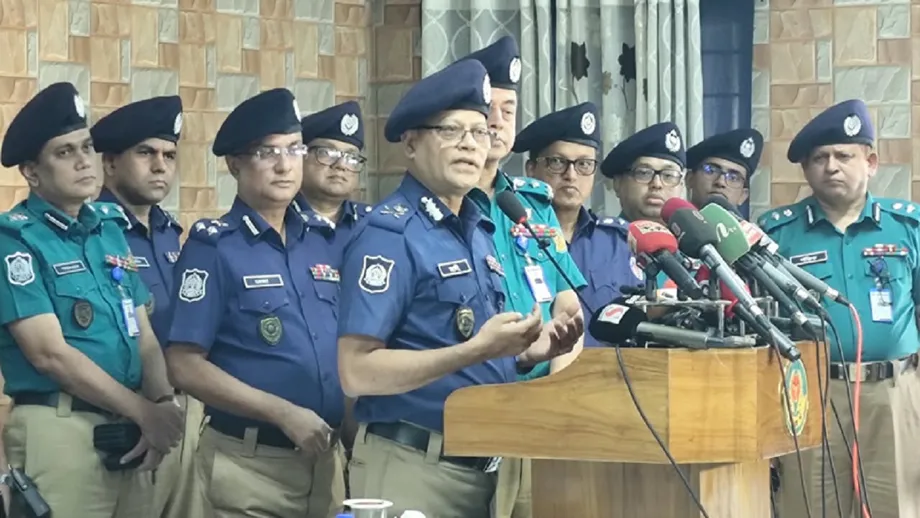
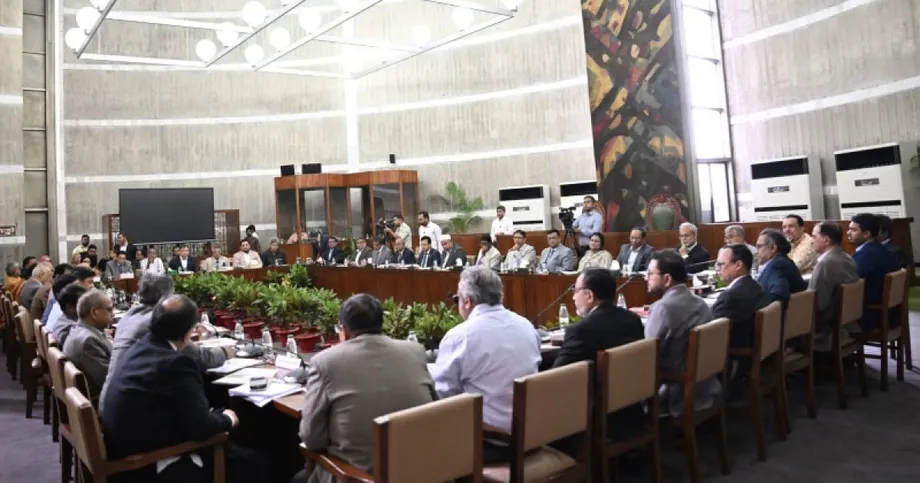
Home Minister Salahuddin Ahmed, who chairs the special committee, outlined the options after its ninth meeting at the National Parliament Building on Saturday, October 24, 2026. The discussions also included proposals for a lower house serving four years, an upper house serving six years and presidential appointments to the heads of at least six statutory bodies or commissions.
The committee has not settled the caretaker government's selection process, structure or responsibilities. Its central idea is to build agreement between the governing party and the opposition into the choice of the administration that would oversee an election period.
The meeting ran from 11am to about 5:30pm, with a break of one hour. About 60 constitutional specialists, Supreme Court lawyers, law professors and academics were invited; 44 attended. Some submitted written opinions, while others were asked to provide them within a week to 10 days.
The reform timetable extends beyond Parliament's next sitting. Consultations and drafting are intended to finish by December, with a constitutional amendment bill targeted for January 2027. Chief Whip Nurul Islam Moni said the proposal would not come before the session beginning November 9.
How would the caretaker government be chosen?
Salahuddin described a proposal under which an upper chamber would remain in place when the lower chamber was dissolved. Its continued existence would provide a parliamentary body through which the caretaker administration could be formed during the election period.
One suggestion is to create a vice president position whose holder would also serve as Speaker of the upper chamber. That person could then take responsibility for the caretaker government. Another is to have the government and opposition agree on a Speaker who would lead the election administration.
Other suggestions would allow a person other than the Speaker to be chosen by agreement. Advisers could also be selected with the consent of both sides, including from the upper chamber. These are alternative selection routes under discussion, rather than a list of people nominated for the job.
Participants discussed keeping the judiciary outside the selection process and removing reliance on the president as the final fallback. Salahuddin said the aim was a caretaker arrangement formed through consensus. Writing that process into the Constitution would give future governments and opposition parties a defined procedure to follow.
The most consequential design issue is how agreement would work when political parties disagree. The proposals place consent at the centre of selection, but the committee has yet to publish a complete procedure covering appointments, responsibilities and the handling of a deadlock.
Different terms would keep the upper house in place
Experts proposed a term of four years for the lower chamber and six years for the upper chamber. The proposed upper house would therefore have a term two years longer than the lower house, helping explain how it might continue operating while an election was held for the other chamber.
A parliament with two chambers is called a bicameral legislature. In the arrangement discussed here, the upper chamber would have a role beyond considering legislation: it could also become the institution through which an election administration is selected.
Its composition would therefore matter to both lawmaking and election management. Suggestions included representation from all 64 districts and different ethnic communities. Experts also discussed increasing the proposed number of presidential nominees beyond five and setting clear qualifications for those seats.
Salahuddin said some participants suggested choosing nominees who had made national contributions in fields such as art, culture and science. That would give a stated basis for appointments rather than leaving eligibility entirely open.
Some participants questioned whether Bangladesh needed a second parliamentary chamber at all and suggested an advisory council instead. Choosing between those approaches would also affect the caretaker proposal, because its upper house route depends on creating that chamber in the first place.
MPs could gain more freedom to vote
Article 70, which restricts the ability of members of Parliament to vote against their party, was another major subject. Participants discussed allowing MPs to express their views and vote independently on most matters while retaining party discipline in four categories.
- Constitutional amendments.
- Money bills, which concern specified financial matters.
- Confidence and no confidence votes, which determine whether a government retains parliamentary support.
- National security matters or wartime situations.
Salahuddin said the experts' views broadly matched earlier committee discussions. The proposal would leave MPs with greater room to disagree with their parties on ordinary legislation and other parliamentary business, while keeping tighter controls over the government's survival, constitutional change, finances and security.
Participants also discussed allowing lawmakers to record a note of dissent, a formal statement explaining disagreement. For voters, the practical change would be the possibility of an MP taking a different position from party leaders on more issues and placing that position on record.
The committee's discussion also covered direct elections to seats reserved for women. Together with district and ethnic representation in a proposed upper house, that suggestion addresses who enters Parliament as well as how freely its members can act once elected.
Opposition chairs could strengthen scrutiny
Article 76, which concerns parliamentary committees, featured in proposals to give opposition lawmakers greater responsibility for examining government activity. Salahuddin said the committee would consider arrangements consistent with the agreement reached in the July National Charter.
The proposals included opposition chairs for important standing committees, with discussion of the Public Accounts Committee and Public Undertakings Committee as well as committees overseeing home affairs and foreign affairs. These bodies examine areas ranging from public spending to the work of ministries.
Former interim government law adviser Professor Asif Nazrul called for legislation under Article 76 to make parliamentary committees more effective. Giving a committee an opposition chair and giving it powers to obtain answers are related parts of the proposed scrutiny system.
Salahuddin described agreement under the charter on allocating committee leadership to the opposition according to its share of seats. Asif, however, said he received no answer at the meeting to his proposal concerning opposition leadership of important committees. The chairman described the intended policy direction, while Asif sought commitments on its application.
Judicial independence involves appointments and administration
Experts discussed a law governing the appointment of judges and a separate Supreme Court Secretariat. A secretariat is an administrative office that handles an institution's organisational work; a separate judicial secretariat would give the courts their own administrative structure.
Salahuddin said the government remained committed to establishing it, but attributed the failure to turn the previous interim government's ordinance into an act of Parliament to defects in that measure. He did not detail those defects in the briefing.
The home minister explained the government's position:
We have a commitment on setting up a Supreme Court Secretariat. But we haven't turned the previous government's ordinance into law, because it had many errors and flaws. We have a commitment on that.
Asif said he had raised concerns over the judge appointment law and secretariat initiative and received assurances from Law Minister Md Asaduzzaman that the government would pursue them later. He presented those assurances as a reason the initiatives remained active despite the earlier measures not becoming law.
Participants also proposed transferring administrative responsibility for the control and discipline of subordinate court judges to the judiciary. That would address who manages judges below the Supreme Court, alongside the separate question of how judges are appointed.
Who should control constitutional institutions?
The president's relationship with the prime minister was discussed through proposals to change appointment powers and strengthen the independence of public institutions. Salahuddin said suggestions would give the president authority to appoint heads of at least six statutory bodies and commissions.
Statutory bodies are institutions created by legislation. Constitutional institutions derive their status directly from the Constitution. Participants discussed granting constitutional status to the Anti-Corruption Commission and the National Human Rights Commission, giving their place in the state a firmer legal foundation.
A proposed framework described as a Statutory Constitutional Board also entered the discussion. Salahuddin said the purpose was to consider how institutions could be constituted, how their responsibilities could be defined and how they could work independently.
Experts proposed an impartial selection committee for appointments to the Election Commission and other constitutional institutions. The choices concern both the person who formally makes an appointment and the process used to identify suitable candidates.
Judicial review was another subject. This is the power of courts to examine whether government action or legislation complies with the Constitution. Participants discussed that power in relation to administrative decisions, ordinary laws and constitutional amendments, including the basic structure doctrine, which concerns fundamental constitutional features.
Most participants who addressed whether a higher court ruling could directly amend the Constitution favoured Parliament formally incorporating such a ruling through an amendment. That discussion places the courts' interpretation of the Constitution alongside Parliament's responsibility for changing its written provisions.
The opposition dispute reaches beyond individual proposals
The 12 member special committee has no opposition representative. Opposition parties rejected the committee's process and have demanded implementation of the July National Charter according to the referendum mandate, including through a Constitution Reform Council.
The charter was adopted during the interim administration led by Muhammad Yunus. After the February 12 election, successful Bangladesh Nationalist Party candidates took their oaths as MPs, while winners from the alliance led by Jamaat-e-Islami took oaths for both parliamentary membership and the proposed reform council role.
Salahuddin said a Constitution Reform Council had not been formed and that MPs had been elected and sworn in as parliamentarians. He said the government respected the referendum mandate, while explaining that the referendum ordinance had not been converted into law because no further vote was intended under it. He said future referendums following constitutional change would proceed under Article 142.
The disagreement therefore concerns the authority and procedure for reform as well as its content. The government is proceeding through a parliamentary amendment committee, while the opposition wants the referendum mandate implemented through the council process it supports.
Salahuddin renewed his invitation for opposition participation and said its proposals would be considered. Asked whether the BNP would withdraw or relax objections recorded in notes of dissent to the July charter, he said no decision had been made. Opposition parties would need to identify the issues on which they sought concessions.
Asif urged the committee to shape the caretaker system around opposition views and involve opposition parties in the discussions. He said the name of the reform body was a political dispute he did not wish to enter; his concern was whether positive constitutional changes could achieve their intended objectives.
The 2011 experience weighs on the talks
Asif recalled taking part in constitutional amendment consultations in 2011, when the committee was led by Suranjit Sengupta under the Awami League government. He said he had entered those discussions with high expectations and later felt disappointed by the changes made through the Fifteenth Amendment.
The abolition of the caretaker system in 2011 also arose in Salahuddin's briefing. He accused the government of that period of abandoning support within its committee for retaining the arrangement after members met the then prime minister. That was the current minister's account of the earlier political decision.
Asif urged participants to keep the expectations of the mass uprising in mind. His appeal connected the present negotiations to the public demand for political change, while his recollection of 2011 explained why commitments made during consultation would be judged against the eventual amendment.
The current committee has already met political parties and alliances, academics, media representatives, social and professional organisations, women leaders and people involved in the uprising. Salahuddin has said proposals may extend beyond the July charter to public demands and commitments in election manifestos.
What happens between now and January?
Officials plan to compile written opinions before settling the draft. The proposed schedule aims to complete stakeholder discussions and drafting in December and introduce the amendment bill in January 2027, potentially during Parliament's first session of that year.
Chief Whip Nurul Islam Moni said the November sitting was primarily intended to meet the constitutional requirement for Parliament to sit within 60 days of the previous session. Explaining the amendment timetable, he said:
The committee's proposal on constitutional amendment is not coming in this session.
The principal dates and next steps are:
- February 12, 2026: The election was followed by competing approaches to taking the parliamentary and reform council oaths.
- July 13: The special amendment committee was formally constituted after delays over opposition nominations.
- October 24: The ninth meeting examined caretaker selection, parliamentary powers and judicial independence.
- Within a week to 10 days of the meeting: Further written opinions were requested.
- November 9: Parliament's fourth session is scheduled to begin without the constitutional amendment proposal.
- December 2026: The target for completing consultations and drafting.
- January 2027: The target for introducing the amendment bill.
January is a target for introduction, with further parliamentary work expected afterward. The envisaged process includes presenting a bill, referring it to the relevant standing committee and returning it to Parliament for passage. Moni said consultations would take considerable time and declined to give a firm completion date.
Key Points
- A proposed upper house could supply the head and advisers of an election caretaker government through agreement between government and opposition.
- Options include a vice president serving as upper house Speaker, a Speaker chosen by consensus or another agreed person.
- Experts proposed terms of four years for the lower house and six years for the upper house.
- Article 70 changes could allow MPs to vote freely outside four specified categories.
- Judicial appointments, a Supreme Court Secretariat and opposition leadership of parliamentary committees are also under discussion.
- Opposition parties remain outside the committee amid disagreement over the referendum mandate and reform council process.
- The committee aims to introduce a bill in January 2027, with no caretaker framework yet finalised.