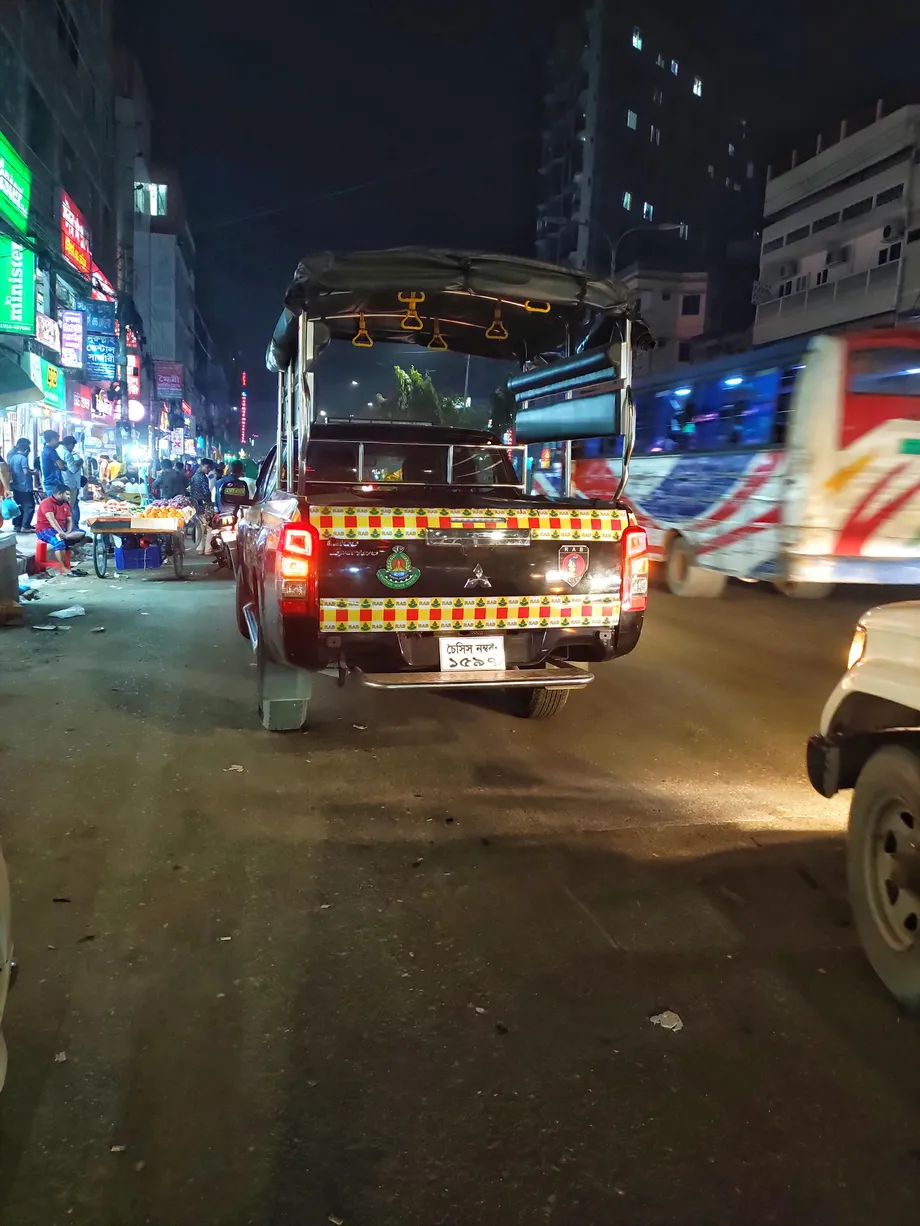
639 police stations share just 1,237 vehicles
Bangladesh is proposing to spend about Tk 6,609 crore on 5,830 vehicles for police, as its 639 administrative police stations operate with only 1,237 vehicles, nearly two thirds of them more than 10 years old. The purchases would cover everyday patrol transport, boats, ambulances and vehicles equipped for crowd control, investigations and emergency operations.
Contents
- 639 police stations share just 1,237 vehicles
- Why the existing fleet falls short
- Pickups account for the biggest purchase
- Specialised vehicles serve several different jobs
- Purchase costs are only part of the bill
- Training is included alongside the vehicles
- A narrow margin in the economic assessment
- Officers describe transport and rest shortages
- Crime pressures and the approval timetable
- Key Points
The Home Ministry's two projects are scheduled for consideration by the Executive Committee of the National Economic Council (Ecnec) on October 25, 2026. Neither has received final approval. Bangladesh Police would implement them between October 2026 and June 2029, with the government providing the funding.
The larger proposal allocates approximately Tk 4,328.92 crore for 4,829 operational vehicles. Another Tk 2,280.14 crore would buy 1,001 specialised vehicles. Together, they represent a substantial expansion of police transport, going beyond replacement of vehicles damaged during the July and August 2024 uprising.
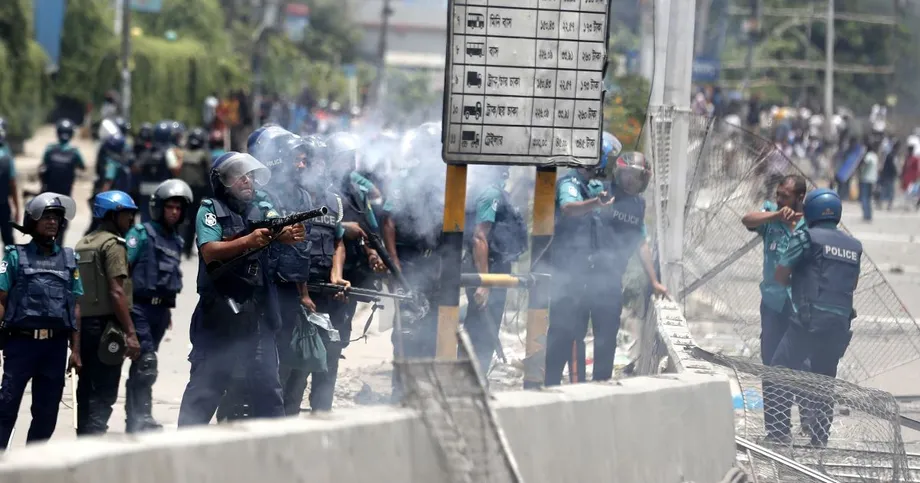
Police Headquarters records show that 1,074 vehicles were damaged during the uprising, including 455 that were burned. Officers say ageing vehicles also break down during operations, while the force already faces a gap between its transport needs and its approved vehicle allocation.
For residents, the shortage can mean competing demands on the same patrol vehicle. A team sent to make an arrest may leave its station with little transport available for another emergency. The proposals seek to address that problem, while planning and ministry officials want clearer arrangements for purchasing, maintaining and operating the expanded fleet.
Why the existing fleet falls short
The Planning Commission proposals put the average at about 1.94 vehicles per administrative police station, calculated from 1,237 vehicles across 639 stations. Around 64% of that fleet is more than a decade old, adding repair needs to the shortage of available transport.
Each station generally needs at least four to five pickups or patrol vehicles to cover different unions or wards simultaneously, according to the operational proposal. Densely populated areas and places with greater crime problems may need more. Across 639 stations, even four vehicles each would require 2,556 vehicles, which is 1,319 more than the current station fleet.
Bangladesh Police also operates 24 railway police stations and 73 highway police stations. Its transport responsibilities therefore extend beyond the administrative stations used in that comparison. The proposed purchases also include vehicles for specialised units, personnel transport and river operations.
Home Minister Salahuddin Ahmed told parliament on March 30 that vehicles burned or rendered unusable during the uprising had disrupted patrols and law enforcement. Kamarum Munira, assistant inspector general for media at Police Headquarters, said the force would assess its requirements and could submit further requests.
Pickups account for the biggest purchase
The operational project would buy 2,909 double cabin pickups at Tk 86 lakh each, for a combined Tk 2,501.74 crore. One crore equals 10 million taka, while one lakh equals 100,000 taka. These pickups alone would account for almost 58% of the operational project's proposed budget.
Senior officers would receive 400 jeeps with engines of 2,700 cubic centimetres, priced at Tk 1.69 crore each, or Tk 676 crore altogether. Another 345 jeeps with engines of 2,000 cubic centimetres would cost approximately Tk 258.75 crore. Engine capacity describes the volume inside an engine's cylinders and is one of the specifications used to define a vehicle purchase.
The plan also includes 214 microbuses at Tk 52 lakh each, 148 large buses without air conditioning at the same unit price, and 148 air conditioned minibuses at Tk 1.20 crore each. Those buses and minibuses are intended to move police personnel.
Other proposed purchases include 115 prisoner vans, 100 patrol cars, 50 ambulances, 100 speedboats and roughly 300 additional vehicles. The project identifies routine patrols, criminal and narcotics investigations, arrests and emergency response as core uses. Elections and major events create further demand because officers must be deployed across many locations at once.
Specialised vehicles serve several different jobs
The second project would buy 1,001 specialised vehicles, including 11 armoured personnel carriers for situations in industrial areas, 20 water cannons, 20 crowd control vehicles and 15 SWAT vans for specialised units and bomb disposal teams.
The proposed fleet also includes 200 motorcycles capable of high speeds, 50 utility terrain vehicles for transporting police dogs and six mobile surveillance vehicles. Other categories include specialised patrol and prisoner transport vehicles, freezer vans, vehicles for transporting horses and vehicles suitable for difficult terrain.
Mobile command centres would operate as temporary control rooms, allowing officers to coordinate deployments and communications near an incident. Crime scene vans would support the collection of evidence soon after an offence. Vehicles designed for rough terrain would help teams reach places where conventional patrol vehicles struggle.
Boats form another part of the programme. Speedboats, rapid response boats and rescue boats would support patrols and emergency work on Bangladesh's rivers. Their proposed duties include rescue operations, protection of important installations and operations against terrorism.
Home Secretary Monjur Morshed Chowdhury said the United Nations would later reimburse the cost of some specialised vehicles purchased for police serving in UN peacekeeping missions. The proposals nevertheless place the initial funding responsibility on the Bangladesh government.
Purchase costs are only part of the bill
Planning Commission and Home Ministry officials have sought clearer plans for fuel, repairs, spare parts, tyres, insurance and other operating expenses. Those costs continue throughout a vehicle's working life, after its purchase price has been paid.
The home secretary said police have their own maintenance arrangements. Specialised vehicles also require trained operators, technical support and a dependable supply of parts. A water cannon, surveillance vehicle or mobile command centre brings equipment needs beyond those of an ordinary pickup.
The operational project's proposed repair equipment allocation has been listed at both Tk 15 crore and Tk 1.5 crore, leaving the exact amount unclear. Resolving that difference matters because tools and repair equipment are part of the plan for keeping the larger fleet available for duty.
The Planning Commission's project evaluation committee reviewed the proposals on October 15. It sought accurate cost estimates, compliance with government procurement rules, adequate maintenance arrangements and details of which existing vehicles are operational, repairable or beyond use. That inventory would help determine how much transport can be restored and how much must be replaced.
Training is included alongside the vehicles
The operational project provides for driving and mechanical training for 650 personnel handling light vehicles and 300 handling heavy vehicles. Another 50 people would receive mechanic training. The specialised project includes driving and mechanical training for 910 personnel and separate mechanic training for 50 more.
Together, the two projects provide 1,960 training places across those categories. The combination reflects two needs: officers must be able to operate the vehicles, and maintenance personnel must be able to keep them working.
The operational proposal was revised after the October 15 evaluation meeting, including the removal of foreign training. The revisions also sought to bring the proposal into line with relevant training and Finance Division requirements.
Bangladesh Police would have until June 2029 to complete the projects under the proposed schedule. Procurement, delivery, training and the establishment of repair support would all need to fit within that period. Stations facing immediate shortages would therefore depend on when vehicles are delivered and how they are distributed.
A narrow margin in the economic assessment
Hawks Bay conducted the feasibility studies for both projects. Each study gives a benefit to cost ratio of 1.05. In simple terms, the assessments estimate Tk 1.05 in economic benefits for every Tk 1 of costs, using the assumptions built into the studies.
That leaves a projected margin of 5% above estimated costs. Higher spending or lower benefits would reduce that margin. Accurate prices, realistic operating costs and reliable vehicle availability therefore matter to the projects' economic case.
The studies give an estimated net present value of Tk 19.22 crore for the operational project and Tk 176.096 crore for the specialised project. Net present value converts expected future costs and benefits into an equivalent value today. The specialised assessment uses a 12% discount rate, the rate used in that conversion.
The proposed annual spending schedule allocates Tk 2,080.94 crore in the 2026–27 financial year, Tk 2,867.55 crore in 2027–28 and Tk 1,660.58 crore in 2028–29. The largest funding requirement would fall in the middle year, when procurement and delivery arrangements would need to support the higher level of spending.
Officers describe transport and rest shortages
Demra Police Station Sub-Inspector Md Jahangir Alam described the practical difficulty of getting to assignments when official vehicles are unavailable. He said officers sometimes use a leguna, a small passenger vehicle commonly used for shared transport.
"There are practically no vehicles; we have to go on duty by human hauler (leguna)," he said.
Jahangir said police personnel routinely work 12 to 16 hours a day without extra remuneration for the extended duty, with insufficient opportunities for food and sleep. His account places the vehicle shortage alongside demanding working conditions.
The force has grown from around 117,000 personnel in 2010 to nearly 250,000, more than doubling in size. Nearly 90% of personnel lack accommodation in police housing facilities. Its responsibilities have also expanded through units dealing with investigations, tourism, river policing, terrorism and the urban rail network.
Niaz Mehedi, additional deputy commissioner in Dhaka Metropolitan Police's Media and Public Relations Division, linked suitable accommodation and rest to officers' mental health.
"Police housing must certainly be of good quality so that members can rest well," he said.
Former inspector general of police Abdul Kaiyum and Dhaka University teacher and crime analyst Touhidul Haque have also called for attention to housing and transport shortages. Their concerns extend beyond procurement to the conditions in which officers carry out daily duties.
Crime pressures and the approval timetable
A September 2026 research brief by the Global Development Network recorded an increase in police murder cases from 3,023 in 2023 to 3,786 in 2025. That is 763 additional cases, a rise of about 25%. The brief, reviewing crime and public security between September 2024 and June 2026, also documented concerns about mob violence, sexual violence and organised extortion.
The proposed transport programme would give police more ways to patrol, reach incidents, collect evidence and move personnel. Its effect on daily service would depend on deployment decisions as well as purchasing: which stations receive vehicles, which units receive specialist equipment and how consistently the fleet remains available.
The main dates leading to the pending decision are:
- July and August 2024: Police records show 1,074 vehicles damaged during the uprising, including 455 burned.
- March 30, 2026: Home Minister Salahuddin Ahmed told parliament that vehicle damage had disrupted police work.
- October 15, 2026: The Planning Commission's project evaluation committee reviewed the proposals.
- October 25, 2026: Ecnec is scheduled to consider both projects.
- October 2026 to June 2029: Proposed implementation period, subject to approval.
Ecnec's decision would determine whether the purchases proceed. The committee review has already identified the practical issues requiring attention: accurate costs, a reliable inventory of existing vehicles, procurement rules and maintenance after the projects end.
Key Points
- Bangladesh proposes buying 5,830 police vehicles for approximately Tk 6,609 crore.
- The country's 639 administrative police stations have 1,237 vehicles, with 64% more than 10 years old.
- The plans cover 4,829 operational vehicles and 1,001 specialised vehicles.
- Ecnec consideration is scheduled for October 25, 2026; final approval is pending.
- The government would fund implementation through June 2029, with UN reimbursement expected for some peacekeeping vehicles.
- Planning officials have sought clearer costs, maintenance arrangements and information on the existing fleet.