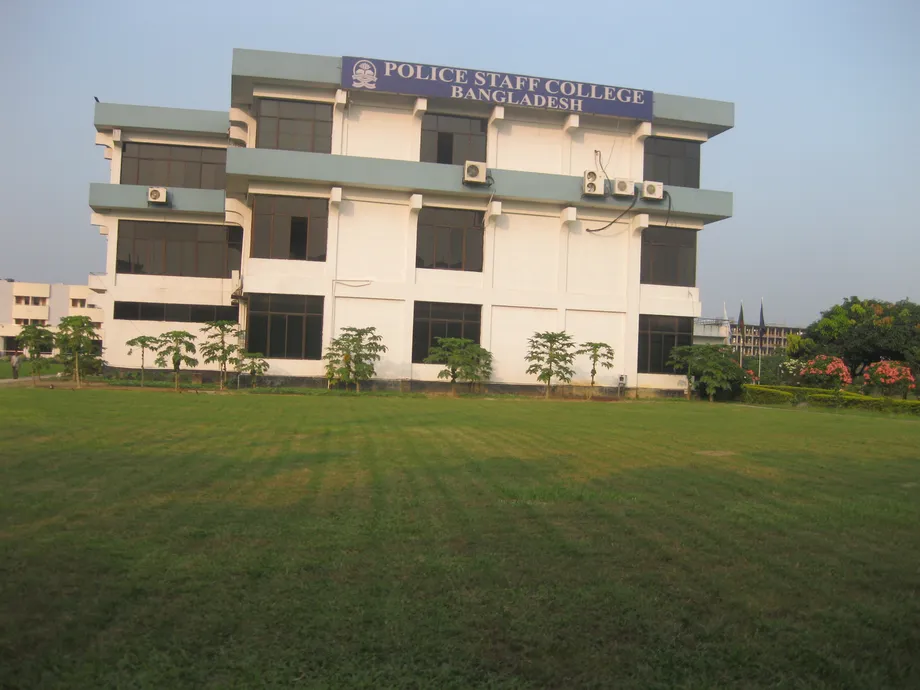
Expansion plan moves through three government bodies
Bangladesh is processing proposals to create 24,677 police posts, including 10,000 constables and 4,000 subinspectors, as the government seeks to expand patrols, strengthen investigations and increase staffing across the country. The proposals are moving through the Ministry of Home Affairs, the Ministry of Public Administration and the Finance Division.
Contents
- Expansion plan moves through three government bodies
- Why two different shortage figures appear
- What the population ratios show
- Which posts are being proposed?
- How the constable announcement leads to recruitment
- More personnel and 107 proposed facilities
- Weapons recoveries rose between July and September
- Arrest figures show the range of police operations
- Disciplinary proceedings accompany the expansion
- Key Points
A progress report prepared by a committee under the home ministry puts the staffing shortfall at 135,374 against an estimated requirement of 354,123 personnel. Police Headquarters presented a larger gap of 146,185 to a parliamentary committee, using police posts alone rather than a total that includes support positions.
The distinction matters for understanding the scale of the expansion. Even if all 24,677 proposed posts are approved, the increase would cover about 18.2% of the ministry committee's stated gap, or 16.9% of the Police Headquarters figure. A substantial shortage would remain under either calculation.
The proposals cover positions funded through the revenue budget, the part of government spending that pays for continuing operations such as salaries. Creating a post gives an organisation an authorised position to fill. Recruitment, selection and deployment follow through a separate process.
For residents, the government's stated aims include stronger patrols and more staff at police stations, investigation centres, outposts and operational camps. For applicants, the next step is administrative approval: the proposals remain at different stages, and no recruitment opening date, completion deadline or total salary cost has been announced.
Why two different shortage figures appear
The home ministry committee's progress report gives an estimated requirement of 354,123 personnel and total sanctioned staffing of 218,749. Subtracting the second figure from the first produces its stated shortfall of 135,374.
Police Headquarters instead compares the same requirement with 207,938 sanctioned police posts, producing a gap of 146,185. The difference between the two shortage figures is 10,811 posts, almost entirely explained by whether support positions are included.
The committee report lists 10,809 nonpolice positions alongside the 207,938 police posts. Those components add up to 218,747, the total presented by Police Headquarters, rather than the report's 218,749. The larger issue for readers is which workers the calculation counts: the Police Headquarters figure measures the gap against police positions, while the smaller shortage uses a broader staffing total.
Both calculations concern sanctioned posts, meaning positions the government has authorised. The number of officers actually serving, and the number of existing vacancies, were not specified.
What the population ratios show
Police Headquarters told the parliamentary committee that Bangladesh had one police officer for every 868 people, using a population estimate of 180.6 million. The home ministry committee's account describes the population more broadly as exceeding 170 million.
Malaysia's ratio was given as one officer for every 297 people and Thailand's as one for every 313. On those figures, each sanctioned police position in Bangladesh corresponds to about 2.9 times as many residents as in Malaysia and 2.8 times as many as in Thailand.
Police Headquarters cited a peacetime benchmark of one officer for every 400 people. The home ministry committee's account instead contains a reference to 40:1 while also describing fewer than 400 citizens per officer. The benchmark's wording is therefore inconsistent across the official accounts described.
The stated requirement of 354,123 also uses a different ratio from one officer per 400 people: dividing 180.6 million by 354,123 gives roughly 510 people per officer. Applying one officer per 400 people to that population would require 451,500 officers. The calculation behind the government's 354,123 target needs clarification.
Which posts are being proposed?
The clearest elements of the package are the 10,000 constable and 4,000 subinspector positions. Together, they account for 14,000 posts, or about 56.7% of the announced expansion. Their proposals are being processed by the home ministry for submission to a committee of secretaries.
Another 400 sergeant posts and 450 assistant superintendent of police posts are awaiting administrative approval at the Ministry of Public Administration. Assistant superintendent of police is commonly shortened to ASP.
The field unit allocation is less clear. The home ministry committee's progress account gives 1,943 positions for stations, investigation centres, outposts and operational camps. The Police Headquarters presentation gives 9,943 for those facilities and other units.
Using the Police Headquarters field unit figure, the listed categories total 24,793, which is 116 more than the announced package of 24,677. A reconciled breakdown would show how those categories fit together. Further staffing proposals are also being prepared for submission in stages, according to the operating needs of individual units.
How the constable announcement leads to recruitment
Prime Minister Tarique Rahman announced plans for 10,000 new constable positions in his closing remarks to parliament's first budget session. He described recruitment as part of the government's plan to build a modern, professional police force and strengthen public safety.
After that announcement, the home ministry began administrative work on the proposal submitted by Police Headquarters. The proposal was reviewed and sent to the finance and public administration ministries for clearance.
Ruhul Amin, additional secretary in the home ministry's Public Security Division, said administrative work began after the instructions arrived. Police Headquarters would start recruitment once ministerial approval was obtained, he said.
The constable proposal is therefore both a political commitment and an administrative file moving between government bodies. The authorities must first authorise the positions before Police Headquarters can begin filling them. The wider expansion follows similar approval steps, with different categories already at different points in the process.
More personnel and 107 proposed facilities
Police Headquarters also outlined plans for 107 new police stations, outposts and investigation centres across Bangladesh. The proposed facilities would expand the places from which police deliver services, alongside the planned increase in staffing.
New stations and population growth were cited as reasons for requiring additional personnel. The field unit proposals connect the national staffing target to the practical needs of individual locations, including personnel for investigations, patrols and operational camps.
Additional Inspector General of Police Gazi Jashim Uddin described the pressure on the force in a statement about the expansion:
With Bangladesh's population exceeding 17 crore, the existing police strength is inadequate to meet growing public safety demands.
Seventeen crore means 170 million. Jashim Uddin also cited the Malaysian and Thai staffing ratios and described the proposed recruitment as a positive step for law enforcement, public safety and service delivery.
The distribution of new posts will matter alongside the national total. The government's plan to assess further requests according to each unit's needs gives local staffing requirements a role in deciding where expansion takes place.
Weapons recoveries rose between July and September
The staffing presentation came with figures on police operations. Police Headquarters reported recovering 557 illegal firearms, 672 locally made weapons, 4,576 rounds of ammunition and 455 cartridges nationwide between July and September 2026.
Monthly firearm recoveries increased from 120 in July to 186 in August and 251 in September. September's figure was about 109% higher than July's. Recoveries of locally made weapons were 163 in July, 255 in August and 254 in September.
Police filed 455 cases and arrested 694 people in connection with those recoveries. On August 29, Home Minister Salahuddin Ahmed said a special unit had been formed with intelligence agency support to recover illegal firearms and intensify operations.
The main dates leading up to the staffing disclosure were:
- July to September 2026: Police recorded the weapons recoveries presented to the parliamentary committee.
- August 29, 2026: Salahuddin Ahmed announced the special unit supporting weapons recovery operations.
- October 15, 2026: The fifth meeting of the parliamentary standing committee on the home ministry received the staffing and operational figures. Committee chairman Zainul Abedin presided.
- October 17, 2026: Further details of the home ministry committee's progress report became public, including the approval stages for different posts.
Arrest figures show the range of police operations
Police Headquarters also gave the committee arrest figures covering several categories of alleged offences. These included 30,187 people suspected of smuggling or drug trading, 9,073 accused of planning or contributing to instability, and 3,445 accused of snatching, robbery or banditry.
Another 797 people were arrested on suspicion of extortion or other criminal activity, along with 40 suspected juvenile gang members. The figures describe people arrested on allegations; their cases proceed through the justice system.
The committee also received figures organised by law: 222 arrests in 194 cases under the Speedy Trial Act, 3,701 in 407 cases under the Anti-Terrorism Act, and 388 in 399 cases under the Cyber Security Act.
Under the Special Powers Act, police recorded 1,390 arrests in 972 cases. They also recorded 76 arrests in 38 online gambling cases and 263 arrests in 337 cases under the Human Trafficking Prevention and Suppression Act.
These categories show the range of work included in the operational presentation, from weapons and drugs to trafficking and offences involving digital services. The staffing proposals seek to increase personnel across ranks and units while those duties continue.
Disciplinary proceedings accompany the expansion
The parliamentary presentation also detailed action against officers in connection with events surrounding the July 2024 uprising. Police reported that 147 officers of ASP rank and above had been compulsorily retired in the public interest.
Among 13 officers of ASP rank and above linked to cases covered by International Crimes Tribunal verdicts, five had been dismissed and departmental proceedings against eight were continuing. Departmental proceedings are the police service's internal process for considering alleged misconduct and employment penalties.
A further 57 officers of ASP rank and above were suspended over allegations of absence from work or going into hiding around August 5, 2024. Of those, 28 had been dismissed and one compulsorily retired. Another 29 officers arrested in uprising related cases were suspended from their arrest dates; two officers of deputy inspector general rank in that group were compulsorily retired.
For inspectors, five had been dismissed or removed, proceedings against 30 were continuing, and 73 had been compulsorily retired since the uprising. Separately, departmental cases against 62 Bangladesh Civil Service police cadre officers accused of fleeing after August 5 had resulted in 31 dismissals, with the remaining 31 cases continuing.
The presentation lists these as separate disciplinary categories without a combined total of distinct officers. They place the expansion proposal alongside an ongoing process of departures and internal proceedings within the force.
Key Points
- Bangladesh is processing 24,677 new police posts through the home ministry, public administration ministry and Finance Division.
- The package includes 10,000 constables, 4,000 subinspectors, 400 sergeants and 450 assistant superintendents of police.
- The home ministry committee gives a shortage of 135,374; Police Headquarters gives 146,185, using police posts alone.
- The expansion would cover about one sixth to one fifth of those stated gaps.
- Field unit allocations and the calculation behind the staffing target need clarification.
- Plans also include 107 new stations, outposts and investigation centres.
- Recruitment depends on approvals, with no opening date or completion deadline announced.