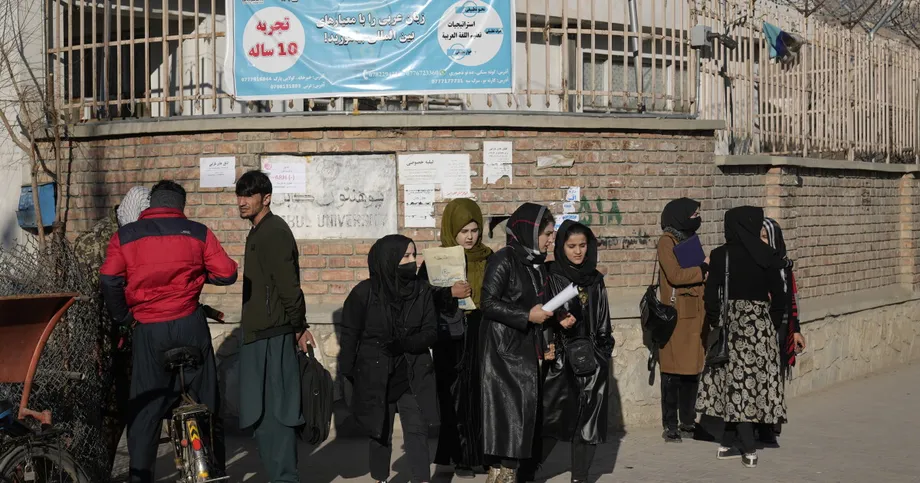
A $25 million decision puts degrees at risk
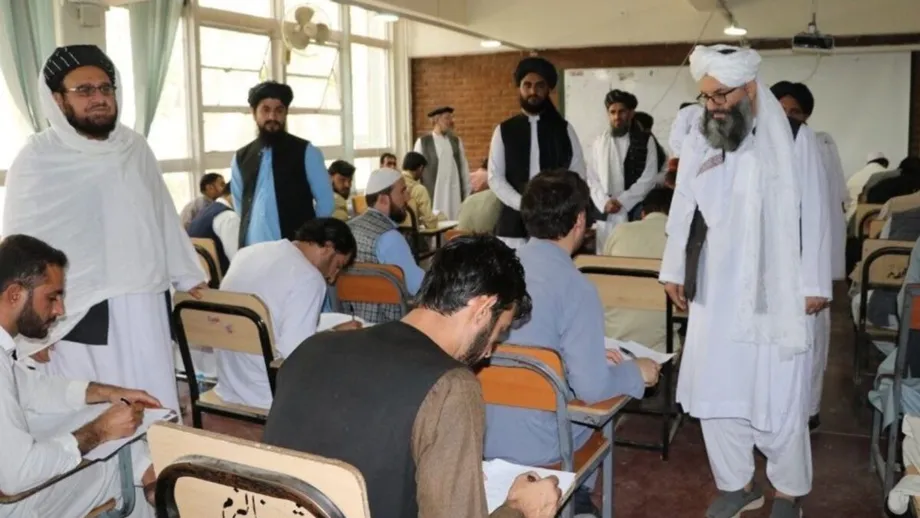
A refused $25 million US grant has left students at the American University of Afghanistan fearing that one of their few remaining routes to a degree could disappear. For women studying secretly under Taliban rule, the threat reaches into bedrooms where lectures play through headphones and classmates know one another only by their voices.
Contents
- A $25 million decision puts degrees at risk
- For Laila, another interrupted education
- How a Kabul university continued abroad
- The decisions that shaped today's uncertainty
- Why Washington questioned the university's finances
- A scholarship fund works differently from a university grant
- What losing a semester means for a student
- Women have become a larger share of AUAF
- Key Points
Yet the US government's own account presents a more complicated picture. A State Department report to Congress, published in June 2026, says American funding supports virtual education for approximately 1,100 AUAF students through the Supporting Student Success in Afghanistan program. Most operations supported by that program are in Doha, Qatar.
The department's report to Congress says the arrangement provides no funding within Afghanistan or money that may reach the Taliban. That statement sits alongside the department's explanation for refusing the $25 million grant, which cited financial accountability concerns. The relationship between the refused grant and the support described in the congressional report, including their funding periods and amounts, remains unclear; no university closure date or next funding decision date was given.
The immediate concern for students is whether they can finish their courses. The university has already survived an attack, the loss of its Kabul campus and the dispersal of students and staff across several countries. Its dependence on American support has followed it into exile.
For Laila, another interrupted education
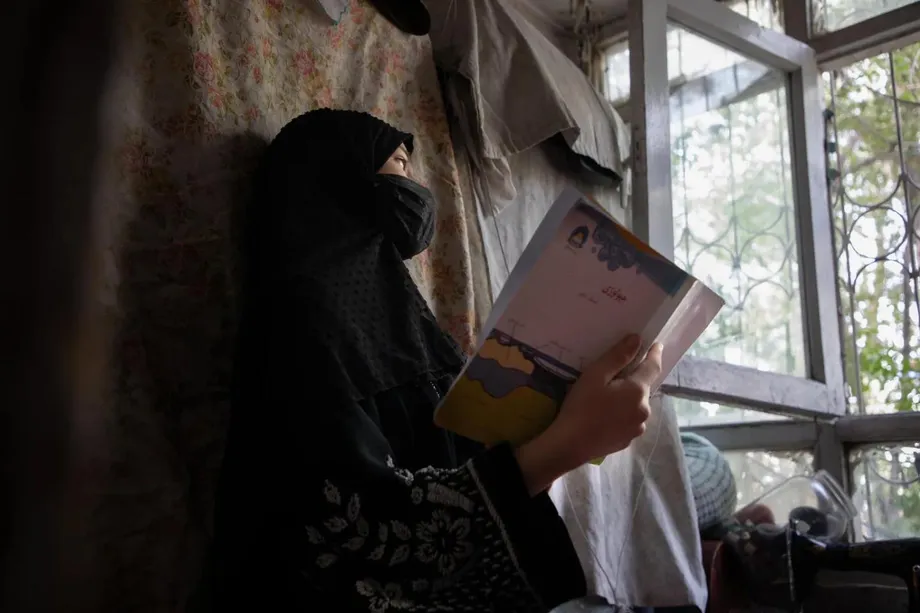
Laila, a student in her mid twenties whose name has been changed for safety, discovered the funding news after waking during the night for water and checking her phone. She sat on her bed, thinking about the years she had spent trying to complete an education.
She studies political science and international studies at AUAF. When the Taliban returned to power in August 2021, she was attending another university in Kabul and had two examinations left to finish her semester. The Taliban's December 2022 ban on university education for women left her degree unfinished.
A scholarship at AUAF allowed Laila to begin again. She described how unusual that opportunity was for women around her.
"Not every girl got that opportunity," she said.
Her classmates often use assumed names and leave their cameras off during remote lectures. Laila has told few people outside her family that she is studying. She fears authorities might search her phone and discover university messages, and says Taliban personnel have entered her home several times to search belongings.
After learning about the funding decision, she said she largely stayed in her room, kept the curtains closed and lost her appetite. A degree that once seemed within reach had again become uncertain.
How a Kabul university continued abroad
AUAF was established as a private Afghan institution offering an American model of liberal arts education. A USAID grant launched the project in 2005, and the university opened in 2006. Its name and American financial support did not give students or staff a direct route to US immigration.
Victoria C. Fontan, the university's provost and vice president of academic affairs, described an emergency transformation after the Taliban entered Kabul on August 15, 2021. Staff destroyed records and servers to protect people whose identities could put them at risk. A registrar working from Canada helped reconstruct information needed for evacuation lists.
More than 400 AUAF students found places at the American University of Central Asia in Kyrgyzstan and the American University of Iraq, Sulaimani. Bard College in the United States also hosted students. Faculty and administrators continued university operations from abroad while students unable to leave Afghanistan attended online.
Fontan said a dual degree agreement with Bard, signed in October 2021, addressed a further problem: the university's Afghan ministry accreditation was due to lapse in February 2023. Accreditation is official recognition that an institution meets educational requirements. Keeping a recognized route to graduation mattered for students seeking employment or further study.
Qatar became another base. According to Fontan, the Qatar Fund for Development supported accommodation and classrooms for 200 students there, while US support helped AUAF provide full financial aid.
The decisions that shaped today's uncertainty
The university's funding difficulties stretch across several distinct events. Its long dependence on US assistance, the Taliban's restrictions and changes to American aid policy have each affected whether students can remain enrolled.
- 2005 and 2006: A USAID grant launched AUAF, which opened to students in Kabul in 2006.
- August 2016: An attack killed 17 people and injured more than 50. The university temporarily closed, reopening in March 2017.
- August 15, 2021: The Taliban entered Kabul. AUAF continued through evacuation, international partnerships and remote teaching.
- December 2022: The Taliban barred women from university education.
- April 4, 2025: A presidential order cited by the State Department suspended aid that could possibly reach the Taliban.
- April 5, 2025: A termination notice affected the Women's Scholarship Endowment program. Officials subsequently confirmed that the relevant programs were active through June 2025.
- June 2026: The State Department's congressional report described continued support for four Afghan scholarship programs, including AUAF distance learning.
The April 2025 scholarship reversal shows how a funding announcement can change even within a semester. Students first faced termination, then received confirmation of support through June, while funding for the following autumn was left unresolved at that time.
Why Washington questioned the university's finances
The State Department justified refusing the $25 million AUAF grant by referring to the university's record of financial management. Its press office gave the following explanation:
history of repeated lack of accountability for millions of American taxpayer dollars.
US inspectors began investigating the university's finances in 2016. By 2018, investigators said weak accounting prevented them from determining exactly how American aid money was being spent. John Sopko, the former federal inspector who oversaw that investigation, expressed surprise that funding had continued.
Patrick Fine, a former USAID mission director in Afghanistan, disputed the department's rationale. He acknowledged that earlier audits found difficulties meeting USAID's extensive requirements, while defending the university's educational value.
It is still a useful investment, a worthy investment," Fine said, "and the reason for that is that it's one of the few organizations left that is reaching Afghan women.
The financial exposure is large because American assistance covered nearly 90 percent of AUAF's costs in 2018, according to a US report cited in the funding dispute. At that level of dependence, replacing a major grant requires much more than finding a few additional scholarships.
The State Department said AUAF could seek other funders and partners. Its congressional report also describes financial monitoring and regulatory compliance staff as part of its approach to overseeing assistance. For students, the practical outcome depends on whether money is available to keep classes, administration and academic support operating.
A scholarship fund works differently from a university grant
The Women's Scholarship Endowment is another part of the funding picture. USAID established it in 2018 with a $50 million award to the Texas A&M University Foundation. The money was invested, with investment earnings paying for scholarships while the original fund remained intact, according to a program official.
An endowment resembles a financial reservoir: the principal is invested to generate income over time. Its ability to fund scholarships still depends on investment returns, program rules and administrative permission. Separate USAID assistance paid teachers and other expenses, connecting individual scholarships to the university services students needed.
During the 2025 disruption, the program supported 208 women, including students attending online from Afghanistan. Funding had allowed 120 women to relocate to Oman and Qatar for study in person, with living expenses covered. The program focused on science, technology, engineering and mathematics.
The State Department's June 2026 report gives later figures: 136 students currently supported by the endowment and 169 Afghan women awarded full scholarships during the preceding academic year. Those scholarships covered eight universities in seven countries.
Another two US scholarship awards at the American University of Central Asia supported 70 Afghan students, most evacuated after 2021. Together, the programs show that American support operates through several institutions and funding arrangements, rather than through AUAF alone.
What losing a semester means for a student
R.K., an Afghan scholarship recipient identified by her initials for safety, began online AUAF courses in 2024. During the 2025 funding disruption, she had completed 49 of the 120 credits required for her degree and hoped to graduate in 2026.
Those 49 credits represented about 41 percent of her course requirements. Losing access at that point would put years of work at risk, particularly if another university could not accept all her completed courses. Transferring credits means asking a new institution to count earlier study toward its own degree.
R.K. described the place her scholarship held in her life after the fall of Kabul.
This scholarship meant everything to me," she said. "It was like a light in the darkest days of my life. After the fall of Kabul, this program was my biggest hope for the future.
Laila faces a similar burden after already restarting her education once. She had expected to graduate years earlier, contribute through her work and pursue a master's degree abroad. Another interruption would delay those plans further.
Sahar Fetrat, a researcher in the Women's Rights Division at Human Rights Watch, described the narrow opening these programs provided for women who had managed to finish secondary school.
These programs were the last remaining loopholes for girls and women seeking higher education.
Women have become a larger share of AUAF
AUAF's student body changed as the Taliban closed other educational routes. After its March 2017 reopening, the university had more than 2,000 students, approximately half of them women, according to former USAID official William Hammink's Afghanistan aid assessment, published by the American Foreign Service Association.
The account of the recent grant refusal described roughly 1,000 enrolled students, three quarters of them women. Comparing those figures, women's share rose from about 50 percent to about 75 percent, an increase of 25 percentage points. The State Department's later congressional report puts total enrollment at approximately 1,100.
Demand extended beyond degree courses. Fontan said an online university readiness program for Afghan girls began with 350 students in 2023 and received more than 10,000 applications within two days. That was more than 28 applications for every initial place.
Fontan also described an education alliance with 65 members reaching an estimated 100,000 students at the time of her account. AUAF therefore sits within a wider network, but its degree programs, financial aid and international academic partnerships give it a particular role for women seeking a recognized qualification.
Laila's immediate goal is more modest than those institutional ambitions: to attend the next lecture and eventually finish. The funding decisions determine whether the university can keep that route open, while the Taliban's restrictions continue to make accessing it dangerous.
Key Points
- A refused $25 million US grant has raised fears about AUAF's ability to continue serving Afghan students.
- A June 2026 State Department report describes US support for approximately 1,100 AUAF students through a program operating largely from Doha.
- The State Department cited financial accountability concerns; former USAID mission director Patrick Fine defended the university's value.
- The Taliban banned women from university education in December 2022, making remote courses and scholarships abroad especially important.
- The Women's Scholarship Endowment was created with $50 million and supports study at several universities, separately from other university operating assistance.
- Students risk further delays to graduation and difficulties transferring completed coursework if their education is interrupted.