Five Opening Matches Await Bhutan in Azerbaijan
Bhutan will make its first appearance in a FIFA World Cup competition at any age level when its boys begin the inaugural FIFA U-15 World Cup and Festival against Lithuania in Baku, Azerbaijan, on October 24, 2026. Five group matches in three days will give the young team an immediate test of skill, stamina and concentration.
Contents
- Five Opening Matches Await Bhutan in Azerbaijan
- A World Cup Debut Shared by 78 Associations
- Bhutan's Schedule and the Event Dates
- How the Festival Format Works
- A Month of Preparation for a Demanding Test
- Players Look for Experience and Results
- Why FIFA Wants More Countries Playing
- Baku Brings Teams Together On and Off the Pitch
- Bhutan Connects Baku With Its Youth Plans
- Key Points
FIFA lists Bhutan among 78 member associations making their World Cup debut at the event, which brings together 189 associations. Bhutan's Group Q opponents are Lithuania, Luxembourg, the United Arab Emirates, the Republic of Korea, and St Vincent and the Grenadines.
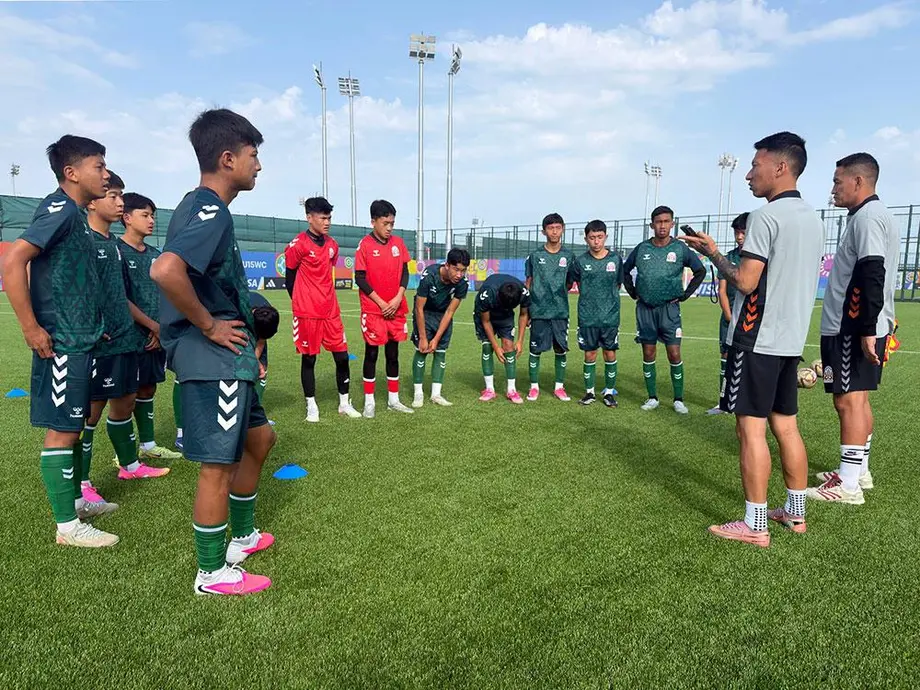
Coach Sonam Dorji has prepared the players for a competition built around continued participation. After the opening group stage, teams will move into six performance tiers and keep playing through October 30, rather than leave after elimination.
For Bhutan, the immediate task is to handle an unfamiliar international schedule. The longer ambition is to help these players progress toward the under-17 team and eventually the senior national side. Their preparation has included a friendly against Japan's FC Imabari and work on physical fitness, tactics, mental readiness and discipline.
A World Cup Debut Shared by 78 Associations
FIFA's tournament announcement, published on October 22, confirms 189 participants from 211 invited member associations. An earlier count put participation at 191 countries across 32 groups; FIFA's confirmed total is 189 associations.
The 78 debutants represent about 41 percent of the confirmed field, or roughly two in every five teams. Bhutan shares this milestone with three of its group opponents: Lithuania, Luxembourg, and St Vincent and the Grenadines.
FIFA defines the milestone across its men's and women's World Cup competitions, including youth events. For Bhutan, Baku therefore marks a new entry into the organisation's World Cup tournament history.
Roberto Grassi, FIFA's head of youth tournaments, described the personal importance of the occasion for young players, including those travelling internationally for the first time.
Can you imagine how many of these young boys will travel abroad for the first time in their lives, wearing their country's jersey? That is exactly what we are here for.
The inaugural boys' competition is open to players born in 2011 or 2012. FIFA says the festival combines matches with educational activities, meetings with football legends and awareness campaigns.
Bhutan's Schedule and the Event Dates
Bhutan begins against Lithuania on October 24, then faces two matches on each of the following two days. The group schedule leaves little time between opponents, making recovery and preparation part of the sporting challenge.
- October 19 to 20: FIFA President Gianni Infantino visited Bhutan and met the U-15 team during its preparations.
- October 22 to 31: Azerbaijan's football association lists this as the wider event period.
- October 24: Bhutan opens its group campaign against Lithuania.
- October 25: Bhutan plays Luxembourg and the United Arab Emirates.
- October 26: Bhutan faces the Republic of Korea and St Vincent and the Grenadines.
- October 30: Competition concludes, with teams continuing through the performance tiers.
The Association of Football Federations of Azerbaijan, known as AFFA, gives October 22 to 31 in its hosting announcement. FIFA identifies October 24 as the opening match date, while Bhutan's competition schedule runs through October 30. The host's wider event dates therefore extend beyond the playing schedule.
Bhutan's opponents after October 26 will depend on its placement following the opening stage. Those fixtures have yet to be specified.
How the Festival Format Works
Teams will play with eight players on each side, on smaller pitches, over two halves of 20 minutes each. Rolling substitutions allow players to leave and return during a match, while kick-ins replace throw-ins when the ball crosses the touchline.
FIFA has divided the competition into a qualification stage lasting three days and a tournament stage lasting three days. Results in the opening stage determine which of six performance tiers a team enters. The Tier A winner will become the inaugural champion.
Every team continues to the final day. For Bhutan's players, that means the first five games establish their next level of competition while also providing experience against five different national teams.
Five matches of 40 minutes amount to 200 minutes of scheduled team playing time across the opening three days. Individual workloads will depend on substitutions and selection. Managing those minutes will be an important part of Sonam Dorji's job, especially on the two days with double fixtures.
The smaller playing area changes the task from the familiar game with 11 players on each side. Players must make decisions with fewer teammates available, while the rolling substitution system gives coaches more flexibility to manage fatigue and participation.
A Month of Preparation for a Demanding Test
Sonam Dorji said the team had spent the past month preparing for the tournament. Training has covered the technical skills used with the ball, the tactical choices made as a team, and the physical and psychological demands of international competition.
The head coach said mental readiness and behaviour had received attention alongside football skills.
"We have worked on the technical and tactical aspects while giving equal importance to physical preparation, psychology, mentality and discipline," he said.
Bhutan also played a friendly against FC Imabari from Japan. That fixture formed part of the team's preparation before facing national sides from different footballing backgrounds in Baku.
Sonam Dorji identified recovery and concentration as particular concerns in the opening schedule. With two matches on October 25 and another two on October 26, players will need to regain energy and adjust quickly between games.
The coach said his players understood the demands ahead.
"We know that playing five matches in a short period will be challenging, especially in terms of recovery and maintaining concentration. But the boys have worked hard, and we believe they are ready to represent Bhutan and give their best in every match," Sonam Dorji said.
Players Look for Experience and Results
Goalkeeper Sonam Choda said the team was working hard and looking forward to international football. His focus was on making full use of the opportunity, match by match.
"We will try our best in every match, learn from the experience and make the most of this opportunity," he said.
Captain Sonam Darjay said he wanted to guide his teammates, gain experience against players from other countries and make new friends. His responsibilities will combine leadership with the same learning process facing the rest of the squad.
I look forward to playing against teams from different countries and gaining valuable experience," he said. "As captain, I will do my best to guide my teammates while learning from this experience.
Winger Kinjor Pelga Yozer also spoke about the value of international exposure. Midfielder Ugyen Phuntsho said the team was excited, preparing well and determined to try to win. Their comments reflect two ambitions that run through Bhutan's preparations: competing seriously now and becoming better players through the experience.
Why FIFA Wants More Countries Playing
Arsène Wenger, FIFA's chief of global football development, said the festival would allow more countries to measure themselves against international opponents. He connected that access with the possibility of narrowing differences between smaller and bigger football nations.
Wenger, the former Arsenal manager, described competition as a practical way for teams to discover their level.
"When you compete in football, you want to know how good you are. The only way to know how good you are is to give everybody a chance to do that and compete with everybody else. It can reduce the difference a little bit between the smaller countries and the bigger countries, and it can allow you as well to play more games," he said.
Bhutan's schedule puts that idea into practice through repeated matches rather than a short visit ending with an early exit. The group phase supplies a range of opponents, and the tier system then places teams according to their opening performances.
FIFA approved the new U-15 festival tournaments in December 2025. A girls' edition is planned for 2027, followed by annual boys' and girls' tournaments from 2028.
Baku Brings Teams Together On and Off the Pitch
Most matches will take place at the Hovsan Competition Complex. Baku Crystal Hall will host the opening ceremony and finals, while all teams will stay together in one Athletes' Village.
AFFA says FIFA's decision to select Azerbaijan took account of its sports infrastructure, facilities meeting international standards and experience organising major international competitions. Azerbaijan will also jointly host the 2027 U-20 World Cup with Uzbekistan.
FIFA and AFFA are delivering the U-15 event with the endorsement of Azerbaijan's government. The shared accommodation and concentrated venues bring a large field of national teams into one setting for competition and activities outside the matches.
Educational sessions, meetings with football legends and awareness campaigns form part of that programme. For Bhutan's captain, who has spoken about making friends as well as playing football, those activities add another dimension to the visit.
Bhutan Connects Baku With Its Youth Plans
Sonam Dorji said Bhutan's youth programmes, academies and work through the FIFA Talent Development Scheme were intended to build a route toward higher national teams. Baku offers an early opportunity to see how the current group responds to international competition.
The coach set out development as the main priority while also recognising the value of results.
"We want the players to compete, learn, enjoy the experience and understand the level of international football. The result is important, but developing these young players for the future of Bhutanese football is our biggest priority," he said.
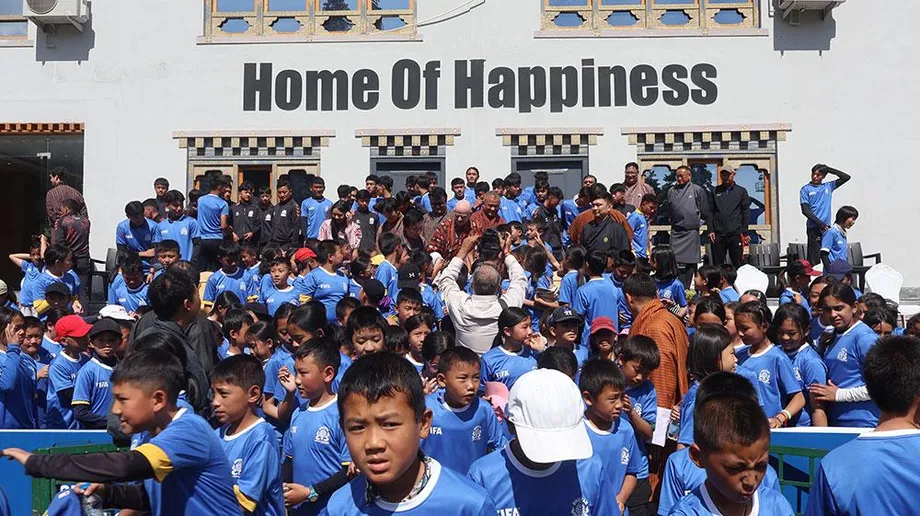
Infantino met the U-15 boys during his October 19 to 20 visit to Bhutan. A programme for children younger than 12 was also launched during the visit, linking the departing team with efforts to bring younger children into the game.
FIFA is considering an allocation of up to USD 25 million for Bhutan for 2027 to 2030. Programme conditions are due before the FIFA Council in December 2026, with the wider programme requiring FIFA Congress approval in March 2027.
A proposed academy would accommodate 500 players, divided equally between 250 boys and 250 girls, and combine schooling with football training on a complex including four pitches. The funding remains subject to approval, and the academy awaits a feasibility assessment before any construction decision.
For the current U-15 team, the immediate opportunity is already on the calendar: Lithuania on October 24, four more group opponents over the next two days, and further matches through the end of the competition.
Key Points
- Bhutan is among 78 associations making their first FIFA World Cup appearance at any age level.
- FIFA confirms 189 participating associations in the inaugural boys' U-15 event in Baku.
- Bhutan opens against Lithuania on October 24 and completes five group matches by October 26.
- Matches feature eight players per side, two halves of 20 minutes, rolling substitutions and kick-ins.
- Teams move into six performance tiers and continue playing through October 30.
- Bhutan's coach is prioritising international experience and progression toward the under-17 and senior national teams.
- A girls' edition is planned for 2027, with annual boys' and girls' tournaments from 2028.