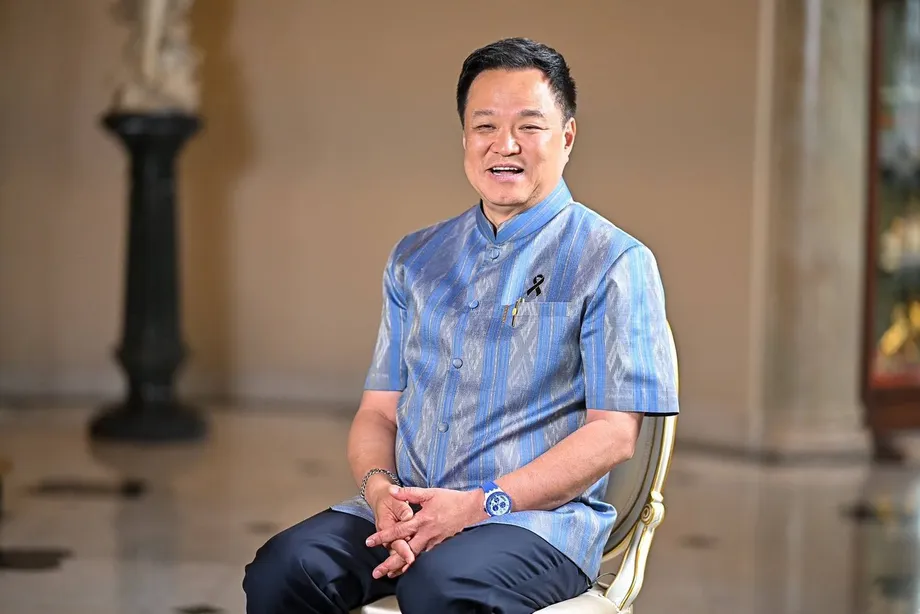
Fuel reassurance comes with a push to put solar on one million homes
Thailand has enough oil to meet domestic demand despite conflict in the Middle East, Prime Minister Anutin Charnvirakul said on Saturday, October 24, 2026, as his government prepared to seek Cabinet approval for a 50 billion baht programme to help one million households install solar power.
Contents
- Fuel reassurance comes with a push to put solar on one million homes
- Enough oil does not mean stable prices
- Why electricity generation remains exposed to gas
- What the 50 billion baht proposal would provide
- Who could qualify and how repayments would work
- Solar sales rules have expanded since April
- What a household earns for surplus electricity
- Loans and tax deductions address different costs
- More panels require stronger local grids
- Electricity relief and flood payments also feature
- Key Points
Anutin, who also serves as interior minister, said oil imports were continuing at their usual contracted volumes. Conservation and a growing shift to other energy sources had helped build surplus stocks, allowing the government to ease temporary export restrictions so state energy companies could clear inventory.
The next major decision is expected on October 26, when the Cabinet is due to consider support of 50,000 baht per household for solar installations. The proposal has passed a spending screening board, but Cabinet approval is still required.
Speaking during the morning programme Talking with the Cabinet: Anutin on NBT, the prime minister credited households with helping prevent the fuel shortage that officials had feared.
We continue importing at standard contracted volumes, but the Thai public has cooperated by avoiding wasteful consumption," Anutin said. "The feared scenario of insufficient fuel supplies for domestic refining has not materialised.
Thailand is pursuing two connected goals: keeping fuel available now and reducing the amount of imported energy it will need later. Oil stocks address the immediate supply concern. Household solar, financing and changes to electricity purchasing rules are intended to reduce exposure to international fuel prices over time.
Enough oil does not mean stable prices
Anutin said international conflict continued to affect domestic fuel prices even while imports and refinery supplies remained sufficient. Thailand can manage inventories and consumption at home, while the prices it pays remain exposed to movements in global markets.
The government has described stocks of both crude oil, which refineries process, and refined fuels as ample. Anutin gave no stock volume or number of days of consumption covered by those reserves.
Manufacturers and exporters still face changing energy costs. Anutin said the early stages of the energy transition had helped cushion those businesses against supply disruptions as they adjusted to global price movements. His proposed response combines conservation, greater use of electricity and investment in domestic energy resources.
Thailand has natural gas, wind and sunshine available within its borders, he said. The government's clean energy push centres on using more renewable electricity and reducing dependence on oil and engines that burn fuel.
Why electricity generation remains exposed to gas
Natural gas supplies 66% of Thailand's electricity generation, according to an August 19 IEEFA policy report by energy finance specialist Haneea Isaad. The Institute for Energy Economics and Financial Analysis said declining domestic gas production had increased reliance on imported liquefied natural gas, or LNG.
LNG is natural gas cooled into liquid so it can travel by ship. Greater dependence on these imports exposes electricity costs to international price swings, extending the effects of an overseas energy crisis from petrol stations into electricity bills.
IEEFA said the Electricity Generating Authority of Thailand, or EGAT, had accumulated more than 36 billion baht in losses from earlier energy crises by March 2026. The figure illustrates the financial burden of cushioning consumers against expensive fuel.
Thailand had about 11.8 gigawatts of solar capacity in early 2026, including 3.6 gigawatts on rooftops, according to the report. Rooftops therefore accounted for about 31% of that total. An earlier estimate put their share at 35% in 2023, when residential installations grew 32% from the previous year. Total solar deployment has since expanded, including larger projects on the ground.
What the 50 billion baht proposal would provide
Finance permanent secretary Lavaron Sangsnit, who chairs the loan spending screening board, said the Interior Ministry's proposal would provide 50,000 baht towards installation costs for each of one million households. Multiplying those figures gives the programme's proposed 50 billion baht budget.
The money would come from the energy transition component of an emergency decree authorising the Finance Ministry to borrow 400 billion baht. The proposed household subsidies represent 12.5% of that borrowing authorisation.
Former energy permanent secretary Kulit Sombatsiri chairs the subcommittee reviewing energy transition projects. Lavaron said proposals had been questioned and examined closely to check their benefits and whether the borrowed money would serve its intended purpose.
Deputy Prime Minister and Finance Minister Ekniti Nitithanprapas outlined the household scheme on October 22. He said state financial institutions, including Government Savings Bank and Government Housing Bank, would support loans so participating households would not need to pay a lump sum upfront.
Anutin also described broader financial assistance modelled on the Khon La Khrueng co-payment approach, under which government and participants share costs. His remarks covered households and small enterprises switching to electricity and cleaner technologies, while the detailed solar proposal targets households.
Who could qualify and how repayments would work
Ekniti said the initial solar programme would cover one million households, with possible expansion if demand exceeded that target. Applicants would need to register under a name matching the electricity meter account holder. There would be no minimum electricity consumption requirement.
Households would use some of the electricity they generate and sell the surplus to the electricity system. Under the proposed financing model, sales revenue would help repay the installation loan.
Preliminary government calculations assume about four hours of average daily sunlight. Ekniti said households could have 500 to 1,000 baht left each month after loan payments, alongside savings on electricity they would otherwise buy. Those are projected amounts based on the proposed model; household results would depend on generation, consumption and financing terms.
The proposal envisages electricity sales over 20 years. Solar panels and the inverter, which converts panel output into electricity suitable for household use, would become household property after the loan was repaid under the programme's terms. Final loan rates, repayment periods, application dates and detailed participation rules await the programme's approval and implementation arrangements.
Solar sales rules have expanded since April
Thailand's solar purchasing framework has changed during 2026. On April 29, the National Energy Policy Council approved a household net billing programme with a national purchasing ceiling of 500 megawatts, an export limit of five kilowatts per meter and a purchase price of 2.20 baht per kilowatt hour for 10 years.
Energy Minister Eknat Promphan later said the council had approved an expansion to 10,000 megawatts and extended purchasing contracts to 20 years. The wider programme covers rooftop, ground and floating solar, retaining the five kilowatt limit per meter and the 2.20 baht purchase rate.
The 10,000 megawatt target is 20 times the April ceiling of 500 megawatts. It is a purchasing target across the expanded programme, while the proposed subsidies have an initial household participation target of one million.
Eknat said participants who had joined the public solar programme from 2018 onward would also receive contracts extended to 20 years. Anutin said the government had been pursuing purchases of surplus household solar electricity throughout the preceding year.
The main decisions and upcoming dates are:
- April 27, 2026: Cabinet approved the national energy agenda in principle.
- April 29: The National Energy Policy Council approved the 500 megawatt household solar purchasing framework.
- September to December: Electricity cost relief measures apply, alongside the council's expanded solar purchasing policy.
- October 22: Ekniti outlined the proposed household subsidy and loan arrangements.
- October 24: Anutin said fuel supplies were sufficient and urged faster energy transition.
- October 26: Cabinet consideration of the household subsidy proposal is expected.
- October 27 to 30: The government has set aside time for the opposition's no-confidence debate.
What a household earns for surplus electricity
Net billing gives a monetary value to electricity sold to the grid. The utility charges for electricity a household buys and separately values the surplus solar power it receives. The money from sales can then help offset the household's bill.
IEEFA used a retail electricity price averaging about 3.88 baht per kilowatt hour, compared with the 2.20 baht solar purchase rate. At those prices, 100 kilowatt hours used directly at home would avoid about 388 baht in purchases. Selling the same amount would earn 220 baht.
Households that use more solar electricity while it is being generated can therefore gain more value from each unit than they would by exporting it. Batteries allow electricity to be stored for later use, but add to installation costs.
IEEFA recommends moving towards net metering, where exported electricity offsets purchased electricity on a unit basis, or increasing the purchase rate. Its modelling suggests net metering could reduce the time needed to recover installation costs to about four years. A purchase rate of three baht could shorten that period to about five years, compared with six to seven years under the framework it assessed.
Loans and tax deductions address different costs
A May TDRI solar analysis estimated that a household system rated at three kilowatts cost about 100,000 baht and generated roughly 300 to 400 kilowatt hours a month. The Thailand Development Research Institute put the typical investment recovery period at six to seven years.
Against that installation example, a subsidy of 50,000 baht would cover half the cost before financing. The proposal's final equipment specifications and installation prices will determine how much individual households need to borrow.
Thailand also offers a personal income tax deduction of up to 200,000 baht for qualifying rooftop solar installations, with the measure running through December 2028. TDRI explains that the deduction reduces the income used to calculate tax. The amount a household saves depends on its taxable income and tax rate.
The tax measure was expected to attract about 90,000 households, compared with the one million targeted by the proposed subsidy programme. The latter combines direct support with access to loans, addressing the initial cash requirement that TDRI identifies as a major obstacle.
More panels require stronger local grids
Thailand's earlier residential purchasing quota of 90 megawatts filled in June 2024, prompting a halt in new purchases, according to TDRI. Larger quotas can open participation, but local power lines, transformers and approval systems must also accommodate the extra electricity.
The April framework called for approvals within 30 days where households intended to sell surplus power, and within seven days where they intended only to generate for their own use. It also called for consideration of reduced or waived connection fees and a single service process for applications.
Officials were instructed to review grid rules, including a restriction tying connected generation capacity to 15% of a distribution transformer's rating. Ekniti's newer proposal includes investment in smart meters, smart grids and transmission infrastructure. Smart meters can record electricity moving both into and out of a home, supporting accurate billing.
Access also depends on housing. TDRI says roofs need sufficient space, suitable sunlight and structures capable of carrying the equipment. Apartment residents face shared roof space and limited installation areas. A pilot allowing direct electricity purchases through utility networks, approved in 2024 for up to 2,000 megawatts, focused mainly on large users such as data centres.
TDRI also calls for planning for worn out panels. It projects accumulated solar waste of 9,900 to 57,200 tonnes by 2030, rising to 17,900 to 78,100 tonnes by 2032. Collection, reuse and safe disposal would need to address materials including lead and antimony.
Electricity relief and flood payments also feature
For September through December 2026, Eknat said the retail fuel adjustment charge, known as Ft, was set at 16.23 satang per unit. This is one component of the electricity bill. More than 16 billion baht in recovered excess benefits would help reduce electricity costs, while the natural gas price for power plants would be capped at 363.53 baht per million British thermal units.
EGAT and PTT would carry accumulated outstanding costs temporarily under the relief measures. The immediate price support runs alongside the government's effort to reduce future fuel purchases through solar generation.
Anutin also addressed flood assistance during the October 24 broadcast. He said payments that previously could take as long as six months could now be made immediately once household information and eligibility were complete.
Assistance is assessed per household rather than per person. Anutin said Bangkok required additional checks involving owners, tenants, identity documents and differing residency status. Provincial officials in areas with frequent flooding already had established household records that helped verify claims.
Key Points
- Anutin says Thailand has sufficient oil and continues importing at normal contracted volumes, while global price volatility persists.
- A proposed 50 billion baht solar subsidy programme targets one million households, with Cabinet review expected on October 26.
- The proposal combines 50,000 baht per household with state bank financing and envisages surplus electricity sales over 20 years.
- The expanded public solar purchasing target is 10,000 megawatts, at 2.20 baht per kilowatt hour and up to five kilowatts per meter.
- Natural gas supplies 66% of electricity generation, making imported fuel costs a central concern.
- Installation costs, grid capacity, housing access and disposal of ageing panels remain practical challenges.