2.6 million girls excluded, with losses reaching beyond classrooms
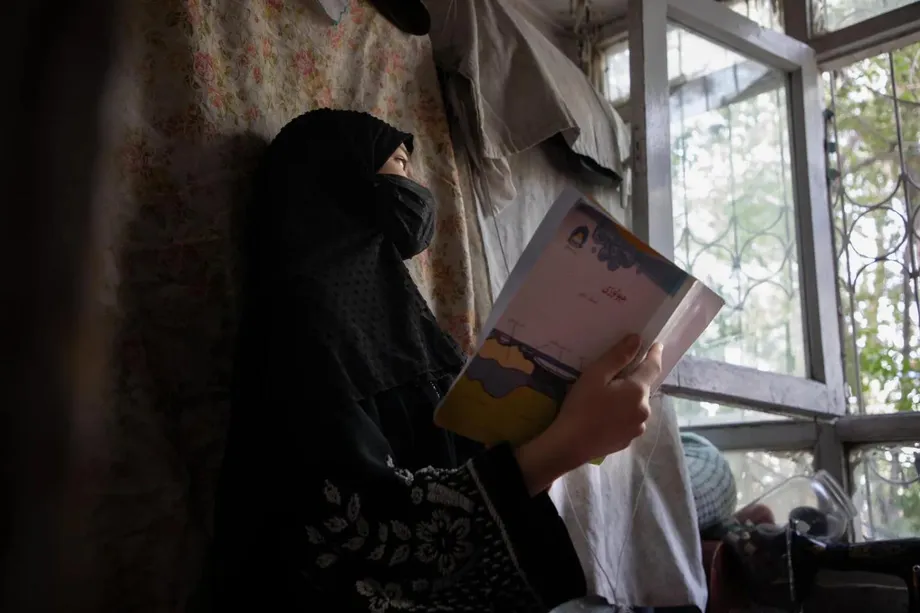
More than 2.6 million girls in Afghanistan have been denied secondary education since 2021, UNICEF said on August 14, 2026, warning that continued restrictions could leave the country without up to 20,000 women teachers and 5,400 female health workers by 2030. Five years after the Taliban returned to power, the agency says Afghanistan remains the only country where secondary and higher education are effectively closed to girls and women.
Contents
- 2.6 million girls excluded, with losses reaching beyond classrooms
- How the restrictions became a lasting barrier
- Why the agencies give different numbers
- Fewer teachers today, fewer replacements tomorrow
- Why the health service depends on girls returning to school
- The economic cost starts at $84 million a year
- Poverty, displacement and damaged schools deepen the crisis
- Learning support continues, but access remains fragile
- UNICEF calls for immediate reopening
- Key Points
The damage is already visible in schools and public services. The number of women teaching in basic education fell from nearly 73,000 in 2022 to around 66,000 in 2024. Restrictions on education and employment are costing the economy at least US$84 million each year, according to UNICEF's analysis.
For a girl who finished Grade 6 in 2021, five years without formal schooling means losing much of the period when she would normally prepare for university, professional training or work. Across Afghanistan, the same interruption is cutting off the next generation of teachers, nurses, doctors and midwives.
UNICEF Executive Director Catherine Russell described the personal cost in the agency's August 14 statement:
Five years may be brief in a country's history, but it is a defining period in a girl's life.
UNICEF links exclusion from school to greater risks of child labour, early marriage, abuse and violence against girls. Poverty and displacement make those risks worse. The consequences also reach children who are still in primary school, women seeking medical care and families whose future earnings depend on access to education.
How the restrictions became a lasting barrier
The Taliban took power on August 15, 2021, as US and NATO forces withdrew. The authorities initially assured the international community that women would be allowed to continue studying. UNICEF dates the exclusion of girls from formal education beyond Grade 6 to September 2021.
Secondary schools remained closed to girls in March 2022, another key point in the restrictions, and women were barred from universities in December that year. The authorities described the measures as temporary. Their continued enforcement has left girls without a formal route from primary school to a degree.
- August 15, 2021: The Taliban returned to power.
- September 2021: UNICEF dates the exclusion of girls from education beyond Grade 6 to this month.
- March 2022: Secondary schools remained closed to girls.
- December 2022: Women were barred from universities.
- April 2026: UNICEF published an analysis of the costs to education, employment and essential services.
- August 2026: UNICEF and UNESCO issued warnings marking five years of restrictions.
The authorities say they respect women's rights according to their interpretation of Islamic law and Afghan culture, and describe education policy as a domestic matter. Their restrictions also affect women's work, movement and access to public spaces. UNICEF and UNESCO have called for the immediate restoration of access to secondary schools and universities; no reopening date has been announced.
Why the agencies give different numbers
UNICEF's August statement puts the number denied secondary education since 2021 at more than 2.6 million. UNESCO's August estimate is 2.4 million, about 200,000 more than a year earlier. Both agencies describe exclusion on a national scale, although their totals differ.
UNICEF's April issue brief, The Costs of Inaction, gives another set of figures: an estimated 3.8 million girls aged 7 to 18 were out of school in 2024, including more than 2.6 million adolescent girls. It separately counts at least 1 million girls directly affected by restrictions on secondary education over five years.
The April brief therefore measures both the wider population outside school and girls directly affected by the decrees. It projects that the latter group could exceed 2 million by 2030. UNESCO projects that nearly 4 million girls could be barred from secondary education by that year. The agencies' projections use different counting frameworks, and no common calculation explaining the gap has been published in their statements.
UNESCO's education emergencies programme coordinator, Hoda Jaberian, described the length of the interruption:
Five years is not a temporary interruption in a child's education. It is clearly almost an entire secondary school cycle.
Fewer teachers today, fewer replacements tomorrow
Afghanistan had nearly 73,000 women teaching in basic education in 2022. By 2024, that figure was around 66,000, a loss of roughly 7,000 teachers, or more than 9 percent. Girls are more likely to attend school and remain enrolled when women teachers are present, making the decline a problem even for children still permitted to study.
UNICEF warns that the country could lose up to 20,000 women teachers by 2030. UNESCO projects a shortage of more than 11,000 qualified female teachers by the same year. The first figure describes potential losses and the second a projected shortage of qualified staff, with each pointing to growing difficulty staffing classrooms.
Jaberian said teachers had left Afghanistan and some who remained faced restrictions on continuing their work. Restrictions on women teaching boys have also left some pupils with unqualified male teachers or no teacher.
Schools face pressure from both directions: experienced women leave the workforce, while girls are prevented from completing the education needed to replace them. Reopening classrooms would restore access to learning, but rebuilding the supply of qualified teachers would require girls to progress through secondary education and professional training.
Why the health service depends on girls returning to school
UNICEF projects potential losses of 5,400 female health workers by 2030. Combined with its estimate for women teachers, that amounts to 25,400 workers across two services that families use throughout their lives.
Women in Afghanistan often face social barriers to receiving medical treatment from men. A shortage of women doctors, nurses and midwives can therefore reduce access to care during pregnancy, childbirth and the first weeks of a baby's life. UNICEF warns of reduced access to maternal, newborn and child health services.
Russell, speaking about the April analysis, described the professions at risk:
Afghanistan cannot afford to lose future teachers, nurses, doctors, midwives and social workers, who sustain essential services. This will be the reality if girls continue to be excluded from education.
Maternal education also matters for children's health. UNICEF says a lack of education among mothers is associated with higher risks of low birthweight, missed vaccinations and stunting. Stunting means a child is too short for their age because of prolonged poor nutrition or repeated illness. These health problems add pressure to services already struggling to meet families' needs.
The economic cost starts at $84 million a year
UNICEF estimates that restrictions on girls' education and women's participation in paid work cost Afghanistan at least AFN 5.3 billion, equivalent to US$84 million, annually. That is about 0.5 percent of the country's gross domestic product in 2023. GDP measures the value of goods and services produced by an economy.
The loss comes as girls are prevented from gaining qualifications and women face limits on using their skills in employment. Families lose potential earnings, while schools, clinics and other services lose access to trained workers. UNICEF describes its estimate as conservative and warns that losses build with each year the restrictions continue.
Women's share of the civil service fell from 21 percent in 2023 to 17.7 percent in 2025. That is a decline of 3.3 percentage points in two years, showing a shrinking presence in public employment alongside the fall in women teachers.
UNESCO examines a longer period, estimating that exclusion from secondary and higher education could push around 600,000 women out of the workforce by 2066 and cause cumulative income losses of US$9.6 billion. Its forecast concerns income accumulated over time, while UNICEF's US$84 million figure describes an annual loss under its own analysis.
Poverty, displacement and damaged schools deepen the crisis
Afghanistan's schools were already struggling with low literacy, inadequate facilities and children missing primary education. UNESCO says more than 2 million children of primary school age are out of school for reasons beyond the restrictions on girls. More than 90 percent of children aged 10 cannot read a simple text, and the national literacy rate stands at 37 percent.
Nearly half of schools lack water, sanitation or heating, according to UNESCO. Earthquakes, floods and other disasters have forced around 1,000 schools to close since 2021. Overcrowding and damaged facilities make it harder to teach children who can still attend.
Large numbers of returnees add to those demands. UNICEF's August statement records more than 2.7 million people returning from Iran and Pakistan since 2023, with children and young people making up 60 percent. UNESCO gives a much larger total of more than 7 million people returning voluntarily or being forced back since 2023, including 3 million in 2025. The agencies do not give a shared definition or counting method that reconciles those totals.
UNICEF warns that poverty and displacement increase the dangers facing girls outside school. Families struggling to secure food, shelter and income may face greater pressure to send children into work or arrange early marriages. Losing daily contact with teachers also removes an important source of support.
Learning support continues, but access remains fragile
UNICEF supported more than 3.7 million children in public schools with emergency education assistance in 2025. Another 442,000 children participated in community learning programmes, and 66 percent were girls. That share amounts to about 292,000 girls, calculated from the agency's figures.
The agency also built or rehabilitated 232 schools during 2025. UNESCO supports learning in community spaces and the homes of local educators, alongside literacy and skills programmes. These activities keep education within reach for some children while formal restrictions remain.
Girls seeking lessons outside conventional classrooms face further barriers. During the September 2025 internet cuts, restrictions on fixed broadband spread from Balkh to other provinces, interrupting online classes. Mobile data remained available in many places, but cost and unreliable connections limited its usefulness for families.
Access to educational broadcasts was also affected by the October 2026 FM suspension of BBC services across Afghanistan. Its Afghan output includes programmes for girls barred from secondary school. Broadcasts continued through other radio bands, online platforms and satellite, leaving listeners dependent on those alternatives.
Community classes, online lessons and radio programmes offer routes to learning for some girls. Formal secondary schools and universities provide the structured progression and qualifications needed to enter professions such as teaching and medicine, which makes their reopening central to UNICEF's appeal.
UNICEF calls for immediate reopening
Russell has urged the authorities to restore education access immediately and called on the international community to keep supporting girls' right to learn. UNICEF says it and its partners are ready to help schools reopen safely.
In the August statement, Russell set out the agency's demand:
UNICEF calls on the de facto authorities to lift the restrictions on education and allow all girls and women to return to schools and universities immediately.
The figures connect a girl's lost school years with services her community will need later. Afghanistan is already losing women teachers. The projections for 2030 extend that concern to larger shortages in classrooms and health facilities, while each additional year outside school delays the preparation of their replacements.
Key Points
- UNICEF says more than 2.6 million girls have been denied secondary education since 2021; UNESCO estimates 2.4 million.
- Girls remain excluded from formal education beyond Grade 6, and women have been barred from universities since December 2022.
- Women teaching in basic education fell from nearly 73,000 in 2022 to around 66,000 in 2024.
- UNICEF warns of potential losses of up to 20,000 women teachers and 5,400 female health workers by 2030.
- Restrictions on education and employment cost at least US$84 million annually, according to UNICEF.
- UNICEF supported community learning for 442,000 children in 2025, with girls accounting for 66 percent.
- UNICEF and UNESCO are calling for immediate access to secondary and higher education for girls and women.