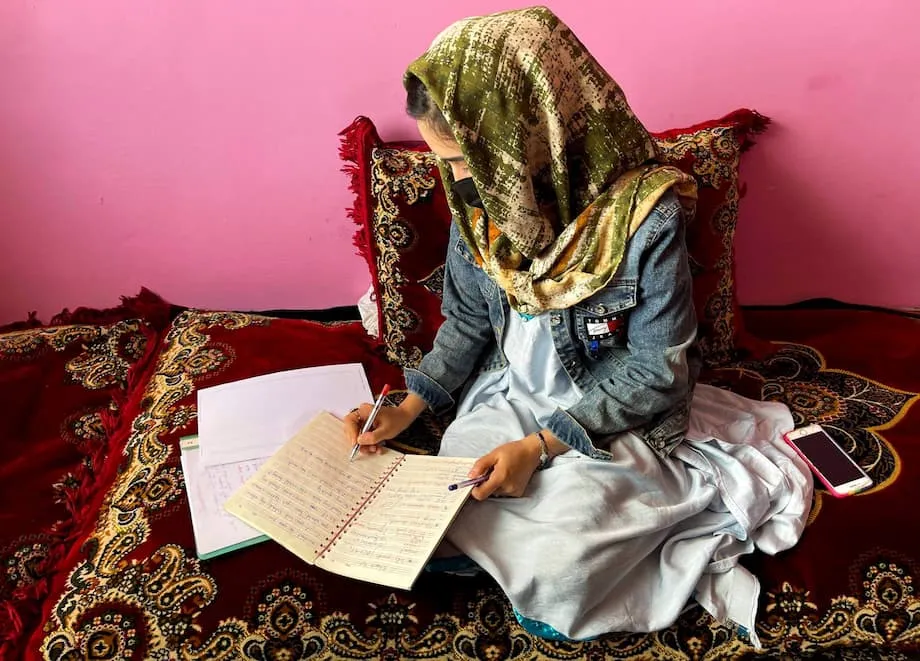
A blank screen where a classroom should be
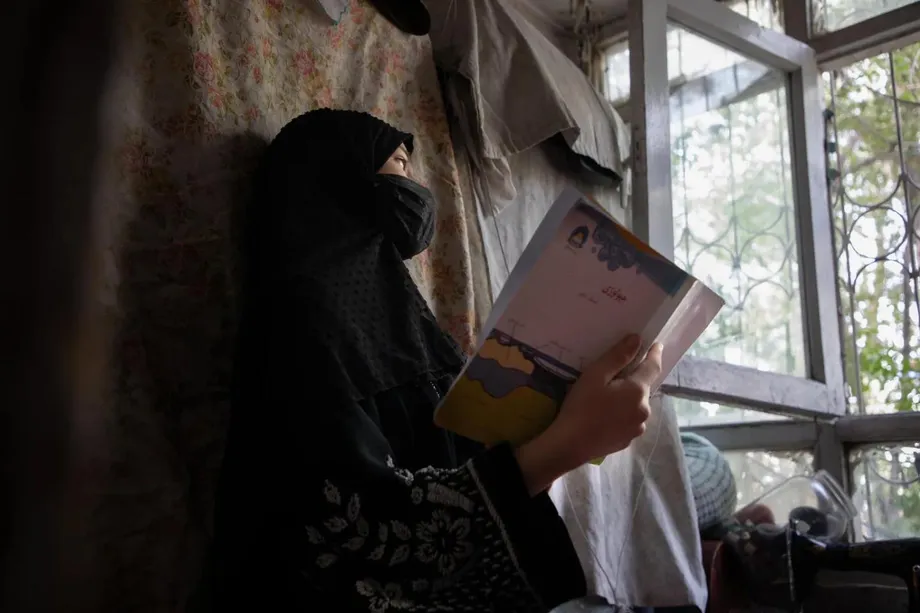
At 7pm on a recent evening in Afghanistan, 17-year-old Marjaneh opened her laptop for an online English class and found a blank screen. Her neighborhood's wifi had disappeared without warning. Barred from attending school, she had depended on that connection to reach teachers, classmates and the lessons she hoped would help her win a scholarship and become a doctor.
Contents
- A blank screen where a classroom should be
- Where the restrictions have spread
- Why cutting fiber disrupts so much
- Online lessons had become a substitute for school
- The cost of staying connected
- Losing classmates also means losing support
- Women lose orders as connection costs rise
- A tighter squeeze on journalism and relief work
- The Taliban's explanation meets objections
- International objections focus on women and hardship
- Teachers try to keep learning possible
- Key Points
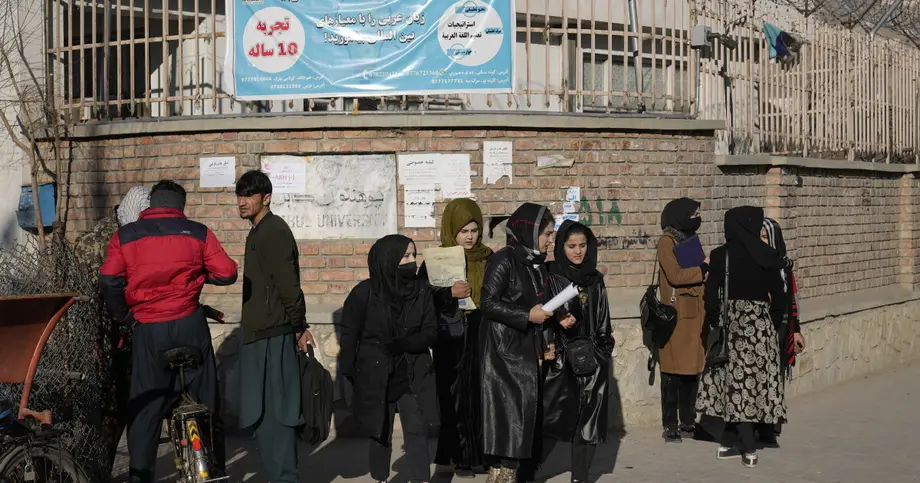
By September 27, 2025, restrictions that began with the cutting of Balkh province's fiber optic connection on September 15 had spread across several regions. For girls already excluded from secondary schools and universities, the loss of fixed broadband was closing one of their last routes to education.
Marjaneh, who asked to use a pseudonym for safety, described what the interruption meant before her connection dropped again:
These online classes were my only source of hope. I thought when they closed schools at least they would not cut the internet, but now that has been taken away too.
Taliban leader Hibatullah Akhundzada justified the restrictions as a measure to prevent immorality. The cuts coincided with the fourth anniversary of the ban on girls attending secondary school. Officials have also indicated that they are considering restrictions on mobile internet supplied by telecommunications companies, raising fears of a nationwide blackout.
Families are already losing more than lessons. Women who sell clothing and crafts online face higher costs and interrupted orders. Journalists struggle to gather information, while relatives abroad find it harder to contact and support people at home. Mobile data still works in many places, but its price and unreliable performance leave many households without a workable substitute.
Where the restrictions have spread
Balkh was the starting point for the fiber restrictions. Fixed broadband has since been shut in Helmand, Kandahar, Uruzgan, Nimroz, Zabul, Baghlan, Takhar, Kunduz, Badakhshan, Herat and Parwan as well.
Local authorities have confirmed fiber optic bans in the northern provinces of Balkh, Kunduz, Badakhshan, Takhar and Baghlan. Residents elsewhere describe severe disruptions. The cuts are uneven, and mobile connections remain available in many areas, leaving access dependent on location, network performance and what a family can afford.
The sequence connects an existing education ban with a new loss of access:
- Since the change in power in 2021, restrictions on women and girls have reduced access to education, employment and public life, while many media outlets have closed or relocated.
- September 15, 2025: Balkh province's fiber optic connection was cut.
- In the following days, fixed broadband restrictions spread to other provinces.
- By September 27, 2025: officials had indicated that limits could extend to mobile data, which was still operating in many places.
For a student, these differences can decide whether a class remains reachable at all. A household with working mobile data may still manage a short call. A girl without access to a phone account, or whose family cannot pay for repeated data purchases, can lose contact with her teacher entirely.
Why cutting fiber disrupts so much
Afghanistan's national fiber optic network began in 2007 with around $60 million in donor funding. It grew to nearly 6,000 miles of cables connecting 26 provinces to global networks. By last year, about 26 million Afghans had access to telecommunications.
Fiber carries information through cables and provides fast, relatively inexpensive connections for homes, government agencies, banks and businesses. When those connections disappear, users must depend more heavily on mobile networks. Video lessons, calls, cloud services and financial transactions become slower or more expensive.
Network monitoring groups have tracked steep falls in internet traffic in affected provinces. Business leaders warn that a prolonged outage will put further pressure on fragile public services and the private sector.
Sayed Ahmad Shah Sadaat, identified as a former Afghan education minister, described the consequences for institutions that rely on the network:
Cutting the fiber optic network will harm all areas of life. Government agencies, banks, and media do not have a viable alternative in place.
A connection that supports a student's evening class may also support the systems used by an employer, a bank or a public agency. Removing fixed broadband therefore reaches beyond individual households and into services that people need for work and daily administration.
Online lessons had become a substitute for school
Thousands of Afghan girls moved their education into living rooms and onto phones after losing access to classrooms and universities. Online programs supplied lessons, study groups and access to learning materials. One provider reported 17,000 Afghan students studying 15 subjects from home.
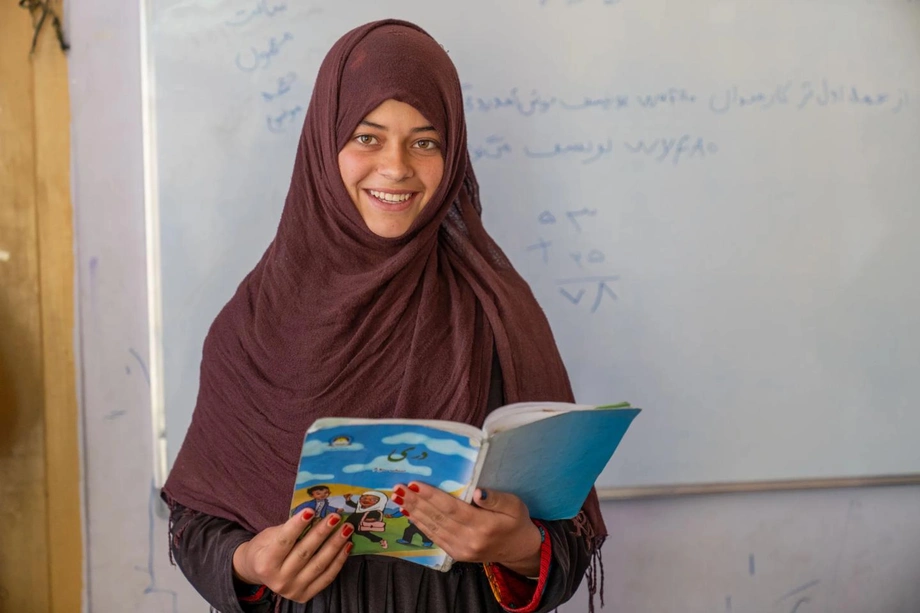
Maryam, 17, in Takhar province, was learning coding and graphic design while preparing for the Test of English as a Foreign Language, known as TOEFL. After her fiber connection stopped working, she tried joining classes by phone. Delays and broken audio made it difficult to follow the teaching.
Maryam explained why the mobile connection could not sustain her coding lessons:
The teacher's voice kept cutting in and out. For coding you need a stable computer connection; without it, the whole lesson collapses.
Courses taught through laptops often require students to hear instructions while working on a computer and sharing their screens. Live coding, science labs and language lessons built around conversation become difficult when audio stops or uploads fail. Instructors also struggle to keep a class together when students repeatedly disconnect.
Teenagers preparing for TOEFL, intensive coding courses and scholarship applications now face indefinite delays. Reading saved material or watching a downloaded lesson can preserve some progress, but neither supplies the conversation, feedback and deadlines that help students complete a course.
The cost of staying connected
Maryam's family previously paid 1,100 afghanis a month for unlimited wifi. Mobile packages cost roughly twice as much and can run out within days. In a country where most households live on less than 2,200 afghanis a month, that replacement can consume a family's limited budget.
The comparison is stark: 1,100 afghanis is half of 2,200 afghanis. A mobile bill of roughly twice the former wifi charge reaches that entire monthly amount, leaving households struggling to pay for connectivity alongside their other needs.
Sonia, 21, in Baghlan, bought 5 GB of mobile data for 400 afghanis. It lasted two weeks. Her brother's wages support the whole family, and she said paying steadily for data was impossible.
Mobile access also depends on more than money. In provinces such as Kandahar, girls often cannot buy a SIM card without a male relative. Some fear scrutiny for using devices in public or even at home during lockdowns. Those restrictions interrupt both study and contact with support networks.
Families trying to keep a few lessons running each week can quickly exhaust their data packages. Students with the least money lose participation first, even where a mobile signal is still available.
Losing classmates also means losing support
Roweida, a 25-year-old law student in Balkh, relied on nightly online meetings for contact with other students. The meetings offered companionship as well as a way to continue learning after physical classrooms became inaccessible.
Roweida described how the disappearance of that routine affected her:
It was not just about classes. It kept our spirits alive. Every night we met on Google Meet and hearing each other's voices gave us hope. When the internet went, it felt like the roof had fallen on us.
Grassroots networks established after 2021 connected Afghan girls with teachers abroad through encrypted apps and schedules designed around safety. Coordinators say they have lost contact with many students since the fiber cuts began. Expensive mobile access is reducing attendance among those who can still connect.
An Afghan legal scholar who connects with and counsels women online described the importance of that contact:
Living in a land of darkness, the internet is the only light that helps us survive without choking. Without it, little remains for Afghan women.
Local organizers are expanding mental health support, peer groups and safe community study circles where possible. For girls confined by restrictions on education and movement, losing a connection can mean losing the people who helped them cope with those restrictions.
Women lose orders as connection costs rise
Women running small businesses depend on social media and messaging apps to find customers, receive orders and arrange payments. Tailoring and embroidery can provide income when other forms of employment are closed to them.
In Kandahar, women selling long embroidered dresses and other crafts say they now activate short, expensive mobile packages throughout the day to remain reachable. Connectivity that once cost a manageable monthly fee now costs three times as much.
A tailor in northern Afghanistan, who asked to be identified by her family name, Dawrani, employs widows and other women in need. Her workshop depends on internet access to maintain sales, and without fiber her staff cannot keep up with orders. Dawrani described the pressure on her livelihood:
If I cannot even earn this small piece of bread, I will be forced to leave this country.
Remote work has also sustained many women since 2021. Interruptions make that work harder to maintain. For a workshop supporting several households, missed messages and lost orders can affect employees as well as the person running the business.
A tighter squeeze on journalism and relief work
Afghanistan once had hundreds of media outlets. Since 2021, many have closed or moved abroad. Women's voices have largely disappeared from broadcasting, and nearly all content now requires approval from the authorities.
The United Nations has recorded hundreds of arbitrary arrests and detentions of journalists and media workers since the change in power. Fixed broadband restrictions add another obstacle to reporting in an environment already shaped by detention and censorship.
Press freedom advocates warn that the cuts severely weaken newsgathering and public oversight. A leading watchdog described the decision as a major escalation of censorship that damages the public's right to information and makes safe journalism harder.
Humanitarian agencies and civil society groups also warn that losing fixed internet disrupts service delivery, case management and coordination. Keeping track of people seeking help and arranging assistance becomes harder when organizations cannot reliably exchange information.
Diaspora families use online connections to remain in contact and sponsor relatives. The restrictions interfere with those relationships and with the flow of information needed for relief work and accountability. The disruption therefore reaches people outside Afghanistan who are trying to support families inside it.
The Taliban's explanation meets objections
Officials in several provinces say the fiber cuts were ordered to protect morality. Haji Attaullah Zaid, spokesperson for the governor of Balkh, said authorities intended to develop an alternative within Afghanistan:
This action has been taken to prevent immoral activities, and an alternative solution will be developed within the country to meet necessary needs.
The shape and timing of that proposed alternative remain unspecified, and no date was given for a possible extension of restrictions to mobile data. Families and organizations must make decisions about study and work while access remains uncertain.
Obaidullah Baheer, an academic based in Kabul, views morality as a pretext for control. He connects the policy with earlier restrictions that reduced women's rights and access to public space:
It shows a very anti modern version of the Taliban. It seems their fight is against modernity, and they fit the label used by people who called them draconian.
Fazl al Hadi Wazin, a member of the International Union of Muslim Scholars, also opposed a complete shutdown. He drew a distinction between restricting harmful material and removing access to the internet itself:
The Taliban can restrict access to harmful content, but completely cutting off the internet is not justified. It deprives the nation of an essential tool for progress.
Taliban officials and supporters continue to post on global platforms, including through verified accounts reaching large audiences. Foreign influencers have been invited to promote travel in Afghanistan. Critics say this approach sends positive messages abroad while restricting the ability of Afghans, especially women, to speak and connect at home.
International objections focus on women and hardship
The Malala Fund condemned the fixed internet order as another attack on Afghans' rights, particularly those of women and girls already barred from secondary school, university and most employment. The organization described online learning as one of their last remaining lifelines:
Shutting down the internet is the Taliban's latest attempt, under their system of gender apartheid, to cut Afghan women and girls off from the world. Without reliable access, they cannot reach courses or connect with peers and teachers.
Officials in Washington called the restrictions very concerning and warned that they would harm ordinary Afghans and economic activity. A US State Department spokesperson described the risks for families already facing high unemployment and food insecurity:
Limiting fiber optic internet access will negatively affect Afghans' daily lives and economic activity. The move risks deepening isolation and worsening hardship.
The Malala Fund and the US State Department have urged the restoration of internet access. Afghan legal scholars and activists are also seeking practical help, including emergency connections that do not depend on local fiber networks.
A wider restriction covering mobile data would leave homes, schools and businesses across large parts of Afghanistan without a practical way to get online. Online commerce, remote education and digital payments would be interrupted, while banking and government services that depend on connected systems would stall.
Families relying on remittances and online jobs to pay for food and rent would face another loss of support. A longer shutdown would make it harder to recover interrupted studies, household incomes and public services.
Teachers try to keep learning possible
Teachers and volunteers are distributing offline lessons on memory cards and USB drives. These allow students to continue reading and practicing, but they still cost money that many families lack. They also cannot supply live feedback, interactive teaching or exams requiring an active connection.
Education groups and donors are weighing scholarships abroad, emergency grants for mobile data and partnerships to deliver study packs for core subjects and language courses. Each approach addresses part of the problem: data grants can help students where mobile networks work, while offline packs can reach some learners without a connection.
Teachers can adapt lessons for limited internet access and offline study. Sponsors can cover data costs for the poorest households, and universities can allow flexible deadlines for Afghan applicants whose access has been curtailed. Safety remains essential, alongside affordability and teachers' ability to follow students' progress.
The coming weeks will test whether these efforts can keep girls connected to education. Marjaneh's scholarship plans, Maryam's technical studies and Roweida's nightly meetings all depended on a service that has now become unreliable or unavailable. Without concrete support, students who fought to continue learning face falling further behind.
Key Points
- Fiber restrictions began in Balkh on September 15, 2025, and spread to other provinces, with uneven access remaining as of September 27.
- Authorities cite morality and have indicated that mobile internet could also face restrictions.
- The national fiber network began in 2007 with around $60 million in donor funding and grew to nearly 6,000 miles linking 26 provinces.
- Girls excluded from classrooms are losing online lessons, scholarship preparation and contact with teachers and peers.
- Maryam's family paid 1,100 afghanis monthly for unlimited wifi; replacement mobile packages cost roughly twice as much.
- Women selling clothing and crafts face interrupted orders, with some in Kandahar reporting tripled connection costs.
- The cuts also disrupt journalism, humanitarian coordination, remote work and contact with relatives abroad.
- The Malala Fund and US State Department have urged restored access, while teachers and donors consider offline lessons and help with data costs.