Millions miss school as demand keeps growing
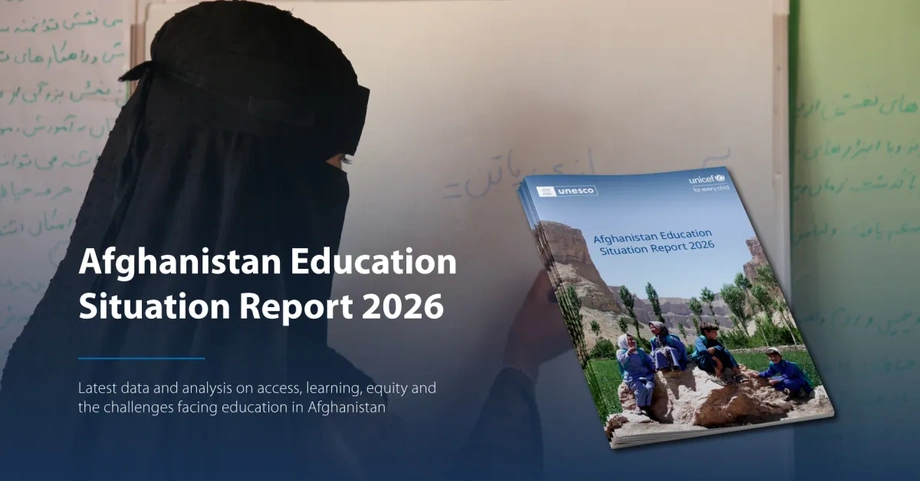
More than half of Afghanistan's children of primary school age remain outside formal general education, while more than 2.6 million girls have been denied secondary schooling since 2021, according to the Afghanistan Education Situation Report 2026, jointly published by UNESCO and UNICEF on November 4, 2026.
Contents
- Millions miss school as demand keeps growing
- More children, overstretched schools
- Girls describe lives interrupted
- Community classes offer limited opportunities
- Children in class are struggling to learn
- Returnees and floods add pressure
- Universities shrink as future health workers lose access
- A national crisis with a global impact
- How the crisis developed and what agencies seek
- Key Points
The report puts the share of primary age children outside formal education at 53%. It also identifies serious learning gaps among children who reach the classroom: a national assessment of more than 55,000 Grade 4 pupils found that only one in four met the minimum mathematics standard expected in Grade 3.
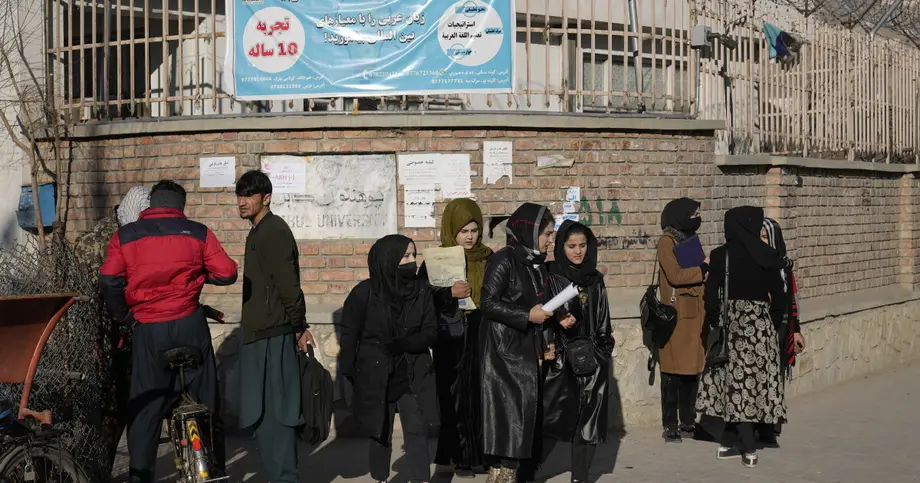
Afghanistan faces several pressures at once. Its population of school age children is growing, large numbers of families are returning from abroad, emergencies are damaging schools, and investment is insufficient. Restrictions imposed by the Taliban authorities have closed secondary schools and universities to girls and women, cutting off their progression through education.
Families continue to seek schooling despite these conditions. Public primary schools enrolled approximately 6.6 million children in 2025, about 560,000 more than in 2022. Community classes also provide learning opportunities, particularly for girls. Yet UNESCO and UNICEF say access is failing to keep pace with demand, and restoring girls' rights must go alongside better teaching, classrooms and learning materials.
More children, overstretched schools
Afghanistan's population of children and adolescents of school age rose from approximately 10.4 million in 2019 to 11.5 million in 2024. That is an increase of about 1.1 million, or roughly 11%, in five years.
Schools need more teachers, space and supplies simply to serve that larger population. They also need capacity for children who were already missing education. The report describes schools and education services as overstretched, with enrolment growth no longer matching population growth.
The rise of 560,000 pupils in public primary education since 2022 shows that demand remains strong. Parents are still seeking places for their children, including in areas where schools are difficult to reach. The immediate challenge is to turn that demand into regular access to a classroom with a teacher and suitable materials.
The report calls for wider access alongside improvements in teaching. For a child, those goals belong together: securing a school place starts the process, while effective lessons help that child acquire the reading and mathematics skills needed to continue.
Girls describe lives interrupted
UNICEF's accounts of excluded girls describe how restrictions have changed daily life. Shafiqa had completed Grade 6 when the Taliban returned to power in 2021. She repeated the grade the following year to remain in a classroom. She later tried art classes and a computer course, but those opportunities also closed under further restrictions.
Shafiqa, who hoped to become a doctor, described the importance she still places on learning:
Education gives people the opportunity to build a better future.
Rabia, 14, completed Grade 6 in 2024 and wanted to become a midwife. She described frustration and distress after being confined to home. Speaking about the future she wanted, Rabia said:
I really want to continue my education. I want to help women and save lives.
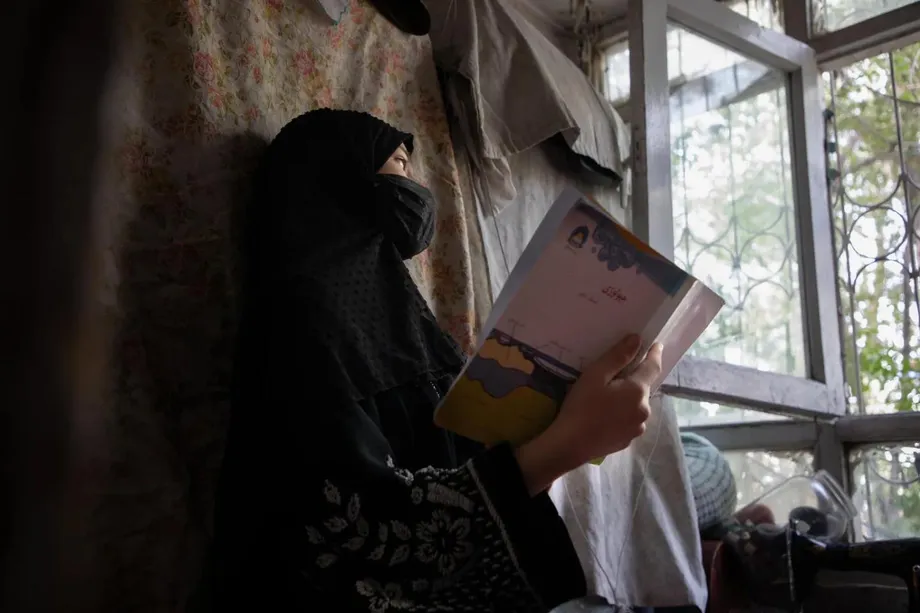
Mahira, now 18, was in Grade 8 when secondary schools closed to girls. She keeps her school notebooks and studies them after finishing household chores. Her mother, Halima, described the sadness they share and her efforts to keep her daughter hopeful. UNICEF changed all four names for their protection.
The girls' experiences show how exclusion reaches beyond lessons. School also provides contact with friends and teachers, a daily routine and a route toward work. UNICEF describes isolation and psychological distress among girls whose education has stopped.
Community classes offer limited opportunities
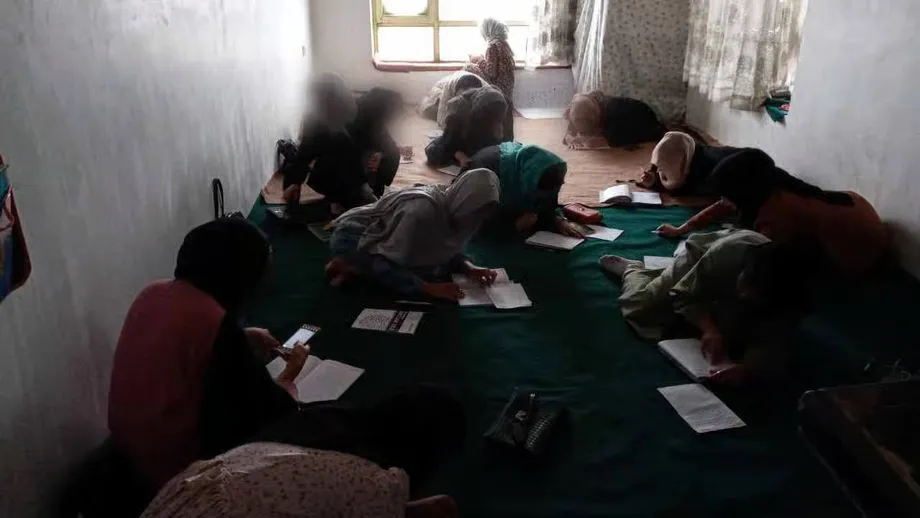
Approximately 5,300 community classes were operating by October 2026, reaching about 162,000 learners, according to the joint report. Girls accounted for 64% of participants, equivalent to roughly 104,000 learners.
Community education brings lessons closer to children who struggle to reach established schools. Literacy and skills programmes, distance learning, digital lessons and private tutoring are also among the few remaining options for adolescent girls.
Those routes are far from sufficient, UNESCO and UNICEF say. The agencies call for the restoration of formal, in person education so girls can progress through secondary school and into higher education.
Shafiqa's experience illustrates the fragility of alternatives when restrictions spread from one activity to another. Her move from school to art and then computing ended with her spending most of her time at home, sewing and helping her mother. Keeping some learning available matters, but girls also need a dependable route through successive grades.
Children in class are struggling to learn
The national assessment covered more than 55,000 pupils across all 34 provinces. Fewer than half of Grade 4 students achieved the minimum language proficiency expected for Grade 3. Only a quarter reached that benchmark in mathematics.
Minimum proficiency means reaching a basic level of knowledge and skill for a particular stage of education. Here, pupils were assessed against the standard for the grade below their own. The results indicate that many children need support with earlier learning while continuing their current lessons.
UNESCO and UNICEF identify sustained investment in teachers, effective classroom instruction, and adequate teaching and learning materials as urgent needs. For pupils, that means lessons they can follow, opportunities to practise and teachers able to identify where they are falling behind.
Early childhood education is also extremely limited. Fewer than one in 100 children aged three to four attend an early learning programme. Such programmes help children develop language, social and basic number skills before primary school. With participation below 1%, almost all children in that age group miss this organised preparation.
Returnees and floods add pressure
Approximately 1.23 million Afghans had returned to the country during 2026 by September, the joint report says. More than 245,000 returnee children required education support, adding demand in communities whose schools already faced shortages.
Areas receiving large numbers of returning families need to accommodate additional pupils alongside children already living there. The report identifies these returns as one of the forces widening the gap between demand for education and the system's ability to respond.
Flooding has also damaged the places where children learn. UNICEF's August humanitarian report records flash floods affecting homes, infrastructure, agricultural land, water systems and schools. It gives no total for the number of schools damaged.
School repairs therefore compete with other urgent needs in affected communities. Families facing damage to their homes, water supplies or farmland may need several forms of assistance at the same time as education services work to keep children learning.
Afghanistan's education barriers also have a longer history. The 2018 country study, authored by Afghanistan's Ministry of Education and UNICEF, identified war, displacement, migration, natural disasters, poverty and lack of access as obstacles. Part of an initiative launched by UNICEF and the UNESCO Institute for Statistics, it sought to identify gaps in responses and recommend policies. The 2026 findings show those pressures continuing alongside restrictions on girls and women.
Universities shrink as future health workers lose access
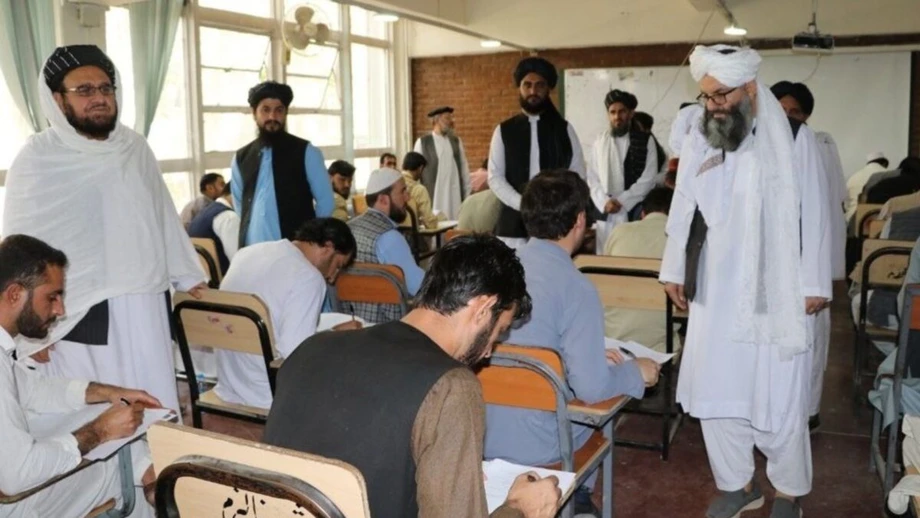
Afghanistan's universities enrolled approximately 208,000 students in 2026, up from 189,000 in 2024. The increase of about 19,000 represents a recovery of roughly 10% over those two years, while women remain barred from university.
Enrolment is still far below the approximately 430,000 students recorded in 2020. The 2026 total is about 222,000 lower, a fall of roughly 52%. Universities therefore serve fewer than half as many students as they did before 2021.
The loss of educational opportunities has consequences for the services Afghan communities need. Rabia wanted to become a midwife; Shafiqa and Mahira wanted to become doctors. Their ambitions connect the restrictions on classrooms to the future supply of trained health workers.
UNICEF describes female health providers being pushed out of medical work while young women are blocked from entering it. It says some pregnant women and mothers who cannot be seen by male doctors are left without prenatal or maternal care. Prenatal care consists of health checks and support during pregnancy, when complications can be identified and treated.
Afghanistan already faces high infant mortality and thousands of maternal deaths each year, according to UNICEF. Closing education routes for prospective female health workers adds pressure to a health system serving women who already face difficulties obtaining care.
A national crisis with a global impact
UNESCO's 2023 education data briefing put the global population outside school at 250 million, an increase of 6 million since 2021. It identified the exclusion of girls and young women in Afghanistan as a major contributor to the rise, alongside stalled education progress elsewhere.
The briefing cited an April 2023 UNICEF survey estimating that 7.8 million children were outside school in Afghanistan. At that time, roughly half of children of primary school age and only one fifth of those of secondary school age were enrolled.
Those earlier figures place the 2026 findings in a longer period of widespread exclusion. Globally, girls and young women accounted for 122 million, or 48%, of the population outside school in UNESCO's 2023 figures. Afghanistan's restrictions deny an entire group access to secondary and higher education because they are female.
UNESCO's 2023 Global Education Monitoring Report also recorded improvements in school completion worldwide between 2015 and 2021. Primary completion rose from 85% to 87%, while upper secondary completion increased from 54% to 59%. Afghanistan's subsequent exclusion of girls interrupts the progression through school that those global goals seek to expand.
How the crisis developed and what agencies seek
The report brings together changes across several years, from population growth to recent returns and the expansion of community classes. The main dates are:
- 2019: Afghanistan had approximately 10.4 million children and adolescents of school age.
- 2020: University enrolment stood at approximately 430,000.
- 2021: The Taliban returned to power, and girls were excluded from secondary education.
- 2024: The population of school age children reached approximately 11.5 million; university enrolment was about 189,000.
- 2025: Public primary schools enrolled approximately 6.6 million children.
- September 2026: Returns during the year reached approximately 1.23 million people.
- October 2026: About 5,300 community classes served approximately 162,000 learners.
- November 4, 2026: UNESCO and UNICEF published the joint education situation report.
UNESCO and UNICEF call for the full restoration of the right to education for girls and women, alongside action to remove barriers to access and improve learning. Their priorities address both the children barred from classrooms and those attending schools that need more support.
UNICEF says it continues to support primary and community education, school construction and rehabilitation, female teacher training, and learning materials. These activities respond to practical needs while the agencies press for girls to regain access to secondary and higher education.
The central task is concrete: provide more children with places to learn, ensure teachers can help them master basic skills, and allow girls to continue beyond primary school. Without those changes, the agencies warn, Afghanistan risks leaving a generation behind and weakening the foundations of its recovery.
Key Points
- UNESCO and UNICEF say 53% of children of primary school age are outside formal general education.
- More than 2.6 million girls have been denied secondary education since 2021.
- Only one in four assessed Grade 4 pupils met the Grade 3 minimum mathematics standard.
- Community classes reached approximately 162,000 learners by October 2026; 64% were girls.
- More than 245,000 returnee children needed education support by September 2026.
- University enrolment remained about 52% below its 2020 level, with women still excluded.
- The UN agencies seek restored education rights, wider access and sustained investment in teaching and learning.