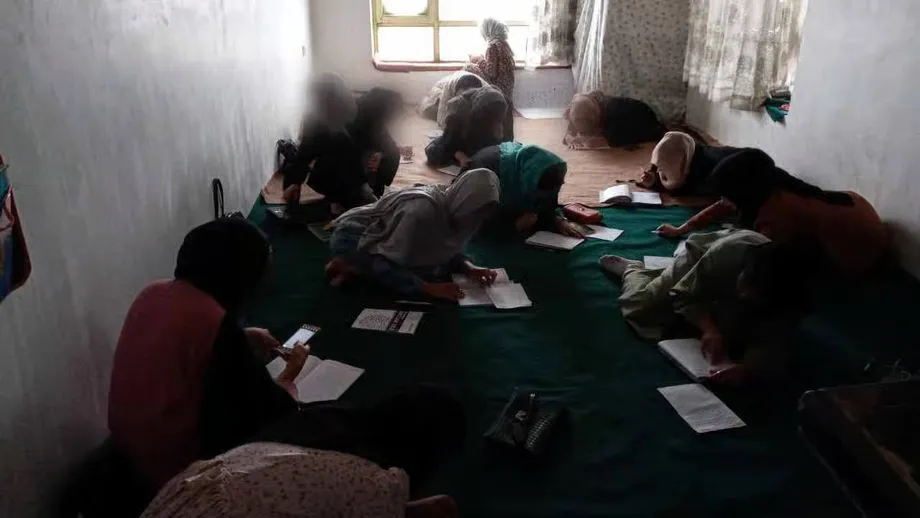
A classroom hidden among sewing machines
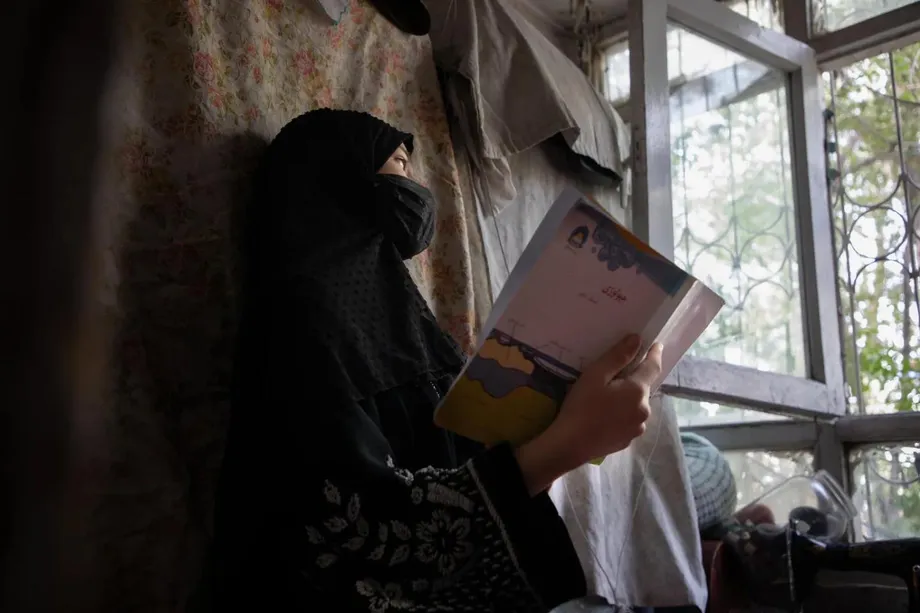
Daughters of Taliban members attended a secret school in Kabul where girls and women studied in a room containing sewing machines, according to Susanna Fioretti, founder of the Italian aid organisation Nove Caring Humans. She said she discovered their family connections two years after the school opened.
Contents
- A classroom hidden among sewing machines
- Parents quietly worked around the restrictions
- How the education ban developed
- What the official figures say
- The costs reach hospitals and families
- Learning continues through other routes
- Negotiating opportunities for women to earn
- Permission depended on personal encounters
- Key Points
Their parents wanted them to receive an education despite restrictions imposed by the movement to which their families belonged, Fioretti said. Her account describes a private route to learning inside a country where girls are barred from formal education beyond sixth grade and women are excluded from universities.
The room had a second purpose: it could pass for a workshop for women. Organisers planned to hide notebooks and pens and bring out sewing materials if inspectors arrived. Fioretti said no Taliban officials inspected the premises during its first two years.
The school offered a way to continue learning, but secrecy shaped its operation. Fioretti said a report to the Taliban's morality police could have brought severe consequences for the students and those organising their classes.
Parents quietly worked around the restrictions
Fioretti, whose organisation is based in Rome, said the students with Taliban family connections were attending because their mothers and fathers wanted them to study. She described some people associated with the movement as opposed to particular restrictions and willing to work around them discreetly.
Her account places private decisions by those families alongside the public rules enforced across Afghanistan. For the daughters involved, access depended on parents finding a hidden classroom rather than being able to enrol openly in an ordinary school.
Neither the number of students with Taliban family connections nor their parents' identities or ranks was disclosed. Fioretti also gave no opening date for the school or details about its present operation.
Other underground schools have continued operating despite the restrictions. Some have reportedly functioned with the knowledge or informal tolerance of Taliban officials, while others have been shut down. A 2022 investigation also described senior Taliban members arranging education for their daughters through secret schools inside Afghanistan or by sending them abroad.
Those arrangements leave access dependent on family resources, personal connections and decisions made by individual officials. A girl whose parents can secure a place in a hidden classroom has an opportunity that many others lack.
How the education ban developed
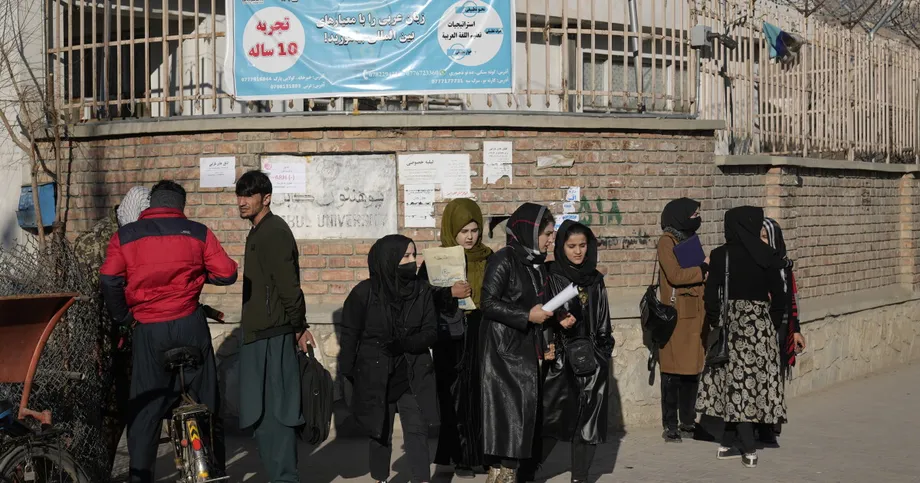
The Taliban returned to power in August 2021. Restrictions imposed since then have excluded girls from secondary education and women from universities and most jobs. Afghanistan is the only country where girls are barred from education beyond the primary level, according to UNESCO.
UNICEF marked three years of the secondary education ban on March 21, 2025. Its statement described another school year beginning with almost 400,000 additional girls deprived of education, bringing its total to 2.2 million.
- August 2021: The Taliban returned to power, beginning the period of legal and institutional changes examined by UNESCO.
- 2022: An investigation described some Taliban members arranging education for their daughters despite restrictions on other girls.
- March 7, 2025: UNESCO hosted the International Conference on Afghan Women and Girls.
- March 21, 2025: UNICEF said the secondary education ban had deprived 2.2 million girls of schooling.
- March 26, 2025: UNESCO published its review of the right to education in Afghanistan. Its publication page was updated on January 16, 2026.
Sixth grade has become a stopping point for girls who should be moving into secondary school. Each new school year brings another group to that limit, while those already excluded spend more time away from formal learning.
What the official figures say
UNICEF's March 2025 statement put the number of girls deprived of secondary education at 2.2 million. UNESCO's education rights review said 1.5 million young girls and women remained out of school as of 2025, while a broader UN figure cited in reporting on the secret school exceeded 2.5 million girls. The publications use different descriptions of the populations counted, and the reason for the gap is not explained.
UNESCO examined changes to the laws, rules and institutions governing education since August 2021. Its review drew on document research and interviews, looking at barriers to attendance, the quality of learning and the wider effects on society.
The review followed the March 7 conference, where UNESCO called for responses led by Afghan women and guided by the principle of avoiding harm. That approach matters for education organised in secret: decisions about access and visibility directly affect the women and girls taking part.
UNICEF also set out a projection. If the ban continues until 2030, it said, more than four million girls will have been deprived of education beyond primary school. That would be more than 1.8 million above its March 2025 total of 2.2 million.
The costs reach hospitals and families
UNICEF Executive Director Catherine Russell warned that excluding girls from school would affect Afghanistan's health system and economy as well as the students themselves. She also linked exclusion from education to a greater risk of child marriage and damage to girls' health and wellbeing.
Russell described how fewer girls completing their education would reduce the future supply of female doctors and midwives. In her March 21 statement, she said:
With fewer female doctors and midwives, girls and women will not receive the medical treatment and support they need. We are estimating an additional 1,600 maternal deaths and over 3,500 infant deaths. These are not just numbers, they represent lives lost and families shattered.
Training a doctor or midwife takes years of schooling followed by specialist study. When girls lose access to secondary school, the pool of women able to enter that training shrinks. Families may eventually face fewer qualified workers available to provide care during pregnancy, childbirth and infancy.
UNICEF's figures are estimates of additional deaths associated with the projected shortage. Russell's warning connects an education decision made today with the staff and services that families will need in later years.
Learning continues through other routes
UNICEF said it had provided access to education for 445,000 children through community learning, with girls making up 64 percent. That works out to approximately 284,800 girls. It also described support for female teachers so girls could have women as role models.
Community learning brings education closer to where children live, rather than relying entirely on conventional schools. UNICEF's programme serves both boys and girls. The hidden Kabul classroom described by Fioretti involved a different arrangement, with organisers preparing to conceal lessons if officials arrived.
Radio has also carried educational programmes for girls excluded from secondary schools. After the suspension of BBC FM broadcasts across Afghanistan in October 2026, listeners lost one local transmission route for a service whose Afghan output included such programmes. Broadcasting continued through other radio bands, online platforms and satellite.
For a girl unable to enter a secondary school, these routes can keep some learning within reach. Access still depends on the particular classroom, programme or broadcast she can receive, while the national restriction continues to govern entry to formal education.
Negotiating opportunities for women to earn
Fioretti also described a separate effort to create economic opportunities for Afghan women. Through discussions with Taliban officials, she said, she secured approval for a programme recognising women entrepreneurs.
Officials initially questioned whether she understood which country she was in, according to her account. She responded by arguing that women's economic activity could generate income for Afghanistan. The authorities eventually approved the programme, and women receiving awards attended a ceremony with a Taliban minister.
The negotiations show the practical terms on which Fioretti sought permission: women running businesses could contribute money to the country's economy. For the participants, approval meant being able to receive public recognition in the presence of a senior official.
The school and the entrepreneurship programme operated through different relationships with authority. Lessons depended on secrecy; the awards programme proceeded after negotiation and approval. Women seeking to study or earn faced different conditions even within the activities of one aid organisation.
Permission depended on personal encounters
Fioretti said Taliban authorities treated her respectfully because she was Italian and that she had been able to express her opinions in Afghanistan. She recalled a senior official asking what she thought of the Taliban government.
She told him that, had she grown up under a government like his, she would not have been able to do her present work with the organisation. According to Fioretti, he accused her of having a colonial mindset and then invited her to share a meal. She said she never met him again.
Her account describes room for personal exchanges and negotiated exceptions alongside restrictions that continue to shape daily life for Afghan women. At the Kabul school, some parents connected to the Taliban sought lessons for their daughters. Across the country, millions of girls remained unable to continue their formal education.
UNICEF has called for the authorities to lift the ban immediately. UNESCO's review places Afghan women's leadership at the centre of responses. The immediate issue for students is straightforward: whether they can return to a classroom openly, continue studying and prepare for work without having to hide their books.
Key Points
- Italian aid worker Susanna Fioretti said daughters of Taliban members attended a secret girls' school in Kabul.
- Classes took place among sewing machines, with plans to hide learning materials if inspectors arrived.
- Fioretti said no Taliban officials inspected the premises during its first two years.
- UNICEF counted 2.2 million girls deprived of secondary education in March 2025 and projected more than four million by 2030 if the ban continues.
- UNICEF warned that fewer female health workers could contribute to an estimated 1,600 additional maternal deaths and more than 3,500 infant deaths.
- Fioretti also said she secured Taliban approval for a programme recognising Afghan women entrepreneurs.