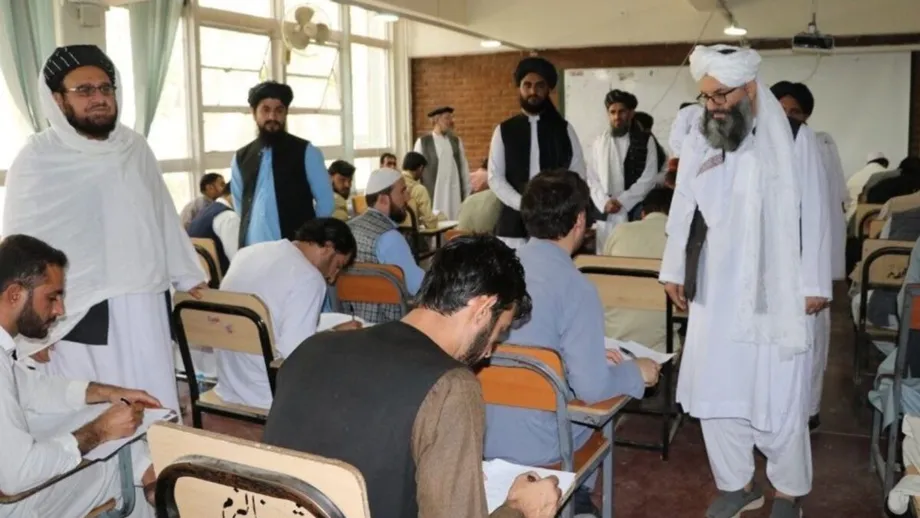
Universities lose students, teachers and routes to work
Afghanistan had about 208,000 male university students in 2026, down from 306,000 in 2019, while recorded female enrollment has been zero since 2024. Together, those changes have reduced the university student population from roughly 425,000 in 2019 to less than half that number.
Contents
- Universities lose students, teachers and routes to work
- How the restrictions and declines unfolded
- Fewer applicants compete for university places
- Female academics nearly disappear
- Girls' exclusion threatens essential professions
- Primary enrollment masks weak learning
- Schools struggle with buildings and returning families
- Community classes contract sharply
- Curriculum changes accompany religious education growth
- Vocational training becomes a mainly male route
- Funding falls as needs accumulate
- Key Points
UNESCO and UNICEF's 2026 education report, published on October 20 and updated on October 21, describes a crisis stretching from children's first lessons to professional training. Girls face formal exclusion after Grade 6, boys are leaving secondary education, universities have lost thousands of lecturers, and foreign education funding is falling.
The decline among male university students amounts to about 98,000 people, or 32%, since 2019. The agencies identify households' reduced ability to pay, weaker employment prospects for graduates and financial pressure on private universities as factors reducing participation.
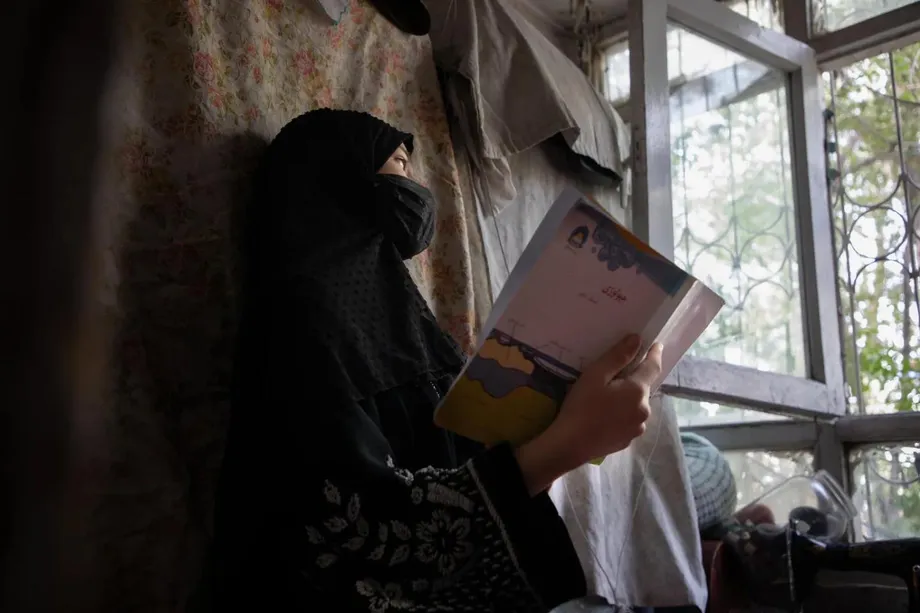
Women were barred from universities in December 2022. Their enrollment had already fallen from about 119,000 in 2019 to 89,000 in 2022, before dropping to almost zero in 2023. Their exclusion also removes the training route for future teachers, doctors and academics.
Afghanistan's education system still serves millions of learners and retains strong public demand, the agencies say. Yet its successive stages are becoming harder to reach. Children who miss basic reading and mathematics struggle with later lessons; adolescents who leave school have fewer routes into university or skilled work; universities with fewer teachers have less capacity to train the next generation.
How the restrictions and declines unfolded
The figures cover several years of policy changes and economic pressure. The main developments show how restrictions on girls and women have combined with declining participation among boys and men.
- 2019: Universities enrolled about 306,000 men and 119,000 women and employed roughly 18,900 professors and lecturers.
- 2021: Restrictions began excluding girls from secondary education after the Taliban returned to power.
- December 2022: Taliban authorities barred women from university education.
- 2024: Recorded female university enrollment reached zero.
- 2025: University teaching staff fell to about 12,700, including just over 100 women.
- August 2026: The Higher Education Ministry suspended seven private institutions for one year and revoked two licenses.
- October 2026: UNESCO and UNICEF published their assessment of falling participation, weak learning and a funding gap extending into 2027.
Fewer applicants compete for university places
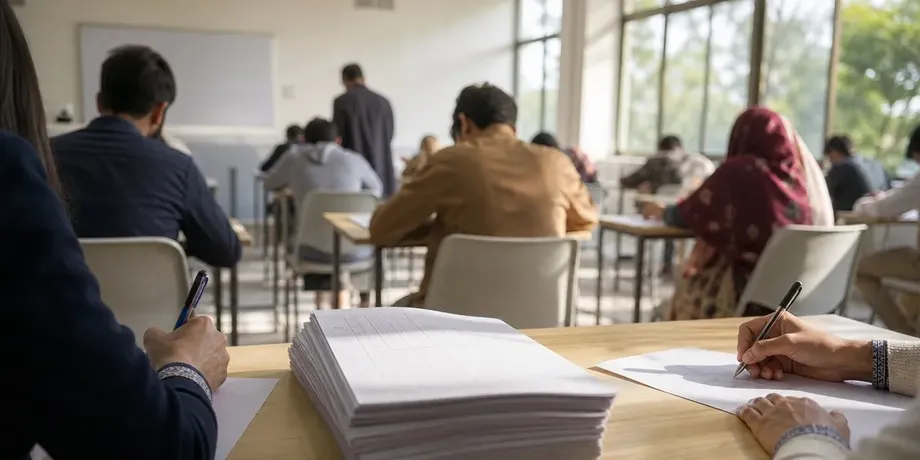
About 118,000 people took the Kankor university entrance examination in 2026, compared with 210,000 in 2020. Participation recovered from roughly 84,000 in 2023, but remained about 44% below the 2020 figure.
Women have disappeared from that process. Around 80,000 girls took the examination in 2020 and more than 81,000 in 2021. No female participation has been reported since 2023.
Roughly 75,000 candidates qualified for higher education in 2026, compared with 81,000 in 2020, 44,000 in 2023 and 41,000 in 2024. With fewer people applying, the proportion qualifying rose from about 39% in 2020 to 63% in 2026. The report describes university admission as less competitive.
Boys' participation is also falling before they reach the examination. Enrollment in Grades 10 through 12 dropped from about 750,000 in 2023 to 700,000 in 2024 and 660,000 in 2025, a reduction of 90,000 students, or 12%, in two years.
The male gross enrollment ratio for those grades fell from 48.5% to 40%. This ratio compares all enrolled students, including those older or younger than the usual age, with the population normally expected to attend that level. It helps show whether schooling is keeping pace with the number of young people.
Female academics nearly disappear
Afghanistan lost about 6,200 university professors and lecturers between 2019 and 2025. The total fell from roughly 18,900 to 12,700, a decline of about one third.
Female academics experienced the sharpest reduction. Their numbers fell from approximately 2,600 in 2019 to 1,100 in 2023, 800 in 2024 and just over 100 in 2025. Male academic staffing also declined, though less sharply.
UNESCO and UNICEF say the loss of women has reduced expertise and academic guidance. It also weakens the workforce needed to support female students if they return to university. Reopening access would therefore require rebuilding teaching capacity as well as admitting students.
University numbers have remained relatively stable despite the shrinking student and teaching populations. Afghanistan had 166 public and private institutions in 2019, 161 in 2023 and 170 in 2024. The 2024 total included 40 public and 130 private institutions.
Private universities depend heavily on tuition fees and have lost revenue following women's exclusion. In August 2026, the Taliban administration's Higher Education Ministry cited administrative, academic and compliance issues when it suspended seven private institutions for one year and revoked the licenses of two others.
Girls' exclusion threatens essential professions
More than 2.6 million girls have been denied secondary education since restrictions began in 2021, UNICEF estimates. Each academic year, roughly another 397,000 girls are barred from continuing their education.
UNICEF previously projected that nearly four million girls could be denied secondary schooling by 2030 if the ban continues. UNESCO estimates that prolonged exclusion from higher education could cause cumulative economic losses of about $9.6 billion by 2066, through lost qualifications, employment and productive work.
UNICEF Representative in Afghanistan Dr. Tajudeen Oyewale explained the consequences for health services in a joint January statement marking the International Day of Education:
Afghanistan urgently needs female teachers, nurses, community health workers, and doctors. In a context where women can only be treated by women, who will care for sick girls and women in the future if they are denied education today?
Schools face a similar problem. Afghanistan had about 175,800 teachers in public general schools in 2026, including nearly 57,800 women, or 32.9%. Women accounted for just 25.5% of primary teachers.
Among public schools reporting female attendance, 57.3% had no female teacher. That figure reached 61.8% in rural areas and 75.1% among primary schools. The report projects a potential shortage of more than 11,000 female primary teachers by 2030 if restrictions persist.
Primary enrollment masks weak learning
Reported primary enrollment rose from about 6.04 million in 2022 to 6.77 million in 2024, then fell to around 6.6 million in 2025. The primary gross enrollment ratio dropped from 95.4% to 91% between 2024 and 2025, showing that enrollment was losing ground against population growth.
The report estimates that 53% of children of primary school age are outside formal general education. The corresponding figures are 67% for adolescents of lower secondary age and 79% for young people of upper secondary age. Gross enrollment ratios count enrolled children of all ages, while these estimates focus on whether children in each age group attend formal general education.
A national assessment in 2025 tested more than 55,000 Grade 4 pupils in 1,856 schools across all 34 provinces. Only 43.5% reached minimum proficiency in language and 25.4% in mathematics. Girls who participated performed better than boys in both subjects.
The January 2026 UNESCO and UNICEF statement also said 93% of children at the end of primary school were still working toward basic reading proficiency. The Grade 4 assessment and the reading estimate concern different stages and measures of learning, together showing difficulties extending beyond a single school year.
UNESCO Afghanistan Officer in Charge Soohyun Kim said preliminary research conducted in 2025 found better student performance, particularly in language, where more teachers had university education. Female teachers demonstrated stronger subject knowledge and were associated with better student learning outcomes.
Early learning reaches very few children: fewer than one in 100 children aged three to four participate in early childhood education programs. Many children therefore enter primary school without access to organized learning beforehand.
Schools struggle with buildings and returning families
About half of schools lack buildings large enough for all their classes. Many pupils study in tents, temporary structures or outdoors, limiting the space and protection available for daily lessons.
UNICEF's October 2025 assessment said nearly half of schools lacked clean water, sanitation or heating. More than 1,000 remained closed because of damage from conflict or natural disasters.
Returns from Iran and Pakistan are adding children to communities already short of classrooms, teachers and textbooks. By October 2025, about 2.7 million people had returned since 2023; children and young people accounted for 60% of that population.
The 2026 report estimates that 7.1 million children need emergency education assistance. Families facing poverty also encounter pressures beyond the classroom: nearly 30% of children aged five to 17 work, while 28% of women married before age 18.
Community classes contract sharply
Community education has helped children in remote areas learn closer to home, with girls making up most participants. At its peak in 2023, the program served nearly one million students through about 30,000 classes across all 34 provinces.
By October 2026, about 5,300 classes remained active, serving roughly 162,000 students. Around 103,000 were girls, accounting for 64% of enrollment. The number of students served had fallen by approximately 84% from the program's peak.
UNICEF assessed more than 11,000 community classes undergoing transition into public schooling. Only 6% had fully completed that process, with children registered and attending. Another 15% had partially transitioned, while 79% had completed administrative changes without students consistently continuing their education.
Declining donor support and the Education Ministry's decision to phase out the existing system prompted a move toward a new community school model. For families, continued attendance is the practical test: a registration change needs to leave children with an accessible place to learn.
Curriculum changes accompany religious education growth
Public and private universities were instructed in 2025 to remove 679 books and learning materials and discontinue 18 academic subjects, including areas related to human rights, democracy, gender and governance. More than 200 other subjects were retained pending revision.
UNESCO and UNICEF warn that these changes narrow academic education, particularly in law, the humanities and social sciences. School materials have also lost references to civic values, human rights, women's rights and international institutions.
Islamic education's share of weekly teaching time in Grades 1 through 3 rose from about 24% under the 2021 curriculum to about 42% under a teaching plan approved in 2023. Monitoring in July and August 2026 recorded just over 10 hours of religious subjects weekly, compared with six hours under the earlier timetable.
Education Ministry administrative data show Islamic education institutions increasing from 1,127 in 2019 to 17,832 in 2023 and approximately 20,700 in 2025, more than 18 times the 2019 number. They reported around 2.46 million students and 84,000 teachers in 2025, including about 716,000 girls, or 29% of enrollment.
Independent verification is limited, making participation, teaching quality and learning outcomes difficult to assess fully. Richard Bennett, the United Nations special rapporteur on human rights in Afghanistan, has warned that the expansion of religious schools may reshape the country's social fabric and described hearing families' concerns about changes in their children's behavior.
Vocational training becomes a mainly male route
Formal technical and vocational education and training, known as TVET, enrolled about 58,000 students in 2025, down roughly 8% from 63,000 in 2019. These programs teach practical skills intended to prepare students for particular trades and occupations.
Male enrollment rose from around 49,000 to 57,000 over that period. The reduction in total participation was driven by the disappearance of active female participation. About 15,000 formal vocational graduates were reported in 2025, all male.
Instructor numbers fell from roughly 5,700 in 2019 to 2,900 in 2023, then recovered to about 4,200 in 2025. Women, adolescent girls, returnees and other excluded groups increasingly depend on training outside the formal system.
The report identifies gaps in recognized qualifications, progression to further education and connections between training and paid work. Across Afghanistan, 42% of adolescents and young people are outside education, employment and skills training; girls and young women account for 68% of this group.
Funding falls as needs accumulate
External financing for basic needs and humanitarian education fell from about $405 million in 2024 to $339 million in 2025 and $182 million in 2026. Identified resources for 2027 stand at $77 million, about 81% below the 2024 amount.
The education sector requires approximately $583 million across 2026 and 2027, with roughly $258 million identified. The report puts the cumulative gap at about $324 million; the rounded totals leave a small arithmetic difference. Available funding is expected to cover 53% of requirements in 2026 and 32% in 2027.
Domestic spending offers little room for rebuilding. Recurrent education expenditure, covering salaries and other regular costs, totaled about $460 million in 2025. Development spending was only around $2 million, leaving school construction, teacher training, textbooks and other improvements heavily dependent on foreign support.
UNESCO and UNICEF call for the removal of restrictions on girls and women, predictable investment, stronger teaching and recognized routes between community learning, formal schooling and employment. Their findings connect these priorities: restoring university access requires qualified lecturers, preparing future teachers requires secondary education, and keeping children learning requires classrooms and sustained funding.
Key Points
- Male university enrollment fell from about 306,000 in 2019 to 208,000 in 2026; recorded female enrollment has been zero since 2024.
- More than 2.6 million girls have been denied secondary education since restrictions began in 2021.
- University teaching staff fell from about 18,900 to 12,700 between 2019 and 2025.
- Only 25.4% of Grade 4 pupils assessed in 2025 reached minimum mathematics proficiency.
- Community education enrollment fell from nearly one million in 2023 to about 162,000 by October 2026.
- The education sector faces an estimated $324 million funding gap across 2026 and 2027.