Exam venues protected as schools prepare for worse air
Singapore's O-level written examinations are due to begin on October 19, 2026, with candidates sitting in enclosed, air-conditioned venues equipped with air purifiers, while the Ministry of Education (MOE) prepares to consider postponements if the next day's air quality forecast enters the hazardous range.
Contents
- Exam venues protected as schools prepare for worse air
- Two pollution readings guide different decisions
- Outdoor restrictions tighten before schools close
- Which examination dates are at stake?
- What students should do if they become unwell
- Buildings can stay open when classes stop
- Parents and teachers face competing pressures
- Weather may prolong the disruption
- Check evening notices and school messages
- Key Points
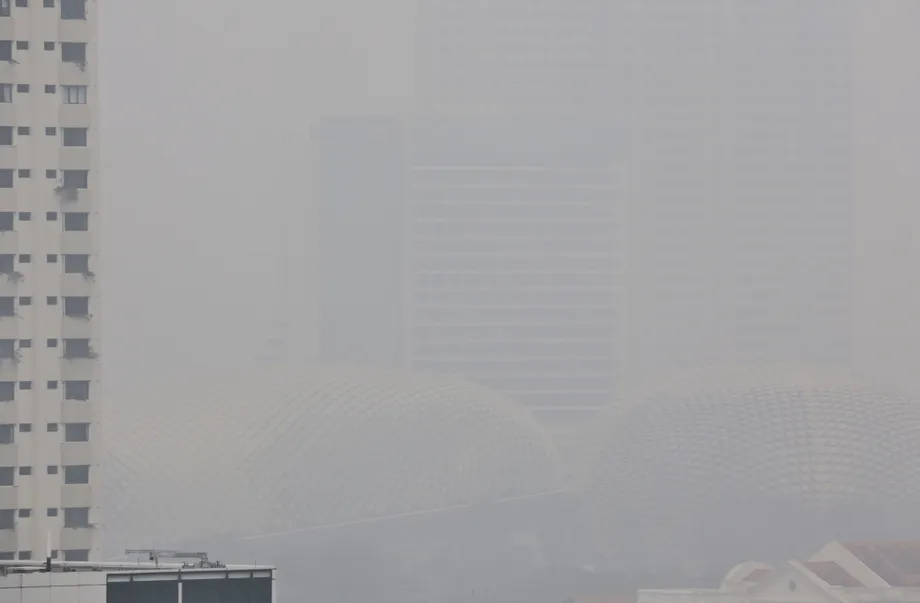
Education Minister Desmond Lee outlined the arrangements on October 16, when central Singapore's 24-hour Pollutant Standards Index (PSI) reached 229 at 3pm, its highest reading of the year. Schools remain open, with restrictions on activities adjusted to pollution levels and students' health needs.
By noon on October 17, the regional 24-hour PSI had eased to between 136 and 184, still in the unhealthy band. Hourly fine particle readings nevertheless reached the high band in three regions: 206 in the west, 174 in central Singapore and 165 in the south.
MOE's stated hazardous threshold for considering school closures and O-level postponements is a next-day PSI forecast of 301 or above. Lee said decisions would also reflect students' ages, vulnerabilities, existing medical conditions and circumstances at schools.
For families, the arrangements separate three decisions: whether ordinary lessons continue, whether examinations proceed and whether school premises remain available for children needing care. A move to learning at home can happen while buildings stay open for children whose parents have no alternative arrangements.
The ministry's haze management guidance says its continuity plan aims to protect students and staff while responding to Ministry of Health advisories. Teachers will watch for students who are unwell or have existing lung or heart conditions, and parents should ensure children have necessary medication, including asthma inhalers.
Two pollution readings guide different decisions
The National Environment Agency's (NEA) 24-hour PSI forecast helps schools plan for the following day. Hourly PM2.5 readings help school leaders decide what activities are suitable as conditions change during school hours.
PSI is an air quality index. Its bands run from good at 0 to 50, to moderate at 51 to 100, unhealthy at 101 to 200, very unhealthy at 201 to 300, and hazardous above 300. PM2.5 measures the concentration of tiny airborne particles, expressed in micrograms per cubic metre. These particles are small enough to travel deep into the lungs.
A high hourly particle reading can arrive before the 24-hour index has risen as far. Conversely, the latest hour can improve while the longer average remains high. October 17 illustrated why both matter: the highest regional PSI at noon was 184, down 45 points from October 16's peak of 229, while three regions still had high hourly PM2.5.
Lee said schools would use hourly readings alongside forecasts. MOE generally intends to decide on a shift to learning at home a day ahead, giving schools and families time to prepare.
Outdoor restrictions tighten before schools close
Schools can restrict activities well before the hazardous threshold for considering closures. An October 10 notice to parents said lessons would continue in enclosed, well-ventilated spaces with air purifiers when the 24-hour PSI entered the very unhealthy range of 201 to 300. Outdoor activities and strenuous indoor exercise would be avoided, activities after school reduced, and meals taken indoors.
Hourly PM2.5 readings bring a more immediate set of adjustments:
- At 56 to 150, schools avoid prolonged or strenuous outdoor activity. Light indoor exercise may continue, with students who are unwell or have existing heart or lung conditions excused.
- At 151 to 250, students stay in enclosed indoor spaces with air purifiers, eat indoors, and avoid outdoor activities and strenuous indoor exercise. Normal school hours continue.
- At 251 or above during school hours, schools reduce the intensity of lessons and suspend physical activities and activities after school.
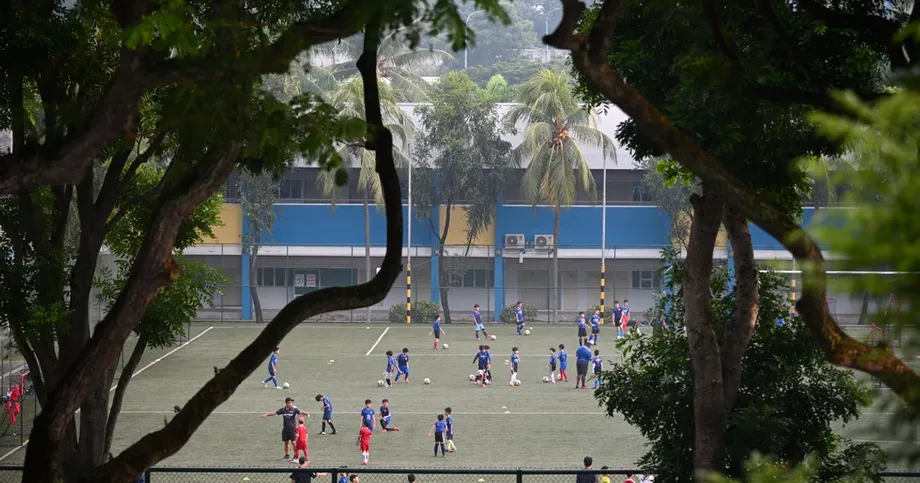
Maris Stella High School cancelled outdoor sports, Nan Hua High School cancelled at least one co-curricular activity, and Pasir Ris Secondary School cancelled football activities. CHIJ (Kellock) suspended outdoor physical education and play on October 15 and 16, while St Andrew's School (Junior) allowed pupils to wear physical education attire until December 31.
Those changes followed the west's hourly PM2.5 reading of 288 at 3pm on October 14 and 251 an hour later, part of the October 14 haze escalation that also brought wider public protection measures.
Which examination dates are at stake?
O-level papers face closer scrutiny because candidates are younger than those taking A-levels. Lee said A-level examinations were generally less likely to be affected, although actual conditions would also inform decisions.
Lee, the education minister, described the aim of the examination arrangements at the October 16 press conference:
I know that students have been working very hard to prepare for their national exams and we want to minimise disruption for them,
The examination calendar places several important dates within the period when haze could persist:
- September 30: All 2026 Primary School Leaving Examination papers concluded.
- October 19: Main O-level written papers begin, alongside the scheduled H2 Physics practical examination.
- October 22: The H2 Biology practical examination is scheduled.
- November 2: Main A-level written papers begin with General Paper.
- November 10: The main O-level written examination period ends.
Any affected papers will move to the earliest practicable date. The Singapore Examinations and Assessment Board (SEAB) will announce changes publicly, and schools will contact students and parents directly. No replacement examination dates have been announced.
What students should do if they become unwell
Students who feel too unwell to take an examination, or who cannot continue a paper, should see a doctor, obtain a medical certificate and apply for special consideration through their school. Schools will guide candidates through the procedure.
Special consideration is the process for asking examination authorities to take account of circumstances affecting a candidate's performance or attendance. Students should follow their school's instructions rather than assume that missing a paper automatically completes that process.
Parents should also check that children carry prescribed medication. MOE advises families to seek medical attention when children are unwell and, where needed, arrange to care for them at home. Teachers will pay particular attention to students with lung or heart conditions.
School illness patterns have varied. Lee said some schools had seen no change compared with the same period in 2025, while others reported more students falling ill, including with sore throats, colds and flu. He said haze could be contributing in some cases, while other illnesses were also circulating.
Schools can adjust precautions to individual needs. That allows a child with asthma or another existing condition to receive additional protection even while classmates continue suitable activities.
Buildings can stay open when classes stop
MOE will consider moving younger students, from preschool through secondary school, to learning at home if the next day's forecast reaches hazardous levels. Kindergarten programmes and early intervention services for children with developmental needs would be suspended in those circumstances.
The affected services include the Early Intervention Programme for Infants and Children, including EIPIC-P, and preschool programmes such as Development Support-Plus and Development Support-Learning Support. For families using these services, a suspension would interrupt scheduled developmental support as well as their usual daily arrangements.
MOE Kindergartens, Kindergarten Care and preschools licensed by the Early Childhood Development Agency (ECDA) would remain physically open. Children attending could take part in indoor reading and practical activities, with air purifiers operating in enclosed rooms.
Primary and secondary schools would also remain available for children without alternative care, even when ordinary classes stop. Special education schools, student care centres and special student care centres would continue providing care. The October 10 notice said student care and Kindergarten Care centres would operate from 7am to 7pm during closures.
MOE, the Ministry of Social and Family Development and ECDA would strongly encourage families to keep infants and young children at home. Lee generally placed the hazardous trigger above 300, although one account of the joint advice gave the threshold as 300 and above.
Older students would generally continue attending lessons in person. The institutions covered include junior colleges, equivalent sections of Integrated Programme schools, Millennia Institute, the Institute of Technical Education, polytechnics, autonomous universities and the University of the Arts Singapore, subject to circumstances.
Parents and teachers face competing pressures
Desiree, a 41-year-old mother of children aged five and eight, said she had exhausted her childcare leave and used much of her annual leave. With limited family support and a demanding job, she described the pressure a closure would bring:
If schools close, my ability to focus and do my job properly will definitely be affected,
Yvonne Chia, a 48-year-old real estate agent, argued for earlier action because of health concerns. She said:
We should not be waiting till PSI crosses 300,
Classroom conditions also trouble teachers. Mandy, a 32-year-old MOE Kindergarten teacher, described a classroom with two air purifiers and closed windows but no air-conditioning. The PSI was in the low 100s at the time.
Mandy described the resulting discomfort:
Although there are two air purifiers in the classroom, it is so stuffy,
Public discussion has reflected both pressures. A Facebook discussion on school closures drew more than 230 comments, while a preschool teacher's October 14 post about staff health received more than 21,000 views and 60 comments. Keeping care facilities open helps parents continue working, while staff must continue caring for children during the haze.
The childcare issue also reaches workplaces. The government's warning to employers on October 16 included considering requests from caregivers to work from home as businesses prepare for hazardous conditions.
Weather may prolong the disruption
Minister for Sustainability and the Environment Grace Fu warned on October 16 that hazardous air remained possible. Singapore had recorded unhealthy PSI readings in at least one region for 12 consecutive days, its longest such stretch since 2015.
Fu explained the uncertainty at the joint press conference with Lee and Acting Manpower Minister Jasmin Lau:
Depending on the weather, we can expect air quality to fluctuate, including the possibility of reaching hazardous levels,
NEA's October 17 regional update identified hotspots in Kalimantan and southern Sumatra, with smoke haze across parts of Singapore, Peninsular Malaysia, Sumatra, Kalimantan and western Sarawak. Thick smoke and cloud cover limited detection of the full extent of the hotspots.
Fu said conditions could improve around the inter-monsoon period in late October or early November. She also said the north-east monsoon around early December would carry haze from Sumatra and Kalimantan away from Singapore. Singapore has contacted Indonesia and offered assistance in managing forest fires.
The NEA-led Haze Task Force brings together 28 government agencies. Wider measures include possible haze shelters when PSI reaches 201 or above and N95 mask distribution for vulnerable residents. By October 16, about 10 per cent of eligible residents had collected masks, with vending machines scheduled for deployment at 37 transport hubs and social service offices.
The Ministry of Health advises using hourly PM2.5 for immediate outdoor decisions. It says well-fitting N95, KN95, FFP2 and KF94 masks can reduce exposure to haze particles, while N95 masks are generally unnecessary for routine journeys between home and school or work. People with severe heart or lung conditions who experience breathing difficulties should consult a doctor before using an N95.
Check evening notices and school messages
Lee said on October 10 that school closure decisions would be announced around 8pm the previous evening, through schools and MOE's official channels. Parents Gateway, the app connecting schools and families, will carry updates, while examination scheduling information will appear on SEAB's website.
False social media claims about closures have already caused confusion and anxiety, Lee said. Families should check direct school messages and official announcements when planning attendance or examinations.
Singapore has previously changed school and examination arrangements during severe haze. On September 25, 2015, MOE closed primary and secondary schools for a day after forecasts indicated very unhealthy or potentially hazardous conditions. An O-level practical examination moved from September 25 to September 29, while the PSLE began as scheduled on October 1 in enclosed venues with air purifiers.
Schools are also drawing on their experience of learning at home during COVID-19. Lee said they have maintained that readiness. For the current examination period, students should continue following the published timetable unless their school or SEAB announces a change.
Key Points
- Schools remain open, and O-level and A-level examinations will use enclosed, air-conditioned venues with air purifiers.
- MOE may postpone O-level papers or move younger students to learning at home if the next day's PSI forecast reaches 301 or above.
- Hourly PM2.5 readings determine immediate restrictions on outdoor activity, exercise and activities after school.
- Schools and care centres will remain physically available for children without alternative care arrangements.
- Unwell examination candidates should see a doctor, obtain a medical certificate and apply for special consideration through school.
- Families should check Parents Gateway and official MOE and SEAB announcements, with closure decisions generally expected around 8pm the previous day.