Just 75 Million Baht Left in Relief Allocation, MP Says
Thailand has paid out 5.215 billion baht from a flood relief allocation of 5.29 billion baht, leaving about 75 million baht while another 1.7 million applicants await approval, according to Suphanat Minchaiynunt, a People's Party MP for Bangkok's ninth constituency.
Contents
- Just 75 Million Baht Left in Relief Allocation, MP Says
- What the MP Says Went Wrong
- Officials Said Funding Was Still Sufficient
- How the Funding Debate Developed
- Bangkok Accounts for a Large Share of Those Waiting
- October 1 Separates Two Relief Arrangements
- What Additional Funding Would Require
- A Larger Drainage Plan Runs on a Different Timetable
- Key Points
In remarks published on October 17, 2026, Suphanat urged Prime Minister and Interior Minister Anutin Charnvirakul to seek urgent Cabinet approval for more money. He estimated that another 12 billion baht would be needed to cover applicants still waiting, including about 700,000 in Bangkok.
The warning followed assurances from senior Interior Ministry officials on October 13 that funding remained sufficient and payments were moving quickly. Their statements described a 4.7 billion baht allocation, while Suphanat cited 5.29 billion baht approved across two Cabinet decisions.
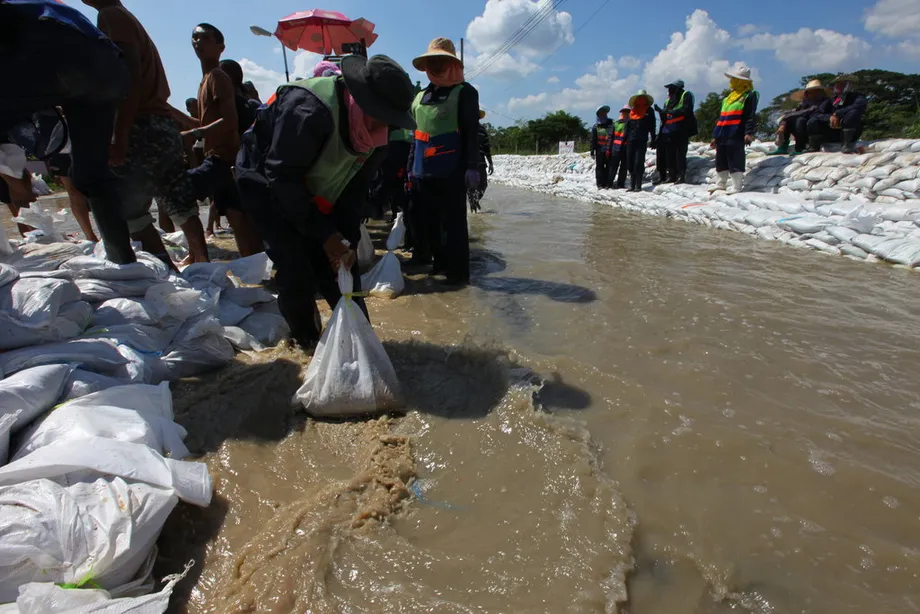
The immediate concern is whether households waiting for approval can move through the payment process before the remaining spending authority runs out. Suphanat said some residents whose homes flooded the previous month had already waited three weeks for assistance.
His figures put spending at about 98.6% of the allocation he cited. The remaining 75 million baht represents about 1.4%, leaving little room for further payments within that ceiling.
What the MP Says Went Wrong
Suphanat said about 683,000 recipients had received relief, while a further 1.7 million applicants nationwide had submitted requests that were still awaiting approval. He accused the government and Interior Ministry of setting a budget far below the scale of need, even though the calculation was made after flooding had occurred.
The MP described the government's estimate of damage as four times too low. That was his assessment of the planning failure. His practical demand was for Anutin, who holds both the premiership and the interior portfolio, to bring an urgent proposal for additional funding to the Cabinet.
The 12 billion baht increase he sought would take the allocation from 5.29 billion baht to about 17.29 billion baht. The requested increase alone is roughly 2.3 times the existing allocation, showing how much larger he believes the relief programme needs to become.
Suphanat linked the financial shortage to stalled assistance. For residents waiting after weeks of flooding, his complaint concerned the gap between submitting an application and having money available to pay an approved claim.
Officials Said Funding Was Still Sufficient
Interior Permanent Secretary Arssit Sampantharat gave a different assessment on October 13. He said applications had reached 1.9 million households and that assistance for flooding before October 1 was being paid from an emergency allocation of 4.7 billion baht approved by the Cabinet.
Arssit said more than 2 billion baht had been spent and payments had reached nearly 300,000 households. He maintained that the approved budget was sufficient, while saying the Department of Disaster Prevention and Mitigation could approach the Budget Bureau for additional funding if necessary.
Nirat Pongsitthavorn, director general of the disaster department, also said on October 13 that the 4.7 billion baht allocation remained adequate. He put cumulative transfers at more than 2.2 billion baht, following six rounds of payments.
The October 13 statements and Suphanat's later warning describe different spending positions on different dates. They also use different totals for the relevant allocation: officials cited 4.7 billion baht, while Suphanat cited 5.29 billion baht across two approvals. A detailed reconciliation of those budget totals, application categories and payment counts was not given, nor was a date for a Cabinet decision on the additional 12 billion baht.
How the Funding Debate Developed
The public statements trace a progression from an initial emergency reserve in late September to assurances about payments and then a warning that the money was almost exhausted.
- September 29, 2026: Anutin said the Cabinet had set aside roughly 4 billion baht from the remaining central emergency budget to assist flood victims nationwide.
- October 1, 2026: The date became the dividing point in the Interior Ministry's explanation of which relief arrangements would apply to affected households.
- October 13, 2026: Arssit cited 1.9 million household applications and said funding was sufficient. Nirat reported more than 2.2 billion baht transferred from a 4.7 billion baht allocation.
- October 17, 2026: Suphanat's warning put payments at 5.215 billion baht against a combined ceiling of 5.29 billion baht and called for another 12 billion baht.
The dates matter because payments were being processed rapidly. Nirat said more than 1.1 billion baht was transferred to about 150,000 households on October 13 alone. A large payment round can reduce the available balance quickly, even while officials are still assessing further claims.
Bangkok Accounts for a Large Share of Those Waiting
Bangkok represented about 700,000 of the 1.7 million applicants awaiting approval in Suphanat's account. That is approximately 41% of the pending total, with the remaining one million spread across the rest of the country.
The capital therefore sits near the centre of the dispute over payment delays. Suphanat represents a Bangkok constituency, and Arssit separately acknowledged the urgency of assistance for residents affected by standing floodwater in the city.
Arssit said damage assessments had to be handled carefully by the disaster department and local officials. Compensation still needed to pass through local procedures, including the submission and consideration of information about affected households.
Nirat described another part of the process: preparing household information for payment through the Government Savings Bank. He said staff had worked until around 3 a.m. or 4 a.m. to prepare files for the October 13 transfers, including information received from Bangkok, before forwarding the data from about 11 a.m.
For applicants, the process involves several stages. Local authorities document damage and submit information, the relevant agencies consider the claim, and payment details must be prepared for the bank. More funding addresses the amount available to spend; completed assessments and usable payment records are also needed to get money into household accounts.
October 1 Separates Two Relief Arrangements
Arssit divided assistance into two groups according to when flooding occurred. Areas affected before October 1, 2026, would receive assistance through the emergency budget arrangements he described.
Flooding after October 1 would enter what he called the national disaster insurance system. He said the Office of Insurance Commission and the Department of Disaster Prevention and Mitigation would arrange transfers to affected households under that system.
The timing of the flood therefore determines which funding route officials say applies. Households affected before the cutoff are being discussed under the emergency allocation, while later cases fall under the insurance arrangement described by the permanent secretary.
Arssit's account also placed responsibility on officials assessing losses to follow local procedures. He called for careful examination of damage while urging rapid assistance in Bangkok, where standing water had caused hardship.
Anutin had addressed the payment amount on September 29. Asked about assistance of 9,000 baht per household, he said payments had to follow legal criteria and proposals submitted by local areas and agencies through the relevant committees. His explanation made eligibility and local submissions part of the decision about who receives assistance.
What Additional Funding Would Require
Suphanat wants the prime minister to secure a higher Cabinet spending ceiling urgently. A spending ceiling is the maximum amount authorised for a programme. Once payments approach that limit, the government needs approval for more money to keep funding further eligible claims through the same allocation.
Arssit and Nirat both described a route for requesting extra funds. The disaster department could take the matter to the Budget Bureau if the existing allocation was insufficient. Nirat said any request would be based on the actual scale of damage.
The disagreement is therefore about the urgency and size of an increase. Suphanat says the allocation is almost spent and that applicants are already facing delays. The senior officials said on October 13 that enough money remained, while acknowledging that further funding could be requested.
Nirat also said the prime minister had pressed officials to work towards transfers within one day and that payment processing was being accelerated daily. His account presented a programme trying to pay households quickly, with six rounds already completed. Suphanat's later figures place the focus on whether the authorised budget can keep pace with that payment effort and the remaining applications.
A Larger Drainage Plan Runs on a Different Timetable
Anutin's September 29 remarks also addressed a much larger project intended to reduce future flooding: the Chai Nat–Pa Sak–Gulf of Thailand scheme. He put its estimated cost at 165 billion baht and its implementation period at eight years.
The proposed scheme would provide another route for water to ease pressure on the Chao Phraya River. Anutin said it could improve flood protection in central Thailand, Bangkok and surrounding provinces, while also retaining some water for use during the dry season.
He said the project would require Cabinet consideration and discussions about borrowing involving agencies responsible for agriculture, national economic planning, the budget and finance. The government was also considering changes to allow local authorities to develop more areas for storing and diverting water.
The drainage proposal and household relief operate on very different timescales. The proposed infrastructure would take eight years to deliver, while residents waiting for compensation need decisions and transfers during the current recovery.
Anutin also appointed Defence Minister Lieutenant General Adul Boonthamcharoen as a Cabinet representative to coordinate and oversee the response across regions. Alongside financial assistance, the prime minister described efforts to pump water out of affected areas and reopen roads as quickly as possible.
Key Points
- Suphanat said 5.215 billion baht had been paid from a 5.29 billion baht flood relief allocation, leaving about 75 million baht.
- He put applications awaiting approval at 1.7 million nationwide, including about 700,000 in Bangkok, and sought another 12 billion baht.
- Senior Interior Ministry officials said on October 13 that a 4.7 billion baht allocation remained sufficient and that more funding could be requested if needed.
- The ministry described separate assistance arrangements for flooding before and after October 1, 2026.
- No date was given for Cabinet consideration of the additional funding sought by the MP.