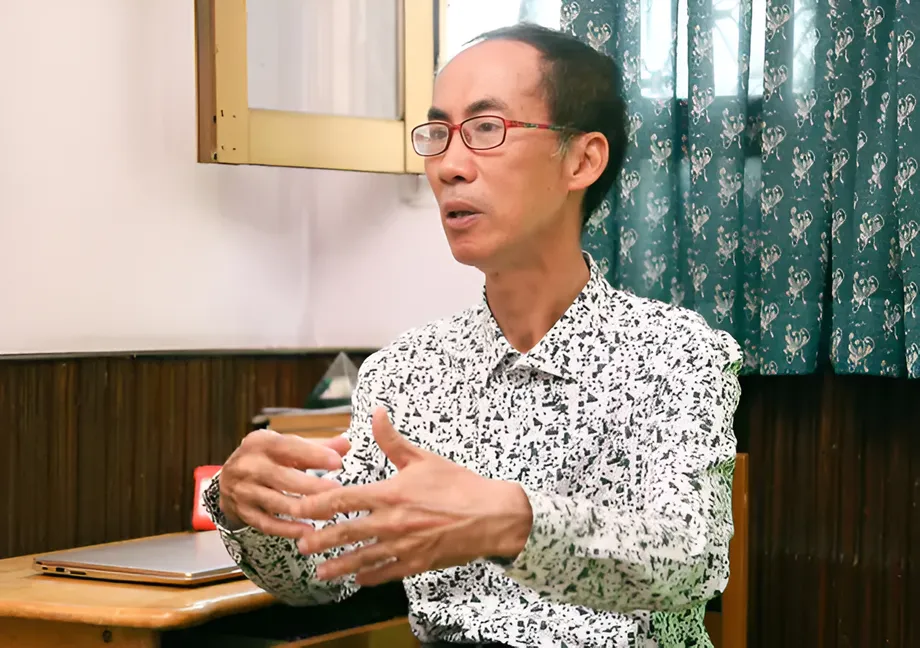
A perfect score, an unusual proof and a lasting classroom role
In 1979, Lê Bá Khánh Trình, a 17-year-old student from Quốc học Huế, earned a perfect 40 out of 40 at the International Mathematical Olympiad in Britain. He became his school's first gold medalist at the competition and received a special prize for an unusually short geometry solution. More than four decades later, his retirement has brought attention to another achievement: 35 years spent teaching mathematics and preparing younger contestants.
Contents
- A perfect score, an unusual proof and a lasting classroom role
- The student from Huế among a team from Hanoi
- The geometry problem that nearly went wrong
- Why the judges awarded a special prize
- Moscow helped him choose teaching
- A teacher who learned to speak less
- From his own medal to the next generation's results
- The milestones from 1979 to retirement
- Retirement with mathematics still unfinished
- Key Points
His connection with the classroom continues. The High School for the Gifted, part of Vietnam National University Ho Chi Minh City, names him as a mathematics department adviser in its school organisation listing for the 2026–2027 academic year. The school identifies him as its former mathematics department head and a 1979 IMO gold medalist, with Nguyễn Ngọc Duy heading the department and Vương Trung Dũng serving as deputy head responsible for its mathematics team.
Trình stepped down as department head in 2025 after holding the position for more than 30 years, beginning in 1993. Although eligible for retirement in 2022, he continued working. He has since received his retirement decision, while saying that he intends to keep teaching gifted students and helping Olympic teams.
His career connects three places: Huế, where his mathematical interests took shape; Moscow, where he studied and completed a doctorate; and Ho Chi Minh City, where he began teaching in September 1990. The thread running through them is a preference for finding a simple way to explain something difficult.
The student from Huế among a team from Hanoi
Vietnam sent five students to the 1979 IMO. Trình was the only member who did not come from Hanoi. He studied in the specialist mathematics class at Quốc học Huế, which had already celebrated Hồ Đình Duẩn's bronze medal at the 1978 competition.
Training with the national team in Hanoi initially left Trình feeling less outstanding than his teammates. He responded by working to strengthen his knowledge. His eventual gold extended his school's success from a bronze medal one year to its first gold the next.
One important part of his preparation had begun earlier, in grade 10. Trình recalled discovering a geometry book that explained transformations through movement rather than treating figures mainly as fixed objects. He studied it throughout secondary school, supported by his teachers.
A geometric transformation is a rule for moving or changing a figure, such as rotating it around a point or reflecting it across a line. Thinking about how a shape moves can reveal relationships that are difficult to spot in a still drawing. Trình later connected the approach he learned from that book with his prizewinning solution.
The geometry problem that nearly went wrong
Problem 3 of the 1979 contest, proposed by the Soviet Union, concerned two intersecting circles. Two points started together at one intersection, each moving uniformly around its own circle in the same direction. Each completed a circuit and returned to the starting point at the same time.
The task was to prove that a fixed point P existed somewhere in the plane that would always be equally distant from the two moving points. In simple terms, contestants had to find a stationary place whose distance from one moving point always matched its distance from the other.
The jury's prepared approach used equations describing angular velocity, the speed at which something turns, and trigonometric formulas linking angles and lengths. Trình found a much shorter route, but only after discovering that he had misread the direction of movement.
In one retirement interview, he recalled having about 15 minutes left when he noticed the mistake; in another, he remembered 20 minutes. The latter interview also reversed which direction the question specified. The reproduced problem states that the points moved in the same direction, matching his recollection that he initially solved the opposite direction case.
Trình described a session lasting 270 minutes with three problems. Even using his recollection of 20 minutes remaining, he had less than a quarter of the 90 minutes that an equal division of the session would give each problem. He also recalled feeling tired, having a mild fever and coughing heavily the night before.
Why the judges awarded a special prize
Trình kept his earlier work and added a solution addressing the actual question as time ran out. His account links the short final argument to the need to turn his mistaken approach into a correct one quickly. The judges rewarded the mathematical originality of the solution.
Tony Gardiner, the British mathematician who judged geometry at the 1979 IMO, later recalled that the marking team initially doubted such a short argument could work. Careful checking changed their minds. Gardiner said that he proposed the special prize after examining the solution.
Forty years later, the two met again in Britain on July 18, 2019, during the IMO in Bath. Trình was attending as Vietnam's deputy team leader. Gardiner was still involved in judging geometry, this time on problem 2.
Gardiner, recalling the discovery that the young contestant's brief proof was correct, described it in a phrase he also gave in English:
A great moment.
At the reunion, Gardiner praised Vietnam's work on problem 2 and noted that two Vietnamese students had earned full marks on problem 6, described as that competition's hardest geometry problem. The former contestant had returned as a teacher helping another generation tackle demanding proofs.
Retirement profiles identify Trình as the only Vietnamese contestant to have received this IMO special prize. Earlier profiles made the same observation across the 41 editions of Vietnamese participation counted at their publication. His perfect score and the special recognition together explain why the 1979 result remains so closely associated with his name.
Moscow helped him choose teaching
The IMO result opened a route to the mathematics faculty of Lomonosov Moscow State University in the Soviet Union. Trình continued to doctoral study under Andrey Aleksandrovich Gonchar, a mathematician who served as a vice president of the Russian Academy of Sciences.
Teaching was already familiar within his family. His father lectured at the University of Medicine and Pharmacy in Huế, and his mother taught secondary school mathematics. Trình nevertheless traced his own decision to become a teacher especially to the example of his instructors in Moscow.
He admired their ability to explain a difficult subject simply while helping students understand it deeply. Their manner in the classroom made him want to develop the same ability. After completing his doctorate, he returned to Vietnam in 1990 and began teaching first year mathematics and computer science students that September.
Trình explained his return in personal terms: his family and relatives were in Vietnam, so returning felt natural. He joined the institution now known as the University of Science, Vietnam National University Ho Chi Minh City. He also declined an invitation to work at the Vietnam Institute of Mathematics, choosing the teaching position in Ho Chi Minh City.
Moscow was also a place where his interests reached beyond mathematics. A colleague who had studied, lived and worked with him for 33 years recalled his guitar playing, football and role in organising student performances. The mathematics and mechanics faculty won university arts competitions in 1986, 1987 and 1988, with Trình helping lead its Vietnamese student performers.
A teacher who learned to speak less
Trình remembered his first university lectures as confident and full of explanation. Teaching gifted secondary students later changed that approach. Their unexpected solutions required him to listen, reconsider his own methods and choose more carefully when to intervene.
He gradually moved away from lengthy explanations toward a timely suggestion that allowed students to discover the next step themselves. A correct answer remained essential, but he also wanted a proof to follow an understandable line of thought.
Drawings became central to his lessons. Trình described walking around the classroom, pointing to different parts of a figure and adding details until a difficult relationship became easier to see. He adjusted his explanation according to students' reactions rather than repeating his own teachers' methods unchanged.
Trần Nam Dũng, deputy principal of the High School for the Gifted and a colleague since their Moscow years, described Trình's attachment to chalk and a blackboard rather than electronic presentations. For geometry, this allowed a diagram and its explanation to develop together.
Trình, explaining how students had changed his teaching, put their contribution at the centre:
Many people keep saying that I have lifted my students up, but it is the students who have lifted me up, urged me on and inspired me to renew myself every day.
He also said that in more than 30 years of teaching he had never entered a zero for a student, instead giving the student a chance to replace it by solving a difficult problem. His classroom reputation combined seriousness about mathematics with humour, music and a willingness to respond warmly when students performed songs for Teachers' Day.
From his own medal to the next generation's results
Trình's work extended from university classes to the High School for the Gifted, where mathematics teams collected hundreds of national and international awards during his leadership. He also helped select and train Vietnam's IMO contestants and served as delegation leader or deputy leader.
In 2013, his first year leading Vietnam's IMO delegation, all six contestants won medals: three golds and three silvers. Vietnam placed seventh among 97 delegations. Trình later recalled that he still found reasons to question his own work and learn from that competition.
In 2017, Vietnam won four golds, one silver and one bronze, placing third among 112 teams. Compared with 2013, that meant one additional gold and a rise from seventh to third. Trình remembered students emerging discouraged after the first day before producing stronger work on the second.
Another memorable result came in 2022, when Ngô Quý Đăng earned a perfect 42 out of 42. Trình recalled the emotion of seeing a student carrying Vietnam's flag receive individual recognition on stage. Both Đăng's 42 out of 42 and Trình's 40 out of 40 represented full marks under their respective competitions' scoring totals.
His coaching also crossed national borders. He began helping Saudi Arabia's IMO team in 2015. His writing included the 2008 article "Static and Dynamic Geometry", returning to the study of transformations that had shaped his own school years.
The milestones from 1979 to retirement
Trình's career spans a celebrated student performance, doctoral study abroad and decades of work with students in Vietnam. Several dates show how the competition became the beginning of a teaching career rather than its final achievement.
- 1979: Won IMO gold with 40 out of 40 and a special prize while studying at Quốc học Huế.
- September 1990: Began university teaching in Ho Chi Minh City after returning from doctoral study in Moscow.
- 1993: Began the mathematics department leadership tenure that continued for more than 30 years.
- 2013: Led Vietnam's IMO delegation to three golds, three silvers and seventh place.
- July 18, 2019: Reunited with geometry judge Tony Gardiner during the IMO in Britain.
- 2025: Stepped down as mathematics department head and subsequently retired.
- 2026–2027 academic year: Named as a mathematics department adviser in the school's organisation listing.
The shift from department head to adviser gives the school a new leadership arrangement while retaining his experience. His stated plans also extend to gifted students in other provinces and Olympic preparation.
Retirement with mathematics still unfinished
Trình once imagined retirement in a small house in the countryside, with time to read, garden and play music. At retirement, however, he said he still wanted to teach and had mathematical work he hoped to put on paper.
One ambition is to assemble a comprehensive set of materials drawn from his years preparing gifted students. He has given no publication date. His intention is to organise the problems, methods and explanations accumulated through decades of teaching.
He has also described the extra effort that continued improvement demands with age. A small advance can now require more time and work, yet the wish to make it remains. That continuing interest is part of why he regards teaching as the right career choice.
For students, his retirement therefore changes his formal employment more than his stated commitment. The adviser role listed by the school and his plans to continue coaching keep him connected to the same task that followed his return from Moscow: helping someone else understand a difficult problem.
Key Points
- Lê Bá Khánh Trình became Quốc học Huế's first IMO gold medalist in 1979, scoring a perfect 40 out of 40.
- His unusually short geometry solution earned a special prize proposed by judge Tony Gardiner.
- He began teaching in Ho Chi Minh City in September 1990 after completing doctoral study in Moscow.
- He led the High School for the Gifted's mathematics department for more than 30 years before stepping down in 2025.
- The school's organisation listing for 2026–2027 names him as a mathematics department adviser.
- He plans to continue working with gifted students and to compile mathematics teaching materials.