A housing target that depends on finding usable land
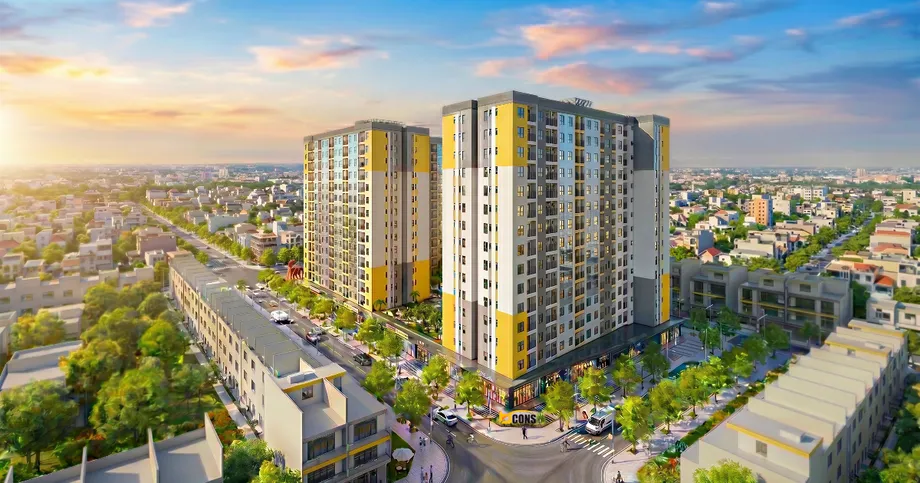
Ho Chi Minh City plans to develop 181,257 social and rental homes between 2026 and 2030, including 52,000 homes for rent, while working to turn industrial sites, public land and unused apartments into housing that workers can afford.
Contents
- A housing target that depends on finding usable land
- What is finished, and what comes next?
- Where the city is looking for land
- An industrial site faces a residential future
- A smaller project clears a long standing obstacle
- Who will provide the rental homes?
- Why workers need more than a lower purchase price
- Rental builders face a financing gap
- Faster approvals must connect homes with daily life
- Key Points
The Government's Resolution No. 303/NQ-CP, dated September 30, 2026, assigns the city 129,257 homes for sale or lease purchase alongside the rental allocation. Lease purchase allows residents to pay toward eventual ownership over time. The rental allocation represents about 29% of the total, giving households an option that requires less money at the outset than buying.
The Department of Construction outlined the annual targets at an October 8 briefing. Deliveries must rise from 9,000 homes in 2026 to 57,657 in 2027, before settling at 38,200 annually from 2028 through 2030. The jump required next year is more than six times the 2026 target.
Land is central to that expansion. Following the merger with Binh Duong and Ba Ria - Vung Tau, the enlarged city has identified 191 projects and plots covering about 740 hectares for social housing. A further 1,000 hectares is envisaged in planning extending to 2040, taking the broader potential land supply to about 1,740 hectares.
The immediate task is to make sites ready for construction through planning changes, compensation, clearance and investment approvals. Those steps determine when a housing allocation becomes a building project, and when families can actually move in.
What is finished, and what comes next?
The Department of Construction says three projects containing 2,283 homes have been completed and put into use since the beginning of 2026. They comprise 580 homes at Thanh Tan, 750 at the People's Police Armed Forces housing area at 20/2 Nguyen Van Qua Street in Dong Hung Thuan Ward, and 953 at Vinh Loc B.
Across the city, 25 projects containing about 22,900 homes are under construction. Thirteen projects with roughly 14,000 homes have recently broken ground. The construction total includes projects at different stages, so residents will see deliveries spread over time.
The department expects 13 projects to provide about 9,000 completed homes during 2026. A Ho Chi Minh City Real Estate Association (HoREA) compilation of municipal information gives a more specific forecast of 9,402 homes across those 13 projects, against the assigned target of 9,000.
Another 17 projects containing about 18,000 homes are expected to finish foundation work and reach the stage at which their eligibility for registration or market launch can be considered. Families interested in those projects would still face a further wait while construction proceeds.
Several deadlines now shape the programme:
- 2026: Complete 9,000 homes, including 2,000 for rent.
- Fourth quarter of 2026: Begin construction on six proposed projects containing about 84,000 homes, according to the HoREA compilation.
- 2027: Deliver 57,657 homes, including 5,000 rentals.
- 2028 to 2030: Deliver 38,200 homes annually, including 15,000 rentals each year.
A separate development update described about 40,000 homes expected to start construction before the end of 2026, alongside an investment approval for a project of roughly 37,000 homes. The relationship between that update and the six projects totalling 84,000 homes has not been specified.
Where the city is looking for land
The enlarged city's identified social housing land is spread across three former administrative areas. The former Ho Chi Minh City accounts for 100 projects or plots covering 412.5 hectares. Former Binh Duong contributes 59 covering 184.09 hectares, while former Ba Ria - Vung Tau contributes 32 covering 143.61 hectares.
Together, the two former provinces contribute about 328 hectares, or roughly 44% of the identified total. The merger therefore expands the places where housing can be developed, while increasing the need to connect homes with jobs and services across a larger urban area.
The People's Committee has instructed the Department of Planning and Architecture to prepare a plan for using existing land resources. Its work includes reviewing land directly managed by the state and considering changes to industrial zones, production premises and factories that are being used inefficiently.
The additional 1,000 hectares envisaged by 2040 gives the city a longer planning horizon than the housing delivery programme ending in 2030. The broader estimate of 1,740 hectares also excludes potential land in economic development areas of former Binh Duong and Ba Ria - Vung Tau.
For developers, the practical issue is whether a plot has the right planning designation, completed compensation arrangements and permission for residential use. The Labour Federation identifies land ready for development and investment procedures as two of the biggest obstacles to worker housing.
An industrial site faces a residential future
The planned conversion of the expanded Le Minh Xuan Industrial Park shows how the city intends to release land. The 109.91 hectare site lies in Tan Nhut and Binh Loi communes, in the former Binh Chanh District, about 15 kilometres from the city centre.
The city plans to change its designation from industrial production and warehousing to residential use. Khang Phuc Housing Investment and Trading Company is the current investor. Detailed planning was approved in 2016 for an industrial development expected to support about 10,000 jobs, with infrastructure still being completed.
The conversion has several scheduled steps:
- By the end of October: Finish reviewing the proposed land use change.
- Before November 22: Complete subdivision planning at a scale of 1:2,000, following approval of the city's overall plan.
- During November: Complete procedures to terminate the previous project, including the investor's financial obligations.
- Before December 15: Complete approval of the investment policy for the housing project.
- Early the following year: Proceed with detailed planning changes, land conversion, feasibility assessment and infrastructure construction permission.
Subdivision planning sets out the arrangement of uses, roads and infrastructure across an area. More detailed planning then specifies how individual buildings and facilities fit within it. Both stages affect how much housing the site can accommodate.
The conversion comes as the enlarged city has 105 industrial and export processing zones covering more than 50,000 hectares. Sixty six have been established and are operating, with occupancy around 80%. City planning envisages industrial expansion toward outer areas as the urban core faces limits on land and infrastructure.
A smaller project clears a long standing obstacle
In Phuoc Long Ward, a land allocation has opened the way for the Nam Ly social housing project to continue after delays over land procedures. The city assigned approximately 4,820 square metres to Thao Dien Real Estate Company for a term of 50 years.
The allocation includes 2,940 square metres of urban residential land exempt from land use fees and approximately 1,878 square metres for public facilities. The developer must build the approved infrastructure, roads, park and riverside landscape, then transfer the relevant public facilities and land to state management.
Nam Ly is planned to contain 291 apartments in a building with 26 floors and one basement, on Do Xuan Hop Street near the Rach Chiec riverside road. The land was allocated without an auction of land use rights or competitive bidding to select an investor.
The project illustrates why administrative progress matters even at a modest scale. Its 291 homes are a small share of the city target, but the land decision allows a delayed development to move toward further implementation.
Who will provide the rental homes?
The rental programme places most of its delivery in the final three years. Only 7,000 of the 52,000 rentals are scheduled for 2026 and 2027 combined, leaving 45,000, about 87%, for 2028 through 2030.
The Housing Development Fund has been assigned a plan for 25,000 rental homes. The Labour Federation is working toward approximately 10,000 rentals under a trade union investment programme. The authority overseeing export processing zones and industrial parks is preparing a plan for 10,000 worker accommodation units.
The Labour Federation has also proposed converting 953 unused resettlement apartments at Vinh Loc B into rentals for workers. The apartments are listed among the completed housing supply; making them available under the proposed rental arrangement requires a further decision on their use.
Agreements between the federation and nine businesses envisage approximately 128,000 homes by 2030. Progress varies: the 1,853 apartment Hoa Sen An Ha project in Tan Vinh Loc Commune is expected to start in the fourth quarter of 2026, while some other projects are expected to begin in 2027 and others still need suitable land.
The federation is developing a partnership linking trade unions, housing developers and employers. Unions would collect information on demand, developers would build housing, and employers would help verify workers' needs and consider support. This gives project planning a closer connection to the people expected to live there.
Why workers need more than a lower purchase price
Tran Thanh Thao, deputy chief of office of the city Labour Federation, described preliminary survey findings showing 3,181 union members seeking rental homes and 30,339 seeking to buy social housing. Other federation descriptions include lease purchase within the second group.
Before the merger, the former city had more than 60,470 rental compounds containing over 560,000 rooms and housing more than 1.4 million people, according to figures compiled by HoREA. Conditions vary, including in ventilation, living space, infrastructure and fire safety.
Nguyen Thi Sinh, a garment worker who moved from Hai Phong to Ho Chi Minh City two decades ago, described doing extra work to build savings while her husband also sought additional shifts. Explaining how she supplemented her factory income, she said:
Besides my regular salary and overtime pay, I take home clothes from outside to do alterations.
Sinh's family had rented the same house for more than a decade at VND2.5 million a month. When the landlord reclaimed it for relatives, comparable accommodation elsewhere cost around VND3.5 million to VND4 million. She and her husband decided to return to their hometown.
For households managing food, childcare, transport and school expenses, the monthly housing payment is decisive. A rental home near work can meet an immediate need even when a family cannot accumulate enough savings to buy.
Rental builders face a financing gap
Nguyen Ninh, director of Kien Ninh Investment and Construction Company, says homes built for sale can recover investment within two to three years, while rental projects may need 15 to 20 years. Commercial borrowing rates of 9% to 11% annually make that long wait difficult for private developers to finance.
A draft city council resolution proposes increasing the amount of loan capital eligible for interest support through the Ho Chi Minh City State Financial Investment Company, known as HFIC, from VND200 billion to VND300 billion per project. It would also extend the maximum support period from seven to 10 years and bring rental housing into the supported categories.
National credit figures compiled by HoREA show a similar gap between money committed and money reaching projects and buyers. By August 31, 2026, banks had committed around VND50.3 trillion under a social housing credit programme expanded to more than VND153 trillion. Disbursements had reached about VND17.5 trillion, or 11.44% of the programme.
About VND15 trillion of that disbursement went to developers and VND2.5 trillion to buyers. Programme rates from July 1 were 7% annually for developers and 6.5% for buyers, up 0.9 and 0.6 percentage points respectively from the first half of 2026. A separate Vietnam Bank for Social Policies housing programme was cited at 5.4% annually.
Nationally, 947 social housing projects containing 910,933 homes were spread across completed, construction and investment approval stages. Of those, 363 projects containing 216,626 homes were complete. Rental deliveries stood at 8,314 homes against a 2026 national plan of 17,176.
Faster approvals must connect homes with daily life
Pham Quoc Huy, deputy head of the Department of Construction's Technical Infrastructure Division, says existing incentives are insufficient to attract the investment needed. The department is reviewing public land and preparing mechanisms for selecting investors and supporting development.
Approval and investor designation procedures can be shortened to 37 days where land use rights are already secured, or 52 days for land directly managed by the state. The Labour Federation also wants priority processing, coordinated work between departments and public updates on applications.
Transport planning is part of the same housing effort. Construction Department director Tran Quang Lam has identified housing, congestion, flooding and pollution as problems requiring coordinated investment. Social housing is intended to connect with metro lines, ring roads, expressways and national highways.
The city is targeting about 255 kilometres of metro by 2030. Its longer proposal envisages 28 lines covering approximately 1,500 kilometres, with public transport meeting 55% to 60% of travel demand by 2050. Planning around stations aims to put residents within about a 10 minute walk of rail services.
The first metro line's opening in December 2024 brought a 19.7 kilometre route between Ben Thanh and Suoi Tien. Extending that network toward new housing areas would give more residents an alternative to long road journeys.
For workers, location affects the true cost of a home. Rent, travel fares and time spent commuting all come out of the same household budget. The city's delivery challenge therefore reaches beyond apartment totals to whether new homes offer practical access to workplaces, schools, healthcare and transport.
Key Points
- Ho Chi Minh City is assigned 181,257 social and rental homes for 2026 to 2030, including 52,000 rentals.
- The city has identified about 740 hectares across 191 projects and plots, with another 1,000 hectares envisaged in planning to 2040.
- Three projects containing 2,283 homes have been completed in 2026; about 22,900 homes are under construction.
- The 2027 delivery target is 57,657 homes, more than six times the 2026 target.
- Proposed solutions include converting industrial land, reusing 953 Vinh Loc B apartments and extending financial support for developers.
- Land approvals, financing and access to jobs and transport will shape how quickly workers can obtain suitable housing.